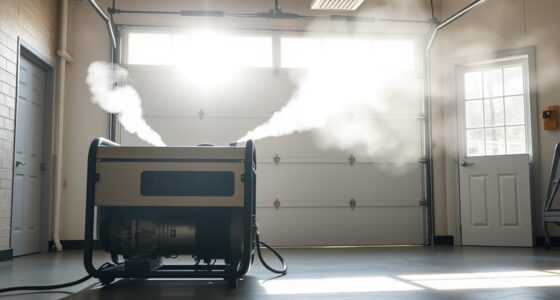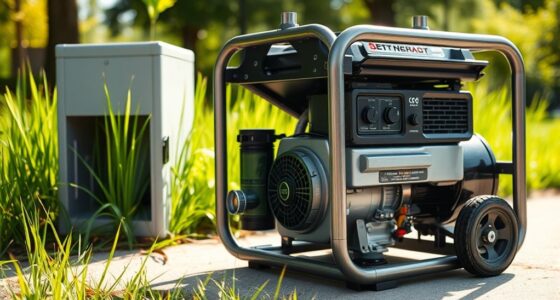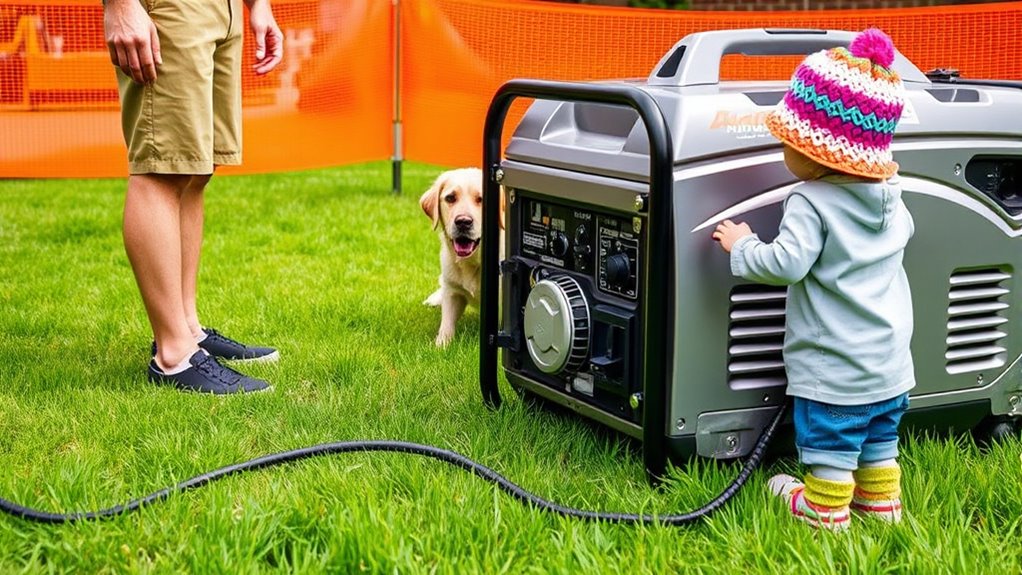
To safeguard kids and pets around running generators, always place the generator outside in a well-ventilated area, away from windows and doors. Keep children and pets at a safe distance, and never leave them unattended near the device. Teach kids about the dangers and guarantee pets are in secure, quiet spots. Regularly inspect cords and store fuel safely. If you’d like to learn more about safety measures, keep exploring these important tips.
Key Takeaways
- Keep children and pets at a safe distance from the generator’s outdoor placement area.
- Establish a secure, quiet indoor or sheltered outdoor space for pets during generator operation.
- Educate children about generator dangers and ensure they understand it is not a toy.
- Never leave pets unattended near a running generator and monitor for signs of distress.
- Store fuel safely away from children and pets, and turn off the generator before refueling.
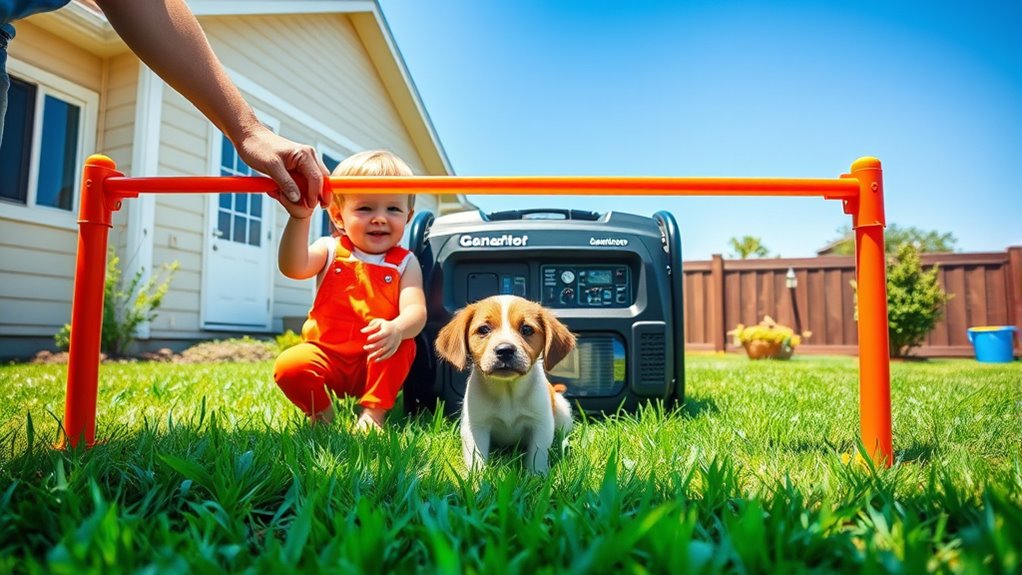
Generators can be lifesavers during power outages, but they also pose serious risks to kids and pets if not used carefully. Understanding generator safety is crucial to prevent accidents and keep everyone safe. When operating a generator, always ensure it’s placed outside, away from windows, doors, and vents. This prevents dangerous carbon monoxide from seeping into your home, which is a leading cause of generator-related injuries. Never run a generator indoors or in enclosed spaces, even if doors and windows are open, because the risk of carbon monoxide poisoning remains high.
Proper pet protection is equally important. Pets are naturally curious and may be attracted to the noise or the smell of a running generator. To keep them safe, establish a designated safe zone far from the generator’s location. This helps prevent pets from chewing on cords or getting too close to moving parts, which can cause injury. If you have a pet that’s anxious around loud noises, consider creating a quiet, secure space indoors or in a sheltered outdoor area away from the generator’s sound. Never leave pets unattended near a running generator—accidents happen quickly, and they may accidentally trip over cords, get tangled, or knock over the equipment.
In addition to placement, maintain your generator properly. Regularly inspect cords and connections for damage, and use only grounded, heavy-duty extension cords rated for outdoor use. When refueling, turn off the generator and let it cool down to prevent fuel spills or fires. Keep fuel stored in approved containers, away from children and pets, and never refuel inside your home or garage. These safety measures help protect everyone from potential hazards associated with generator use.
Educating children about generator safety is essential. Teach them to stay away from the equipment and cords, and explain the dangers of carbon monoxide. Make sure they understand that the generator is not a toy and should only be operated by adults. For pets, it’s best to keep them indoors or in a secure outdoor area during generator operation. If your pet shows signs of distress, like excessive barking or hiding, move them to a quieter space and consult your veterinarian if needed. Additionally, understanding Kia Tuning options can help owners optimize their vehicle’s performance, ensuring safety and reliability during emergencies or daily use.

Porch Shield Waterproof Universal Generator Cover 32 x 24 x 24 inch – for Most Generators 5000-10000 Watt, Black
Compatible – More sizes for 3000w -15000w gas generator or inverter generator.
As an affiliate, we earn on qualifying purchases.
As an affiliate, we earn on qualifying purchases.
Frequently Asked Questions
Can Kids or Pets Accidentally Start a Generator?
Kids or pets can accidentally start a generator if it isn’t properly secured. To prevent this, always use a generator lock and guarantee child safety features are in place. Keep the generator out of reach and never leave it unattended while running. By taking these precautions, you reduce the risk of accidental activation, protecting your loved ones from potential harm. Safety measures are essential for peace of mind around your generator.
What Are Signs of Carbon Monoxide Poisoning in Children or Pets?
Imagine your child suddenly appears pale, dizzy, and complains of a headache after a storm. These are signs of carbon monoxide poisoning. In children and pets, symptom recognition is crucial—look for confusion, vomiting, or lethargy. If you suspect poisoning, immediately evacuate everyone to fresh air and call emergency response. Prompt action can save lives, so stay alert to these warning signs and act quickly.
How Should I Store Generator Fuel Safely Away From Children?
You should store generator fuel in a well-ventilated, cool, and dry area away from children. Use approved, labeled containers for fuel storage and keep them tightly sealed. Always follow safety precautions, such as avoiding storing fuel indoors or near heat sources. Keep the containers out of reach of kids, preferably in a locked cabinet or shed. Regularly check for leaks and dispose of fuel safely when it’s old or unused.
Are There Specific Safety Features to Look for in Generators?
You should look for generators with safety features like automatic shutoff and safety covers. These features aren’t just extras; they’re essential for preventing accidents. Automatic shutoff stops fuel flow if the generator overheats or detects a leak, while safety covers prevent accidental contact with hot or moving parts. Investing in these features shows that safety isn’t optional—it’s built into the design, helping keep everyone safe during power outages.
How Long Should I Keep Children and Pets Away After Using the Generator?
You should keep children and pets away from your generator for at least 30 minutes after turning it off. This allows fumes to dissipate and prevents exposure to toxic gases. Regular generator maintenance guarantees it runs safely and efficiently, reducing risks during emergency preparedness. Always ventilate the area well, and supervise kids and pets during and after use to keep everyone safe and minimize hazards.

POWGRN 100 ft 12/3 Outdoor Extension Cord Waterproof Heavy Duty with Lighted Indicator End 12 Gauge 3 Prong, Flexible Cold-Resistant Long Power Cord Outside, 15Amp 1875W SJTW Yellow ETL Listed
Up to 1875W Applications: Outdoor extension cord waterproof 100ft 12 gauge, 15 amp, 125 volts, 1875watts; Male power…
As an affiliate, we earn on qualifying purchases.
As an affiliate, we earn on qualifying purchases.
Conclusion
Remember, safety is a shared responsibility. Keep kids and pets at a safe distance when the generator’s running, always supervise, and never run it indoors. Think of it like a fire; a small spark can cause big trouble. By staying vigilant and following these precautions, you’re keeping everyone safe and sound. When it comes to generators, better safe than sorry—because a little caution today prevents a big accident tomorrow.
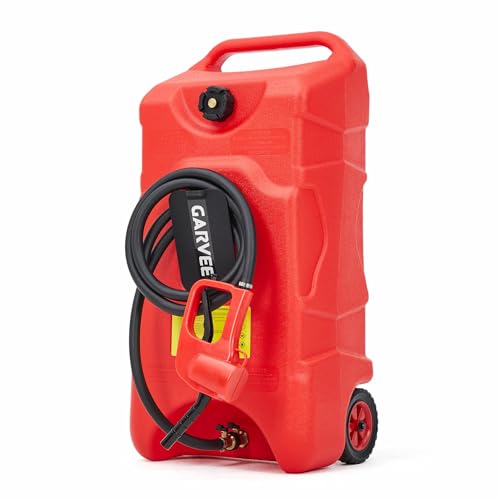
Garvee 16 Gallon Gas Can, Fuel Tank Container with LE Fluid Transfer Manual 10 FT Siphon Pump, Portable Diesel Gas Storage Caddy w/Wheels for Car, ATV, Weeder, Boat, Tractor, Snow Blower,Generator
Heavy-Duty Gas Can Construction: Built from industrial-grade HDPE, this gas can and gas tank resists corrosion, dents, and…
As an affiliate, we earn on qualifying purchases.
As an affiliate, we earn on qualifying purchases.

PetSafe Pawz Away Indoor Pet Barrier – Battery-Operated Indoor Invisible Containment Area with Adjustable Compatible Collar – Easy Setup for Furniture Protection
Effective Pet Control: The PetSafe Pawz Away Indoor Pet Barrier teaches pets to avoid restricted areas using a…
As an affiliate, we earn on qualifying purchases.
As an affiliate, we earn on qualifying purchases.