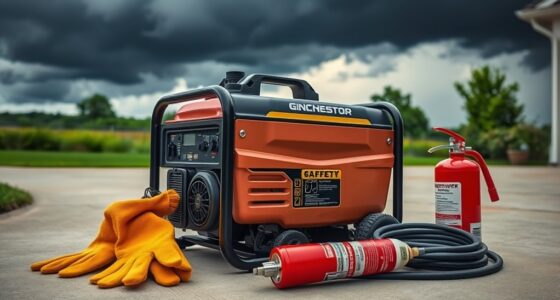

When using a generator near water, you must prioritize electrical safety and environmental protection. Keep cords and electrical connections elevated and waterproof, and always use GFCIs to prevent shocks. Avoid placing the generator directly on or near water, and perform maintenance away from water sources to prevent spills. Proper placement and regular checks help prevent water pollution and electrical hazards. Continue exploring for essential tips to guarantee safe, eco-friendly generator operation by water.

Get backup power and energy gear delivered free — and shop member deals
- Fast, free delivery on millions of items
- Access to Prime Big Deal Days deals on October 6–7
- Prime Video, Amazon Music and more included
Key Takeaways
- Keep generators at a safe distance from water to prevent electrical shocks and contamination.
- Use waterproof, outdoor-rated extension cords and elevate connections above ground and moisture.
- Ensure proper grounding of generators to reduce electrical hazards near water.
- Avoid refueling or performing maintenance near water to prevent spills and pollution.
- Install and maintain GFCIs and sound-dampening enclosures to reduce electrical risks and noise pollution.
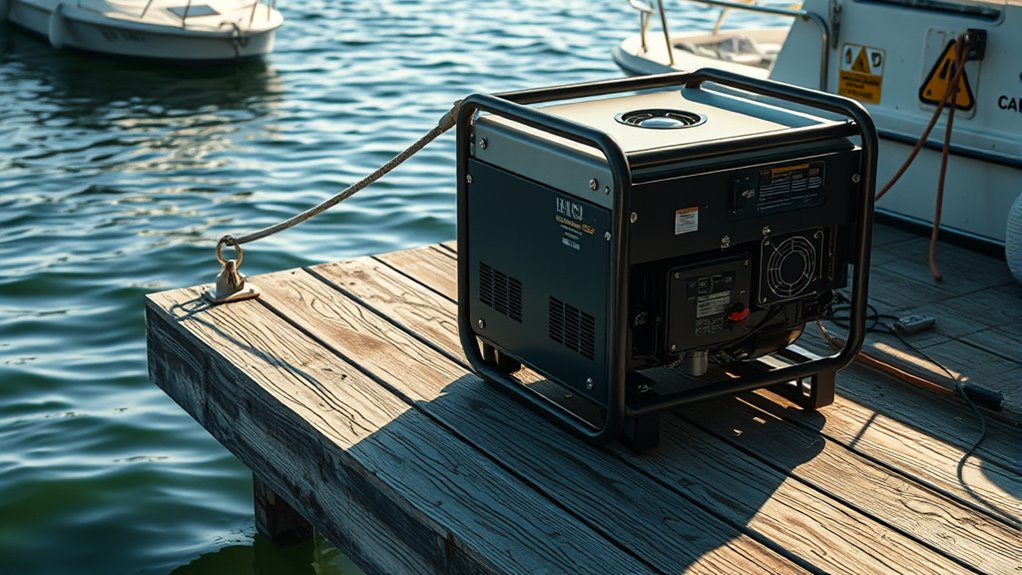
Generators placed near water can pose serious safety risks if not properly managed. When you operate a generator close to a dock, marina, or any aquatic environment, you must be aware of the potential dangers related to electrical hazards and marine pollution. These risks aren’t just about personal safety—they can also affect the environment and the health of others around you. It’s vital to follow safety guidelines to prevent accidents, protect marine life, and guarantee the longevity of your equipment.
Electrical hazards are one of the most immediate concerns when using generators near water. Water is an excellent conductor of electricity, so any exposure of electrical components to moisture can lead to electric shocks or short circuits. If your generator isn’t properly grounded or if cords and connections aren’t waterproof, you risk electrocution or fire. Always use outdoor-rated extension cords, keep electrical connections off the ground, and verify your generator has a ground-fault circuit interrupter (GFCI). Regularly inspect cords and plugs for damage, and never operate a generator in wet conditions without appropriate protective measures. Remember, even a small splash can cause a dangerous electrical fault, so staying vigilant is essential. Proper grounding techniques are crucial for safety when operating near water.
Electrical hazards near water require proper grounding, waterproof connections, and vigilant inspection to prevent shocks and fires.
Marine pollution is another serious issue linked to improper generator use near water. Fuel spills, oil leaks, or emissions from poorly maintained generators can contaminate water sources, harming aquatic ecosystems and violating environmental regulations. When you refuel or perform maintenance, do so away from the water’s edge, and always clean up any spills immediately. Using environmentally friendly fuels and oils can substantially reduce your impact. Additionally, make sure your generator has appropriate spill containment measures, such as drip trays or catch basins, to prevent leaks from reaching the water. Avoid running your generator unnecessarily or at high loads for extended periods, as this increases emissions and pollution risks.
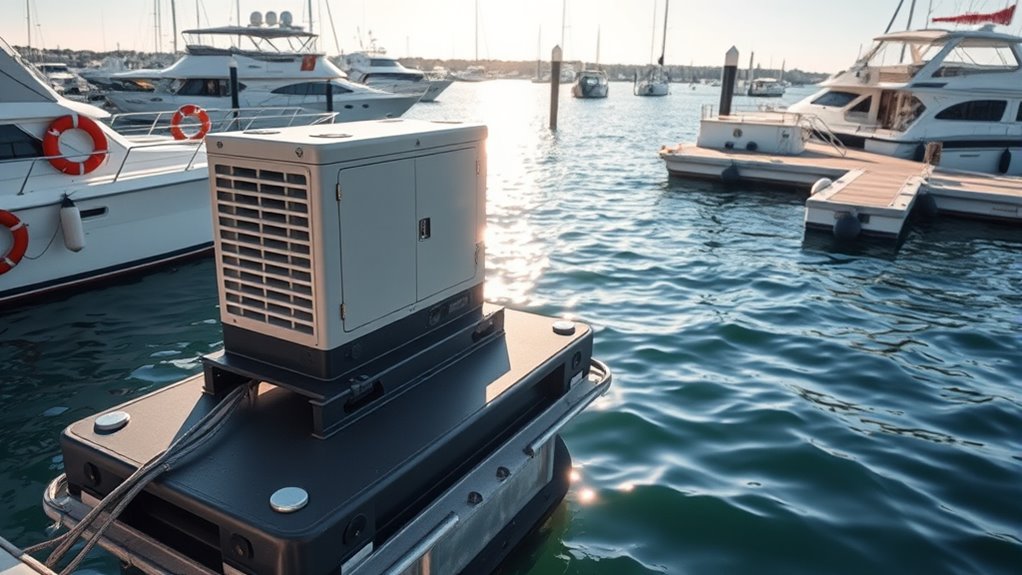
Furthermore, noise pollution from generators can disturb marine life and nearby communities. Keeping your generator well-maintained and using sound-dampening enclosures can help minimize noise levels. Be mindful of local regulations and environmental guidelines, which often specify safe distances from water bodies and living areas. Proper placement and operation of your generator not only safeguard your safety but also protect the environment and those around you.
outdoor waterproof extension cords
As an affiliate, we earn on qualifying purchases.
As an affiliate, we earn on qualifying purchases.
Frequently Asked Questions
What Are the Best Waterproof Covers for Portable Generators?
For generator waterproofing, you want the best portable cover options to protect your equipment. Look for heavy-duty, weatherproof covers made from durable materials like polyester or vinyl with sealed seams. These covers shield your generator from water, moisture, and debris, ensuring safe operation near water. Choose a cover that fits snugly and offers ventilation. Brands like Classic Accessories or ShelterLogic provide reliable options, giving you peace of mind during marine or dock use.
How Often Should I Inspect Generator Wiring Near Water?
You should inspect your generator wiring near water at least once every three months. Regular generator maintenance is essential, especially in moist environments, to prevent electrical safety hazards. Think of wiring inspections as a critical shield—over 60% of electrical accidents happen due to overlooked issues. During these checks, look for corrosion, loose connections, or damage to guarantee safe operation and avoid costly repairs or dangerous shocks.
Can I Operate a Generator During a Lightning Storm?
You should avoid operating a generator during a lightning storm for lightning safety reasons. Lightning can cause power surges or damage your generator, and there’s a risk of electrical shock or fire. To stay safe, turn off your generator and disconnect it from water or other equipment. Wait until the storm passes and it’s safe to operate again. Always follow safety guidelines to protect yourself and your equipment during storms.
What Emergency Procedures Should I Follow if Water Contacts the Generator?
If water contacts your generator, immediately turn it off and disconnect it from power sources. Do not attempt to touch the generator or water contact areas until you confirm the device is de-energized and safe. Follow emergency procedures by alerting others nearby, avoiding contact with water or the generator, and calling emergency services if needed. Always prioritize safety and wait for professional assistance before inspecting or handling the equipment.
Are There Specific Certifications for Water-Resistant Generators?
You should look for generators that meet specific certification standards and safety certifications for water resistance. These certifications guarantee the generator is designed to withstand exposure to water and moisture, reducing electrical hazards. Check labels or product specifications to verify compliance with standards like IP (Ingress Protection) ratings or UL (Underwriters Laboratories) safety certifications. Always prioritize water-resistant generators with proper certifications for safer operation near water environments.
As an affiliate, we earn on qualifying purchases.
Conclusion
Remember, handling generators near water is like walking a tightrope over a shimmering lake—you need steady hands and sharp focus. Respect the guidelines, keep safety at your core, and treat the water like a gentle giant that demands care. With vigilance and caution, you’ll navigate these waters smoothly, ensuring your power source doesn’t turn into a storm. Stay safe, stay smart, and let your awareness shine brighter than the sun reflecting off the waves.
As an affiliate, we earn on qualifying purchases.

Hudson Generator Box, SD Aluminum Generator Enclosure with Ventilation, Heat Dissipation & Reduce Noise, Accommodates The Maximum Size of 39.4"x32"x31.7", White
- Efficient Ventilation: Louvered vents and airflow openings for cooling
- Active Cooling System: High-speed fan boosts airflow and temperature control
- Quiet Operation: Phenolic foam lining reduces noise levels
As an affiliate, we earn on qualifying purchases.
As an affiliate, we earn on qualifying purchases.
Fall Picks
fall essentials
As an affiliate, we earn on qualifying purchases.