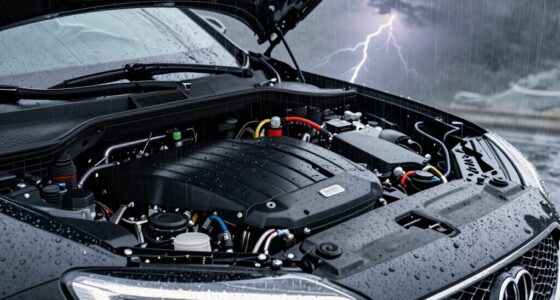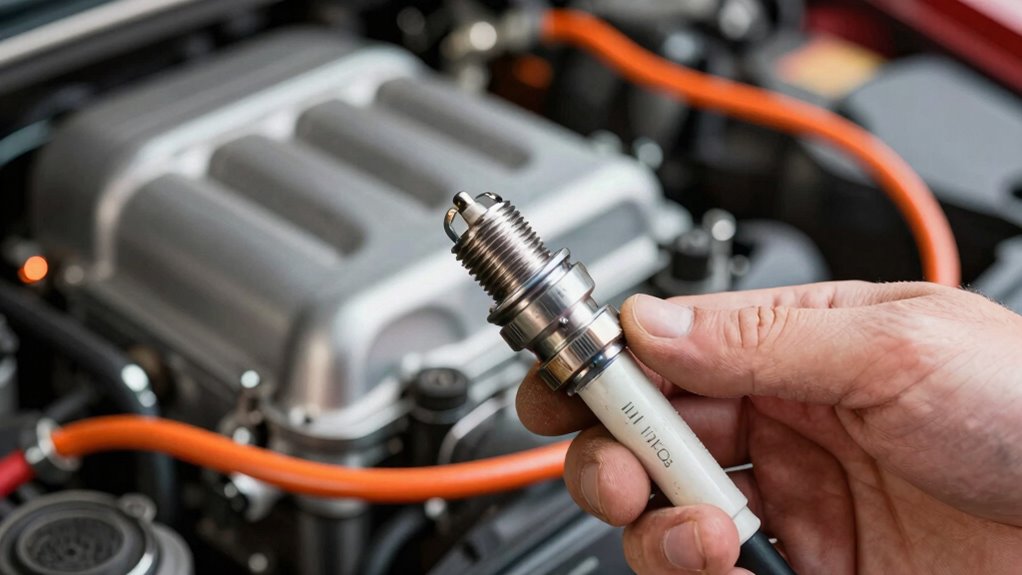

To identify if your car’s problem is fuel, air, or spark, start by checking the basics—ensure the fuel tank isn’t empty and listen for the fuel pump when turning the key on. Examine the air filter for dirt or blockages, and inspect spark plugs for wear. If your engine misfires or hesitates, you’re likely dealing with one of these issues. Keep exploring to find out specific checks that can help you pinpoint the cause more precisely.

Get backup power and energy gear delivered free with Prime
- Fast, free delivery on millions of items
- Prime Video, Amazon Music and more included
- Member-only deals all year
Key Takeaways
- Check for engine misfires, hesitation, or poor acceleration to identify potential fuel, air, or spark issues.
- Listen for the fuel pump sound when turning the key to “on”; absence suggests fuel delivery problems.
- Inspect spark plugs and perform a spark test; weak or no spark indicates ignition system failure.
- Examine the air filter for dirt or clogging; restricted airflow causes rough idling and hesitation.
- Verify fuel pressure at the rail; low pressure points to fuel delivery or filter problems.
When your vehicle won’t start or runs poorly, the cause often comes down to a problem with fuel, air, or spark. To figure out which one is at fault, you need to understand some basic troubleshooting steps and perform engine diagnostics systematically. Starting with the simplest checks can save you time and money before you dive into more complex repairs.
First, consider the fuel system. If your engine isn’t getting enough fuel, it might crank but won’t start or stalls unexpectedly. Check if the fuel tank is full; it’s surprising how often that’s overlooked. If it is, listen for the fuel pump when you turn the key to the “on” position—if you don’t hear it, the pump could be faulty. You can also check the fuel filter for clogs, which can restrict flow. An easy troubleshooting basic here is to see if fuel is reaching the engine by checking for fuel pressure at the fuel rail, if you have the right tools. If fuel isn’t reaching the engine, the problem likely lies with the pump, filter, or fuel injectors. Additionally, understanding the importance of fuel delivery can help you diagnose issues more accurately. It’s also helpful to be familiar with common signs of fuel system problems, such as engine misfires or lack of power.
Check fuel tank, listen for pump, and inspect filter to diagnose fuel delivery issues.
Next, think about the air supply. If the engine isn’t getting enough air, your vehicle may struggle to start or run poorly. Make sure the air filter isn’t dirty or clogged, because a clogged filter can choke off airflow. You can remove the filter and inspect it for debris or excessive dirt. During engine diagnostics, you can also check for vacuum leaks around the intake manifold—these leaks can cause rough running and stalling. If the air intake system looks clear, the issue might be with sensors like the mass airflow sensor, which, if malfunctioning, can send incorrect data to the engine control module (ECM), disrupting the air-fuel mixture. Additionally, understanding the importance of proper airflow can help you diagnose issues more accurately. Recognizing symptoms such as irregular idling or hesitation can also point toward airflow problems.
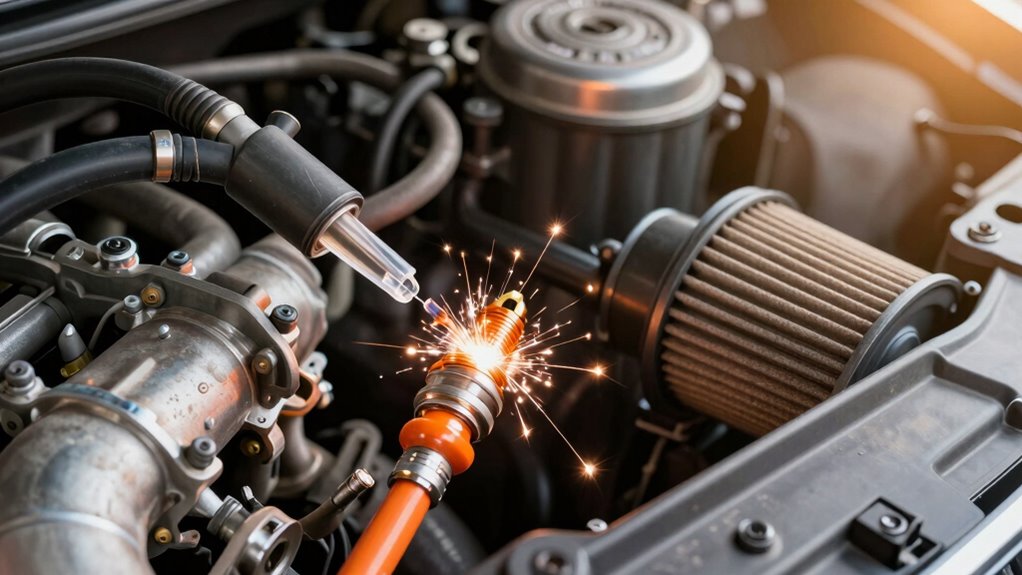
Finally, evaluate the spark system. Spark is essential for igniting the fuel-air mixture. If the spark plugs are worn or fouled, or if the ignition coils are failing, your engine won’t fire properly. You can perform a simple test by removing a spark plug, reconnecting it to its wire, and grounding it against the engine block while cranking the engine. If you see a strong, blue spark, your ignition system is likely fine. If not, you’ll need to replace the spark plugs or coils. Being aware of ignition system issues can further streamline your troubleshooting process.
Products Worth Considering

LEVOIT Vital 200S-P Smart Air Purifier for Large Rooms

Levoit Eleva 300X HEPA Air Purifier for Home and Bedroom

Ring Alarm 14-Piece Wireless Security System Kit
As an affiliate, we earn on qualifying purchases.
Frequently Asked Questions
Can a Clogged Fuel Filter Cause Starting Issues?
Yes, a clogged fuel filter can cause starting issues because it restricts fuel flow in your fuel system. When the filter is blocked, it hampers proper fuel delivery, affecting airflow regulation to the engine. This can make it difficult for your vehicle to start or run smoothly. Regular maintenance and replacing the fuel filter guarantee your fuel system operates efficiently, preventing these starting problems.
How Do I Check if My Spark Plug Is Working?
You can’t afford to ignore your spark plug—it’s the tiny spark that powers your engine! To check if it’s working, perform a spark plug inspection by removing it and inspecting for damage or carbon buildup. Then, do ignition system testing by reconnecting it to the wire and ground, then cranking the engine. If you see a strong blue spark, your spark plug is good; if not, it’s time for a replacement.
What Are Common Signs of a Bad Air Filter?
You’ll notice a bad air filter through signs like reduced engine performance, rough idling, or a decrease in fuel efficiency. During air filter inspection, check for dirt, debris, or visible clogging. If it’s dirty, replace it promptly. Filter replacement tips include noting the manufacturer’s recommendations and ensuring a proper fit. Regularly inspecting and replacing your air filter helps maintain smooth engine operation and prevents more serious issues down the line.
Can a Weak Battery Affect Fuel or Spark?
A weak battery can subtly influence your vehicle’s performance by lowering battery voltage, which affects your electrical system’s efficiency. When the battery isn’t providing enough power, it can lead to weak spark signals, making it harder for your engine to ignite properly. While it might not directly impact fuel delivery, a compromised electrical system can cause rough starts, stalling, or misfires, hinting that your battery’s health deserves a closer look.
How Often Should I Perform a Tune-Up for Fuel, Air, and Spark?
You should perform a tune-up every 30,000 miles or about once every 2 years, whichever comes first. During this, you’ll check the fuel system, ensuring clean fuel filters and proper injectors, and inspect the air intake system for blockages or dirt. Spark plugs should be replaced as needed, typically around 30,000 miles, to maintain peak engine performance. Regular tune-ups keep your vehicle running smoothly and prevent bigger issues down the line.
Conclusion
Once you’ve ruled out fuel, air, and spark, you’re like a detective holding the key to a locked mystery. Think of your engine as a symphony—if one instrument’s out of tune, the whole melody falters. By listening closely and checking each part, you can restore harmony to your ride. With patience and a keen eye, you’ll piece together the puzzle, turning a frustrating problem into a smooth, roaring engine once again.