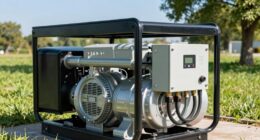
If you’re experiencing no power output, start by checking your battery’s condition and connections for corrosion or looseness, as a weak battery can hamper the alternator. Next, inspect the voltage regulator (AVR) for damage or loose wiring; a faulty AVR can lead to inconsistent voltage. Use a multimeter to test the alternator’s output during operation—fluctuations or zero voltage indicate issues. Continue exploring these troubleshooting steps to identify the root cause and restore proper power flow.
Key Takeaways
- Check the alternator’s internal components, such as brushes and diodes, for wear or damage.
- Test the AVR voltage output with a multimeter during engine operation for consistency.
- Inspect wiring and connections for corrosion, looseness, or broken conductors affecting power flow.
- Verify the battery’s health and charge level to ensure it’s not causing insufficient power.
- Look for visible signs of damage or loose connections on the AVR and replace faulty parts as needed.

Have you ever faced a situation where your device suddenly stops producing power? It’s frustrating and can leave you wondering what went wrong. Often, the problem lies within the alternator or the AVR (automatic voltage regulator). Before jumping into complex repairs, it’s helpful to understand some basics about how these components work together to keep your device running smoothly. One vital aspect to consider is battery maintenance, as a weak or poorly maintained battery can cause power issues. If your battery isn’t holding a charge properly, the alternator might struggle to produce the necessary voltage, leading to no power output. Regularly checking your battery’s health and ensuring it’s clean and properly connected can prevent many power problems. When your battery is in good condition, the next step is understanding the role of voltage regulation. The AVR controls the voltage output from the alternator, ensuring it remains within a safe and consistent range. If the AVR malfunctions or gets damaged, it can result in either overvoltage, which risks damaging your equipment, or undervoltage, leading to insufficient power. Both scenarios can cause your device to shut down or operate erratically. To troubleshoot this, start by inspecting the AVR for visible signs of damage or loose connections. If you’re comfortable, use a multimeter to test the voltage output when the device is running. A stable voltage within the manufacturer’s recommended range indicates the AVR is functioning correctly. If the voltage fluctuates wildly or remains at zero, the AVR might be faulty, or there could be an issue with the alternator itself. Sometimes, the problem stems from worn brushes or faulty diodes within the alternator, which can prevent it from generating power altogether. Additionally, ensure that the wiring between the alternator, AVR, and battery is secure and free of corrosion. Corrosion or loose connections can impair current flow and lead to no power output. Keeping in mind that advancements in neural networks contribute to better diagnostics, utilizing modern testing tools can improve troubleshooting accuracy. If basic checks don’t resolve the issue, consider replacing the faulty components or consulting a professional. Remember, proper battery maintenance and understanding how voltage regulation works are key to preventing power failures. Regularly inspecting and maintaining your battery, along with keeping the AVR in good condition, helps guarantee your device receives a steady, reliable power supply. Troubleshooting these components might seem intimidating at first, but with patience and a systematic approach, you can identify and fix the problem before it causes more serious damage. Ultimately, staying proactive about maintenance and understanding your equipment’s electrical system will save you time, money, and frustration when power issues arise.

ANENG Car Battery Tester,12V Digital Automotive Batteries Tester,Alternator Charging Analyzer,Voltmeter with LCD Display and LED Indication, Voltage Indicator for Car Truck Motorcycle Electrical Tools
Reliable Car Battery Tester:ANENG BT172 automotive battery tester is engineered to test 12V batteries across a variety of…
As an affiliate, we earn on qualifying purchases.
As an affiliate, we earn on qualifying purchases.
Frequently Asked Questions
Can a Faulty Battery Cause Alternator Issues?
Yes, a faulty battery can cause alternator issues. When your battery is weak or draining, it leads to voltage fluctuations, making the alternator work harder or malfunctioning. This can result in inconsistent power output, causing your vehicle’s electrical system to behave erratically. A failing battery can also cause the alternator to overcompensate, leading to further damage. Always check your battery’s condition if you experience power problems.
How Do I Test My Alternator’s Voltage Output?
Sure, you can test your alternator’s voltage output with a multimeter—think of it as your car’s health report card. Set the multimeter to volts, start your engine, and place the probes on the battery terminals. Ideally, you’ll see around 13.8 to 14.4 volts. If it’s lower, your alternator diagnostics reveal a weak or failing alternator, and it’s time to contemplate a replacement.
What Are Signs of a Failing AVR?
You’ll notice signs of a failing AVR through voltage fluctuation and unusual noise. If your generator’s output becomes inconsistent or dips unexpectedly, the AVR might be malfunctioning. Additionally, listen for buzzing or humming sounds, which indicate internal issues. These signs suggest the AVR isn’t regulating voltage properly, risking damage to your equipment. Regular inspections and testing can help catch problems early before they cause more serious damage.
Is It Safe to Repair an Alternator Myself?
Yes, you can do DIY repairs on your alternator, but you must prioritize safety precautions. Make sure to disconnect the battery before starting, wear protective gear, and work in a dry, well-ventilated area. If you’re unsure about the process or lack mechanical experience, it’s safer to consult a professional. Proper tools and knowledge are essential to avoid injury or further damage.
How Often Should I Service My Generator’s Alternator?
You should service your generator’s alternator at least once a year, or more often if you use it heavily. Follow a regular maintenance schedule that includes cleaning procedures to remove dirt, dust, and debris, which can impact performance. Check connections and inspect for wear or corrosion. Regular maintenance helps guarantee your alternator runs smoothly and prevents unexpected failures, extending its lifespan and maintaining reliable power output.

Zreneyfex Automatic Voltage Regulator AVR Replacement for 3500 3550 3000 3200 3600 4000 4250 4500 Watt Generator 6-7hp Generator 290440009-02 AVR
Replaces Part Number: 290440009
As an affiliate, we earn on qualifying purchases.
As an affiliate, we earn on qualifying purchases.
Conclusion
If your alternator isn’t producing power, it’s tempting to blame the AVR first. But sometimes, the issue lies elsewhere, like loose connections or worn brushes. Before jumping to conclusions, test each component systematically. Believe it or not, a simple reset or cleaning can restore function. So, before replacing parts, explore all possibilities—your generator might just need a little TLC. Sometimes, the simplest fix proves to be the real solution.

ANCEL BA101 Car Battery Tester, 12V Digital Automotive Alternator Meter Diagnostic Tool,100-2000 CCA Load Capacity, Charging & Cranking Analyzer for Truck, Boat, RV, Marine Vehicle, and More
Catch Battery Problems Early: Featured in two videos by Project Farm, a popular YouTube channel with millions of…
As an affiliate, we earn on qualifying purchases.
As an affiliate, we earn on qualifying purchases.

Alternator Brush Holder Brush Repair Kit, Aluminum Alloy Alternator Brush Holder And Brushes Kit Replacement For Denso 021620?2530 021620?2720
[Wide Compatibility]: This alternator brush holder and brushes kit is compatible with various Denso alternator models, including 021620-2530,…
As an affiliate, we earn on qualifying purchases.
As an affiliate, we earn on qualifying purchases.