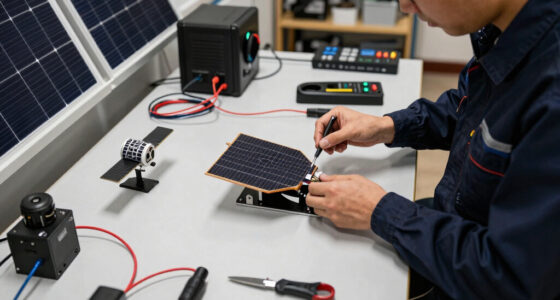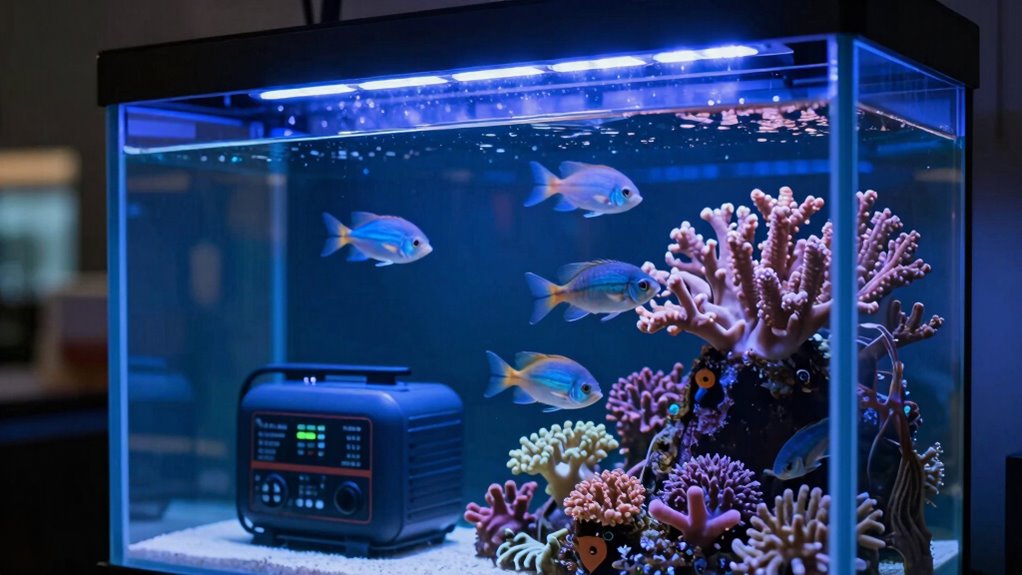

To keep your aquarium safe during power outages, you need reliable backup options like battery backups or solar generators. Battery backups provide quick power for essential equipment, while solar generators harness sunlight for longer-term solutions. Combining both gives you better coverage, especially during prolonged outages. Regular testing and proper maintenance are key to ensuring your backup systems work when needed. If you want practical tips and detailed advice, there’s more to explore below.

Get backup power and energy gear delivered free with Prime
- Fast, free delivery on millions of items
- Prime Video, Amazon Music and more included
- Member-only deals all year
Key Takeaways
- Ensure your backup system can reliably power essential aquarium equipment like filters, heaters, and lights during outages.
- Solar generators and battery backups are eco-friendly options that provide continuous power but require proper sizing and maintenance.
- Combining solar and battery systems offers comprehensive coverage, reducing reliance on stored energy during sunny days.
- Regularly test and maintain backup systems to ensure they function effectively when needed.
- Choose backup solutions based on your aquarium’s size, climate, and budget to optimize performance and reliability.
Power outages can strike suddenly, putting your aquarium’s delicate ecosystem at risk. Without power, your filters, heaters, and lights shut down, threatening the health of your fish and corals. That’s why having reliable backup power options is vital. You might consider investing in solar generators or battery backups to keep your tank stable during outages. Solar generators harness sunlight to produce electricity, making them an eco-friendly choice. They can be a great long-term solution if you experience frequent outages or want a quiet, renewable power source. However, they often require sunlight exposure and may need time to fully recharge, so they work best when paired with other backup options or for use during daytime power interruptions.
Power outages threaten your aquarium’s health—rely on solar and battery backups for peace of mind.
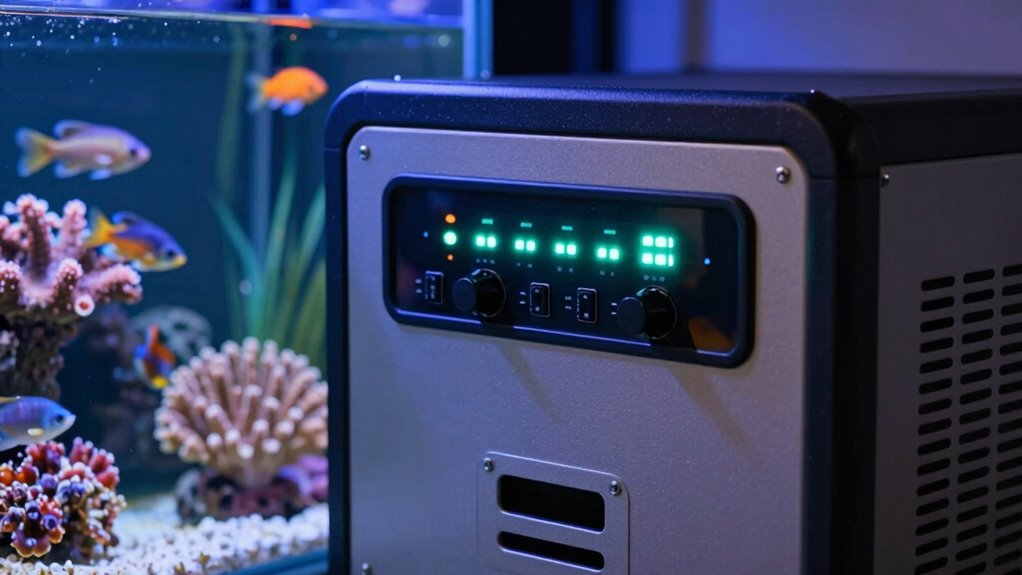
Battery backups, on the other hand, are typically smaller and more immediate. These portable power sources store energy in batteries and can kick in instantly when the main power goes out. They’re easy to set up and maintain, making them a popular choice for aquarium enthusiasts who want a quick and reliable way to keep essential equipment running. When selecting a battery backup, make sure it has enough capacity to power your critical equipment, such as filters, heaters, and aerators, for several hours. Some models even allow you to connect multiple devices simultaneously, providing peace of mind during extended outages. You’ll want to choose a backup that’s compatible with your tank’s equipment and easy to operate, so you’re prepared without hassle.
While solar generators and battery backups serve different functions, combining them can give you the best coverage. During sunny days, a solar generator can supplement your power needs, reducing reliance on batteries and lowering energy costs. When the sun isn’t shining or during longer outages, a battery backup takes over, ensuring your tank remains stable. Additionally, backup system compatibility and capacity are crucial to ensure continuous operation. Keep in mind that no backup system is foolproof, so regular testing and maintenance are vital. Check your backup devices periodically, keep batteries charged, and ensure your solar panels are clean and positioned correctly. Incorporating power management strategies can also optimize your backup system’s efficiency and lifespan.
Ultimately, choosing the right backup power depends on your specific tank setup, local climate, and budget. Investing in solar generators and battery backups offers a dependable way to protect your aquarium’s ecosystem from unexpected power disruptions. With proper planning and equipment, you can provide a safe environment for your aquatic life, no matter what surprises come your way. Additionally, understanding the contrast ratio of your backup power system can help ensure consistent performance during outages. Properly sizing your backup system based on your power requirements can also make a significant difference in maintaining stability during outages.
As an affiliate, we earn on qualifying purchases.
Frequently Asked Questions
How Long Can an Aquarium Survive Without Power?
During a power outage, your aquarium can typically survive for about 4-6 hours if you haven’t set up backup systems. To maintain aquarium safety, act quickly by reducing water flow and temperature, and consider using battery-powered aerators or generators. Without backup power, oxygen levels drop, risking fish health. So, it’s essential to prepare in advance for power outages to keep your aquatic life safe and thriving.
What Is the Most Cost-Effective Backup Power Option?
Think of your backup power like a dependable sidekick. A battery backup is the most cost-effective option, especially for small tanks, since it requires minimal maintenance and has a decent lifespan. Regular generator maintenance guarantees it runs smoothly when needed, but it’s pricier upfront. For long-term savings, prioritize battery backups while keeping a generator ready for larger or more sensitive setups.
How Often Should Backup Batteries Be Replaced?
You should replace backup batteries every 1 to 2 years to guarantee reliable power redundancy. Regular battery maintenance helps you catch potential failures before they occur, protecting your aquarium’s ecosystem. Keep an eye on battery performance and replace them promptly when they show signs of decreased capacity or after their recommended lifespan. Consistent upkeep guarantees your backup power system functions smoothly, providing peace of mind during power outages.
Can Solar Power Adequately Support an Aquarium?
Solar power can be a reliable partner for your aquarium, but it’s not a one-size-fits-all solution. Its solar efficiency depends on sunlight availability and system setup, while battery capacity determines how long you can keep the tank alive during cloudy days or at night. With proper investment and monitoring, solar energy can support your aquarium’s needs, acting as a steady heartbeat beneath the surface.
What Are the Signs of a Failing Backup System?
You’ll notice signs of a failing backup system if your battery maintenance isn’t up to date, such as reduced power or inability to start when needed. Generator reliability also drops, leading to unexpected outages. Regularly test your backup power, check battery health, and make certain your generator runs smoothly. If you see these signs, act quickly to prevent your aquarium’s ecosystem from destabilizing, safeguarding your aquatic life.
As an affiliate, we earn on qualifying purchases.
Conclusion
So, next time your power flickers, remember: your fish aren’t just swimming—they’re auditioning for a survival reality show. Without backup power, your underwater friends might just decide to throw a little rebellion, turning your pristine tank into a swamp. Don’t leave them high and dry—invest in that backup system now or prepare for a watery disaster. Because, honestly, who doesn’t want a dramatic rescue story starring their beloved aquatic life?
As an affiliate, we earn on qualifying purchases.
As an affiliate, we earn on qualifying purchases.
Fall Picks
fall essentials
As an affiliate, we earn on qualifying purchases.