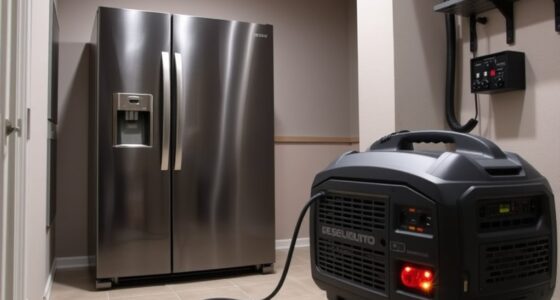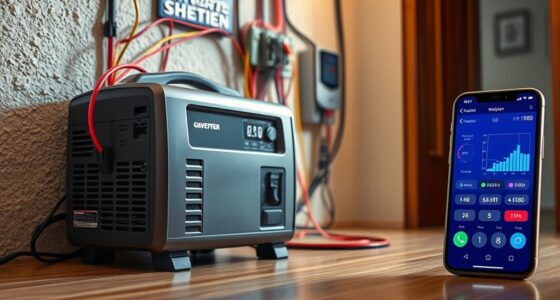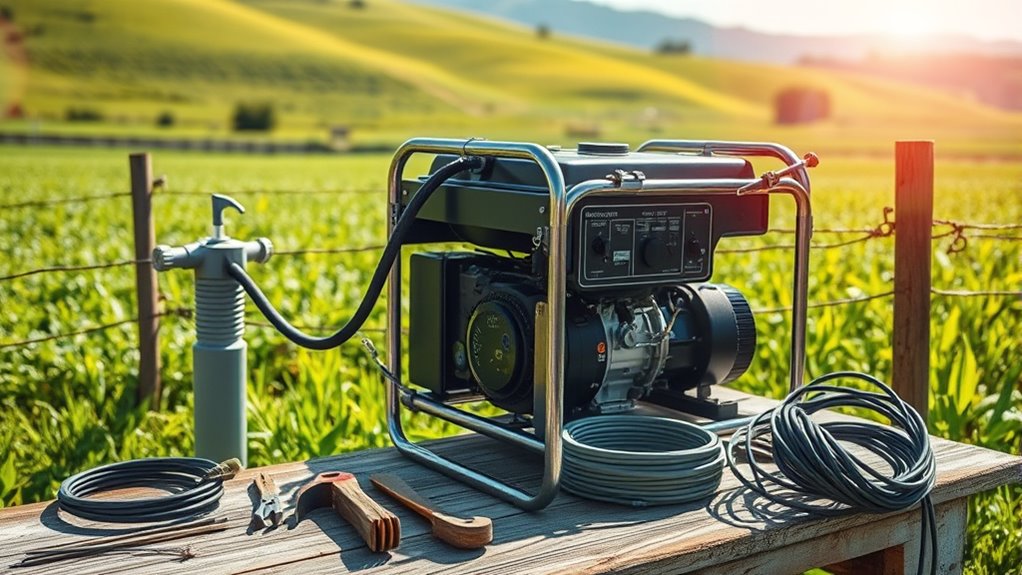
To power pumps, tools, and electric fences on your small farm, consider using reliable, fuel-efficient generators or hybrid solar systems. Solar generators harness sunlight, reducing fuel costs and environmental impact, while fuel-efficient models guarantee dependable performance. Regular maintenance and load management extend equipment life and optimize energy use. Combining these options offers a sustainable, cost-effective solution that keeps your operations running smoothly. Keep exploring to find the best fit for your farm’s needs.
Key Takeaways
- Solar-powered generators provide a clean, renewable energy source for running pumps, tools, and electric fences on small farms.
- Fuel-efficient generators with load management help optimize power use and reduce operational costs.
- Hybrid systems combining solar and fuel generators ensure continuous, reliable power during low sunlight periods.
- Regular maintenance and automatic shut-off features prolong generator lifespan and improve efficiency.
- Investing in energy-efficient solutions lowers long-term costs, decreases environmental impact, and enhances farm resilience.
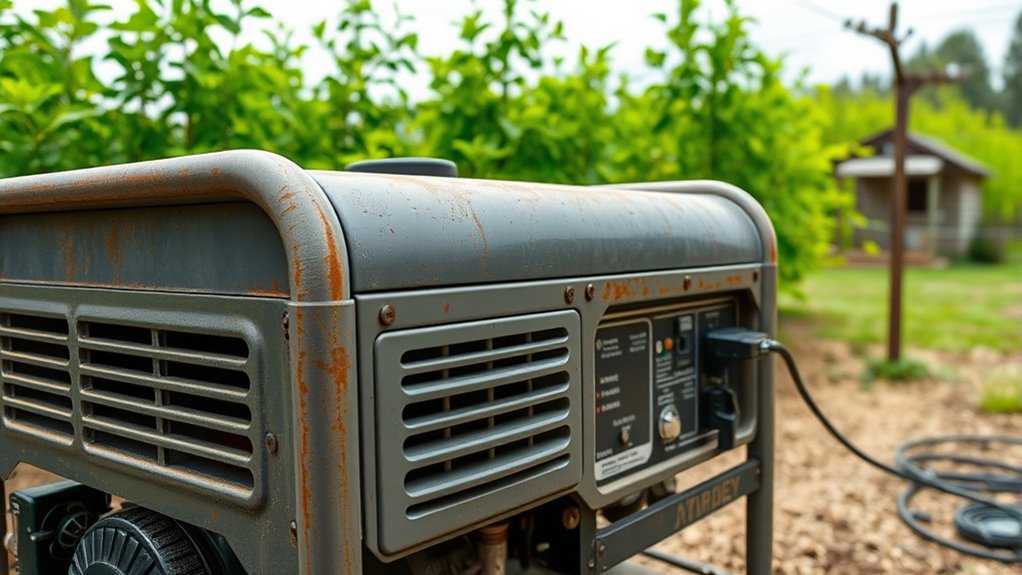
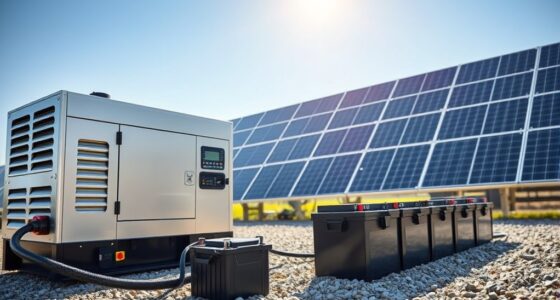
Small farms often rely on generators to keep essential equipment running smoothly, especially during power outages or in remote locations. When selecting a generator, you might consider solar-powered options that harness sunlight to generate electricity, offering a clean, renewable energy source. Solar generators are especially useful for small farms because they reduce fuel dependency and lower ongoing operating costs. They’re quiet, eco-friendly, and require minimal maintenance, making them ideal for farms seeking sustainable solutions. While upfront costs may be higher, the long-term savings and environmental benefits often outweigh initial investments. Plus, solar generators can be paired with battery storage, ensuring power availability even when the sun isn’t shining.
Fuel efficiency strategies play a crucial role in keeping operational costs manageable on your farm. Using fuel-efficient generators means you consume less fuel for the same amount of work, which is especially important during extended outages or when running multiple pieces of equipment. Prioritize models with advanced engine technology that optimize fuel use without sacrificing power. Regular maintenance also boosts fuel efficiency—changing filters, checking oil levels, and ensuring proper ventilation help your generator operate at peak performance. Additionally, managing your power load wisely can prevent unnecessary fuel consumption. Turn off or shut down equipment when not in use, and consider using load management systems that automatically prioritize critical tasks, reducing overall fuel burn. Fuel efficiency strategies are essential for extending your generator’s lifespan and reducing environmental impact.
Incorporating fuel efficiency strategies extends your generator’s lifespan and reduces environmental impact. For example, some models come equipped with automatic shut-off features when idle or low load conditions, conserving fuel and decreasing emissions. Combining these strategies with the use of solar-powered options creates a hybrid system that maximizes energy savings. During peak sunlight hours, your farm can rely on solar power, reducing the need for generator use and fuel consumption. When sunlight is limited, your generator steps in, operating more efficiently due to prior optimization efforts. This hybrid approach not only cuts costs but also enhances your farm’s resilience to power disruptions.
Ultimately, choosing the right generator for your small farm involves balancing initial costs, operational efficiency, and environmental considerations. Embracing solar-powered options and implementing fuel efficiency strategies allows you to run your farm more sustainably and reliably. By doing so, you ensure your pumps, tools, and electric fences stay powered, enabling your farm to operate smoothly regardless of external challenges. The investment in energy-efficient solutions pays off through lower costs, reduced carbon footprint, and increased independence from external power sources, giving you peace of mind and a more sustainable farm operation.
Top picks for "generator small farm"
Open Amazon search results for this keyword.
As an affiliate, we earn on qualifying purchases.
Frequently Asked Questions
How Do I Choose the Right Generator Size for My Small Farm?
To select the appropriate generator size for your small farm, start by calculating your total power needs, including farm batteries and renewable energy systems. Add up the wattage of essential tools, pumps, and electric fences. Choose a generator that provides at least 20-30% extra capacity to handle surge demands and future expansions. This guarantees reliable operation without overloading, keeping your farm running smoothly and efficiently.
Can a Generator Power Multiple Tools Simultaneously?
Yes, a generator can power multiple tools at once, but only if you don’t underestimate the power load. Overloading it with extension cords and devices can cause trips or damage. Always check your generator’s capacity and sum up the wattage of all tools before plugging in. Think of it like a crowded party—too many guests (tools) might just bring the whole thing crashing down.
What Maintenance Is Required for Farm Generators?
You should regularly check and change your farm generator’s oil, filters, and spark plugs to guarantee peak performance. Keep the fuel clean to improve fuel efficiency and prevent engine issues. Periodically inspect for leaks or corrosion, and test the generator’s noise reduction features to minimize sound during operation. Also, ensure ventilation and proper storage to prolong its lifespan, making sure it runs smoothly whenever you need it.
Are There Quiet Generator Options Suitable for Residential Farms?
You’ll be pleased to know that quiet generator options are perfect for residential farms, with many models producing noise levels below 60 decibels—about the volume of a normal conversation. These generators also excel in fuel efficiency, helping you save money and reduce emissions. They’re designed to run smoothly without disturbing your family or neighbors, making them ideal for maintaining a peaceful farm environment while providing reliable power for pumps, tools, and fences.
How Do I Ensure Generator Safety During Operation?
To guarantee generator safety during operation, always follow proper grounding practices to prevent electrical shocks. Keep the generator in a well-ventilated area to avoid carbon monoxide buildup. Store fuel safely in approved containers, away from heat sources, and never refuel while running. Regularly inspect cords and connections, and keep children and pets away. These steps help protect you and your farm during generator use.
Conclusion
With the right generator, you can keep your small farm running smoothly, whether it’s powering pumps, tools, or electric fences. Did you know that 85% of small farmers report increased efficiency after investing in portable generators? By choosing the right size and type, you’ll guarantee reliable power and peace of mind. Stay prepared, save time, and boost your farm’s productivity—your farm’s success depends on having dependable power when you need it most.