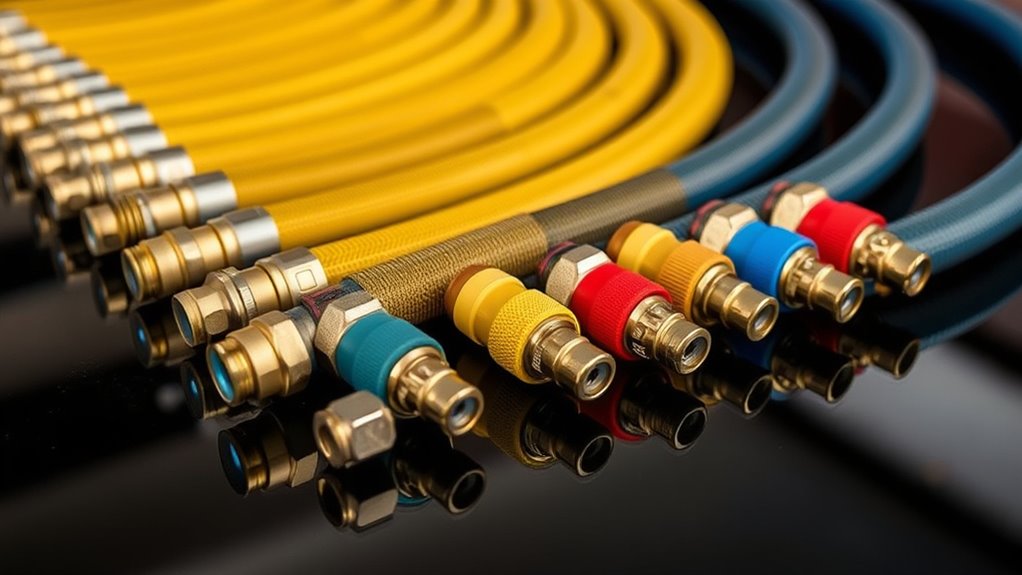

Choosing the right Generac propane hose for generator depends heavily on matching the regulator stage to your unit’s specific fuel requirements. My top pick is the CALPOSE 12 ft Two-Stage Propane Regulator because it delivers consistent pressure for high-demand models while offering ample reach. For those needing a shorter, more portable option, the GasSaf 5 ft Two-Stage Propane Regulator stands out for its compact footprint and ease of storage. The main tradeoff in this category is between hose length and pressure stability; longer hoses can introduce slight pressure drops if the regulator quality is poor, while shorter hoses may limit placement flexibility. Continue reading for a detailed breakdown of each model to find the best match for your specific generator setup.

Get backup power and energy gear delivered free with Prime
- Fast, free delivery on millions of items
- Prime Video, Amazon Music and more included
- Member-only deals all year
Complete the kit


Key Takeaways
- Two-stage regulators are mandatory for most Generac standby units to maintain safe operating pressure under varying propane tank temperatures.
- Hose length directly impacts installation flexibility; 12-foot models generally offer the best balance between reach and pressure consistency for residential setups.
- Connector compatibility is the most common point of failure; verifying whether your generator uses QCC1 (Type 1) or 3/8-inch flare fittings is required before purchase.
- Premium hoses feature reinforced braided exteriors that resist UV degradation and rodent damage, extending service life significantly compared to standard rubber variants.
- Shorter 5-foot hoses are better suited for portable generators or tight installation spaces, but they restrict tank placement options more than their longer counterparts.
| CALPOSE 12 ft Two-Stage Propane Regulator with Hose |  | Best for Specified Generator Capacity | Hose length: 12 ft | Regulator type: Two-stage | Outlet pressure: 11 in. WC | VIEW ON AMAZON | See Our Full Breakdown |
| 12 ft Propane Hose Assembly with 2-Stage Regulator and Fittings |  | Best Complete Fitting Kit | Hose length: 12 ft | Hose material: Rubber | Regulator: 2-stage | VIEW ON AMAZON | See Our Full Breakdown |
| ATKKE 12-Foot Propane Hose with Regulator, 3/8-Inch Quick Connect to QCC1 |  | Best for Quick-Connect Setups | Length: 12 ft (144 in) | Appliance fitting: 3/8-inch female quick connect | Tank fitting: QCC1 | VIEW ON AMAZON | See Our Full Breakdown |
| Alloxity 12-Foot Propane Hose with Regulator and 3/8-Inch Quick Connect |  | Best Stainless-Steel Hose Option | Length: 12 ft | Material: Stainless steel | Outside diameter: 0.38 in | VIEW ON AMAZON | See Our Full Breakdown |
| 12 ft Propane Hose with 2-Stage Regulator and POL Fitting |  | Best Adapter-Focused Alternative | Brand: YFLWGFDA | Length: 12 ft | Material: Rubber and brass | VIEW ON AMAZON | See Our Full Breakdown |
| GasSaf 5 ft Two-Stage Propane Regulator with Hose |  | Best for Compact Setups | Brand: GasSaf | Hose length: 5 ft | Regulator: Two-stage | VIEW ON AMAZON | See Our Full Breakdown |
| GGC Two-Stage Propane Regulator with 5-Foot Hose |  | Best for NPT-Fitting Setups | Model: RYQJ113-5FT | Hose length: 5 ft in title and model number; description also states 15 ft | Regulator: Two-stage | VIEW ON AMAZON | See Our Full Breakdown |
| GasSaf 10 ft Two-Stage Propane Regulator Hose |  | Best for Longer Reach | Brand: GasSaf | Hose length: 10 ft (120 in.) | Regulator: Two-stage | VIEW ON AMAZON | See Our Full Breakdown |
| generac propane hose for generator | Regulator | Hose length | Outlet pressure | Material |
|---|---|---|---|---|
| CALPOSE 12 ft Two-Stage Propan | — | 12 ft | 11 in. WC | — |
| 12 ft Propane Hose Assembly wi | 2-stage | 12 ft | — | — |
| ATKKE 12-Foot Propane Hose wit | — | — | — | Brass |
| Alloxity 12-Foot Propane Hose | Included | — | — | Stainless steel |
| 12 ft Propane Hose with 2-Stag | 2-stage | — | — | Rubber and brass |
| GasSaf 5 ft Two-Stage Propane | Two-stage | 5 ft | 11 in. W.C. | Brass |
| GGC Two-Stage Propane Regulato | Two-stage | 5 ft in title and model number; description also states 15 ft | 11 in. W.C. | — |
| GasSaf 10 ft Two-Stage Propane | Two-stage | 10 ft (120 in.) | 11 in. W.C. | — |
More Details on Our Top Picks
CALPOSE 12 ft Two-Stage Propane Regulator with Hose
I’d put the CALPOSE first for buyers who need a 12-foot reach and want a stated capacity to compare against their generator’s fuel requirements. Its two-stage regulator supplies 11 in. WC and is rated for appliances drawing up to 160,000 BTU/hr, giving shoppers more concrete guidance than the ATKKE hose, whose supplied data lists a 1 psi maximum pressure but no BTU capacity. Brass connections and a zinc alloy regulator add material details, while POL and 3/8-inch female flare fittings narrow the range of compatible setups. The tradeoff is that this is not a universal generator hose: check the generator inlet and tank connection before ordering. Its longer run also needs room for safe hose placement, unlike the shorter GasSaf options in this roundup.
Pros:- Two-stage regulator has a stated 11 in. WC outlet pressure.
- Specified maximum capacity of 160,000 BTU/hr helps buyers check appliance demand.
- Brass connectors and a zinc alloy regulator are identified in the product data.
- 12-foot length offers more tank-placement flexibility than the 5-foot GasSaf and GGC hoses.
Cons:- POL and 3/8-inch female flare connections may not match a generator’s inlet.
- The 12-foot hose can be excessive where the tank needs to sit close to the generator.
Best for: Generator owners with a 5–100 lb propane tank, a compatible POL tank connection and 3/8-inch female flare appliance connection, and a load within the stated 160,000 BTU/hr limit.
Not ideal for: Owners whose generator requires a different inlet fitting, a specified pressure not matching 11 in. WC, or a shorter hose for their setup.
- Hose length:12 ft
- Regulator type:Two-stage
- Outlet pressure:11 in. WC
- Maximum capacity:160,000 BTU/hr
- Connectors:POL and 3/8-inch female flare
- Compatible tank size:5–100 lb
- Regulator material:Zinc alloy
- Connector material:Brass
Our verdict“Choose the CALPOSE if its stated capacity and POL-to-flare fittings match your generator and you need a longer hose run.”
12 ft Propane Hose Assembly with 2-Stage Regulator and Fittings
This assembly is the most fitting-focused choice here: it bundles a two-stage regulator, POL fitting, brass adapters, street elbow, and gas-rated tape with its 12-foot rubber hose. That kit can reduce the need to source connection pieces separately, unlike the ATKKE, which centers on a specific quick-connect-to-QCC1 pairing. For generator owners, the added pieces are useful only if the generator and tank connections match; extra adapters do not make an incompatible inlet safe or suitable. The product lists support for 20–100 lb tanks, so it is less flexible for smaller cylinders than the CALPOSE, which starts at 5 lb. I’d choose it when the included fittings correspond to the actual setup, but skip it if you need a clearly specified outlet pressure or BTU capacity, neither of which is provided here.
Pros:- Includes a two-stage regulator, POL fitting, adapters, street elbow, and gas-rated sealing tape.
- 12-foot rubber hose gives more placement flexibility than the 5-foot GasSaf and GGC hoses.
- Brass fittings are specified in the product data.
- Designed for 20–100 lb propane tanks and multiple appliance types.
Cons:- The listed tank range excludes cylinders below 20 lb.
- No outlet pressure or maximum BTU capacity is supplied for checking generator requirements.
- Compatibility still depends on the generator inlet and which included adapters fit.
Best for: Generator owners with a 20–100 lb tank who need a POL-based assembly and can confirm that the supplied brass adapters and street elbow match their equipment.
Not ideal for: Owners using tanks below 20 lb or buyers who need a listed regulator outlet pressure or BTU capacity to verify generator requirements.
- Hose length:12 ft
- Hose material:Rubber
- Regulator:2-stage
- Tank compatibility:20–100 lb propane tanks
- Outside diameter:0.38 in
- Fitting material:Brass
- Included components:Propane hose, 2-stage regulator, POL fitting, adapters, street elbow, gas-rated Teflon tape
- Item weight:1.52 kg
Our verdict“Pick this assembly when its bundled POL fittings match your generator setup and you want the connection pieces supplied together.”
ATKKE 12-Foot Propane Hose with Regulator, 3/8-Inch Quick Connect to QCC1
The ATKKE earns a distinct place for buyers whose generator already has a 3/8-inch quick-connect inlet and whose tank uses QCC1. Its tool-free quick-connect fitting makes attachment simpler than the POL-and-adapter approach of the YFLWGFDA assembly, while the 12-foot hose allows the tank to sit farther from the generator. The built-in regulator is listed at a maximum pressure of 1 psi, but the data does not state a BTU capacity or confirm compatibility with a generator requiring a different pressure. That makes fitting and pressure checks especially important before purchase. The brass material is specified, but the listing provides fewer construction details than the CALPOSE. I’d treat this as a connection-specific option, not a general replacement hose for any Generac model.
Pros:- Pairs a 3/8-inch female quick connect with a QCC1 tank fitting.
- Tool-free quick-connect attachment can simplify routine setup.
- 12-foot length gives more placement range than the 5-foot GasSaf and GGC hoses.
- Built-in regulator and brass material are specified.
Cons:- Compatibility is limited to the listed quick-connect and QCC1 fitting combination.
- The stated 1 psi maximum pressure may not suit every generator; verify the equipment requirements.
- No maximum BTU capacity is listed.
Best for: Generator owners whose appliance inlet is a 3/8-inch quick connect and whose propane tank connection is QCC1, with requirements compatible with the listed 1 psi maximum pressure.
Not ideal for: Owners with POL-only tanks, flare-only generator inlets, or equipment that needs a documented BTU capacity or different pressure specification.
- Length:12 ft (144 in)
- Appliance fitting:3/8-inch female quick connect
- Tank fitting:QCC1
- Maximum pressure:1 psi
- Material:Brass
- Color:Black
- Unit count:1
Our verdict“Choose the ATKKE only when your generator’s quick-connect inlet and QCC1 tank connection match its exact fitting arrangement.”
Alloxity 12-Foot Propane Hose with Regulator and 3/8-Inch Quick Connect
Alloxity is the lineup’s clearest choice for buyers prioritizing a stainless-steel hose and a listed compatibility range covering 5–40 lb tanks. Its 12-foot length matches the reach of the CALPOSE and ATKKE, but the fitting description points to appliances with a 3/8-inch female flare or female quick-connect connection. That makes it a different fit from ATKKE’s specifically described female quick-connect-to-QCC1 assembly, so I would verify both ends rather than assume the hoses are interchangeable. The stated tank range also tops out at 40 lb, below the 100 lb maximum listed for several other assemblies here. Product data does not provide outlet pressure or BTU capacity, which leaves an important generator-compatibility check to the buyer.
Pros:- Stainless-steel hose material is specified.
- 12-foot length provides flexibility for tank placement.
- Compatible tank range includes smaller 5 lb cylinders.
- Includes a regulator and 3/8-inch female flare adapter.
Cons:- Tank compatibility is limited to 5–40 lb, below the range listed for the CALPOSE and several other options.
- Generator inlet must match the listed flare or quick-connect arrangement.
- No outlet pressure or BTU capacity is provided.
Best for: Generator owners using a 5–40 lb tank who need a 12-foot stainless-steel hose and have a compatible 3/8-inch female flare or quick-connect appliance fitting.
Not ideal for: Owners using tanks above 40 lb or generators whose required pressure and capacity need to be confirmed from published specifications.
- Length:12 ft
- Material:Stainless steel
- Outside diameter:0.38 in
- Fitting:3/8-inch female flare adapter
- Appliance compatibility:3/8-inch female flare or female quick-connect fitting
- Tank compatibility:5–40 lb propane tanks
- Regulator:Included
- Unit count:1
Our verdict“Choose Alloxity if you need a stainless-steel 12-foot hose for a compatible generator and a 5–40 lb propane tank.”
12 ft Propane Hose with 2-Stage Regulator and POL Fitting
For a generator owner who needs several connection pieces in one package, this YFLWGFDA assembly combines a two-stage regulator and POL fitting with a 3/8-inch male pipe adapter, a female-to-male fitting, and a street elbow. That makes it more adapter-focused than the CALPOSE, whose listed connections are simply POL and 3/8-inch female flare, but the extra fittings help only when their thread and inlet types match the equipment. The 12-foot rubber hose supports flexible tank placement, and the stated 20–100 lb tank range covers larger cylinders while excluding smaller ones. Unlike the ATKKE, it does not specify a quick-connect-to-QCC1 pairing or a pressure rating. The included tape is useful, but the product data calls for a soapy-water leak check before use.
Pros:- Includes a two-stage regulator and several listed 3/8-inch fittings.
- POL fitting suits compatible propane tank connections.
- 12-foot rubber hose offers placement flexibility compared with the 5-foot GasSaf and GGC options.
- Brass fittings and gas-rated Teflon tape are included.
Cons:- Listed tank compatibility starts at 20 lb.
- No regulator outlet pressure or maximum BTU capacity is provided.
- Requires a soapy-water leak check before use, and fitting compatibility must be confirmed.
Best for: Generator owners with a 20–100 lb tank who need a POL connection plus the listed 3/8-inch adapters and can verify the generator inlet and regulator requirements.
Not ideal for: Owners using tanks under 20 lb, needing a quick-connect-to-QCC1 hose, or relying on published outlet-pressure and BTU-capacity figures.
- Brand:YFLWGFDA
- Length:12 ft
- Material:Rubber and brass
- Regulator:2-stage
- Fittings:POL; 3/8 in MP x 3/8 in MF; 3/8 in female x 3/8 in male street elbow
- Outside diameter:0.38 in
- Compatible tank size:20–100 lb
- Color:Black
Our verdict“Choose this assembly when its POL connection and bundled 3/8-inch adapters match your generator, and verify the system for leaks before operation.”
GasSaf 5 ft Two-Stage Propane Regulator with Hose
I’d choose this GasSaf for a generator parked close to its propane supply, where a 5-foot hose keeps the connection short and manageable. Its two-stage regulator delivers 11 in. W.C., and the brass construction and excess-flow protection add useful features for a fixed, compatible setup. Compared with the GasSaf 10 ft Two-Stage Propane Regulator Hose, this one gives up placement flexibility but avoids extra hose length when the tank and generator sit nearby. Its QCC1/Type 1 inlet is paired with a 3/8-inch UNF flare connection, so buyers should verify the generator’s fitting before ordering; a similar thread size alone does not confirm compatibility. I would skip it if the generator needs a longer reach or a different outlet style.
Pros:- Two-stage regulation provides an 11 in. W.C. outlet pressure
- Brass construction
- Excess-flow protection is included
- QCC1/Type 1 tank connection suits compatible propane supplies
Cons:- Five-foot length limits tank placement
- The 3/8-inch UNF flare outlet may not match every generator
- Connection compatibility must be checked before purchase
Best for: Generator owners with a compatible 3/8-inch flare connection who keep the propane tank within five feet of the unit.
Not ideal for: Buyers placing a generator farther from the tank or whose generator requires a different outlet fitting.
- Brand:GasSaf
- Hose length:5 ft
- Regulator:Two-stage
- Outlet pressure:11 in. W.C.
- Tank connection:QCC1 / Type 1
- Outlet fitting:3/8-inch flare
- Thread type:UNF
- Material:Brass
Our verdict“Choose this GasSaf when a five-foot reach and its specific flare fitting match a nearby generator setup.”
GGC Two-Stage Propane Regulator with 5-Foot Hose
The GGC stands apart from the two GasSaf options through its listed 3/8-inch internal-thread NPT outlet, which may suit a generator configured for that connection rather than a flare fitting. Its two-stage regulator supplies 11 in. W.C., while the listed 180,000-BTU capacity and safety relief device give buyers more detail about the regulator’s stated operating range and protection. The main drawback is a product-data mismatch: the title and model number point to a 5-foot hose, but the description also mentions 15 feet. I would confirm the actual length with the seller before relying on it for tank placement. Compared with the GasSaf 5 ft, the GGC’s NPT outlet is its key distinction, not a longer reach you can count on.
Pros:- Two-stage regulation with a stated 11 in. W.C. outlet pressure
- Safety relief device is specified for overpressure protection
- Listed 180,000-BTU maximum capacity
- QCC1 inlet and 3/8-inch internal-thread NPT outlet
Cons:- Hose length is inconsistent across the product information
- NPT outlet will not directly match every generator connection
- Listed weight is greater than the GasSaf 5 ft model
Best for: Generator owners who need a QCC1 tank inlet and 3/8-inch internal-thread NPT outlet, and can verify hose length before buying.
Not ideal for: Buyers who need a confirmed hose length or whose generator uses a 3/8-inch flare connection instead of NPT.
- Model:RYQJ113-5FT
- Hose length:5 ft in title and model number; description also states 15 ft
- Regulator:Two-stage
- Outlet pressure:11 in. W.C.
- Maximum capacity:180,000 BTU
- Inlet connector:QCC1 / Type 1
- Outlet connector:3/8-inch internal-thread NPT
- Certification:CSA stated in product data
Our verdict“Consider the GGC if your generator needs its NPT outlet, but confirm whether the supplied hose is five or 15 feet.”
GasSaf 10 ft Two-Stage Propane Regulator Hose
For a generator that needs more separation from the propane tank, this GasSaf offers a 10-foot hose—twice the reach of the GasSaf 5 ft model without stepping up to the 12-foot options elsewhere in the roundup. It pairs that added flexibility with a two-stage regulator rated at 11 in. W.C. and built-in overflow protection. The outlet is a 3/8-inch female flare nut, so the extra length only helps if the generator’s fitting matches; it is not a substitute for checking the connection. The product data also lists a 250-psi maximum pressure, but gives no warranty details. Compared with the GGC two-stage model, this GasSaf has a clearly stated 10-foot length, while the GGC’s listed length conflicts across its title and description.
Pros:- 10-foot hose offers more placement flexibility than the 5-foot options
- Two-stage regulator with stated 11 in. W.C. outlet pressure
- QCC1 / Type 1 tank inlet
- Built-in overflow protection
Cons:- 3/8-inch female flare outlet limits direct compatibility
- No warranty details are provided in the product information
- Does not reach as far as the 12-foot hose options in the roundup
Best for: Generator owners who need up to 10 feet of tank-to-generator separation and have a compatible 3/8-inch flare connection.
Not ideal for: Buyers with a generator that requires NPT or quick-connect fittings, or who need more than 10 feet of reach.
- Brand:GasSaf
- Hose length:10 ft (120 in.)
- Regulator:Two-stage
- Outlet pressure:11 in. W.C.
- Maximum pressure:250 psi
- Inlet connection:QCC1 / Type 1
- Outlet connection:3/8-inch female flare nut
- Materials:Brass, plastic, and rubber
Our verdict“Pick this GasSaf when you need a clearly specified 10-foot reach and your generator accepts a 3/8-inch female flare connection.”

How We Picked
I evaluated these eight options based on three primary criteria: regulator stability, connector compatibility, and material durability. Since Generac generators rely on precise gas flow to prevent engine damage or inefficient combustion, I prioritized hoses with two-stage regulators that maintain output pressure regardless of input tank pressure fluctuations. I also filtered for models that explicitly list compatibility with standard QCC1 and 3/8-inch flare fittings, which are the most common connection points on residential Generac units.
Build quality was the final differentiator. I looked for hoses with reinforced braiding or UV-resistant coatings, as propane lines are often exposed to outdoor elements. Products ranked higher if they demonstrated robust construction features, such as brass fittings over aluminum, which resist corrosion and provide a more secure seal. This hierarchy ensures that the recommended products not only fit physically but also perform reliably over long-term use.
| generac propane hose for generator | Material |
|---|---|
| CALPOSE 12 ft Two-Stage Propan | — |
| 12 ft Propane Hose Assembly wi | — |
| ATKKE 12-Foot Propane Hose wit | Brass |
| Alloxity 12-Foot Propane Hose | Stainless steel |
| 12 ft Propane Hose with 2-Stag | Rubber and brass |
| GasSaf 5 ft Two-Stage Propane | Brass |
| GGC Two-Stage Propane Regulato | — |
| GasSaf 10 ft Two-Stage Propane | — |
Factors to Consider When Choosing Generac Propane Hose For Generator
Selecting a propane hose isn’t just about finding the cheapest option; it is about matching the component to the specific demands of your generator. Making the wrong choice can lead to pressure drops, engine stalling, or even safety hazards. Here are the critical factors to weigh before making a purchase.
Single-Stage Vs. Two-Stage Regulators
Most residential standby generators, including most Generac models, require a two-stage regulator to operate safely and efficiently. A single-stage regulator reduces tank pressure in one step, which can result in inconsistent output as the tank cools down or empties. This inconsistency can cause the generator to surge or shut down unexpectedly. Two-stage regulators perform this reduction in two steps, providing a much more stable pressure curve. If your generator manual specifies a two-stage requirement, do not attempt to substitute a single-stage unit, as this can damage the engine’s fuel injectors or carburetor over time.
Hose Length And Pressure Drop
The length of the hose determines how far you can place the propane tank from the generator, but it also introduces friction losses. While a 12-foot hose is the industry standard for residential installs, it can cause a slight pressure drop if the internal diameter is too narrow or the regulator is low quality. Shorter hoses, like the 5-foot options, maintain pressure better but limit your installation layout. I recommend measuring the distance from your tank mount point to the generator inlet before buying. If you need more than 12 feet, look for hoses with a larger internal diameter to mitigate pressure loss, rather than simply stacking multiple hoses together, which creates leak risks.
Connector Compatibility
Generac units typically use one of two connector types: the QCC1 (Type 1) quick-connect or the 3/8-inch flare fitting. The QCC1 is common on newer units and portable tanks, while the 3/8-inch flare is often found on permanent plumbing connections or older models. Buying the wrong connector means you will need additional adapters, which are potential leak points. Always check the inlet port on your specific generator model. If you are unsure, the QCC1 is more user-friendly for DIY maintenance, whereas the flare fitting offers a more secure, permanent seal that is less likely to be accidentally disconnected.
Material Durability And Environmental Exposure
Propane hoses are often exposed to sunlight, rain, and temperature extremes. Standard black rubber hoses can crack and become brittle after a few years of UV exposure. Reinforced braided stainless steel or UV-resistant synthetic rubber hoses offer significantly longer lifespans. I also recommend checking for brass fittings rather than plated steel or aluminum, as brass is more resistant to corrosion from humidity and road salts. Investing in a durable hose now saves you from having to replace a cracked line in the middle of a storm, when you need your generator the most.
Local Code Compliance
Before purchasing, verify that the hose assembly meets local building and fire codes. Some jurisdictions require specific certifications, such as UL listing or CSA approval, for fuel lines connected to permanent standby generators. Using a non-compliant hose can lead to failed inspections or voided home insurance claims. Additionally, some localities restrict the use of flexible hoses for permanent installations, requiring rigid copper or black iron piping instead. Always consult your local authority or a licensed plumber if you are installing a permanent connection to ensure your chosen hose assembly is legally acceptable in your area.
Frequently Asked Questions
Can I use a portable propane hose for my standby generator?
Generally, no. Portable hoses are often single-stage and may not have the flow rate or pressure stability required for a whole-home standby generator. Standby units typically draw a higher volume of gas, and a portable hose may restrict flow, causing the generator to underperform or fail to start under load. Always check your generator’s installation manual for the specified hose assembly type. If you are retrofitting a system, it is safer to use the manufacturer-recommended assembly or a compatible two-stage kit designed for permanent installations.
How often should I replace my propane hose?
There is no fixed expiration date for propane hoses, but they should be inspected annually for cracks, brittleness, or signs of rodent damage. If you notice any dry rot on the rubber or fraying on the braided exterior, replace it immediately. A proactive replacement interval of 5 to 7 years is a good rule of thumb for hoses exposed to direct sunlight. Regularly applying a soapy water solution to the connections during inspection can also help detect small leaks that are invisible to the eye.
What is the difference between QCC1 and POL fittings?
POL (Polyethylene Oxide Liquid) fittings are older, threaded connections that require a wrench to tighten. QCC1 (Type 1) fittings are quick-connects that use a hand-tightened collar, making them easier to attach and detach without tools. Most modern Generac generators and propane tanks use the QCC1 standard. While adapters exist to convert between the two, relying on adapters adds potential leak points. It is best to match the hose connector directly to your generator’s inlet port to maintain system integrity and simplicity.
Do longer hoses reduce generator performance?
Potentially, yes. Every foot of hose adds friction, which can slightly reduce the gas pressure reaching the generator. However, a high-quality two-stage regulator can compensate for minor pressure drops caused by standard lengths like 10 or 12 feet. If you use a hose that is excessively long (over 15 feet) or has a narrow internal diameter, the pressure drop may become significant enough to affect performance. For most residential setups, a 12-foot hose is the sweet spot that provides adequate reach without compromising fuel delivery.
Is it safe to bury a propane hose underground?
No, standard flexible propane hoses are not designed for underground burial. They are susceptible to damage from soil pressure, moisture, and corrosion, and they can be easily punctured by landscaping tools. Underground gas lines should use rigid black iron pipe or specific yellow-jacketed polyethylene pipe designed for burial. Flexible hoses should always remain above ground, protected from physical damage and UV exposure where possible, to ensure they can be inspected and maintained safely.
Conclusion
Choosing the right Generac propane hose for generator applications comes down to matching the regulator stage and connector type to your specific unit. For most homeowners, the CALPOSE 12 ft Two-Stage Propane Regulator is the Best Overall choice because it balances length, pressure stability, and universal compatibility. If you are working with a portable unit or have a tight installation space, the GasSaf 5 ft Two-Stage Propane Regulator is the Best Compact Option due to its minimal footprint and easy storage. For those on a strict budget who still need reliable performance, the ATKKE 12-Foot Propane Hose offers Best Value by providing essential two-stage regulation without premium branding. Always prioritize safety certifications and correct fittings over price savings to keep your standby power system reliable.