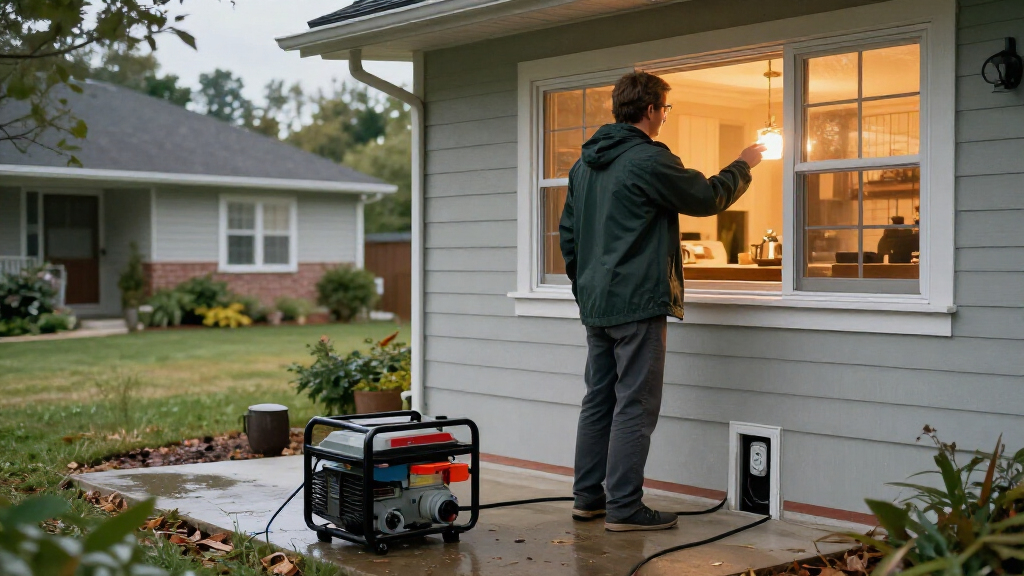
For home backup, I’d choose the Westinghouse iGen12000TFc as the strongest all-around fit for buyers who need substantial inverter output and tri-fuel flexibility. The Westinghouse iGen8200TFc is a more manageable option for essential circuits, while the smaller Generac GP3300i suits limited loads and occasional outages. The main tradeoff is between output, runtime and fuel choice on one side, and portability, noise and ease of storage on the other. Some large generators in this lineup are conventional models rather than inverter generators, so I distinguish their capabilities rather than treating them as direct equivalents. Read on for the full breakdown and guidance on matching generator capacity to your backup plan.

Get backup power and energy gear delivered free with Prime
- Fast, free delivery on millions of items
- Prime Video, Amazon Music and more included
- Member-only deals all year
Complete the kit


Key Takeaways
- The Westinghouse iGen12000TFc leads for broad home coverage among the inverter options listed, pairing high output with three fuel choices; its size and fuel demands make it a bigger commitment than the smaller picks.
- The iGen8200TFc offers a middle ground for buyers seeking inverter operation and tri-fuel flexibility without stepping up to the iGen12000TFc’s larger output class.
- Several high-wattage options are not inverter generators. The DuroMax XP13000EH and Westinghouse WGen models may suit buyers prioritizing capacity, but they should not be ranked as equivalent choices for sensitive electronics or inverter-specific operation.
- The two Oxseryn 4400-watt entries are close alternatives rather than distinct backup strategies; compare their exact specifications and included features before treating one as a clear upgrade.
- Small units solve a narrower problem. The SIOKIUU 2500W and Generac GP3300i are easier to fit into a limited-load plan, but they cannot substitute for a generator sized to run multiple major household loads.
| Oxseryn 4400-Watt Gas-Powered Inverter Generator |  | Best Value for Basic Home Backup | Peak output: 4,400 watts | Running output: 3,400 watts | Fuel: Gasoline | VIEW LATEST PRICE | See Our Full Breakdown |
| Oxseryn 4400W Gas-Powered Inverter Generator |  | Best for Simple, Portable Backup | Peak output: 4,400 watts | Running output: 3,400 watts | Engine: 208cc 4-stroke | VIEW LATEST PRICE | See Our Full Breakdown |
| PowerSmart 4300-Watt Portable Inverter Generator |  | Best for Sensitive Electronics | Starting output: 4,300 watts | Running output: 3,500 watts | THD: Less than 3% | VIEW LATEST PRICE | See Our Full Breakdown |
| Generac GP3300i 3,300-Watt Gas-Powered Portable Inverter Generator |  | Best for Safety-Minded Beginners | Starting output: 3,300 watts | Running output: 2,500 watts | Fuel tank: 1.06 gallons | VIEW LATEST PRICE | See Our Full Breakdown |
| Westinghouse iGen12000TFc Tri-Fuel Portable Inverter Generator with Remote Start |  | Best Premium Whole-Home Backup | Gasoline output: 12,000 peak watts; 9,000 running watts | Propane output: 11,000 peak watts; 8,100 running watts | Natural gas output: 9,800 peak watts; 7,200 running watts | VIEW LATEST PRICE | See Our Full Breakdown |
| DuroMax XP13000EH 13,000-Watt Dual-Fuel Portable Generator |  | Best for High-Load Backup | Fuel: Gasoline or propane | Starting wattage: 13,000 watts | Running wattage: 10,500 watts | VIEW LATEST PRICE | See Our Full Breakdown |
| Westinghouse WGen11500TFc Tri-Fuel Portable Generator with Remote Electric Start and CO Sensor |  | Best for Fuel Flexibility | Fuel: Gasoline, propane, or natural gas | Peak output: 14,500 watts | Running output: 11,500 watts | VIEW LATEST PRICE | See Our Full Breakdown |
| Westinghouse WGen9500DF Dual Fuel Portable Generator, 12,500 Peak Watts |  | Best Dual-Fuel Value | Fuel: Gasoline or propane | Starting wattage: 12,500 watts on gasoline; 11,200 watts on propane | Running wattage: 9,500 watts on gasoline; 8,500 watts on propane | VIEW LATEST PRICE | See Our Full Breakdown |
| Westinghouse iGen8200TFc Tri-Fuel Portable Inverter Generator, 8,200-Watt, Remote Electric Start |  | Best Inverter for Flexible Home Backup | Fuel: Gasoline, propane, or natural gas | Gasoline output: 8,200 watts peak; 6,600 watts running | Propane output: 7,380 watts peak; 5,940 watts running | VIEW LATEST PRICE | See Our Full Breakdown |
| SIOKIUU 2500W Portable Inverter Generator with CO Sensor |  | Best Compact Backup Option | Fuel: Gasoline | Peak wattage: 2,500 watts | Running wattage: 1,900 watts | VIEW LATEST PRICE | See Our Full Breakdown |
| Westinghouse WGen10500DFc Dual-Fuel Portable Generator with Remote Electric Start and CO Sensor |  | Best for High-Load Dual-Fuel Backup | Fuel type: Gasoline and propane (LPG) | Starting wattage: 13,500 watts | Running wattage: 10,500 watts | VIEW LATEST PRICE | See Our Full Breakdown |
| inverter generators for home backup | Runtime | Weight | Starting system | Engine |
|---|---|---|---|---|
| Oxseryn 4400-Watt Gas-Powered | Up to 14 hours at 25% load | 57 pounds | Electronic ignition | — |
| Oxseryn 4400W Gas-Powered Inve | Up to 14 hours at 25% load with ECO mode | 56 pounds | — | 208cc 4-stroke |
| PowerSmart 4300-Watt Portable | Up to 12 hours at 25% load | 68 pounds | — | — |
| Generac GP3300i 3,300-Watt Gas | Up to 7 hours at 25% load; up to 4.5 hours at 50% load | 59.5 pounds | — | — |
| Westinghouse iGen12000TFc Tri- | — | — | Electric start and remote start | — |
| DuroMax XP13000EH 13,000-Watt | — | 234 pounds | Electric start | 500cc, 4-stroke OHV |
| Westinghouse WGen11500TFc Tri- | Up to 19 hours at 25% load | — | Push-button electric start and remote start | 550cc, 4-stroke OHV |
| Westinghouse WGen9500DF Dual F | Up to 12 hours | — | Remote, electric, and recoil start | 457cc, 4-stroke OHV |
| Westinghouse iGen8200TFc Tri-F | Up to 17 hours at 25% load | — | — | 298cc, 4-stroke OHV |
| SIOKIUU 2500W Portable Inverte | Up to 17 hours at 25% load; 8.6 hours at 50% load | 39.46 pounds | Recoil start | 80cc, 4-stroke |
| Westinghouse WGen10500DFc Dual | Up to 19 hours at 25% load | 230 pounds | Push-button electric start, remote key fob, and recoil backup | 500 cc, 4-stroke OHV |
More Details on Our Top Picks
Oxseryn 4400-Watt Gas-Powered Inverter Generator
The Oxseryn OXOG10 is a practical fit for households that want more running capacity than a compact inverter generator without moving into a heavy, high-output machine. Its 3,400 running watts can cover a selection of essentials, while the 30A RV outlet adds flexibility for compatible connections. The 2-gallon tank is rated for up to 14 hours at 25% load, a useful light-load runtime, though heavier demand will shorten it. Compared with the PowerSmart DB5041, it is lighter and lists a longer runtime, while PowerSmart specifies less than 3% THD and a digital display. The Oxseryn’s open frame and 57-pound weight make it less protected and less convenient to move than a fully enclosed design. I’d choose it for straightforward, gasoline-powered backup, not whole-home coverage.
Pros:- 3,400 running watts can support several selected household loads.
- 30A RV outlet joins two 120V AC outlets and a 12V DC outlet.
- Up to 14 hours at 25% load from a 2-gallon tank.
- ECO mode, overload protection, and low-oil shutdown add useful operating safeguards.
Cons:- Open-frame construction provides less enclosure protection than a fully enclosed generator.
- At 57 pounds, it may be awkward to lift or move alone.
- Gasoline-only, 120V output limits fuel options and backup configurations.
Best for: Households seeking a portable gasoline generator for selected essentials, with a 30A RV outlet for compatible backup connections.
Not ideal for: Buyers who need 240V output, fuel flexibility, or a protected enclosed design; this model is gasoline-only, 120V, and open-frame.
- Peak output:4,400 watts
- Running output:3,400 watts
- Fuel:Gasoline
- Tank capacity:2 gallons
- Runtime:Up to 14 hours at 25% load
- Outlets:2 × 120V AC, 1 × 30A RV, 1 × 12V DC
- Weight:57 pounds
- Starting system:Electronic ignition
- Warranty:1 year
Our verdict“Choose the OXOG10 for portable, modest-load backup with a long stated light-load runtime, but skip it if you need 240V or an enclosed build.”
Oxseryn 4400W Gas-Powered Inverter Generator
The Oxseryn EDOG10 offers the same 4,400 peak and 3,400 running watts as the OXOG10, but its listed 56-pound weight and fuel gauge give it a small usability edge for buyers who expect to move it or check fuel at a glance. Its four outlets cover basic household and RV connections, and ECO mode is paired with a stated runtime of up to 14 hours at 25% load. That figure applies to light demand, so it should not be read as an all-day estimate while powering several appliances. Compared with the Generac GP3300i, the EDOG10 offers more running watts and a longer stated light-load runtime; Generac counters with COsense monitoring and a three-year residential warranty. The EDOG10’s open metal frame and noise rating under 72 dBA at 23 feet make it a less sheltered, potentially noticeable choice near living areas.
Pros:- 3,400 running watts provide more capacity than the Generac GP3300i.
- Fuel gauge makes it easier to monitor the 2-gallon tank.
- Up to 14 hours at 25% load with ECO mode.
- Includes AC, 12V DC, and RV outlet options.
Cons:- The 2-gallon tank may need refilling during sustained, higher-load backup.
- Noise is rated under 72 dBA at 23 feet, which may be noticeable nearby.
- Open-frame construction offers less enclosure protection than enclosed inverter designs.
Best for: RV owners and households who want a relatively light open-frame generator for a few essential loads and value a built-in fuel gauge.
Not ideal for: Buyers prioritizing carbon-monoxide monitoring, a longer residential warranty, or quieter operation near neighbors.
- Peak output:4,400 watts
- Running output:3,400 watts
- Engine:208cc 4-stroke
- Fuel tank:2 gallons
- Runtime:Up to 14 hours at 25% load with ECO mode
- Noise level:Under 72 dBA at 23 feet
- Outlets:2 × 120V AC, 1 × 12V DC, 1 × RV
- Weight:56 pounds
- Warranty:1 year
Our verdict“Pick the EDOG10 for portable, light-to-moderate backup with a fuel gauge, but choose another option if CO monitoring or a longer warranty matters more.”
PowerSmart 4300-Watt Portable Inverter Generator
The PowerSmart DB5041 stands out for buyers who want a clear specification for electronics-friendly output: its less than 3% THD rating supports use with sensitive devices, while the digital display gives a more direct view of operating information than the Oxseryn models list. It delivers 3,500 running watts, slightly more than either Oxseryn 4,400-watt model, but its stated light-load runtime is 12 hours rather than 14. The L5-30R twist-lock outlet and 20A duplex give it useful connection options for selected backup loads. Compared with the Generac GP3300i, PowerSmart offers more running capacity, while Generac adds COsense and a longer residential warranty. At 68 pounds, this is the heaviest of the smaller gasoline options here, so moving it around is a real tradeoff.
Pros:- Less than 3% THD is specified for sensitive electronics.
- 3,500 running watts exceed the two Oxseryn models’ listed running output.
- Digital display and Eco mode aid monitoring and fuel-conscious operation.
- L5-30R twist-lock, 20A duplex, and 12V DC connections offer varied hookup options.
Cons:- At 68 pounds, it is heavier than the Oxseryn 4400-watt options.
- Its stated runtime is up to 12 hours at 25% load, shorter than the Oxseryn models’ 14-hour figure.
- The listed outputs are 120V only, limiting use with 240V household equipment.
Best for: Homeowners who need 120V backup for selected appliances and electronics and want a stated low-THD rating plus a digital display.
Not ideal for: Buyers who need a lightweight unit, 240V output, or built-in carbon-monoxide shutdown.
- Starting output:4,300 watts
- Running output:3,500 watts
- THD:Less than 3%
- Fuel tank:1.9 gallons
- Runtime:Up to 12 hours at 25% load
- Outlets:120V 30A L5-30R, 120V 20A duplex, 12V 8A DC
- Weight:68 pounds
- Features:Eco mode, digital display, low-oil shutdown, parallel ready
- Warranty:2-year limited manufacturer warranty
Our verdict“Choose the DB5041 if clean specified output and display-based monitoring matter more than low weight or the longest light-load runtime.”
Generac GP3300i 3,300-Watt Gas-Powered Portable Inverter Generator
The Generac GP3300i is the most approachable pick here for buyers who value a named carbon-monoxide safety feature over maximum output. Its COsense monitoring can shut the generator down when dangerous carbon monoxide levels are detected; it does not make indoor or enclosed operation safe, so outdoor placement remains necessary. With 2,500 running watts, it is better suited to a limited set of essentials than the PowerSmart DB5041, which supplies 3,500 running watts. Generac’s less-than-3% THD rating supports sensitive electronics, and the 3-year residential limited warranty is longer than the one-year terms listed for both Oxseryn models. The tradeoff is capacity and endurance: its 1.06-gallon tank is rated for up to seven hours at 25% load, and it has a recoil start rather than electric or remote starting.
Pros:- COsense monitoring can shut the unit down when dangerous carbon monoxide levels are detected.
- Less than 3% THD is specified for sensitive electronics.
- Three-year residential limited warranty is longer than the Oxseryn models’ one-year terms.
- Economy Mode adjusts engine speed to reduce fuel use and noise.
Cons:- 2,500 running watts are lower than the PowerSmart DB5041 and both Oxseryn models.
- The 1.06-gallon tank is rated for up to seven hours at 25% load.
- Recoil-only starting and no included wheel kit can make setup and movement less convenient.
Best for: First-time generator buyers who need modest 120V backup, want CO monitoring, and value a three-year residential limited warranty.
Not ideal for: Households trying to run several high-demand appliances or seeking long refueling intervals; its running output and 1.06-gallon tank are modest.
- Starting output:3,300 watts
- Running output:2,500 watts
- Fuel tank:1.06 gallons
- Runtime:Up to 7 hours at 25% load; up to 4.5 hours at 50% load
- THD:Less than 3%
- Outlets:Two 120V 20A household, one 120V 30A L5-30R, two USB-A
- Starting method:Recoil pull start
- Weight:59.5 pounds
- Warranty:3-year residential limited warranty
Our verdict“Choose the GP3300i for modest backup where CO monitoring and warranty length lead your priorities, not for high-load or extended-duration use.”
Westinghouse iGen12000TFc Tri-Fuel Portable Inverter Generator with Remote Start
The Westinghouse iGen12000TFc is the clear capacity leader in this group, with 9,000 running watts on gasoline and 120/240V output for a broader home-backup setup than the 120V Oxseryn, PowerSmart, and Generac models. Its tri-fuel design lets owners use gasoline, propane, or natural gas, which can help match backup plans to available fuel. Remote and electric start reduce the effort of getting a large unit running, while transfer-switch-ready outlets support a more integrated connection. Compared with the smaller Oxseryn OXOG10, it can support substantially more load, but it is a heavy-duty machine that needs its wheels and foldable handle for movement. The 19-hour figure applies at 25% load on gasoline; the 7.9-gallon tank and large footprint make this a poor fit for buyers seeking compact, occasional-use backup.
Pros:- 9,000 running watts on gasoline provide far more capacity than the smaller 120V models in this batch.
- Tri-fuel operation offers gasoline, propane, and natural gas choices.
- 120/240V output and transfer-switch-ready outlets support broader home backup setups.
- Remote and electric start, CO sensor, and up to 19 hours at 25% load on gasoline.
Cons:- The 7.9-gallon gasoline tank and heavy-duty form factor require substantial storage and handling space.
- Its size and weight make it less suited to frequent solo transport than the Oxseryn or Generac models.
- The stated 19-hour runtime is at 25% load; higher demand reduces run time.
Best for: Homeowners planning transfer-switch-connected backup for multiple household circuits who want 120/240V output and gasoline, propane, or natural gas flexibility.
Not ideal for: Apartment dwellers, buyers with limited storage or no way to move a heavy-duty generator, and households needing only a few low-wattage essentials.
- Gasoline output:12,000 peak watts; 9,000 running watts
- Propane output:11,000 peak watts; 8,100 running watts
- Natural gas output:9,800 peak watts; 7,200 running watts
- Fuel types:Gasoline, propane, natural gas
- Voltage:120/240 volts
- THD:≤3%
- Tank and runtime:7.9 gallons; up to 19 hours at 25% load
- Starting system:Electric start and remote start
- Outlets:14-50R 50A, L14-30R 30A, GFCI 120V 5-20R 20A duplex
Our verdict“Choose the iGen12000TFc when you need substantial 120/240V home backup and flexible fuel options, but skip it for compact or low-load needs.”
DuroMax XP13000EH 13,000-Watt Dual-Fuel Portable Generator
The DuroMax XP13000EH is the high-output choice here for households that want to run several major loads at once. Its 10,500 running watts and 50-amp transfer-switch-ready outlet give it more capacity than the inverter-based Westinghouse iGen8200TFc, making it better suited to a larger home backup plan. Gasoline-or-propane operation also gives owners a fuel alternative, though it lacks the natural-gas option found on the Westinghouse WGen11500TFc. The tradeoff is practical: at 234 pounds, it is not an easy unit to reposition, and the supplied runtime figure is only three hours, so buyers should verify fuel planning against their expected load. It also is not described as an inverter generator, so I would not choose it over an inverter model when low-THD power for sensitive electronics is the priority.
Pros:- 10,500 running watts support a high household load.
- Gasoline and propane fuel options provide flexibility.
- 50-amp transfer-switch-ready outlet supports home connection.
- Electric start, CO sensor, and low-oil shutdown add convenience and safeguards.
Cons:- At 234 pounds, it is difficult to move despite its wheels and handle.
- The listed three-hour runtime is short for extended outage use.
- It is not specified as an inverter generator or with a THD rating.
Best for: Homeowners with a transfer-switch setup who need substantial output for multiple household circuits and can keep the generator in a fixed, accessible location.
Not ideal for: Buyers prioritizing inverter output for sensitive electronics, natural-gas operation, or a lightweight generator they can move without help.
- Fuel:Gasoline or propane
- Starting wattage:13,000 watts
- Running wattage:10,500 watts
- Engine:500cc, 4-stroke OHV
- Voltage:240 volts
- Starting system:Electric start
- Key outlet:120/240V, 50-amp transfer-switch-ready outlet
- Weight:234 pounds
Our verdict“Choose the XP13000EH for high household output and dual-fuel flexibility if portability and inverter-grade power are secondary.”
Westinghouse WGen11500TFc Tri-Fuel Portable Generator with Remote Electric Start and CO Sensor
For a home backup plan built around multiple fuel sources, the Westinghouse WGen11500TFc offers the broadest choice in this group: gasoline, propane, or natural gas. Its 11,500 running watts exceed the inverter Westinghouse iGen8200TFc’s gasoline output, which makes this a better fit for higher household loads, while the iGen model is the clearer pick for buyers who prioritize inverter power and low THD. Remote and push-button starting can make startup less awkward in poor weather, and the 9.5-gallon tank is rated for up to 19 hours at 25% load. That runtime is tied to a light load, not a promise at full output. The generator is also substantial enough to complicate storage and moving, and a compatible transfer switch is a separate purchase.
Pros:- Tri-fuel operation includes natural gas as well as gasoline and propane.
- 11,500 running watts provide substantial home backup capacity.
- Remote and push-button electric start simplify startup.
- Less than 5% THD and a CO sensor add useful power and safety features.
Cons:- A compatible automatic transfer switch is sold separately.
- Its heavy-duty size makes moving and storage more demanding.
- The 19-hour runtime applies at 25% load, not high-output operation.
Best for: Households with access to natural gas, propane, or gasoline who want high output and remote starting for a transfer-switch-based backup setup.
Not ideal for: Buyers seeking a compact, easy-to-store inverter generator or anyone who needs an automatic transfer switch included.
- Fuel:Gasoline, propane, or natural gas
- Peak output:14,500 watts
- Running output:11,500 watts
- Engine:550cc, 4-stroke OHV
- Fuel tank:9.5 gallons
- Runtime:Up to 19 hours at 25% load
- Starting system:Push-button electric start and remote start
- Total harmonic distortion:Less than 5%
- Key outlets:L14-30R 30A and 14-50R 50A
Our verdict“Pick the WGen11500TFc if fuel-source choice and high household output matter more than inverter power and easy portability.”
Westinghouse WGen9500DF Dual Fuel Portable Generator, 12,500 Peak Watts
The Westinghouse WGen9500DF is a practical middle ground for buyers who want a transfer-switch-ready outlet and useful starting convenience without stepping up to the tri-fuel WGen11500TFc. It runs on gasoline or propane and delivers 9,500 running watts on gasoline, below the WGen11500TFc’s 11,500 watts but enough to make it a credible choice for prioritizing selected home circuits. Remote, electric, and recoil starting give you several ways to get it running, while the 50-amp outlet supports a suitable home connection. Its 6.6-gallon tank is rated for up to 12 hours, so it needs more attention during a long outage than the larger Westinghouse tri-fuel model’s light-load runtime rating. This is a conventional portable generator, not an inverter option for buyers focused on low-THD output.
Pros:- Dual-fuel operation provides gasoline and propane choices.
- Remote, electric, and recoil starting offer flexible startup options.
- 50-amp outlet supports connection to a compatible home transfer setup.
- Never-flat wheels and a handle help with repositioning.
Cons:- Running output is lower than the WGen11500TFc.
- The listed runtime is up to 12 hours, requiring fuel planning for extended outages.
- Minimal assembly is required before use, and it is not specified as an inverter generator.
Best for: Homeowners seeking gasoline-or-propane backup with a 50-amp outlet and multiple starting methods for selected household circuits.
Not ideal for: Buyers who need natural-gas capability, inverter power for sensitive electronics, or longer stated runtime between refueling.
- Fuel:Gasoline or propane
- Starting wattage:12,500 watts on gasoline; 11,200 watts on propane
- Running wattage:9,500 watts on gasoline; 8,500 watts on propane
- Engine:457cc, 4-stroke OHV
- Fuel tank:6.6 gallons
- Runtime:Up to 12 hours
- Starting system:Remote, electric, and recoil start
- Key outlet:120/240V, 14-50R 50A
Our verdict“Choose the WGen9500DF for substantial dual-fuel backup and flexible starting if you do not need tri-fuel capability or inverter output.”
Westinghouse iGen8200TFc Tri-Fuel Portable Inverter Generator, 8,200-Watt, Remote Electric Start
The Westinghouse iGen8200TFc combines inverter output with three fuel choices, making it the most adaptable option here for households that want cleaner power without giving up a 50-amp outlet. Its less-than-3% THD is a stronger fit for sensitive electronics than the conventional WGen9500DF, while its lower gasoline running output—6,600 watts versus 9,500—means buyers must be more selective about which larger loads run together. Fuel choice changes capacity too: natural gas output falls to 5,280 running watts. The remote start and 17-hour runtime rating at 25% load make everyday outage use easier, but that runtime is based on a light load. I’d favor this model over the smaller SIOKIUU 2500W when household circuits and an RV outlet both matter; its greater output comes with more size and weight.
Pros:- Tri-fuel operation includes gasoline, propane, and natural gas.
- Less than 3% THD is suited to sensitive electronics.
- 50-amp home connection and 30-amp RV outlets broaden its use.
- Remote start, CO sensing, and overload protection support convenient operation.
Cons:- Running output ranges from 5,280 to 6,600 watts depending on fuel.
- The 17-hour runtime rating applies at 25% load.
- Its capacity and outlet set make it less compact than the SIOKIUU 2500W.
Best for: Homeowners who want inverter-grade power, natural-gas compatibility, and enough output for selected household circuits or RV use.
Not ideal for: Buyers who need the highest running wattage for several large appliances at once or want a small, hand-carry generator.
- Fuel:Gasoline, propane, or natural gas
- Gasoline output:8,200 watts peak; 6,600 watts running
- Propane output:7,380 watts peak; 5,940 watts running
- Natural gas output:6,560 watts peak; 5,280 watts running
- Engine:298cc, 4-stroke OHV
- Runtime:Up to 17 hours at 25% load
- Total harmonic distortion:Less than 3%
- Voltage:120/240 volts
- Key outlets:14-50R 50A, TT-30R 30A, and GFCI 5-20R duplex
Our verdict“Choose the iGen8200TFc for clean inverter power and three-fuel flexibility when its fuel-specific output can cover your planned loads.”
SIOKIUU 2500W Portable Inverter Generator with CO Sensor
The SIOKIUU 2500W suits a different backup plan from the larger Westinghouse models: think essential small loads rather than feeding several household circuits. Its 1,900 running watts and less-than-3% THD can support electronics and modest appliances, but it cannot match the iGen8200TFc’s capacity or its 120/240-volt home-connection outlet. At 39.46 pounds, this is the one in this group that can be carried more readily, and parallel capability offers a way to expand output with a compatible second unit. The 17-hour figure applies at 25% load; at 50% load, the stated runtime drops to 8.6 hours. Gasoline is its only listed fuel, so it lacks the backup fuel flexibility of the DuroMax XP13000EH and the tri-fuel Westinghouse models.
Pros:- 39.46-pound weight and carrying handle make it easier to move than the larger generators.
- Less than 3% THD suits sensitive electronics.
- Parallel capability can expand output with a compatible generator.
- CO sensor and ECO mode add safety and fuel-saving features.
Cons:- 1,900 running watts limit the number and size of loads it can support.
- Gasoline is the only listed fuel, unlike the dual- and tri-fuel alternatives.
- The 17-hour runtime applies at 25% load and falls to 8.6 hours at 50% load.
Best for: People who need a lightweight source for a refrigerator-sized essential load, communications gear, and small electronics rather than whole-home backup.
Not ideal for: Households needing a transfer-switch-ready 50-amp connection, 240-volt output, or enough capacity to run multiple large appliances.
- Fuel:Gasoline
- Peak wattage:2,500 watts
- Running wattage:1,900 watts
- Engine:80cc, 4-stroke
- Fuel tank:1.06 gallons
- Runtime:Up to 17 hours at 25% load; 8.6 hours at 50% load
- Total harmonic distortion:Less than 3%
- Weight:39.46 pounds
- Starting system:Recoil start
Our verdict“Pick the SIOKIUU for portable, clean power to a few essential loads, not for broad household circuit backup.”
Westinghouse WGen10500DFc Dual-Fuel Portable Generator with Remote Electric Start and CO Sensor
The WGen10500DFc is the high-output choice for households that need to run several major loads during an outage. Its 10,500 running watts and 240-volt output give it more capacity than compact inverter options such as the Westinghouse iGen8200TFc, though this model is not identified as an inverter generator. That distinction may matter to buyers prioritizing inverter output for sensitive electronics. Gasoline and propane flexibility adds fuel options, while the 30A and 50A transfer-switch-ready outlets support a home backup connection; the switch itself is sold separately. Remote and push-button starting reduce setup effort, and the CO sensor adds a useful safety measure. The tradeoff is substantial: at 230 pounds, this is better treated as a stationary backup unit than something to move often, and its 19-hour runtime applies only at 25% load.
Pros:- 10,500 running watts can support more household loads than compact options such as the Westinghouse iGen8200TFc.
- Gasoline and propane operation gives owners a choice of fuel during an outage.
- Remote and push-button electric starting are backed by a recoil option.
- 30A and 50A transfer-switch-ready outlets, a CO sensor, and low-oil shutdown suit planned home backup use.
Cons:- At 230 pounds, it is difficult to reposition without help or suitable equipment.
- The automatic transfer switch is not included.
- The advertised runtime of up to 19 hours is measured at only 25% load.
Best for: Homeowners who need high running capacity, want gasoline and propane fuel options, and plan to connect the generator to a compatible transfer switch.
Not ideal for: Buyers seeking a lightweight, easy-to-move inverter generator or a model specifically confirmed to provide inverter power for sensitive electronics.
- Fuel type:Gasoline and propane (LPG)
- Starting wattage:13,500 watts
- Running wattage:10,500 watts
- Engine:500 cc, 4-stroke OHV
- Fuel tank capacity:9.5 gallons
- Runtime:Up to 19 hours at 25% load
- Voltage and frequency:240 volts, 60 Hz
- Starting system:Push-button electric start, remote key fob, and recoil backup
- Weight:230 pounds
Our verdict“Choose the WGen10500DFc if high output and dual-fuel flexibility matter more than inverter-specific power quality and portability.”
How We Picked
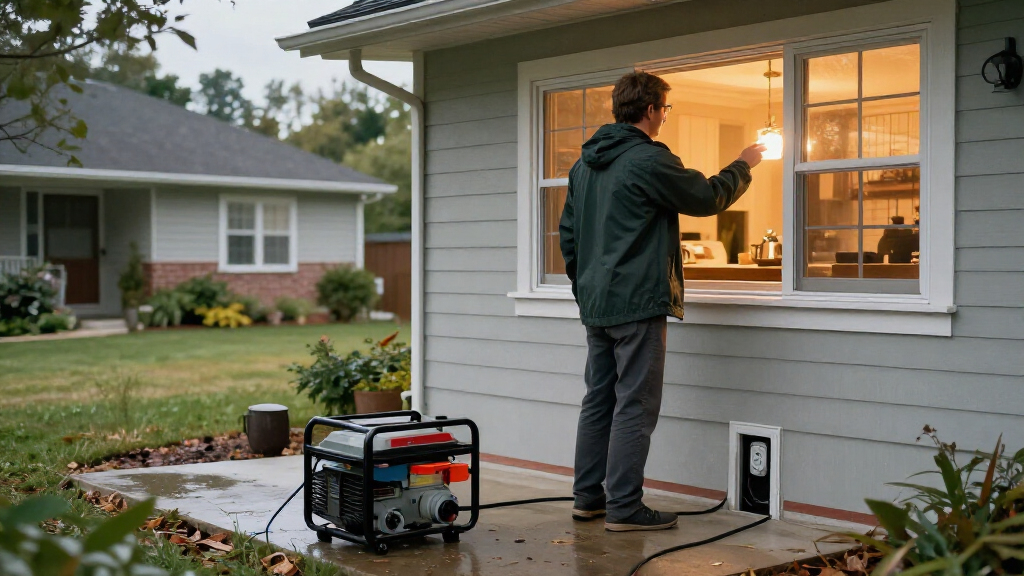
I ranked these models around home-backup usefulness, not peak wattage alone. That means weighing usable output, fuel flexibility, starting and operating convenience, portability, safety features, and how readily a buyer can match the generator to essential circuits. For home use, a model that can support a realistic load plan and be operated safely may be a better fit than the biggest unit on the list.
Inverter and conventional generators are not interchangeable categories, so I call out that distinction in the comparison. The iGen models and other inverter-listed options are judged for buyers seeking inverter operation; the DuroMax and WGen models are included as higher-output alternatives, but their conventional design changes the tradeoffs. I also avoid assuming that similarly named Oxseryn models differ meaningfully without checking their exact specifications. Ranking favors the closest fit to home backup while accounting for the cost in portability, complexity, and load limitations.
| inverter generators for home backup | Fuel |
|---|---|
| Oxseryn 4400-Watt Gas-Powered | Gasoline |
| Oxseryn 4400W Gas-Powered Inve | — |
| PowerSmart 4300-Watt Portable | — |
| Generac GP3300i 3,300-Watt Gas | — |
| Westinghouse iGen12000TFc Tri- | — |
| DuroMax XP13000EH 13,000-Watt | Gasoline or propane |
| Westinghouse WGen11500TFc Tri- | Gasoline, propane, or natural gas |
| Westinghouse WGen9500DF Dual F | Gasoline or propane |
| Westinghouse iGen8200TFc Tri-F | Gasoline, propane, or natural gas |
| SIOKIUU 2500W Portable Inverte | Gasoline |
| Westinghouse WGen10500DFc Dual | — |
Factors to Consider When Choosing Inverter Generators For Home Backup
Before choosing a model, I’d work backward from the circuits and appliances you want to keep running. A generator’s headline wattage does not tell you whether it can start a well pump, support a refrigerator while charging devices, or connect safely to a home electrical system. These factors help turn a broad product comparison into a backup plan that fits your household.
Size for Starting Loads, Not Just Running Loads
List the appliances you expect to run at the same time, then check both their running and starting watt requirements. Motors in refrigerators, pumps, and air conditioners can draw a brief surge when they start, so a generator that appears adequate on continuous watts may still struggle. Avoid adding every appliance’s maximum demand if you will stagger their use; a simple load schedule can reduce the capacity you need. On the other hand, do not assume a large peak-watt figure means the generator can sustain that output. If your plan includes central air or multiple large motors, ask an electrician to help estimate the actual load before buying.
Choose Between Inverter Operation and Raw Capacity
Inverter generators are often chosen for cleaner power delivery and more adaptable output, but the label alone does not tell you whether a unit can run your home’s essential circuits. Some conventional portable generators in this roundup offer high output without being inverter models. That distinction matters if quiet operation, electronics, or variable engine speed are priorities, though you should still follow the manufacturer’s guidance for sensitive equipment. A common mistake is comparing peak watts across inverter and conventional models as if every other trait were equal. Decide which operating characteristics matter to your household before using capacity as the tiebreaker.
Treat Fuel Flexibility as a Backup-Planning Tool
Dual- and tri-fuel capability can offer more ways to keep a generator running when one fuel source is hard to obtain, but each option brings setup and storage questions. Check which fuels the unit accepts, how its output changes by fuel, and what connections or accessories are needed. Gasoline may be familiar, while propane can be stored for longer periods under appropriate conditions; natural gas can reduce refueling chores when a suitable connection is available. Do not assume all fuel types provide the same wattage or runtime. Choose flexibility because it supports a real plan, not simply because more options sound better.
Plan the Electrical Connection Before an Outage
A portable generator can power appliances through approved cords, or it may connect to selected home circuits through a transfer switch or interlock installed by a qualified professional. Never connect a generator directly to a household outlet or improvise a backfeed connection; that can put utility workers and occupants at risk. Check the generator’s outlet types and ratings against the equipment or transfer setup you plan to use. Buyers sometimes focus on generator capacity and discover later that their preferred connection method needs additional equipment or electrical work. Planning the connection early helps prevent a capable generator from becoming difficult to use during an outage.
Balance Runtime, Refueling, and Storage
Runtime depends on load, fuel type, tank capacity, and operating conditions, so a published runtime figure is not a promise for every household. Think about whether you can safely refuel at night, how often you are willing to monitor the unit, and how much fuel you can store in line with local rules. Larger generators can support more loads but are also heavier and take up more storage space. A compact model may be easier to position and store, yet require more careful load prioritization. Consider the full outage routine, including fuel handling and safe outdoor placement, rather than choosing by wattage alone.
Match Safety Features to the Place You’ll Run It
Carbon monoxide is a serious hazard, and a CO sensor is a backup safety feature rather than permission to run a generator indoors, in a garage, or near open windows. Follow the manufacturer’s placement guidance and local safety recommendations, keeping exhaust well away from occupied areas. Check whether the unit includes low-oil shutdown, overload protection, and the controls you need to operate it safely. Noise can also affect where a generator can be used and whether it will disturb household members or neighbors. Before buying, identify a safe outdoor location with suitable clearance and a practical route for cords or a professionally installed connection.
Frequently Asked Questions
Can I run my whole house with one of these generators?
That depends on your home’s total demand, the generator’s continuous output, and which appliances you expect to use together. Many portable units are better suited to selected essential circuits than whole-house operation, especially when heating, cooling, cooking, and water systems overlap. Add the running loads and account for motor-start surges before deciding. A transfer switch or interlock installed by a qualified electrician may be needed for circuit-level connection. If you want whole-home coverage, have an electrician review your service and load plan rather than relying on a generator’s peak-watt figure.
Are the highest-wattage models automatically the best choice for home backup?
No. High output can support more loads, but larger generators may be heavier, louder, harder to store, and more demanding to refuel. Some high-output models in this roundup are conventional generators rather than inverter models, which changes the comparison for buyers specifically seeking inverter operation. A smaller generator can be the better fit if you only need refrigeration, lights, communications, and a few outlets. Start with your intended loads and connection plan, then select enough capacity for those needs without paying in size and complexity for unused output.
Should I choose a dual-fuel or tri-fuel generator for an outage?
Choose a multi-fuel model if having another workable fuel source addresses a real weakness in your outage plan. Compare output and runtime across the fuels you expect to use, and check whether you need separate hoses, regulators, or other setup items. Think through how you will store fuel safely and whether natural gas access would remain available during the kind of outage you are preparing for. Extra fuel choices can add flexibility, but they do not remove the need to maintain the generator or plan for refueling. A single-fuel unit may be simpler if its fuel source is dependable for your situation.
Can an inverter generator connect directly to my home’s electrical panel?
Not through a standard household outlet, and you should never use a cord that feeds power backward into an outlet. To power selected circuits, a generator generally needs a compatible transfer switch or an approved interlock setup installed by a qualified electrician. The generator must also have suitable output and connections for that setup. Some households instead power individual appliances with correctly rated outdoor extension cords, following the generator and appliance instructions. Decide on the connection method before purchase so you can confirm compatibility and budget for any required electrical work.
How much generator capacity should I leave in reserve?
There is no single reserve percentage that fits every home, since appliances have different start-up surges and you may not run every load at once. Build a list of the essential appliances you plan to operate together and include their starting demands where relevant. Then compare that requirement with the generator’s rated running output, not only its peak number. Leaving room for a practical additional load can make operation less restrictive, but buying far more capacity than you need can add bulk and fuel use. An electrician can help with uncertain loads such as pumps, air conditioners, or a planned panel connection.
Conclusion
For most buyers seeking an inverter model with substantial home-backup potential, I’d start with the Westinghouse iGen12000TFc as the best overall pick, provided its size and fuel setup fit the household. The iGen8200TFc is my best middle-ground choice for essential circuits when a larger unit feels excessive, while the Oxseryn 4400-watt models are the value-oriented candidates for a more limited load plan after checking their exact specifications. For beginners, I’d favor a simpler setup sized to a short list of essential appliances, such as the Generac GP3300i, rather than starting with a large multi-fuel machine. Buyers who need maximum capacity and accept conventional-generator tradeoffs can compare the DuroMax and Westinghouse WGen options, but should not mistake them for inverter models. For compact, lower-demand backup, the SIOKIUU 2500W is a specialized choice; match any pick to a safe location, a realistic load list, and a proper connection plan.