
You should call a professional for generator repairs whenever you face complex issues like persistent starting problems, unusual noises, or frequent outages that simple fixes can’t solve. If your generator isn’t running smoothly or if basic maintenance doesn’t work, it’s best to get expert help. Attempting repairs on your own can cause further damage or safety risks. Keep going to find out more about when professional assistance is essential.

Get backup power and energy gear delivered free — and shop member deals
- Fast, free delivery on millions of items
- Access to Prime Big Deal Days deals on October 6–7
- Prime Video, Amazon Music and more included
Key Takeaways
- If the generator exhibits persistent trouble starting or runs irregularly, professional diagnosis is recommended.
- When you hear unusual noises or observe frequent outages, consult a professional to prevent further damage.
- Complex issues beyond simple parts replacement, like electrical system failures, require expert repair.
- If safety precautions are unclear or you lack proper training, it’s best to hire a professional.
- Regular maintenance and unresolved problems should be handled by qualified technicians to ensure safety and reliability.
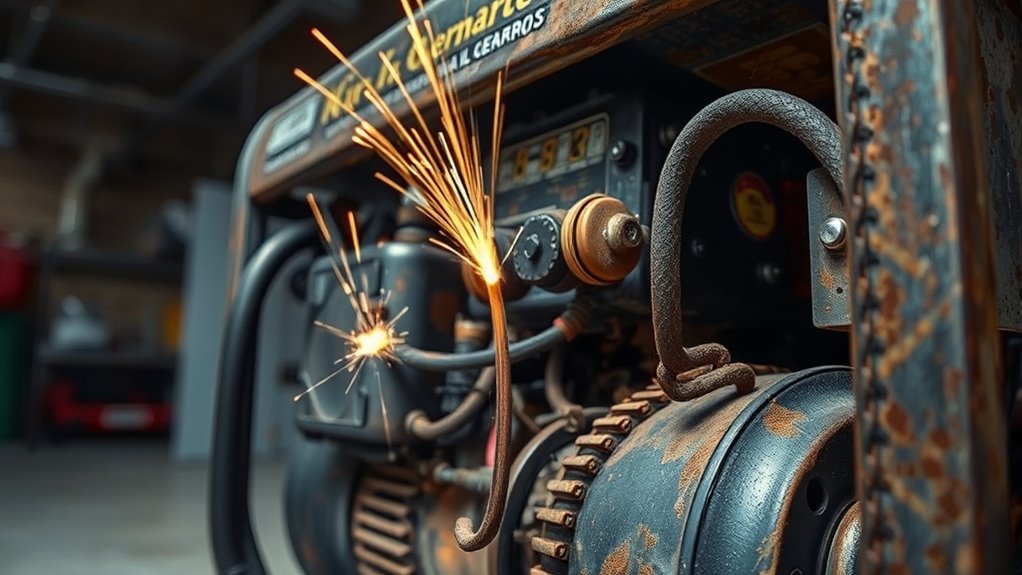
A generator is a dependable backup power source, but knowing when to call a professional for repairs is crucial to guarantee it functions properly when you need it most. While some minor issues might tempt you to try DIY fixes, it’s important to recognize when a problem exceeds your skills. Attempting to troubleshoot complex generator problems without proper knowledge can lead to further damage, increased repair costs, or even safety hazards. If you notice persistent trouble starting your generator, unusual noises, or frequent outages, it’s time to seek professional help. These issues often require specialized diagnosis and repairs that go beyond simple adjustments or replacements.
Cost considerations also play a significant role in deciding whether to attempt DIY fixes or call in a pro. While tackling small repairs yourself might seem cost-effective initially, it can backfire if you lack the proper tools or expertise. Improper repairs can lead to more extensive damage, which might end up costing you more in the long run. For example, replacing a faulty spark plug or air filter is straightforward and inexpensive, but if the problem is a failing alternator or electrical system, attempting to fix it without professional training could cause further harm and increase your repair expenses. Sometimes, a professional assessment can save you money by accurately diagnosing the root issue and preventing unnecessary part replacements.
Additionally, understanding the importance of proper maintenance and timely repairs can extend your generator’s lifespan and ensure reliable operation when needed.
It’s also important to weigh safety when dealing with generator repairs. Gas-powered generators involve fuel, electrical components, and moving parts, all of which can pose risks if mishandled. If you’re unsure about how to safely shut down and troubleshoot your generator, it’s best to call a professional. They have the right training and safety equipment to handle complex repairs without risking personal injury or causing damage to the unit.
Frequently Asked Questions
Can I Repair My Generator Myself Without Risking Safety?
You can attempt DIY safety repairs on your generator, but be cautious about repair risks. If you’re inexperienced, avoid working on electrical components or fuel systems, as mishandling can cause injury or damage. Always disconnect power and wear protective gear. If you’re unsure about your skills or encounter complex issues, it’s best to call a professional. Prioritize safety over quick fixes to prevent accidents or further damage.
How Often Should I Schedule Professional Generator Maintenance?
You should schedule professional generator maintenance at least once a year to guarantee peak performance. Following a regular maintenance schedule, including an inspection routine, helps catch issues early and extends your generator’s lifespan. If you notice strange noises, leaks, or performance drops, don’t wait—schedule a professional check sooner. Regular servicing keeps your generator reliable during power outages and prevents costly repairs down the line.
What Are the Signs That Indicate a Generator Needs Urgent Repair?
Think of your generator as a trusted friend; ignoring warning signs can lead to a breakdown. If you notice unusual noises, persistent trouble starting, or frequent cycling, these are clear generator warning signs. Sudden drops in power, smoke, or strange odors also signal urgent repair indicators. Don’t wait—if you spot these issues, call a professional promptly to prevent further damage and guarantee your generator’s reliable performance.
Are There Specific Tools or Parts I Should Keep for Emergencies?
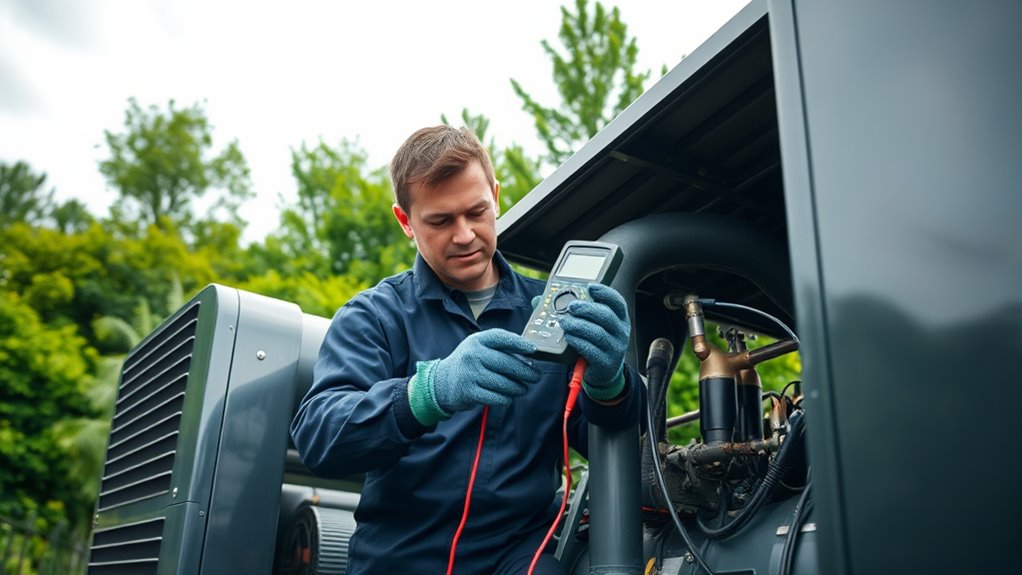
You should keep essential emergency tools like a multimeter, screwdrivers, and pliers handy for quick troubleshooting. Having spare parts such as spark plugs, filters, and fuses can help you address minor issues without delay. Regularly check your generator’s manual for specific recommended parts. Being prepared with these emergency tools and spare parts guarantees you can handle common problems promptly, reducing downtime until you can call in a professional if needed.
How Can I Prevent Future Generator Breakdowns Effectively?
You can prevent future generator breakdowns by performing regular inspections and preventative maintenance. Check for loose wires, corrosion, and fuel or oil leaks frequently. Replace filters and fluids as recommended, and keep the battery charged. Scheduling professional tune-ups annually helps identify issues early. Staying proactive with these steps guarantees your generator runs smoothly when you need it most, reducing the risk of unexpected failures.
Conclusion
Don’t hesitate to call a professional if your generator shows signs of trouble. Attempting repairs yourself might seem cost-effective, but it could lead to bigger issues or safety hazards. Remember, experts have the right tools and knowledge to diagnose and fix problems correctly the first time. Prioritizing professional help not only saves you time and money in the long run but also guarantees your generator runs reliably when you need it most.
Fall Picks
fall essentials
As an affiliate, we earn on qualifying purchases.