
To stay safe, always keep your generator at least 20 feet away from buildings, vents, or windows. This distance helps prevent dangerous carbon monoxide from building up and entering your home. Proper placement also ensures the exhaust fumes blow away from your living area, especially when wind direction varies. Follow the manufacturer’s guidelines and consider wind patterns for maximum safety. Want to learn more about best practices for safe generator use? Keep going to discover helpful tips.

Get backup power and energy gear delivered free with Prime
- Fast, free delivery on millions of items
- Prime Video, Amazon Music and more included
- Member-only deals all year
Key Takeaways
- Keep the generator at least 20 feet away from buildings, windows, and vents to prevent dangerous CO buildup indoors.
- Position the generator on a stable, level surface outdoors, away from overhangs or enclosed areas.
- Consider prevailing wind direction to ensure exhaust fumes are blown away from structures and living spaces.
- Follow manufacturer guidelines for proper placement and routine maintenance of the generator.
- Regularly inspect the exhaust system for leaks or obstructions to maintain safe operation.
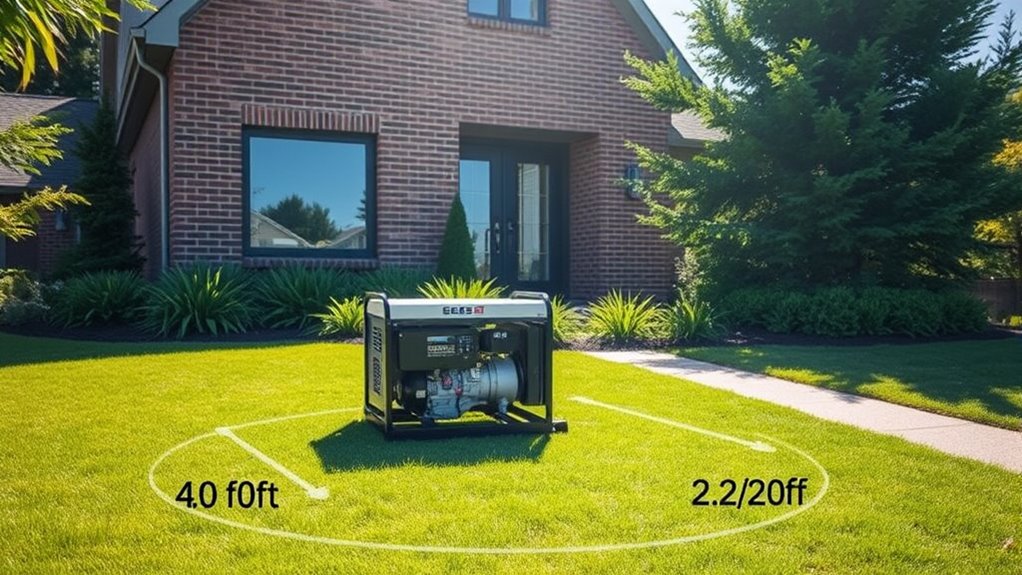
Have you ever considered how your generator’s placement could impact your safety? Many people overlook this important detail, but it can make a huge difference when it comes to avoiding dangerous situations. Generators produce carbon monoxide, a colorless, odorless gas that can be deadly if it accumulates in enclosed or poorly ventilated areas. Proper placement isn’t just about convenience; it’s about protecting yourself and your loved ones from the risks associated with carbon monoxide poisoning. When setting up your generator, always keep it at least 20 feet away from your home, garage, or any other building. This distance allows the gases to disperse safely into the open air, markedly reducing the chance of harmful buildup near windows, vents, or doors.
Proper generator placement at least 20 feet away reduces carbon monoxide risks and keeps your loved ones safe.
Positioning your generator correctly also plays a critical role in ongoing generator maintenance. Regular maintenance ensures your unit runs efficiently and safely, but it also involves checking the exhaust system and ensuring there are no obstructions that could cause gases to back up or leak into nearby structures. If your generator is too close to your house, the risk of carbon monoxide entering your living space increases, especially if there’s a leak or malfunction. Proper placement minimizes this risk and makes routine generator maintenance easier since you’ll be able to spot potential issues more readily when your unit isn’t tucked away in an inaccessible spot.
Another key point is to consider wind direction when placing your generator. Position it so that the exhaust fumes are blown away from your home and neighboring structures. This simple step can prevent dangerous gases from drifting indoors or settling in areas where people spend time. Remember, even a well-maintained generator can produce dangerous levels of carbon monoxide if placed improperly. So, it’s essential to regularly inspect and maintain your generator, ensuring that the exhaust system is functioning correctly and that no leaks develop over time.
Additionally, understanding the importance of proper placement in relation to safety can help you make more informed decisions and avoid potential hazards. Lastly, always follow the manufacturer’s guidelines for placement and maintenance. These instructions are designed to maximize safety and efficiency. Keep your generator on a stable, level surface to prevent accidents and make maintenance tasks easier. By properly positioning your generator at least 20 feet away from buildings, paying attention to wind direction, and performing routine generator maintenance, you can enjoy reliable power during outages while keeping everyone safe from the hidden dangers of carbon monoxide. It’s a simple step that can save lives and ensure your generator operates smoothly when you need it most.
Frequently Asked Questions
Can I Place a Generator Near Trees or Overhanging Branches?
You shouldn’t place a generator near trees or overhanging branches because of tree hazards. Branches can fall onto your generator, causing damage or fire risks. Always guarantee there’s sufficient branch clearance to prevent contact during wind or storms. Keep your generator in an open, clear area, and avoid placing it under trees to minimize hazards and ensure safe, reliable operation.
How Does Wind Affect Safe Generator Placement?
Wind can considerably affect safe generator placement by increasing the wind load on the unit. You should position your generator in a well-ventilated, sheltered area to reduce exposure to strong gusts, and maintain the recommended safety distance of at least 20 feet from buildings and other structures. This helps prevent accidents caused by wind tipping or debris hitting the generator, ensuring both safety and proper operation.
Are There Specific Local Codes for Generator Clearance?
Yes, local regulations often specify clearance requirements for generator placement. You should check your city or county codes to verify compliance, as these rules may dictate minimum distances from buildings, vents, and windows to prevent fire hazards and carbon monoxide buildup. Always follow these regulations closely, and consider consulting a professional to verify that your generator setup meets all local codes for safety and legality.
What Are the Risks of Placing a Generator Too Close to Vents?
Think of your generator as a guardian that needs space to breathe; placing it too close to vents risks ventilation hazards and fire dangers. When vents are blocked or exposed to exhaust fumes, carbon monoxide can accumulate, creating silent but deadly hazards. Keep your generator at least 20 feet away, ensuring proper airflow. This simple step prevents fire risks and keeps your home safe during power outages.
How Should I Secure a Generator in High Wind Conditions?
To secure your generator in high wind conditions, make certain it has proper ground clearance to prevent tipping. Use heavy-duty straps or anchors to fasten it firmly to the ground or a sturdy base, reducing movement. Additionally, position it away from vents and windows to minimize noise disturbance and protect it from wind-blown debris. Regularly check these securements before storms to keep your generator safe and functional.
Conclusion
To keep everyone safe, always place your generator at least 20 feet away from buildings. Remember, generators produce carbon monoxide—a colorless, odorless gas that can be deadly indoors or too close to structures. Did you know that carbon monoxide poisoning causes over 400 deaths annually in the U.S.? By following proper placement guidelines, you reduce this risk notably. Stay vigilant, stay safe, and enjoy reliable power without putting yourself or others in harm’s way.
Columbus Day / Indigenous Peoples' Day Picks
long weekend sales
As an affiliate, we earn on qualifying purchases.