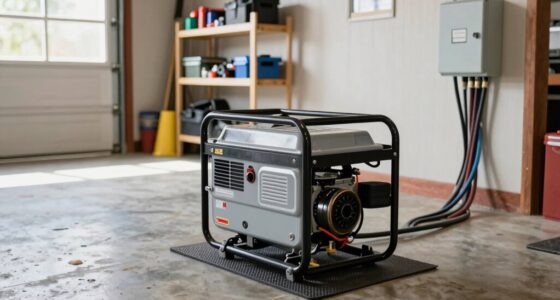
To size a generator for your electric tools, first list each tool’s amps and wattage from their labels, then add the running watts to find the total continuous load. Remember to account for startup or surge wattage, especially for power-hungry tools. Choose a generator with a capacity slightly above your total to handle both running and surge loads comfortably. Keep building your understanding to guarantee your generator meets your needs reliably and safely.
Listen free for 30 days with Audible
Thousands of audiobooks and originals — cancel anytime.
As an affiliate, we earn on qualifying purchases.
Key Takeaways
- Sum the running watts and amps of all tools to determine total continuous load.
- Include surge wattage for tools with high starting power to ensure generator capacity.
- Select a generator with capacity 20-25% above total startup and running requirements for safety.
- Consider future tool additions by choosing a slightly larger generator than current needs.
- Match generator specs to both continuous and surge wattage to prevent overloads and ensure reliable operation.
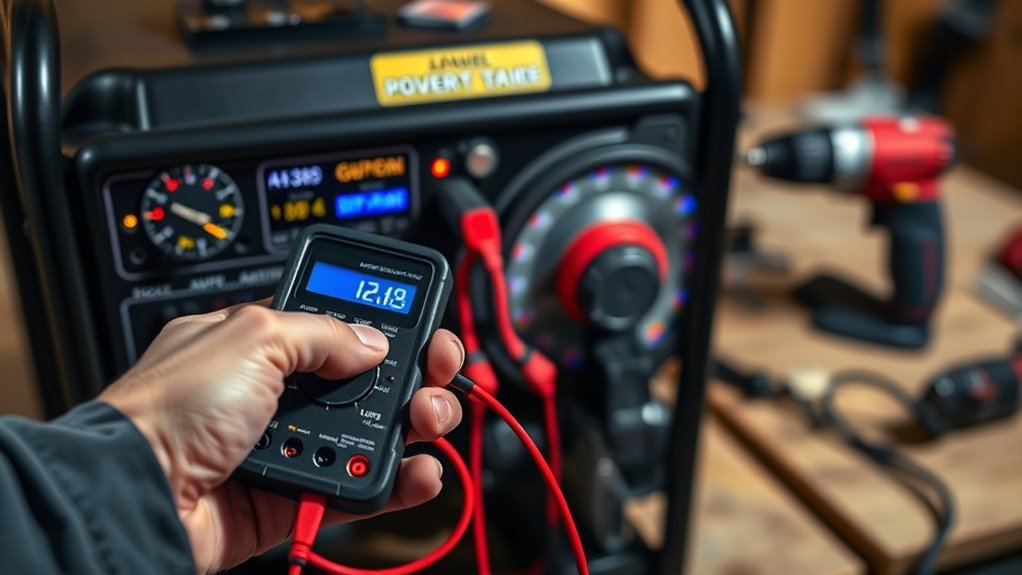
When selecting a generator for your electric tools, it’s essential to ascertain the right size to guarantee reliable power without overloading the system. Getting this right helps prevent power surges that can damage your tools or trip circuit breakers. To do that, you need to understand the power requirements of your tools in terms of amps and watts. Most electric tools specify their power needs on their labels, usually in amps and watts. First, gather the specifications for each tool you plan to use. Add up their running watts to find the total continuous load your generator must support. Keep in mind that some tools may have a higher starting wattage, also known as surge wattage, which briefly spikes when the tool is powered on. Your generator should comfortably handle this power surge without shutting down or risking damage.
Focusing on fuel efficiency is equally important when choosing a generator. A generator that’s too large for your needs wastes fuel and costs more in operation, while one that’s too small risks overloads and power interruptions. An appropriately sized generator balances power capacity with fuel economy, ensuring you get longer run times and lower fuel costs. When comparing models, look for those with good fuel efficiency ratings and features like automatic shutoff or fuel-saving modes. These features help minimize fuel consumption, especially during extended use. Also, consider how often you’ll use it and for how long, as larger generators tend to consume more fuel even when running at low loads, impacting your overall efficiency.
In addition, you should factor in future needs. If you plan to add more tools or equipment later, choose a generator with a slightly higher capacity than your current requirements. This ensures you won’t need to replace it prematurely and helps accommodate power surges that may occur with larger tools or multiple devices running simultaneously. Remember, overloading a generator can cause it to shut down unexpectedly or, worse, damage your tools and pose safety risks. Properly sizing your generator involves calculating the total amps and watts of your tools, accounting for surge wattage, and choosing a model that balances power with fuel efficiency. Doing so guarantees a reliable power source, minimizes costs, and keeps your equipment safe from power surges and overloads.
Frequently Asked Questions
Can I Run Multiple Tools on a Single Generator Simultaneously?
Yes, you can run multiple tools on a single generator simultaneously if you consider the power load and tool compatibility. Make sure the combined wattage of all tools stays within your generator’s capacity. Check each tool’s amperage and wattage ratings, and add them up. If the total power load doesn’t exceed the generator’s output, you’ll operate multiple tools safely and efficiently without overloading the system.
How Do Temperature and Altitude Affect Generator Sizing?
Altitude effects and temperature considerations markedly impact generator sizing. As altitude increases, air becomes thinner, reducing engine performance and power output, so you need a generator with a higher capacity. Cold temperatures can also affect starting and running efficiency, requiring you to contemplate models with better cold-weather performance. Always account for these factors to guarantee your generator supplies adequate power without overloads, especially when working in high-altitude or cold environments.
What Safety Precautions Are Essential When Using High-Wattage Tools?
Think of your high-wattage tools as a mighty ship sailing through rough waters. To stay safe, you must guarantee grounding safety by properly grounding your equipment, preventing shocks. Always wear PPE requirements like gloves and safety goggles, much like a strong crew protecting their vessel. Keep cords dry, inspect for damage, and avoid overloading your generator. These precautions help you navigate safely, avoiding mishaps and keeping your work smooth and secure.
How Long Can a Generator Run Continuously for Power Tools?
You can typically run a generator continuously for 8 to 12 hours, depending on its power capacity and fuel type. To maximize runtime duration, choose a generator with a higher wattage rating that exceeds your tools’ total power needs. Regular maintenance and refueling help guarantee it runs smoothly. Always monitor your generator’s load to prevent overloads, and follow manufacturer guidelines for ideal continuous operation.
Are Inverter Generators Better for Sensitive Electric Tools?
Yes, inverter generators are better for sensitive electric tools because they provide superior power quality, with cleaner and steadier electricity that safeguards against damage or malfunctions. Plus, they operate more quietly, which is ideal for noise-sensitive environments. Their smooth, stable power output ensures your tools run efficiently and safely, making inverter generators a smart choice when working with delicate or precision equipment.
Conclusion
In summary, sizing a generator securely supports your saws, drills, and more. By balancing watts and amps, you guarantee your electric tools operate optimally without overwhelm. Remember, a properly powered generator keeps your projects powerful and problem-free. So, stay smart, select the right size, and smoothly sustain your work with confidence. With careful calculation and clever choices, you’ll conquer any construction challenge with complete control and consistency.
Fall yard work Picks
leaf blowers
As an affiliate, we earn on qualifying purchases.