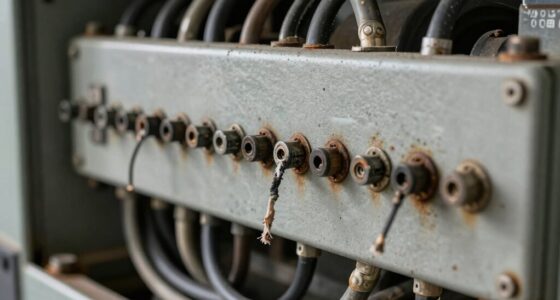
The layout of your generator outlets affects how easy and safe it is to connect devices and operate the system. Proper placement improves convenience, reduces hazards from extension cords, and guarantees even electrical load distribution. It also protects outlets from weather and damage, making your setup more reliable and efficient. Good outlet positioning helps you disconnect quickly in emergencies and stay compliant with safety standards. Keep exploring to discover how to optimize your generator outlet layout for maximum usability.
Key Takeaways
- Strategic outlet placement ensures easy access and reduces the need for extension cords, enhancing overall usability.
- Proper layout facilitates efficient electrical load distribution, preventing overloads and maintaining consistent power supply.
- Weatherproofing and grounding in outlet arrangement improve safety and durability, especially outdoors.
- Well-planned positioning allows quick disconnection during emergencies, increasing safety and responsiveness.
- Avoiding cluttered or inconvenient outlet grouping simplifies device connection and improves user experience.
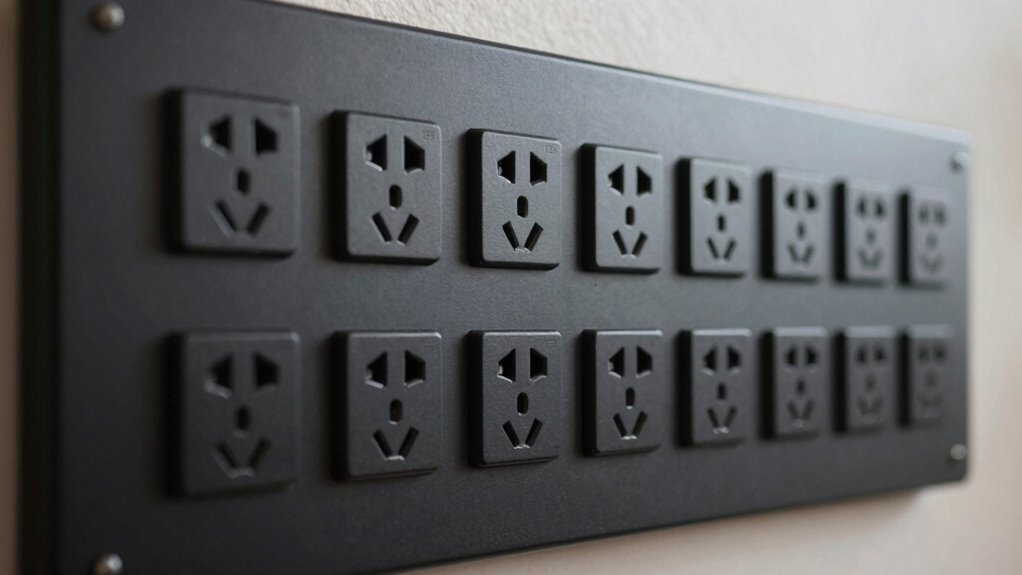
Have you ever wondered how the layout of generator outlets can impact the efficiency and safety of your power system? The way you arrange your generator outlets isn’t just about aesthetics or convenience — it plays a pivotal role in ensuring your setup works smoothly and safely. Power outlet placement directly affects how easily you can connect your devices, how efficiently power flows through your system, and how well you minimize potential hazards. When outlets are strategically positioned, you reduce the need for extension cords or awkward wiring, which can lead to tripping hazards or electrical faults. Proper placement of outlets considers accessibility and proximity to the power sources. If outlets are placed too far from the generator or in hard-to-reach spots, you might find yourself stretching cords across walkways or furniture, increasing the risk of accidental trips or damage to cords and outlets. Conversely, if outlets are grouped too tightly or placed in inconvenient locations, it can complicate the connection process or limit your options for power distribution. You want outlets to be conveniently located for the appliances or tools you plan to run, without requiring excessive extension cords that can cause voltage drops or overheating. Safety considerations are paramount when planning your generator outlet layout. You need to guarantee outlets are protected from water, dust, or physical damage, especially if your setup is outdoors or in a workshop environment. Proper weatherproof covers, grounded outlets, and secure mounting are essential safety features. Additionally, the placement should facilitate easy disconnection in case of emergencies, so outlets should be accessible enough for quick shutoff without risking injury or damage. Avoid placing outlets near flammable materials or in areas prone to moisture, as this could increase the risk of electrical fires or shorts. The arrangement of outlets also impacts how well your system manages electrical loads. Distributing outlets evenly and planning for capacity can prevent overloads, which are dangerous and can damage your equipment. By considering safety considerations in your layout, you also minimize the chances of accidental contact with live parts or exposed wiring, which could lead to shocks or injuries. Incorporating weatherproofing standards into your outlet layout further enhances safety and durability, especially for outdoor setups. Proper grounding practices are also crucial to prevent electrical shock hazards and ensure system stability. Understanding electrical codes can help you comply with local safety regulations and avoid potential fines or hazards. Additionally, considering electrical load distribution can help prevent overloads and ensure your power system functions efficiently. In the end, thoughtful power outlet placement and safety considerations aren’t afterthoughts—they’re fundamental to making your generator setup efficient, reliable, and safe. When you plan your outlet layout carefully, you’re not just improving usability; you’re also protecting yourself, your equipment, and your property from potential hazards.

Intermatic WP3100C Weatherproof Outdoor Electrical Outlet Cover,Single-Gang
- Weatherproof Design: UL Type 3R outdoor enclosure standards
- Easy Installation: Pre-adhered neoprene gasket with mounting slits
- Heavy-Duty Construction: UV stabilized polycarbonate for durability
As an affiliate, we earn on qualifying purchases.
As an affiliate, we earn on qualifying purchases.
Frequently Asked Questions
How Does Outlet Placement Impact Safety During Generator Operation?
Proper outlet placement enhances safety during generator operation by ensuring easy access for emergency shutdowns and maintenance. It helps you follow safety protocols effectively, reducing the risk of electrical shocks or fire. Well-placed outlets prevent obstructions, allowing quick emergency access if needed. By thoughtfully arranging outlets, you minimize hazards and make safety a priority, giving you peace of mind knowing that in urgent situations, you can respond swiftly and safely.
Can Outlet Layout Influence the Power Capacity of a Generator?
Like a well-placed joystick in a vintage arcade game, outlet layout can influence your generator’s power capacity. Proper outlet accessibility guarantees you connect devices efficiently, minimizing power loss and boosting generator efficiency. If outlets are poorly arranged, you risk uneven load distribution, which can limit overall capacity and strain your system. So, thoughtful outlet placement directly impacts your generator’s performance, helping you maximize power output and reliability during use.
What Are Common Mistakes in Designing Generator Outlet Layouts?
You often make the mistake of overlooking outlet efficiency, which can lead to cluttered, hard-to-access layouts. Focusing solely on design aesthetics might compromise functionality, causing inconvenience during setup or maintenance. Avoid placing outlets too close, which hampers usability, or neglecting proper spacing, leading to poor airflow and safety issues. Always prioritize a balanced approach that enhances outlet efficiency and maintains clean, accessible design aesthetics for ideal generator operation.
How Does Outlet Arrangement Affect Maintenance Access?
You’ll find that outlet arrangement directly impacts maintenance access. Proper outlet accessibility means you can easily reach and service the outlets without hassle. Layout optimization ensures outlets are positioned for convenient maintenance, reducing downtime and safety risks. When you plan your generator outlet layout carefully, you make maintenance smoother, quicker, and safer—saving time and effort. Prioritize accessible outlet placement to enhance overall usability and keep your generator running efficiently.
Are There Industry Standards for Generator Outlet Positioning?
Yes, industry standards emphasize outlet accessibility and placement optimization for generator outlets. You should position outlets where maintenance personnel can easily access them without obstruction, usually at a comfortable height and location. Standards like the National Electrical Code (NEC) recommend specific placements to guarantee safety and convenience. By following these guidelines, you improve usability, streamline maintenance, and ensure compliance, ultimately making your generator system more efficient and safer to operate.
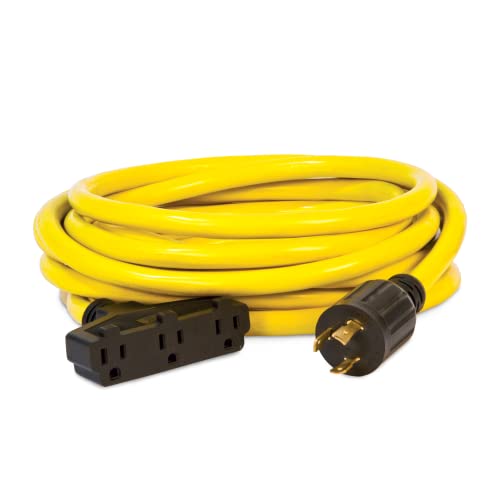
Champion Power Equipment 25-Foot 30-Amp 125-Volt Fan-Style Generator Extension Cord (L5-30P to three 5-15R)
- Power Conversion: L5-30P to three 5-15R outlets
- Extension Length: 25-foot extension cord
- Weather Resistance: Abrasion and weather-resistant insulation
As an affiliate, we earn on qualifying purchases.
As an affiliate, we earn on qualifying purchases.
Conclusion
In the end, how you arrange your generator outlets can make all the difference in ease of use and safety. A well-thought-out layout keeps everything within reach and reduces the chances of mishaps, ensuring you’re not caught off guard when power’s needed most. Remember, a stitch in time saves nine—taking the time to plan your outlet setup now will save you headaches down the road. Don’t leave things to chance; plan wisely for smooth operation later.

Neutral Ground Bonding Plug for Portable Inverter Generator-Camper for Open Ground Error, Grounding Plug Surge Protector Generator with Floating Neutral on RV Plug, Generator Grounding Kit(1-Pack)
- Easy Ground Fault Connection: Inserts into generator outlet for bonding
- Robust Construction: Made with conductive phosphor bronze
- Wide Compatibility: Supports 10A-15A, 125V-250V, up to 2500W
As an affiliate, we earn on qualifying purchases.
As an affiliate, we earn on qualifying purchases.

HOWEASY Portable Power Station,120W(240W Peak) Solar Generator
- Multiple Output Ports: 8 ports including AC, USB, DC
- Compact & Lightweight: 6.6 x 4 x 3 inches, 2.3 pounds
- Easy to Carry: Hidden handle for portability
As an affiliate, we earn on qualifying purchases.
As an affiliate, we earn on qualifying purchases.