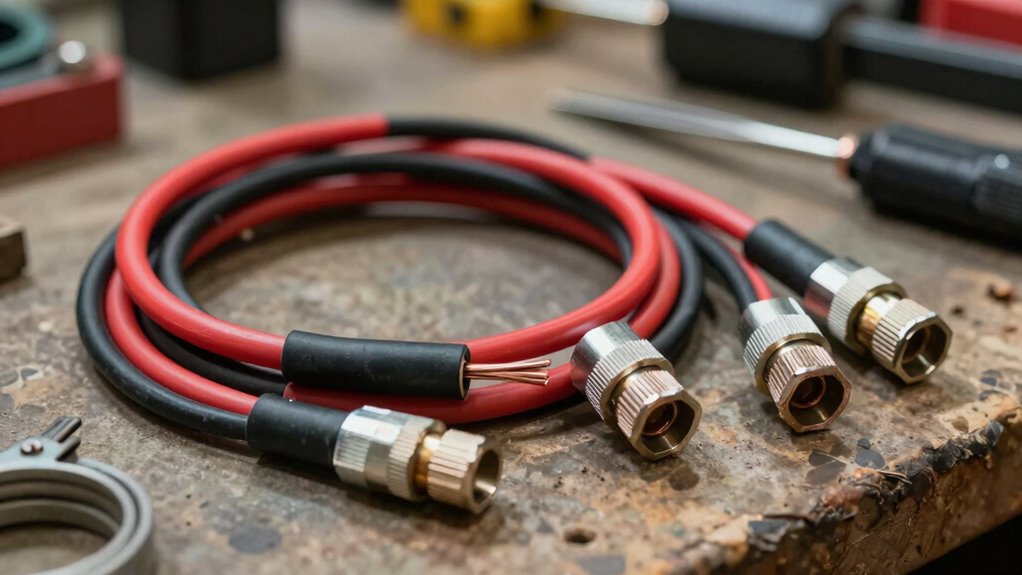
To build a reliable generator connection kit, start by selecting weatherproof, heavy-duty cables rated for your generator’s power output. Make certain all connections are tight and secure to prevent overheating or sparks. Use proper grounding and follow safety protocols, including turning off main power during setup. Incorporate weatherproof enclosures to protect components from environmental damage. If you continue, you’ll discover essential tips to guarantee safety and compatibility for a dependable setup.
Key Takeaways
- Use appropriately rated, outdoor-compatible cables and secure them away from walkways and damage zones.
- Match the transfer switch’s capacity to the generator’s output and home electrical system.
- Follow manufacturer instructions carefully for correct and secure connections.
- Install weatherproof enclosures and shield equipment from environmental elements.
- Regularly test, inspect, and maintain all components to ensure ongoing safety and reliability.
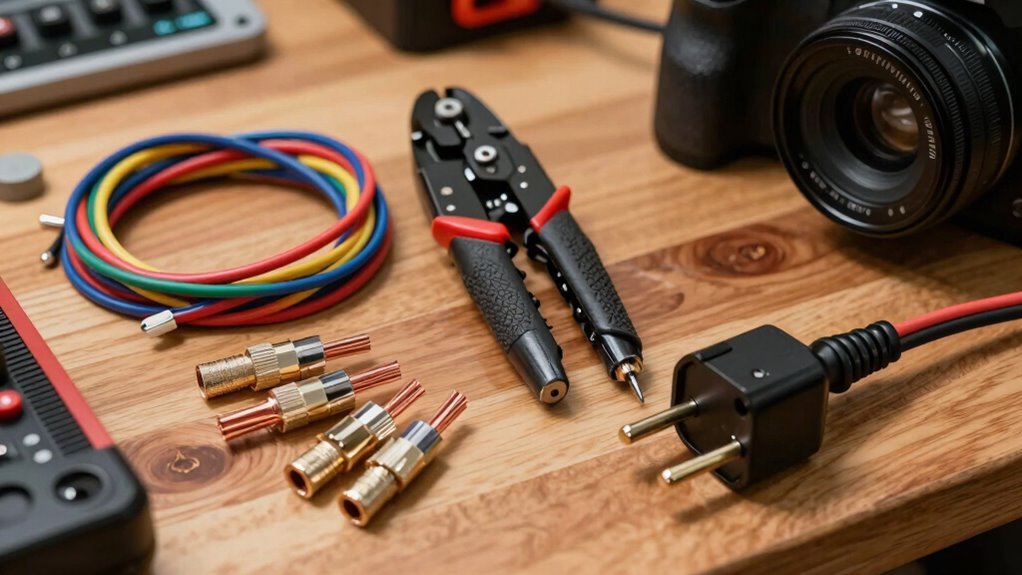
Connecting a generator reliably is essential for guaranteeing a safe and consistent power supply during outages. When setting up your generator connection kit, your primary goal should be to prioritize electrical safety. This means carefully selecting and installing components that prevent accidental shocks, electrical fires, or damage to your appliances. Start by choosing a transfer switch that matches your generator’s power output and your home’s electrical system. Compatibility testing is crucial here—making sure that the transfer switch and other parts work seamlessly together will avoid potential complications down the line. Before making any connections, turn off main power and verify that your generator is grounded correctly to prevent electrical hazards.
Prioritize electrical safety by selecting compatible transfer switches and properly grounding your generator before connecting.
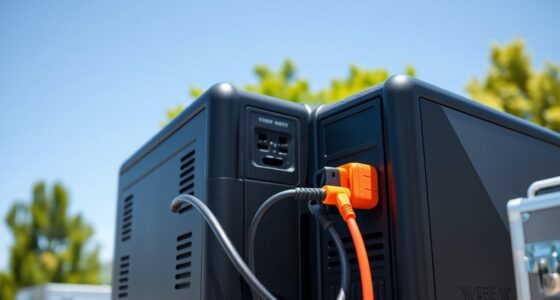
Next, focus on creating a robust, well-insulated connection between your generator and your home’s electrical system. Use heavy-duty, outdoor-rated cables designed to handle the maximum current your generator can produce. Proper cable management isn’t just tidy—it’s essential for safety. Secure cables away from walkways or areas where they could be tripped over or damaged. When connecting the generator to the transfer switch, follow the manufacturer’s instructions meticulously. Double-check that all connections are tight and secure, as loose connections can cause sparks or overheating. Remember, proper electrical safety practices demand that you use the correct tools and wear protective gear like gloves and safety goggles during installation.
Your setup should incorporate a transfer switch that isolates your home’s wiring from the utility grid when the generator is active. This prevents backfeeding, which is an important safety concern, and can be dangerous for utility workers and your equipment. Ensuring proper electrical system compatibility can prevent potential hazards and improve overall safety. If you’re unsure about compatibility testing, consult the manufacturer’s guidelines or hire a professional electrician. They can verify that all equipment works together safely and efficiently. Additionally, installing a weatherproof enclosure for your generator and connection points protects against environmental damage and guarantees safety during adverse weather conditions. Incorporating natural landscaping elements around your setup can also help shield the equipment from harsh weather and improve the overall aesthetics. Regular inspecting and maintaining electrical components is essential to ensure ongoing safety and performance.
Finally, periodically testing your entire setup is crucial. Run your generator under load to confirm that everything functions as expected and that your electrical safety measures hold up. Regular inspections and maintenance of cables, connections, and safety devices will help you identify potential issues before they become hazards. It’s also beneficial to familiarize yourself with generator safety protocols to ensure safe operation during emergencies. By paying close attention to compatibility testing and electrical safety, you build a reliable generator connection kit that provides peace of mind during power outages. Taking these careful steps guarantees your setup remains safe, effective, and ready whenever you need it.

PlugSaf 50FT 30 Amp Generator Cord 4 Prong, 10AWG 125/250V 3750/7500W STW
- Length: 50 feet long extension cord
- Amperage: 30 amp capacity
- Prong Type: 4-prong NEMA L14-30P/R
As an affiliate, we earn on qualifying purchases.
As an affiliate, we earn on qualifying purchases.
Frequently Asked Questions
What Safety Precautions Should I Take During Installation?
During installation, prioritize electrical safety by turning off all power sources and wearing insulated gloves. Make certain of proper grounding of the generator to prevent electrical shocks and protect your equipment. Use correctly rated tools and double-check connections before powering up. Keep the work area dry and clear of obstructions. Following these safety precautions minimizes risks, keeps you safe, and guarantees your generator connection kit functions reliably.
Can I Customize the Kit for Different Generator Brands?
Yes, you can customize your generator connection kit for different brands. Imagine tailoring a suit to perfectly fit various body shapes—that’s what customization options do for your setup. Focus on generator compatibility to guarantee your kit works seamlessly with multiple brands. You might need adaptable connectors or adjustable parts, allowing you to match your kit precisely to each generator’s specifications, ensuring safety and reliability no matter the brand you choose.
How Often Should the Connection Kit Be Inspected?
You should inspect your generator connection kit regularly, ideally following a maintenance schedule of every three to six months. Inspection frequency depends on usage and environmental factors; if you operate the generator frequently or in harsh conditions, more frequent checks are necessary. During inspections, look for signs of wear, corrosion, loose connections, or damage. Staying proactive guarantees your connection kit remains reliable, safe, and ready when you need it most.
What Tools Are Needed for Assembly?
Think of assembling your connection kit as solving a puzzle—you need the right tools to piece it together smoothly. You’ll require screwdrivers compatible with your screws, pliers for gripping and bending, wire strippers for clean connections, and possibly a multimeter for testing. Always follow the assembly instructions carefully to guarantee compatibility and safety. With these tools, you’ll confidently build a reliable generator connection kit that keeps your power flowing securely.
Is Professional Installation Recommended?
Professional installation is highly recommended for your generator connection kit. DIY considerations might seem tempting, but improper setup can lead to safety hazards and costly repairs. Investing in professional help makes certain your system is correctly assembled, compliant with safety standards, and reliable during emergencies. While it might seem less cost-effective initially, professional installation offers peace of mind, minimizes risks, and guarantees your setup works efficiently when you need it most.

Hudson Generator Box, SD Aluminum Generator Enclosure with Ventilation, Heat Dissipation & Reduce Noise, Accommodates The Maximum Size of 39.4"x32"x31.7", White
- Efficient Ventilation: Louvered vents and airflow openings for cooling
- Active Cooling System: High-speed fan boosts airflow and temperature control
- Quiet Operation: Phenolic foam lining reduces noise levels
As an affiliate, we earn on qualifying purchases.
As an affiliate, we earn on qualifying purchases.
Conclusion
Building a reliable generator connection kit guarantees safety and efficiency during power outages. Remember, a properly installed kit can reduce electrical hazards by up to 80%, according to industry studies. Take the time to select quality components and follow the correct wiring procedures. By doing so, you not only protect your home and loved ones but also ensure your generator runs smoothly when you need it most. A well-made kit is a small investment with a big payoff.

EZ GENERATOR SWITCH – The Original, Patented, UL/CSA Approved Manual Transfer Switch – Made in the USA
- Original patented EZ Generator Switch: The authentic, patented model
- Made in the USA: Manufactured and assembled domestically
- Veteran-owned company: Supported by a veteran-employed team
As an affiliate, we earn on qualifying purchases.
As an affiliate, we earn on qualifying purchases.
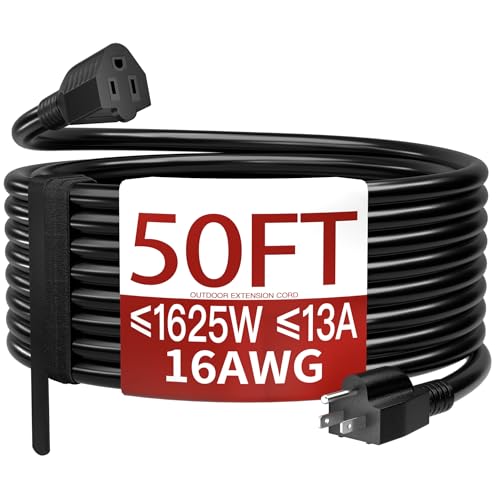
Skrizcable 16/3 50 FT Outdoor Extension Cord Waterproof, Black Power Cord
- ETL Listed and Safe: Rated for safety and reliability
- Durable Copper Construction: Made with pure copper and thick insulation
- Weatherproof and Waterproof: Resistant to rain, snow, and extreme temperatures
As an affiliate, we earn on qualifying purchases.
As an affiliate, we earn on qualifying purchases.


![Samsung Reportedly Bringing This Major Redesign Back From The Dead With Galaxy S27 [Gallery]](https://invertergeneratorhq.com/wp-content/uploads/2026/08/samsung-reportedly-bringing-this-major-redesign-back-from-the-dead-with-galaxy-s-featured-260x140.jpg)