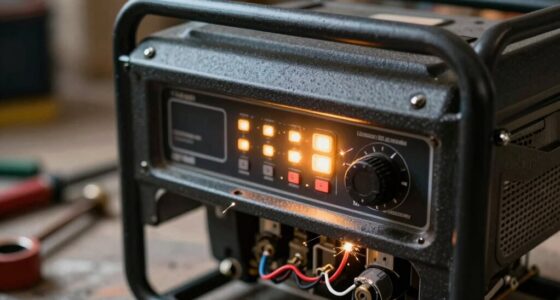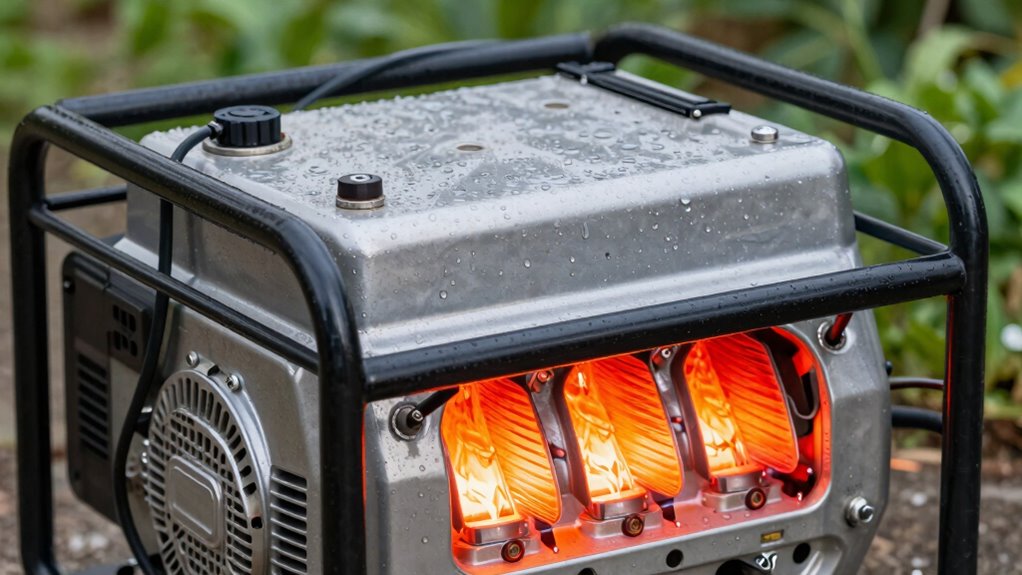
If your generator feels hotter than usual, stop using it immediately to prevent damage. Check the oil levels, ensuring they’re clean and at the correct level, and inspect air filters for dirt or clogging. Examine the cooling system, including radiator fins and coolant levels, and clear any debris from fans or blowers. Regular maintenance and early detection of issues can keep your generator running smoothly—keep going to discover more essential tips.

Get backup power and energy gear delivered free with Prime
- Fast, free delivery on millions of items
- Prime Video, Amazon Music and more included
- Member-only deals all year
Key Takeaways
- Turn off the generator immediately to prevent further overheating and potential damage.
- Check oil levels and quality; top up or change oil if needed to aid cooling.
- Inspect cooling system components, such as radiators and fans, for dirt, debris, or damage.
- Ensure air filters are clean and unobstructed to improve airflow and cooling efficiency.
- Schedule routine maintenance and promptly address any abnormal noises or performance issues.
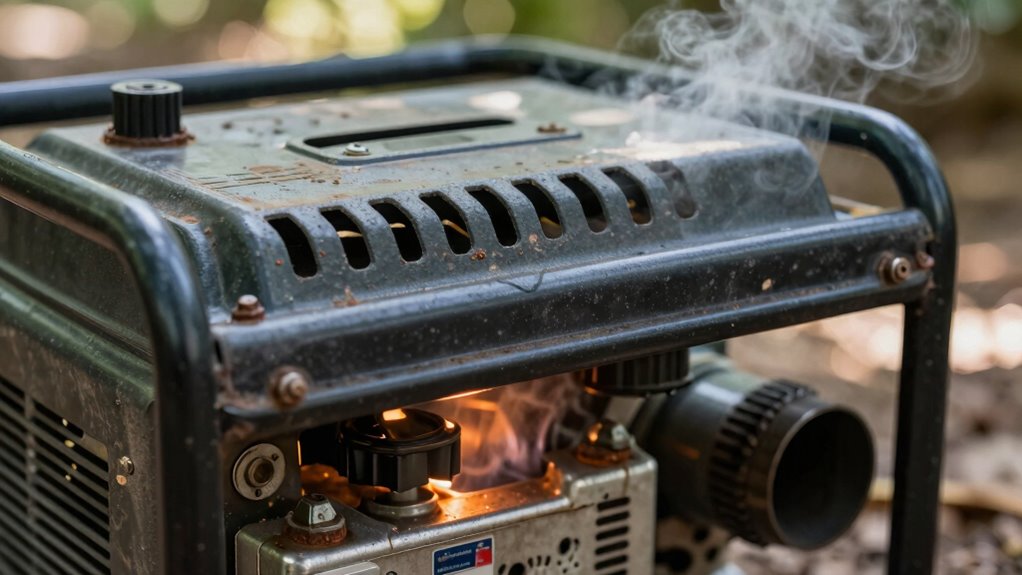
If your generator feels hotter than usual, it’s a sign that something may be wrong and needs your attention. Overheating can lead to serious damage if not addressed promptly. The first step is to perform thorough maintenance checks to identify potential issues. Check the oil levels, as low oil can cause the engine to overheat. Make sure that the oil is clean and at the proper level; dirty or low oil reduces lubrication, increasing friction and heat. Next, inspect the air filters. Clogged filters restrict airflow, making the cooling process less effective. If the filters are dirty, replace or clean them according to the manufacturer’s instructions. Also, look for any leaks or blockages in the fuel lines or exhaust system that could cause the engine to run hotter than normal.
Check oil levels and air filters regularly to prevent your generator from overheating and ensure optimal performance.
A critical component often overlooked is the cooling system. Conduct a cooling system inspection to make certain all parts are functioning correctly. Check the radiator or cooling fins for dirt, debris, or corrosion that could impair heat dissipation. Clean them carefully to restore proper airflow. If your generator has a liquid cooling system, verify the coolant levels and look for leaks. If the coolant is low or contaminated, drain and replace it with the recommended type. Proper coolant levels and a clean cooling system are vital to prevent overheating during continuous operation. Additionally, understanding the cooling system components can help identify potential failure points before they cause overheating.
It’s also important to examine the fan or blower motor that circulates air over the engine or radiator. Make sure it’s operating smoothly and isn’t obstructed by debris or dirt. A malfunctioning fan will considerably reduce cooling efficiency, causing temperatures to rise. If you notice any abnormal noises or signs of wear, consider replacing the fan or motor. Regular testing of these components during routine maintenance checks can help you catch issues early before they escalate. Recognizing signs of overheating early can prevent costly repairs and extend the lifespan of your generator. Additionally, consulting the manufacturer’s guidelines for recommended maintenance schedules can help ensure that all cooling components stay in optimal condition.
Products Worth Considering

Coway Airmega 250 Air Purifier for Large Rooms

LEVOIT Vital 200S-P Smart Air Purifier for Large Rooms

Levoit Eleva 300X HEPA Air Purifier for Home and Bedroom
As an affiliate, we earn on qualifying purchases.
Frequently Asked Questions
Can a Hot Generator Cause a Fire?
Yes, a hot generator can cause a fire if not properly maintained. You should regularly perform generator maintenance, checking for overheating signs and ensuring vents are clear. Conduct a fire risk assessment to identify potential hazards like faulty wiring or clogged filters. Ignoring these issues increases fire risk, so promptly address any overheating and keep your generator in good condition to prevent dangerous fires.
How Often Should I Check Generator Temperature?
You should check your generator’s temperature at least once every hour during operation to prevent overheating. Regular maintenance tips, such as inspecting cooling methods like air vents and coolant levels, help keep it safe. Don’t ignore signs of excessive heat, as neglecting this can lead to dangerous fires. Staying vigilant and monitoring your generator guarantees safe, efficient performance and peace of mind during power outages.
Is It Safe to Touch a Hot Generator?
It’s not safe to touch a hot generator because it could cause burns. When a generator feels unusually hot, check the cooling system to make sure it’s functioning properly. Also, inspect for insulation issues that might prevent heat from dissipating correctly. If the generator remains hot despite these checks, turn it off and consult a professional. Always prioritize safety and avoid direct contact with hot surfaces.
What Are Signs of Imminent Generator Failure?
You’ll notice signs like persistent overheating, strange noises, or a burning smell, which indicate imminent generator failure. Pay attention to overheating prevention and guarantee proper generator cooling. If your generator runs hotter than usual, it’s a red flag. Regular maintenance, checking coolant levels, and cleaning vents help prevent failure. Address these signs early by shutting down the generator and consulting a professional to avoid costly repairs and ensure safe operation.
Should I Upgrade My Generator if It Runs Hot Frequently?
If your generator runs hot frequently, upgrading might be wise. For example, a homeowner noticed consistent overheating despite regular generator maintenance. They upgraded to a model with a more efficient cooling system, which solved the issue. Regularly check your cooling system and perform necessary maintenance to prevent overheating. If problems persist, upgrading guarantees your generator operates safely and efficiently, avoiding potential failures and costly repairs down the line.
Conclusion
When your generator feels hotter than usual, think of it as a warning fire within—a symbol of the energy’s struggle to keep pace. Address it promptly, like tending to a flickering flame, to prevent it from burning out. Remember, the true power lies in your hands to nurture and care for it. By staying vigilant and attentive, you guarantee your generator’s flame stays steady, lighting your path through any storm.