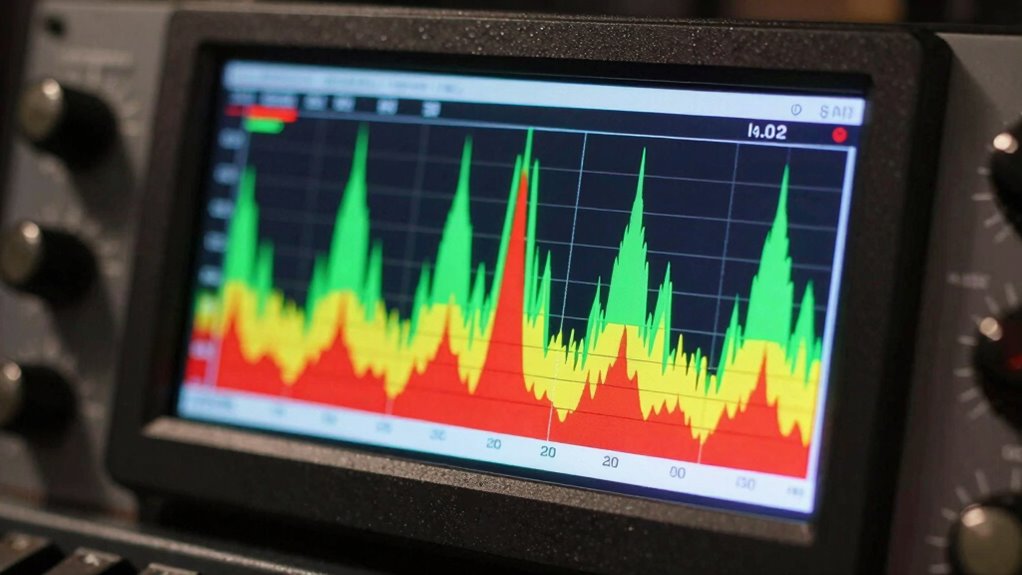

To interpret noise ratings effectively, understand that decibels are logarithmic, so a small increase (like 10 dB) roughly doubles perceived loudness. Check actual decibel numbers rather than trusting vague claims of “quiet” or “silent.” Keep in mind that brands may exaggerate or omit data, so comparing real measurements helps you gauge true noise levels. If you’re curious about making smarter choices and avoiding marketing tricks, you’re in the right spot to learn more.
Open a free Amazon Business account
Business pricing, bulk buying and tax-exempt orders.
As an affiliate, we earn on qualifying purchases.
Key Takeaways
- Always check the actual decibel rating rather than relying solely on marketing claims.
- Understand that small decibel differences (e.g., 55 dB vs. 65 dB) can significantly impact perceived noise.
- Recognize the logarithmic nature of decibel scale; a 10 dB increase roughly doubles perceived loudness.
- Consider the context and environment where the noise level is measured for accurate interpretation.
- Be aware that device design and technology influence noise levels, so compare specifications across models.
Ever wonder what those noise ratings on appliances and equipment really mean? Most of us glance at the labels and see numbers like 50 dB or 70 dB, but understanding what that actually signifies can feel confusing. That’s because noise ratings are based on sound measurement, which uses the decibel scale—a logarithmic system that quantifies sound intensity. Unlike a simple linear scale, the decibel scale represents how we perceive loudness, with small increases in decibels corresponding to significant jumps in actual sound energy. For instance, a 10 dB increase roughly doubles the perceived loudness, so a device rated at 60 dB isn’t just a little louder than one at 50 dB; it’s noticeably louder.
Understanding decibel ratings helps you judge appliance noise levels and choose quieter, more comfortable options.
When you’re evaluating noise ratings, it’s essential to interpret these numbers within the context of human hearing. The decibel scale is calibrated so that 0 dB is near the threshold of human hearing, while everyday sounds such as a whisper (around 30 dB), normal conversation (roughly 60 dB), and loud music or a vacuum cleaner (around 70-80 dB) fall into familiar ranges. Recognizing these benchmarks helps you gauge whether a piece of equipment will be intrusive or unobtrusive in your environment. For example, if an appliance boasts a noise rating of 85 dB, that’s comparable to city traffic or a loud restaurant—probably too loud for a quiet home setting.
It’s tempting to rely solely on marketing claims that emphasize “quiet” or “silent” operation, but these can be misleading if they don’t include actual sound measurement data. Always look for the decibel rating and consider how it aligns with your personal noise tolerance. Remember, even small differences in decibel levels can be meaningful; a device rated at 55 dB might be barely noticeable, while one at 65 dB could be disruptive in a peaceful space. Also, be aware that sound measurement can vary depending on the environment and measurement conditions, so ratings are often approximate. Understanding the sound wave frequencies used in sound therapy and healing practices can also influence your perception of noise levels and their effects.
Additionally, it’s helpful to know that different air purifier models may have varying sound profiles due to their design and technology, which can impact your overall experience. Moreover, awareness of the sound measurement process can help you better interpret these ratings and avoid being misled by marketing claims. For example, some electric bikes, like the KTM models, are designed to operate quietly, which can be an important factor for riders seeking quiet performance. It’s important to consider that paint sprayer performance can also be affected by noise levels, as some equipment may produce loud vibrations or sounds that impact usability or comfort. Ultimately, understanding the decibel scale empowers you to interpret noise ratings critically, instead of falling for vague marketing claims. By paying attention to actual measurements, you can make better-informed decisions about what appliances and equipment will keep your space comfortable. Instead of just trusting the labels, use your knowledge of sound measurement to choose devices that match your noise preferences, ensuring you don’t compromise peace and quiet for functionality.
quiet appliances with decibel ratings
As an affiliate, we earn on qualifying purchases.
As an affiliate, we earn on qualifying purchases.
Frequently Asked Questions
Do Noise Ratings Vary by Environment or Usage?
Yes, noise ratings can vary based on environment and usage impact. Ambient variations like room size, furniture, and background noise influence how loud a device seems. Additionally, your usage—such as watching movies or working—affects perceived noise levels. So, don’t rely solely on standard ratings; consider your specific environment and how you use the device. This helps you choose equipment that truly fits your noise preferences.
How Accurate Are Manufacturer Noise Claims?
Think of manufacturer noise claims as whispers in a noisy room—they can be true but often get amplified by marketing tactics. Noise measurement, while standardized, isn’t foolproof; environmental factors and testing conditions influence accuracy. So, don’t take claims at face value. Instead, look for independent reviews and real-world tests to gauge true performance. Trust your ears and research—manufacturer promises are just one part of the story.
What Noise Rating Is Considered Acceptable?
An acceptable noise rating generally falls below 70 decibels, aligning with common noise level standards for indoor environments. When evaluating acoustic measurement techniques, look for ratings based on standardized tests like A-weighted decibels (dBA), which reflect human hearing sensitivity. If a product’s noise level exceeds this threshold, it might be too loud for comfort or noise-sensitive settings. Always compare ratings with established standards to make informed choices.
How Do Noise Ratings Compare Across Different Brands?
You’ll find noise ratings vary across brands, but checking brand reputation and consumer reviews helps you compare accurately. Established brands often maintain consistent ratings, while newer or less-known brands might have more variable results. Pay attention to real user feedback about noise levels in daily use, rather than just relying on the numbers. This way, you get a clearer picture of each brand’s actual noise performance, avoiding marketing hype.
Can Noise Ratings Predict Actual Experience?
Investigating the theory that noise ratings predict actual experience reveals partial truth. Noise measurement provides a standardized way to gauge a device’s sound level, but consumer perception can vary based on individual sensitivity and environment. So, while a lower noise rating generally suggests a quieter experience, it doesn’t guarantee you’ll find it quieter in real-life use. Consider both ratings and personal preferences when evaluating noise levels.
As an affiliate, we earn on qualifying purchases.
Conclusion
Now that you’ve learned how to decode noise ratings, remember—what you see isn’t always what you hear. The true story lies beneath the numbers, waiting to reveal itself when you ask the right questions. Are you prepared to look beyond marketing claims and uncover the real noise levels? With this knowledge, you hold the power to make smarter choices. The next step? Dive deeper, and let curiosity lead you into a quieter, more informed world.
As an affiliate, we earn on qualifying purchases.
As an affiliate, we earn on qualifying purchases.
NFL season / tailgating Picks
team gear
As an affiliate, we earn on qualifying purchases.