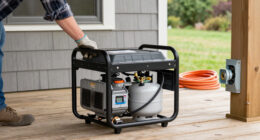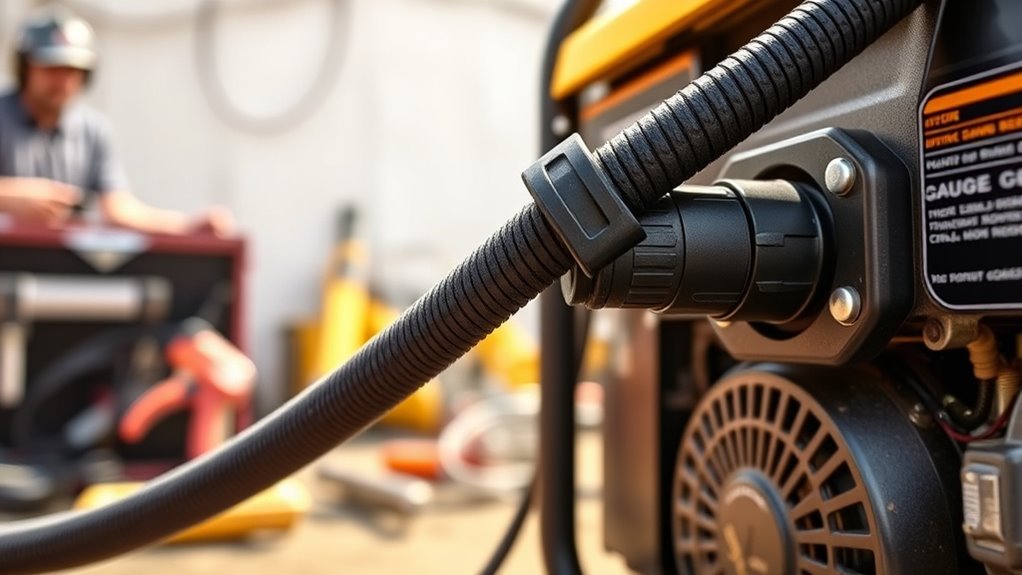

To select the right AWG for your generator extension cord, consider your load’s wattage and amperage. Light loads like LED lights or small appliances usually need 16 or 14 AWG cords, while heavier tools require 12 or 10 AWG for safety and efficiency. Also, account for the cord length, as longer cords need thicker wire to reduce voltage drop. By matching your load and cord length to the proper gauge, you guarantee safe and reliable power — learn more to get it just right.

Get backup power and energy gear delivered free — and shop member deals
- Fast, free delivery on millions of items
- Access to Prime Big Deal Days deals on October 6–7
- Prime Video, Amazon Music and more included
Key Takeaways
- Match the cord’s AWG size to your load’s wattage and amperage requirements for safe operation.
- Use thicker (lower AWG number) cords for higher power loads to reduce voltage drop and prevent overheating.
- Consider cord length; longer distances may require thicker gauges to compensate for increased resistance.
- Refer to safety guidelines: light loads (appliances, LED lights) typically need 14-16 AWG, heavy loads (power tools, generators) need 10-12 AWG.
- Always select outdoor-rated cords for outdoor generator use and inspect cords regularly for damage before connecting.

Are you unsure which gauge extension cord to use with your generator? Choosing the correct AWG (American Wire Gauge) is essential not only for maximum performance but also for safety. Using an under-gauged cord can cause overheating, equipment damage, or even fire hazards, while an unnecessarily thick cord might be bulky and inconvenient. To make the right choice, you need to understand your load requirements and match them with the appropriate cord gauge.
Choosing the right extension cord gauge ensures safety and optimal generator performance.
Before connecting your generator, always prioritize safety precautions. Ensure the extension cord is rated for outdoor use if you’ll be working outside, and check that it’s in good condition—no cuts, frays, or damaged connectors. When handling cords, avoid pinching or bending them sharply, and never overload the cord beyond its rated capacity. Proper cord storage is equally important; after use, coil the extension cord loosely and store it in a cool, dry place away from direct sunlight. This prevents deterioration of the insulation and maintains its safety and performance over time.
In terms of gauge selection, lighter loads, such as small appliances or LED lights, typically require a thinner cord—say, 16 or 14 AWG—since they draw less current. However, larger tools or multiple devices running simultaneously demand a thicker gauge, like 12 or even 10 AWG, to handle higher currents safely. Always check the wattage and amperage ratings of your devices and compare them with the cord’s capacity. Using a cord with too high a gauge (thicker wire) for a small load isn’t harmful but can be cumbersome and less flexible, whereas choosing a thinner gauge for heavy loads risks overheating and potential failure.
Remember that longer extension cords increase resistance, which can lead to voltage drops. If you need to extend your reach, opt for a thicker gauge to compensate for this loss. When storing cords, coil them neatly to prevent kinks and damage. Avoid wrapping them tightly around hooks or objects that might crush the insulation. Proper storage extends the lifespan of your extension cords and keeps them safe for future use.
outdoor generator extension cord 16 AWG
As an affiliate, we earn on qualifying purchases.
As an affiliate, we earn on qualifying purchases.
Frequently Asked Questions
Can I Use a Thicker Gauge Cord for Higher Wattage Loads?
Yes, you can use a thicker gauge cord for higher wattage loads, and it’s actually a good idea to verify gauge compatibility with your power needs. Thicker cords handle more current and reduce resistance, which helps prevent overheating. Keep in mind, though, that a thicker gauge might reduce cord flexibility, making it less convenient to handle. Always match the gauge to your load for safety and peak performance.
How Does Cord Length Affect Amperage Capacity?
You should know that longer cords decrease load capacity because they increase resistance. When selecting a wire gauge, keep in mind that a thicker gauge (lower AWG) can handle more amps over longer distances without overheating. So, if you’re using a longer extension cord, choose a thicker gauge to maintain safe load capacity. Always match your wire gauge to your load requirements and cord length for safe, efficient power delivery.
Is There a Safe Way to Extend My Generator’s Power?
Yes, you can extend your generator’s power safely by using a heavy-duty, appropriately gauged extension cord designed for generator use. Always prioritize generator safety by avoiding overloading and ensuring the cord offers sufficient amperage capacity. Choose a cord with good cord flexibility for easy handling and durability. Remember to connect the cord securely and keep it away from water or sharp objects to prevent hazards.
What Are the Risks of Using an Undersized Extension Cord?
Using an undersized extension cord risks overheating, melting wiring, and causing fires—imagine your home turning into a fireworks display! It’s a clear violation of extension cord safety and wiring standards. You might save a few bucks now, but you’re risking damage to your generator, appliances, or even personal safety. Always choose the correct gauge to handle your load safely, respecting wiring standards and avoiding disaster.
How Often Should I Check My Extension Cord for Damage?
You should check your extension cord for damage at least once a month, especially before heavy use. Regular inspection frequency helps you spot signs of wear, fraying, or exposed wires early, preventing potential damage and hazards. Always look for cracks, cuts, or burn marks, and replace the cord if you find any damage. Staying vigilant guarantees safe operation and prolongs your extension cord’s lifespan.
heavy duty 10 AWG generator extension cord
As an affiliate, we earn on qualifying purchases.
As an affiliate, we earn on qualifying purchases.
Conclusion
So, next time you’re tempted to grab that flimsy extension cord, remember—your generator’s power deserves better. Don’t gamble with fire hazards or burnt-out appliances just to save a few bucks. Choose the right AWG gauge, and show your generator some respect. After all, it’s not just about convenience; it’s about keeping your home safe and your sanity intact. Trust me, your future self will thank you—preferably with a working fridge.
outdoor-rated generator extension cord 12 AWG
As an affiliate, we earn on qualifying purchases.
As an affiliate, we earn on qualifying purchases.
long outdoor extension cord for generator
As an affiliate, we earn on qualifying purchases.
As an affiliate, we earn on qualifying purchases.
Fall Picks
fall essentials
As an affiliate, we earn on qualifying purchases.