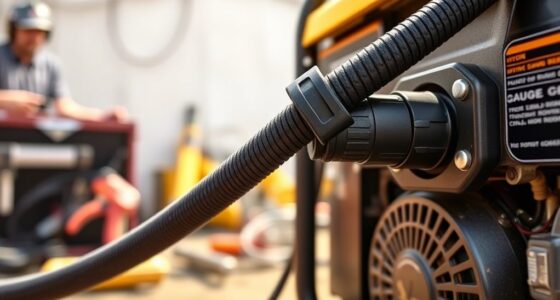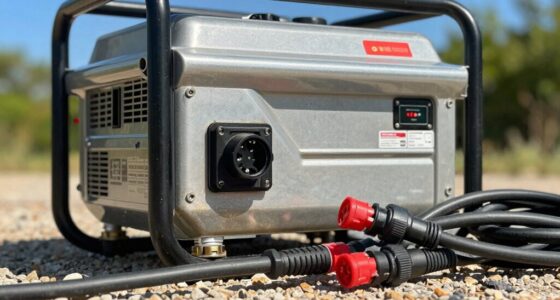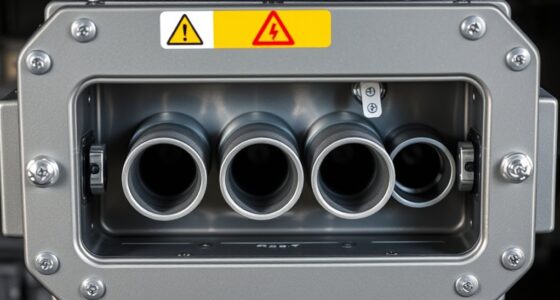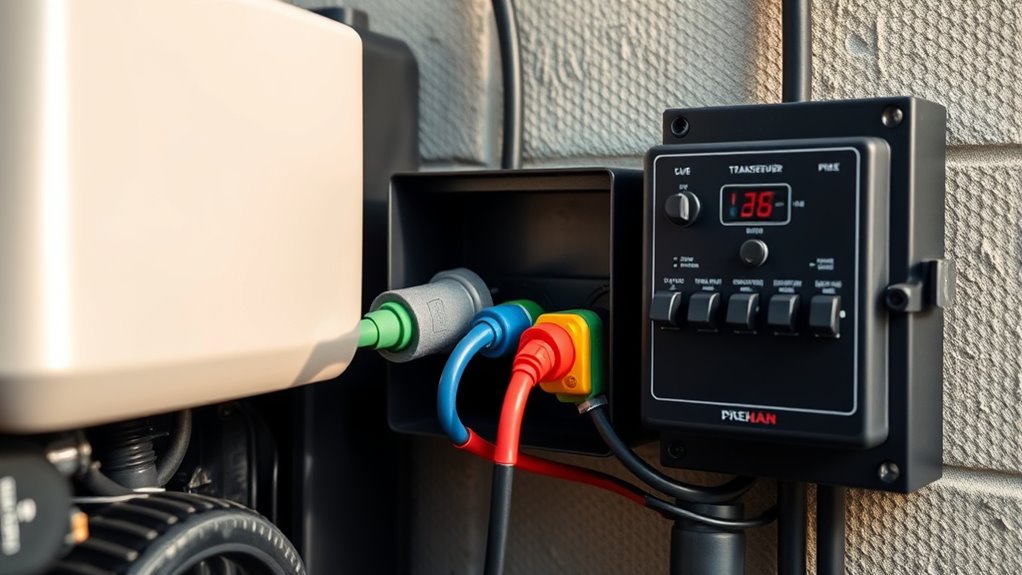

To select the right generator power inlet box and transfer switch, you need to match their capacities with your home’s power needs and generator output. Make certain the inlet box is weather-resistant and has a lockable cover for safety. Choose a transfer switch that suits your load capacity—automatic or manual—while verifying it meets safety standards like UL certification. Proper installation by a qualified electrician is vital for safety and compliance. Keep exploring to discover more essential tips for an ideal setup.

Get backup power and energy gear delivered free — and shop member deals
- Fast, free delivery on millions of items
- Access to Prime Big Deal Days deals on October 6–7
- Prime Video, Amazon Music and more included
Key Takeaways
- Match the inlet box and transfer switch to your generator’s power output and household load capacity.
- Choose weather-resistant, UL-listed components with appropriate features like lockable covers and automatic options.
- Ensure proper wiring, grounding, and circuit protection as per manufacturer instructions and local safety codes.
- Consult a qualified electrician for installation to guarantee safety, compliance, and correct system integration.
- Prioritize compatibility and safety features to ensure reliable, safe backup power operation during outages.
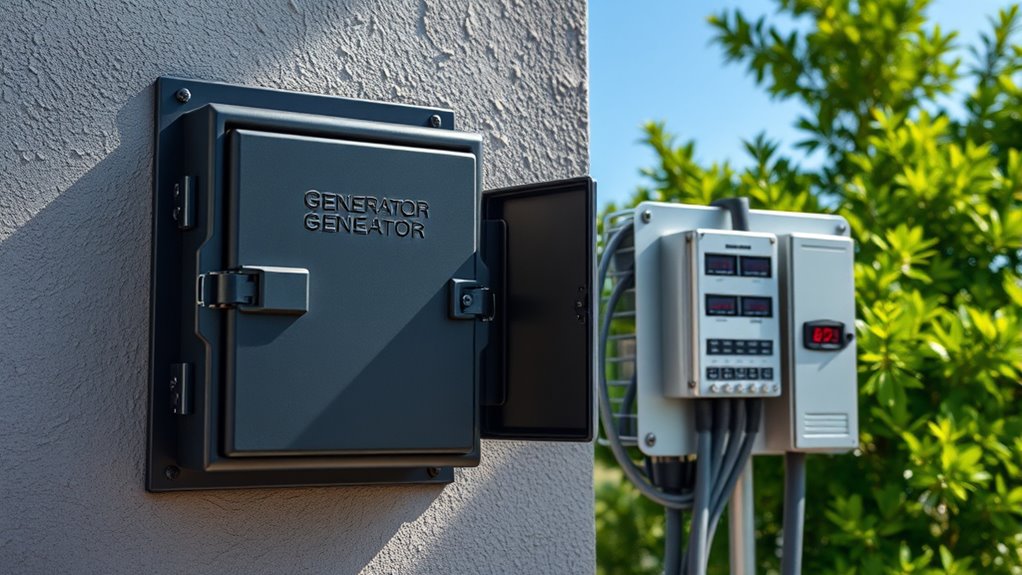
Choosing the right generator power inlet box and transfer switch is vital for guaranteeing a safe and reliable backup power setup. When it comes to generator wiring, selecting compatible components is essential to prevent electrical hazards and ensure smooth operation. Your inlet box acts as the connection point between your generator and your home’s electrical system, so it must match the generator’s power output and be rated for your specific needs. Similarly, the transfer switch serves as a critical safety device that isolates your home’s circuits from the utility grid during a power outage, preventing back-feed that could harm utility workers or damage equipment. Properly matching these components guarantees a seamless flow of power and minimizes risks.
Selecting compatible generator inlet boxes and transfer switches ensures safe, reliable backup power and prevents electrical hazards.
Before installing, you need to understand safety protocols thoroughly. These protocols are designed to protect you, your family, and utility personnel. For instance, always shut off the main breaker before connecting or disconnecting the transfer switch to avoid accidental electrical shocks. When wiring your generator, follow manufacturer instructions carefully, ensuring that all connections are secure and insulated properly. Using the correct gauge of wire is essential to handle the expected current load without overheating or causing shorts. Additionally, grounding your generator wiring properly helps prevent electrical shocks and ensures that any stray current is safely dissipated into the earth. Recognizing the importance of generator wiring components can help prevent dangerous situations and ensure your system functions correctly.
When choosing a generator power inlet box, look for one that’s weather-resistant and designed for your installation environment. It should have a lockable cover to prevent tampering and unauthorized use. The transfer switch must be rated for your home’s load capacity and compatible with your generator’s power output. Automatic transfer switches are preferable for convenience, but manual models can still provide reliable operation when properly installed. Make sure all components are UL-listed or certified by recognized safety standards organizations to guarantee compliance and safety.
Installation should be performed by a qualified electrician familiar with local codes and safety protocols. This not only ensures the correct wiring but also guarantees that safety measures are in place, such as proper grounding and circuit protection. Remember, neglecting these details can lead to dangerous situations like electrical fires or electrocution. By investing in the right generator wiring components, adhering to safety protocols, and consulting professionals when needed, you can enjoy peace of mind knowing your backup power system is safe, reliable, and ready when you need it most.
weather-resistant generator power inlet box
As an affiliate, we earn on qualifying purchases.
As an affiliate, we earn on qualifying purchases.
Frequently Asked Questions
Can I Install a Generator Power Inlet Box Myself?
Yes, you can install a generator power inlet box yourself if you have experience with DIY projects and electrical work. However, make sure to follow all safety precautions—turn off the main power, use proper tools, and double-check connections. If you’re unsure about any step, it’s best to consult a professional. Prioritize safety to prevent accidents and ensure your setup works correctly.
What Is the Lifespan of a Typical Transfer Switch?
A typical transfer switch lasts about 10 to 15 years, but its lifespan depends on regular maintenance and usage. You should perform transfer switch maintenance by inspecting for corrosion, testing functionality, and cleaning contacts periodically. Factors like high outdoor exposure, electrical surges, and installation quality can influence its durability. Proper upkeep ensures your transfer switch stays reliable and extends its lifespan, keeping your generator system ready whenever you need it.
Are There Portable Options for Generator Power Inlet Boxes?
Yes, there are portable options for generator power inlet boxes. These portable generator inlets are designed for easy transportation and quick setup, making them ideal for temporary or remote power needs. You can connect your generator to your home or business with these compact, lightweight inlets, which offer convenience and flexibility. Just guarantee you choose one compatible with your generator’s power specifications for safe and reliable operation.
How Do I Troubleshoot Transfer Switch Malfunctions?
Did you know improper transfer switch setup causes over 50% of generator safety issues? To troubleshoot malfunctions, first check for loose wiring or corrosion, which can disrupt operation. Make certain your transfer switch complies with electrical codes. Turn off power before inspecting, and reset or replace faulty components if needed. Regular maintenance helps prevent future problems and keeps your system running smoothly and safely.
Is Professional Installation Required for All Transfer Switches?
You don’t always need professional installation for all transfer switches, but it’s highly recommended for safety and adherence to electrical code. Installing a transfer switch involves generator safety considerations, such as proper grounding and wiring, which can be complex. A licensed electrician ensures the switch is correctly installed, reducing risks of electrical faults or safety hazards. Always prioritize professional help to guarantee your setup meets local electrical standards and is safe to use.
UL-listed transfer switch for home backup power
As an affiliate, we earn on qualifying purchases.
As an affiliate, we earn on qualifying purchases.
Conclusion
So, after all this, you might think choosing the right generator inlet box and transfer switch is a walk in the park. But here’s the irony—you could spend hours researching, only to realize that the simplest mistake could leave you powerless when you need it most. Don’t overlook the details. Picking the right equipment isn’t just about convenience; it’s about avoiding the ultimate irony—being prepared, only to be caught off guard. Stay smart, stay powered.
automatic transfer switch for generator
As an affiliate, we earn on qualifying purchases.
As an affiliate, we earn on qualifying purchases.
manual transfer switch for home generator
As an affiliate, we earn on qualifying purchases.
As an affiliate, we earn on qualifying purchases.
Fall Picks
fall essentials
As an affiliate, we earn on qualifying purchases.