
To keep your generator cords dry and protected outdoors, organize them neatly using cable ties and elevate them on waterproof platforms. Use outdoor-rated, waterproof extension cords and secure all connections with weatherproof covers or caps. Cover generators and cords with heavy-duty tarps or enclosures, ensuring proper ventilation. Regularly inspect for damage, replace worn cords, and maintain all protective measures. For more detailed tips on weatherproofing and safety, keep exploring the best practices for outdoor electrical setups.

Get backup power and energy gear delivered free — and shop member deals
- Fast, free delivery on millions of items
- Access to Prime Big Deal Days deals on October 6–7
- Prime Video, Amazon Music and more included
Key Takeaways
- Use weatherproof extension cords rated for outdoor use with waterproof and UV-resistant features.
- Cover connections and cords with watertight caps or weatherproof covers to prevent moisture ingress.
- Elevate cords and generator on waterproof platforms or pallets to avoid ground moisture and debris.
- Regularly inspect cords and connections for damage, replacing any frayed or cracked insulation promptly.
- Store and shield cords with heavy-duty waterproof enclosures or covers when not in use.
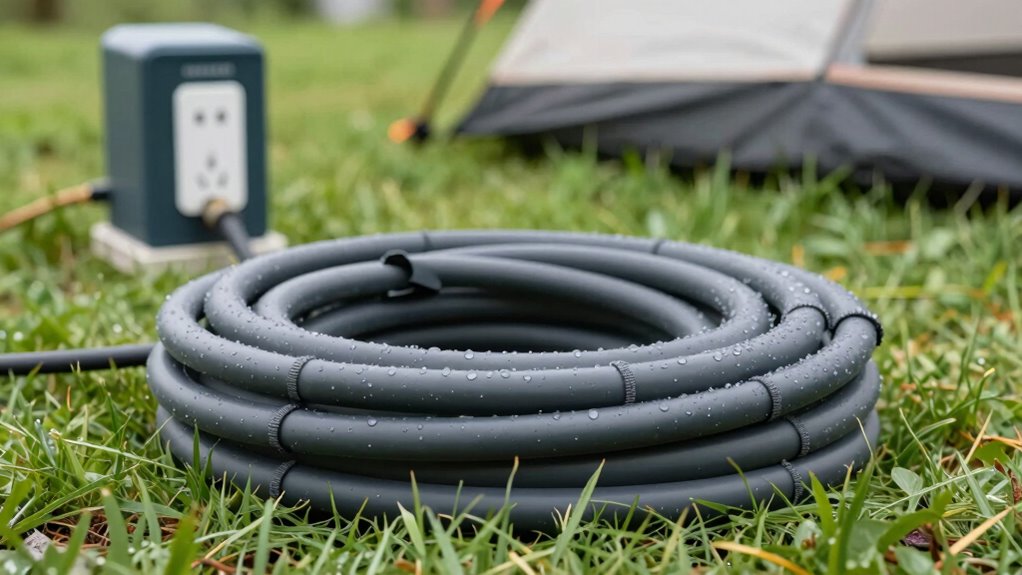
When using a generator outdoors, keeping your cords dry and protected is essential to guarantee safety and reliable operation. Proper cord management plays a crucial role in preventing damage and minimizing safety hazards. Start by organizing your cords neatly, avoiding tangles and unnecessary stress on the wires. Use cable ties or hooks to secure cords off the ground and out of pathways where they could be tripped over or damaged. Keeping cords elevated reduces exposure to moisture, dirt, and debris, which can compromise insulation and lead to electrical shorts. When managing cords, ensure they are not stretched too tightly or pinched, as this can weaken the insulation over time.
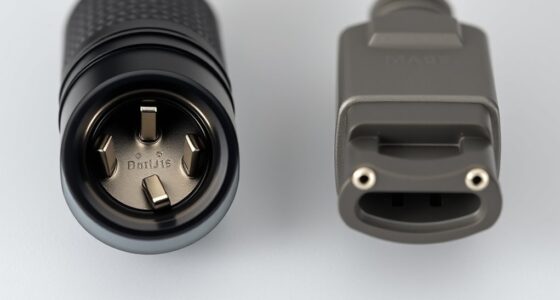
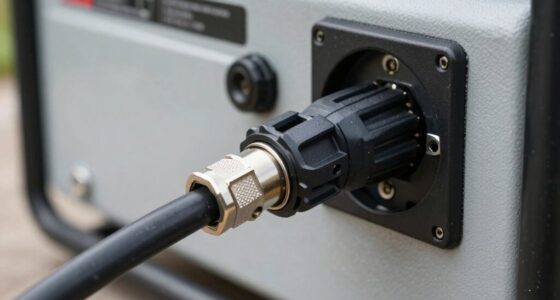
Weatherproofing techniques are vital for protecting your generator cords from the elements. Before setting up, inspect your cords for any signs of wear or damage, and replace any frayed or cracked insulation. Cover exposed connectors with watertight caps or specialized weatherproof covers designed for outdoor electrical equipment. Additionally, use outdoor-rated extension cords with proper insulation and waterproofing features, which are built to withstand moisture and temperature fluctuations. When connecting cords, make sure all connections are tight and secure to prevent water ingress, especially during rain or high humidity conditions. Incorporating appropriate weatherproofing measures can significantly enhance the longevity and safety of your outdoor electrical setup.
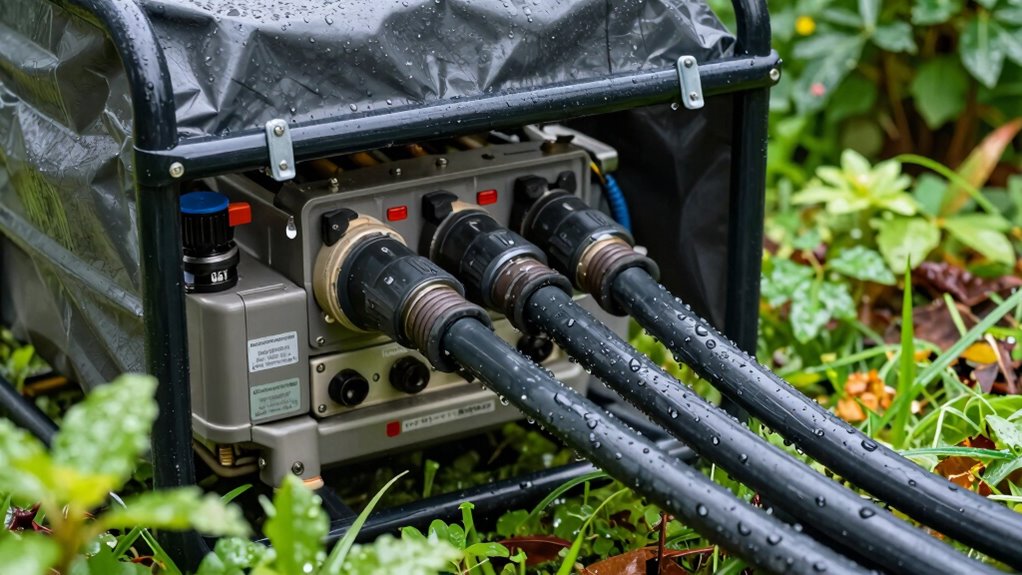
To further weatherproof your setup, utilize protective covers or enclosures over the generator and its cords. Heavy-duty tarps, waterproof covers, or specialized outdoor electrical boxes can shield connections from rain and splashes. When covering your setup, ensure there’s proper ventilation to prevent overheating, and avoid trapping moisture inside. Elevate the generator and cords on sturdy, waterproof platforms or pallets to keep them off damp ground. If you anticipate prolonged outdoor use, consider using weatherproof extension cords with built-in protection against water, UV rays, and temperature extremes. Regularly checking your outdoor electrical equipment for signs of wear helps ensure ongoing safety and performance. Additionally, incorporating moisture-resistant materials into your setup can provide extra protection against unexpected weather changes.
outdoor waterproof extension cords
As an affiliate, we earn on qualifying purchases.
As an affiliate, we earn on qualifying purchases.
Frequently Asked Questions
Can You Use Regular Extension Cords Outdoors Safely?
You shouldn’t use regular extension cords outdoors safely because they lack the necessary insulation and waterproofing, leading to potential electrical hazards. Indoor safety standards don’t apply outside, so always select outdoor-rated cords designed for weather resistance. Be mindful of cord length limitations to avoid voltage drops, which can affect your equipment’s performance. Using proper outdoor extension cords helps protect your equipment and ensures safety during outdoor power needs.
What Are the Best Materials for Waterproofing Generator Cords?
Sure, you can just toss your cords in a bucket and call it waterproofing, but let’s get serious. The best materials for waterproofing generator cords include heavy-duty rubber or silicone coatings, which excel in waterproofing techniques. These materials offer superior cord material durability, resisting water and UV damage. For extra protection, use waterproof connectors and seal the ends. Your cords will thank you with longer life and safer outdoor use.
How Often Should You Inspect Generator Cords for Damage?
You should inspect your generator cords at least once a month to guarantee damage prevention. Regular inspections help you spot signs of wear, cracks, or fraying early, reducing the risk of electrical issues or safety hazards. After heavy use or severe weather, check them more frequently. By maintaining a consistent inspection schedule, you keep your cords in good condition, prolong their lifespan, and ensure safe, reliable operation during outdoor power needs.
Are There Specific Storage Tips for Generator Cords During Winter?
Think of your generator cords as delicate vines needing winter protection. You should store them in a dry, cool place, away from moisture and extreme cold. Coil cords loosely to prevent damage, and avoid sharp bends. Use cord storage containers or hang them on hooks, ensuring they’re protected from snow and ice. Proper winter storage preserves their flexibility and safety, so your cords stay ready for action when spring arrives.
Can Wet Generator Cords Cause Electrical Fires?
Wet generator cords can indeed cause electrical fires. When cords are soaked, water can compromise the electrical insulation, increasing the risk of short circuits and sparks. This fire hazard is especially dangerous outdoors where moisture is common. To stay safe, always make sure your generator cords are dry and properly insulated before use. Inspect cords regularly for damage or moisture, and replace any that show signs of wear to prevent potential fires.
weatherproof generator cord covers
As an affiliate, we earn on qualifying purchases.
As an affiliate, we earn on qualifying purchases.
Conclusion
By taking these simple steps, you’ll keep your generator cords cozy and dry, ensuring they stay happy and functional when you need them most. A little extra care now means fewer surprises later, so your outdoor adventures or emergency backups run smoothly. Think of it as giving your cords a gentle hug—protecting them from the elements and extending their life. With these tips, you’ll enjoy peace of mind, knowing your equipment is well-loved and ready to serve whenever called upon.
outdoor electrical cord enclosures
As an affiliate, we earn on qualifying purchases.
As an affiliate, we earn on qualifying purchases.
heavy-duty waterproof tarp for generator
As an affiliate, we earn on qualifying purchases.
As an affiliate, we earn on qualifying purchases.
Fall Picks
fall essentials
As an affiliate, we earn on qualifying purchases.