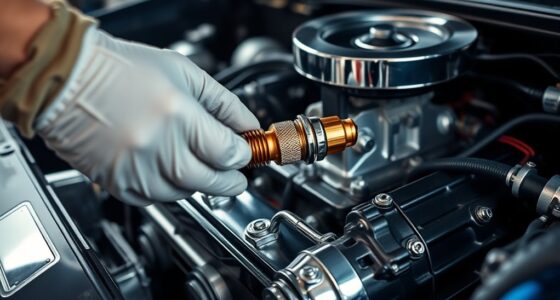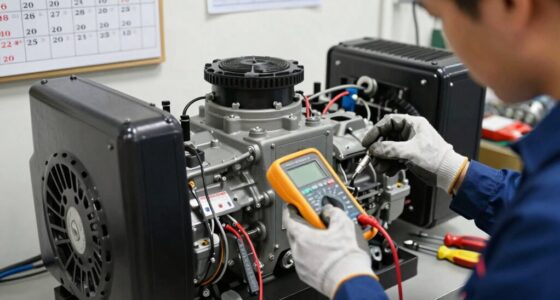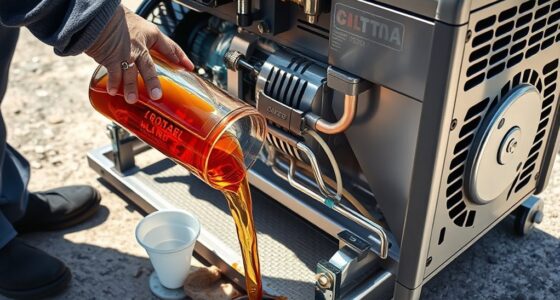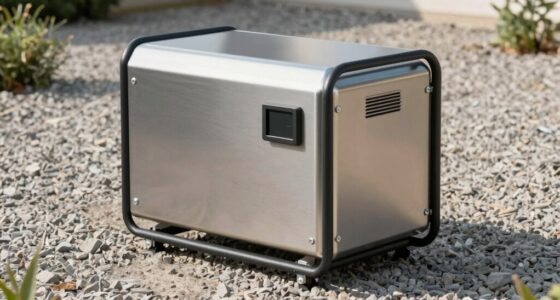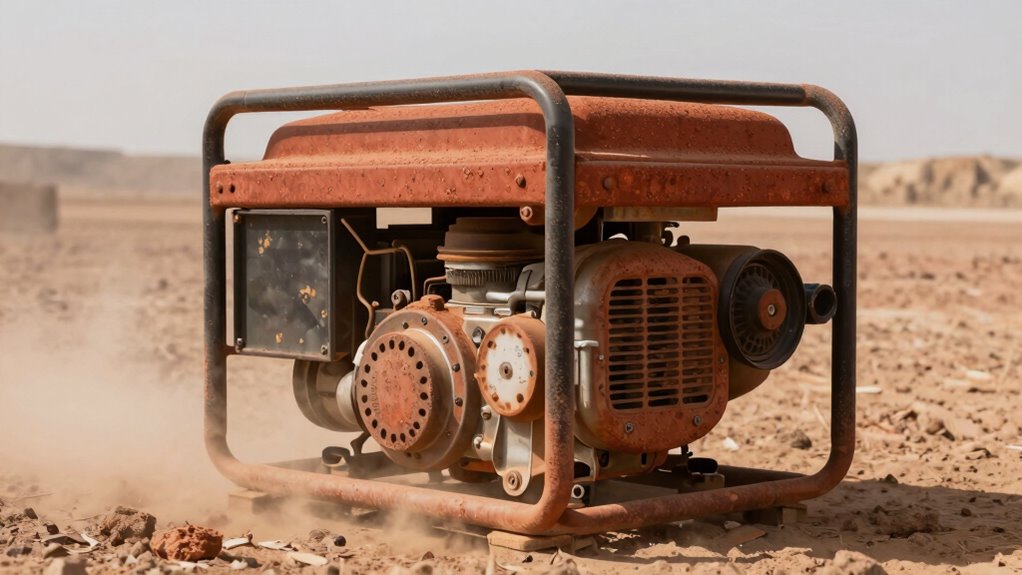

In dusty environments, you’ll need to perform more frequent maintenance on your generator. Dust clogs air filters quickly, reducing airflow and causing incomplete combustion, which can damage engine parts. You should regularly inspect and replace filters, keep the area clean, and check cooling fins and electrical connections for dust buildup. Proper dust management helps prevent corrosion and component wear, extending your generator’s lifespan. If you continue, you’ll discover essential strategies to keep your generator running smoothly in harsh conditions.

Get backup power and energy gear delivered free with Prime
- Fast, free delivery on millions of items
- Prime Video, Amazon Music and more included
- Member-only deals all year
Key Takeaways
- Dust accumulation necessitates more frequent filter inspections and replacements to maintain airflow and engine efficiency.
- Regular cleaning of cooling fins and ventilation systems is essential to prevent overheating caused by dust blockage.
- Increased maintenance of electrical components is required due to dust-induced corrosion and dirt buildup.
- Operators should perform daily checks in dusty environments to identify and address filter and component issues promptly.
- Using high-quality filters and keeping the surrounding area clean helps reduce dust ingress and prolongs generator lifespan.

Operating a generator in dusty environments presents unique challenges that demand diligent maintenance. Dust can quickly clog air filtration systems, reducing airflow and causing the engine to work harder than it should. When the air filter becomes dirty or clogged, it limits the amount of clean air reaching the engine, which can lead to incomplete combustion and decreased efficiency. Regularly inspecting and replacing air filters is essential to keep dust from entering sensitive engine components. A neglected air filtration system not only hampers performance but also accelerates component wear, as dirt particles can settle onto critical parts like pistons, valves, and cylinders. This accelerated wear shortens the lifespan of your generator and increases the likelihood of unexpected breakdowns.
In dusty environments, you must pay close attention to your generator’s air filtration system. Cleaning or replacing filters more frequently than you would in cleaner settings helps prevent dust accumulation. Moisture and dust together can form a sticky paste that clogs filters faster, so it’s imperative to check filters daily if dust levels are high. Using high-quality, industrial-grade filters designed for dusty conditions can markedly improve your generator’s resilience. These filters trap smaller particles and maintain airflow better, reducing strain on the engine and decreasing the rate of component wear. Additionally, keeping the surrounding area clean minimizes the amount of dust that can be drawn into the system. Regular maintenance not only improves performance but also extends the overall lifespan of the generator components. Proper air filtration systems are vital for ensuring your generator operates reliably in challenging dusty environments.
Dust buildup doesn’t just affect the air filtration; it also accelerates the deterioration of other engine parts. Fine particles can settle on electrical connections, cooling fins, and fuel injectors, leading to corrosion and malfunction. This makes routine inspections essential, especially in environments where dust is pervasive. Regularly inspecting cooling systems and ensuring proper ventilation prevents dust from blocking airflow around critical components, which helps avoid overheating and mechanical failure. You should also consider implementing a schedule for thorough cleaning of the generator’s exterior and accessible internal parts to remove accumulated dust that could compromise operation. Proper maintenance of engine components and other parts is crucial for reliable generator operation in dusty environments. Incorporating dust management strategies can significantly enhance the durability and performance of your generator in such conditions.
Products Worth Considering

Levoit Vital 100S-P Air Purifier with Washable Pre-Filter

Levoit Core 400S-P Smart Air Purifier for Large Rooms

LEVOIT Vital 200S-P Smart Air Purifier for Large Rooms
As an affiliate, we earn on qualifying purchases.
Frequently Asked Questions
How Often Should Filters Be Replaced in Dusty Environments?
In dusty environments, you should replace air filtration filters more frequently to maintain ideal filter lifespan. Typically, check filters every 1 to 2 months, and replace them when they appear dirty or clogged. Dust accumulation can considerably reduce efficiency, so proactive maintenance is essential. Regular inspections ensure your generator stays protected, preventing potential damage caused by dust ingress, and helps maintain steady operation and reliability.
What Special Tools Are Needed for Maintenance in Dusty Conditions?
In dusty environments, you need specialized tools like a high-efficiency air filtration system and protective covers for maintenance. For example, a power plant installed extra protective covers and used industrial-grade air filtration tools, which helped prevent dust ingress and kept the generator running smoothly. These tools guarantee you can clean filters effectively and protect sensitive components from dust damage, extending your generator’s lifespan and minimizing downtime.
Can Dust Cause Electrical Issues in Generators?
Yes, dust can cause electrical issues in generators. Dust accumulation on electrical components can lead to overheating and reduce insulation effectiveness. Over time, this buildup promotes electrical corrosion, which weakens connections and increases the risk of short circuits. Regular cleaning and inspection are essential in dusty environments to prevent dust-related electrical problems, ensuring your generator operates reliably and maintains peak performance under challenging conditions.
How Does Dust Impact Generator Cooling Systems?
Dust accumulation greatly impacts your generator’s cooling systems by obstructing airflow. When dust builds up on cooling fins and vents, it blocks proper heat dissipation, causing the generator to overheat. This can lead to equipment failure or reduced efficiency. Regularly cleaning and inspecting your generator helps prevent airflow obstruction, ensuring ideal cooling performance and prolonging your generator’s lifespan in dusty environments.
Are There Specific Lubricants Recommended for Dusty Environments?
In dusty environments, you should choose dust resistant lubricants that withstand dirt and debris, ensuring your generator runs smoothly. Always check lubricant compatibility with your equipment to prevent damage. These specialized lubricants form a protective barrier against dust intrusion, keeping moving parts well-lubricated and reducing wear. Using the right dust resistant lubricants helps maintain peak performance, even in harsh conditions, and extends your generator’s lifespan.
Conclusion
In dusty environments, staying on top of generator maintenance is essential to keep things running smoothly. Dust can be a silent saboteur, clogging filters and causing overheating if you’re not vigilant. Regular inspections, cleaning, and timely replacements are your best defense. Remember, prevention is better than cure—don’t let dust sneak up on you. Stay proactive, and your generator will serve you well, even in the toughest conditions. Keep dust at bay and keep your power flowing smoothly.