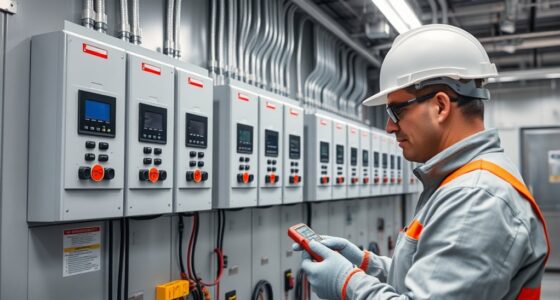

To decide between preventive and reactive maintenance, assess your equipment’s failure rate, operational importance, and potential costs. If your machinery is critical or prone to frequent breakdowns, investing in preventive maintenance can save money and extend equipment life. Conversely, for less critical assets with infrequent failures, reactive maintenance might suffice. Consider environmental factors and available resources too. To make the best choice for your operations, explore the detailed factors that influence each approach.

Get backup power and energy gear delivered free with Prime
- Fast, free delivery on millions of items
- Prime Video, Amazon Music and more included
- Member-only deals all year
Key Takeaways
- Assess equipment criticality and failure impact to prioritize preventive maintenance for high-risk assets.
- Analyze maintenance costs versus potential downtime and repair expenses for informed decision-making.
- Consider environmental factors and operational conditions that may influence the effectiveness of maintenance strategies.
- Utilize technology and management systems to predict failures and optimize maintenance scheduling.
- Match maintenance approach to resource capacity and operational needs to balance efficiency and reliability.
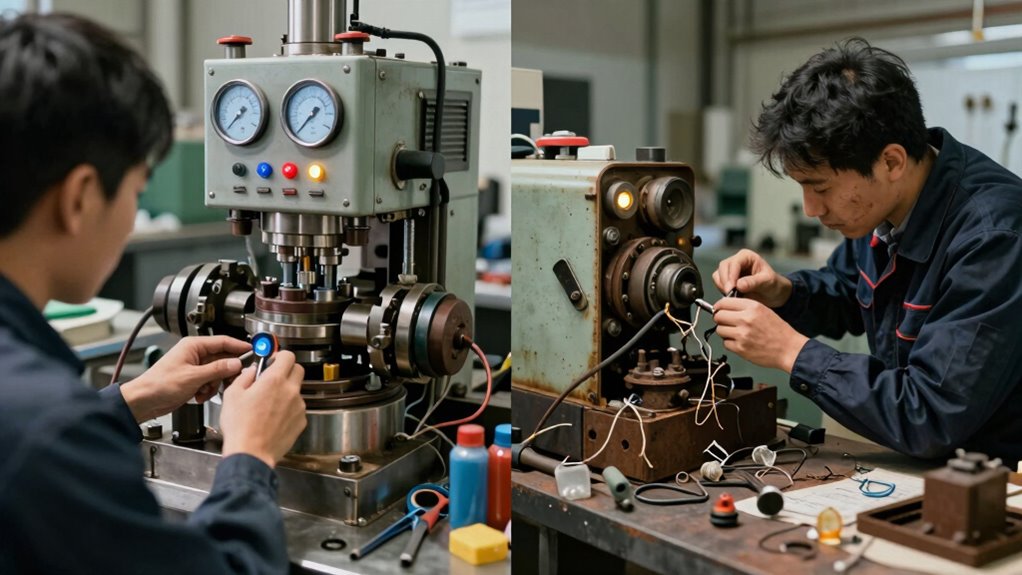
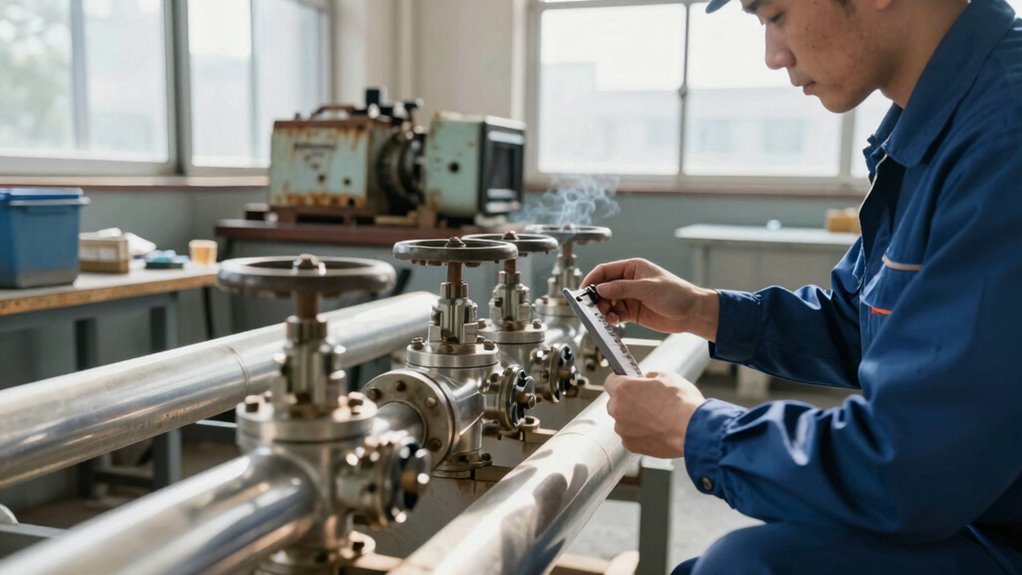
Are you unsure whether to choose preventative or reactive maintenance for your equipment? Making this decision isn’t just about fixing things when they break or scheduling regular checkups; it’s about understanding how each approach impacts your overall operations, costs, and equipment lifespan. To start, you need to consider a thorough cost analysis. Preventive maintenance involves planned inspections and servicing, which might seem costly upfront, but it often prevents major breakdowns that are expensive to repair. Reactive maintenance, on the other hand, can be cheaper initially since you’re only fixing what’s broken, but unexpected breakdowns tend to be costly and disruptive. You should evaluate how often equipment failure occurs and the associated repair costs to determine which approach makes sense financially.
Another critical factor is your equipment’s lifespan. Preventive maintenance helps extend the longevity of your machinery by catching issues early, ensuring components stay in good condition longer. Regular lubrication, calibration, and inspections can prevent wear and tear from escalating, ultimately maximizing your equipment’s lifespan. Conversely, relying solely on reactive maintenance might lead to more frequent breakdowns, causing equipment to age faster and reducing its useful life. If your equipment is expensive to replace or has critical functions, investing in preventative maintenance can prove more cost-effective over time, ensuring your assets remain operational longer and reducing the risk of sudden failures. Additionally, incorporating outdoor or natural environments into your maintenance strategy can help adapt your approach to specific conditions, such as exposure to weather or landscape elements. Understanding the cost-benefit analysis of each approach can help you make more informed, strategic decisions about maintenance planning.
Furthermore, considering technology integration in your maintenance routines can enhance predictive capabilities, helping you identify potential failures before they happen. Implementing maintenance management systems can streamline scheduling and record-keeping, making preventative maintenance more feasible and efficient. You should also consider your operational environment and the importance of downtime. If your production schedule is tight and downtime is costly, preventative maintenance becomes more appealing because it minimizes unplanned outages. This proactive approach allows you to schedule repairs during low-impact periods, maintaining efficiency and avoiding the high costs of emergency repairs. However, if your equipment operates in a less critical setting, reactive maintenance might be sufficient, especially if failures are infrequent and not costly. Understanding the maintenance frequency for your equipment can help you make more informed decisions tailored to your specific situation.
Finally, think about your team’s capacity and expertise. Preventative maintenance requires disciplined scheduling and trained personnel to carry out inspections and repairs systematically. If you lack the resources or expertise, reactive maintenance may seem easier, but it’s often a false economy. Over time, neglecting preventative measures can lead to more significant issues, higher costs, and reduced equipment lifespan. Ultimately, your choice should balance cost analysis, equipment longevity, operational needs, and resource availability. Combining both strategies—preventative for critical assets and reactive for others—can sometimes offer the best overall value, keeping your operations smooth while managing costs effectively.
predictive maintenance management system
As an affiliate, we earn on qualifying purchases.
As an affiliate, we earn on qualifying purchases.
Frequently Asked Questions
What Are the Initial Costs of Preventive vs. Reactive Maintenance?
The initial costs of preventive maintenance are higher because you invest in regular inspections, parts, and labor upfront. Reactive maintenance, however, has lower immediate expenses since repairs happen only when equipment fails. When doing a cost comparison, consider the investment analysis—preventive maintenance might cost more initially but can save money long-term by reducing downtime and major repairs. Your choice depends on balancing short-term expenses with long-term savings.
How Do Maintenance Strategies Impact Overall Equipment Lifespan?
Maintenance strategies markedly influence equipment durability and maintenance scheduling. Preventive maintenance prolongs equipment lifespan by proactively addressing issues, preventing costly breakdowns, and promoting persistent performance. Conversely, reactive maintenance can cause wear and tear to accelerate, shortening equipment lifespan due to delayed repairs. By scheduling regular check-ups, you optimize durability, ensuring your equipment remains efficient longer. Ultimately, a well-planned maintenance approach enhances longevity, reliability, and overall operational efficiency.
What Industries Benefit Most From Preventive Maintenance?
You benefit most from preventive maintenance if your industry relies heavily on equipment reliability and cost management. Manufacturing, aerospace, and healthcare sectors see significant gains by scheduling regular inspections and repairs. These practices reduce unexpected breakdowns, saving money and minimizing downtime. By proactively maintaining equipment, you guarantee consistent performance, extend lifespan, and control costs, making preventive maintenance an essential strategy for industries where reliability directly impacts safety and productivity.
How Can Technology Improve Maintenance Decision-Making?
Imagine you’re managing a factory, and real-time monitoring detects a machine’s vibration pattern indicating potential failure. Technology like predictive analytics analyzes this data to forecast issues before they occur, allowing you to schedule maintenance proactively. By leveraging real-time monitoring and predictive analytics, you improve decision-making, reduce downtime, and extend equipment lifespan. These tools empower you to move from reactive fixes to smarter, data-driven maintenance strategies.
What Are Common Pitfalls in Choosing Maintenance Approaches?
You might fall into common pitfalls by neglecting thorough risk assessment, which can lead to choosing an approach that doesn’t match your equipment’s needs. Relying too heavily on expertise without data or analysis may cause missed signals for preventive actions. Avoid these pitfalls by balancing risk evaluation with objective data, and make certain your maintenance strategy aligns with actual equipment conditions rather than assumptions or outdated practices.
preventive maintenance tools kit
As an affiliate, we earn on qualifying purchases.
As an affiliate, we earn on qualifying purchases.
Conclusion
Deciding between preventive and reactive maintenance isn’t always straightforward, but understanding your equipment’s needs helps. Did you know that companies practicing preventive maintenance see up to 30% less downtime? By investing in regular upkeep, you avoid costly repairs and keep operations running smoothly. Remember, a proactive approach can save you time and money in the long run. So, evaluate your equipment’s condition, costs, and risks to choose the best maintenance strategy for your business.
equipment failure analysis software
As an affiliate, we earn on qualifying purchases.
As an affiliate, we earn on qualifying purchases.
As an affiliate, we earn on qualifying purchases.
Halloween Picks
halloween
As an affiliate, we earn on qualifying purchases.