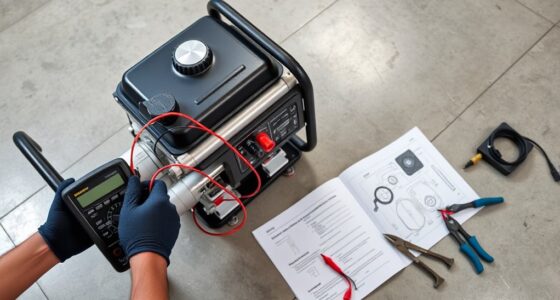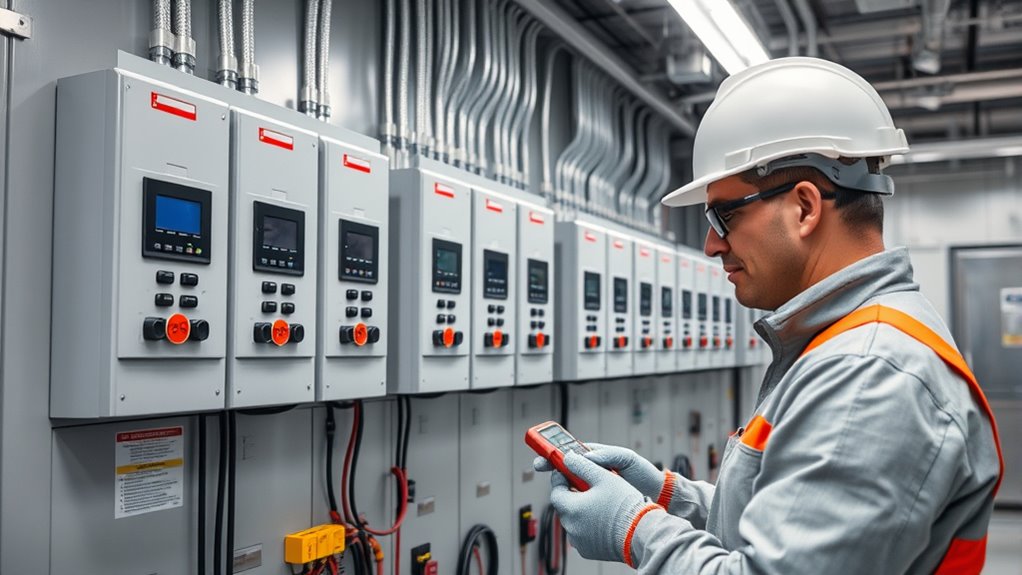

To effectively test and maintain your automatic transfer switch (ATS) system, you should regularly verify generator synchronization, load transfer procedures, and control components. Conduct routine tests to ensure the ATS switches smoothly during power outages and that backup generators can handle the load. Schedule inspections to check contact points, relays, and wiring for wear and corrosion. Performing these tasks consistently helps prevent system failures, and if you keep exploring, you’ll discover how to optimize your system’s reliability.

Get backup power and energy gear delivered free — and shop member deals
- Fast, free delivery on millions of items
- Access to Prime Big Deal Days deals on October 6–7
- Prime Video, Amazon Music and more included
Key Takeaways
- Conduct regular testing of generator synchronization and load transfer to ensure system reliability and proper operation during outages.
- Perform scheduled inspections of contact points, relays, and wiring to prevent component wear and system failures.
- Verify automatic transfer switch functionality through simulated power loss scenarios to confirm seamless power transitions.
- Document test results and maintenance activities to track system performance and identify recurring issues.
- Update system firmware and software as needed to maintain compatibility and enhance transfer switch performance.
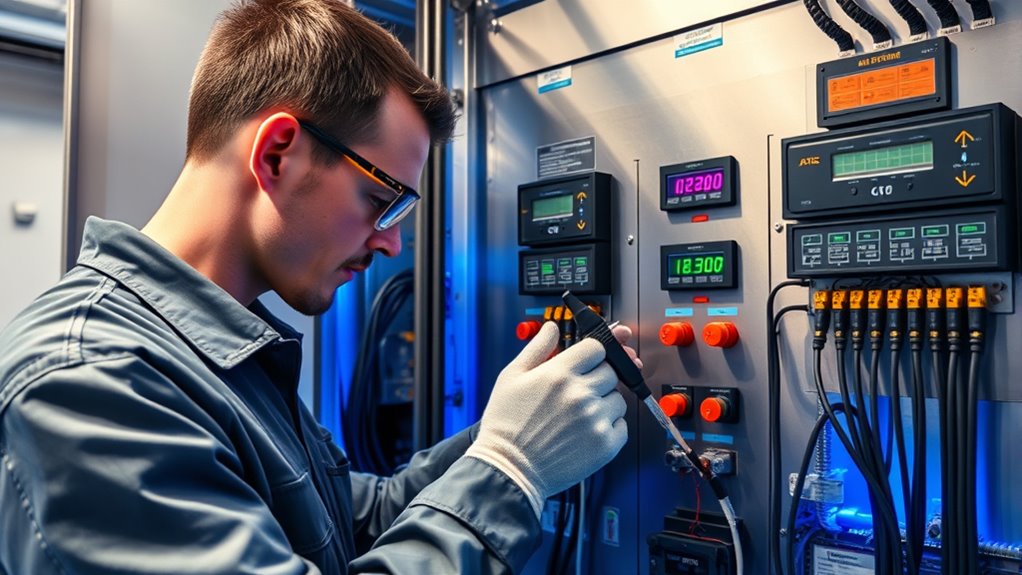
Automatic Transfer Switch (ATS) systems are essential for ensuring continuous power supply during outages, but their reliability depends on regular testing and maintenance. When you understand how these systems operate, especially in aspects like generator synchronization and load transfer procedures, you can prevent unexpected failures and ensure seamless power transitions. Proper testing verifies that the ATS can coordinate with backup generators effectively, ensuring they synchronize correctly before transferring load. Generator synchronization is vital because it involves matching voltage, frequency, and phase to avoid damaging the equipment or causing power disturbances. If the ATS isn’t regularly tested, you risk mismatched generator parameters, which can lead to faults or system failure during an actual outage.
Regular ATS testing ensures proper generator synchronization and reliable power transfer during outages.
Load transfer procedures are also indispensable to check during maintenance. These procedures involve switching the electrical load from the primary power source to the backup generator smoothly and safely. During testing, you want to confirm that the ATS can handle this transfer without causing power interruptions or equipment damage. You should simulate different scenarios—such as sudden power loss or generator failure—to see how the system responds. This helps identify any weaknesses in the transfer process, allowing you to fine-tune the control settings or replace faulty components.
In addition to routine testing, scheduled maintenance is essential. This includes inspecting contact points, relays, control wiring, and communication interfaces. Over time, corrosion, dust, or wear can impair the ATS’s operation. Regularly cleaning and inspecting the system ensures all parts function correctly and reduces the risk of unexpected failures. Updating firmware or software, if applicable, also keeps the system compatible with the latest standards and improves its dependability. Furthermore, understanding Security Zone Info can help in safeguarding the system from cyber threats that could compromise its operation.
You should also perform periodic load testing, where the ATS switches between power sources under actual load conditions. This real-world check confirms that the transfer process occurs smoothly and that the backup generator can sustain the load during an outage. Documenting these tests provides a record of system performance and helps identify patterns or recurring issues that need addressing.
automatic transfer switch tester
As an affiliate, we earn on qualifying purchases.
As an affiliate, we earn on qualifying purchases.
Frequently Asked Questions
How Often Should Emergency Backup Power Be Tested?
You should test your emergency backup power at least once a month to guarantee reliable operation. During these tests, focus on battery maintenance and power source testing to verify everything functions correctly. Regular testing helps identify issues early, like battery degradation or connection problems, so you can address them promptly. Consistent testing and maintenance keep your backup power system ready to activate when needed, minimizing downtime during an outage.
What Are Common Signs of Automatic Transfer Switch Failure?
You’ll notice switch maintenance issues like delayed transfer, failure to switch during power loss, or unusual noises. Fault detection becomes evident through frequent false alarms or erratic operation. Keep an eye out for burning smells or visible damage, which signal possible failure. Regularly inspecting your automatic transfer switch helps identify these signs early, ensuring reliable backup power and preventing costly outages. Proper maintenance keeps your system functioning smoothly and efficiently.
Can Automatic Transfer Switches Be Integrated With Smart Building Systems?
Yes, automatic transfer switches can be integrated with smart building systems. You should focus on smart integration, which allows seamless communication between the transfer switch and your building’s automation platform. Confirm system compatibility by choosing transfer switches that support common communication protocols like BACnet or Modbus. This integration helps you monitor, control, and maintain your power system more efficiently, enhancing overall building management and reliability.
Are There Specific Environmental Conditions That Affect Switch Performance?
Environmental factors like humidity, temperature extremes, and dust can critically impact switch performance and durability. In fact, studies show that 60% of switch failures are linked to harsh environmental conditions. These factors can cause corrosion, electrical faults, or mechanical wear, ultimately reducing switch lifespan. To guarantee reliable operation, you should regularly assess and protect your automatic transfer switch system against these environmental influences, maintaining ideal performance and extending its durability.
What Are the Latest Advancements in Transfer Switch Technology?
You’ll find that the latest transfer switch technology now integrates with smart grids, enabling real-time communication and enhanced automation. These advancements improve reliability and efficiency, especially with renewable energy sources like solar and wind. You can expect smarter, more responsive systems that seamlessly manage power flow, reduce downtime, and support sustainable energy integration. Staying updated with these innovations ensures your transfer switches operate effectively within modern, eco-friendly power networks.
generator synchronization testing device
As an affiliate, we earn on qualifying purchases.
As an affiliate, we earn on qualifying purchases.
Conclusion
Regular testing and maintenance of your automatic transfer switch systems ensure they function flawlessly when needed. Some experts believe these systems rarely fail if properly cared for, but history shows even well-maintained switches can malfunction unexpectedly. By staying vigilant and conducting routine checks, you reduce the risk of failure during power outages. Trusting your system’s reliability might be optimistic, but proactive care markedly boosts your chances of seamless power transfer when it matters most.
ATS load transfer testing equipment
As an affiliate, we earn on qualifying purchases.
As an affiliate, we earn on qualifying purchases.
automatic transfer switch maintenance kit
As an affiliate, we earn on qualifying purchases.
As an affiliate, we earn on qualifying purchases.
Fall Picks
fall essentials
As an affiliate, we earn on qualifying purchases.