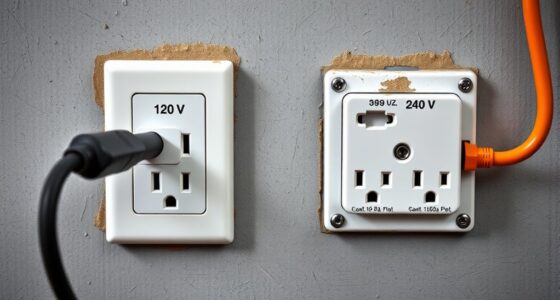
Voltage drop happens when extension cords lose power as electricity travels through them, often due to poor quality wires, too long cords, or loose connectors. Signs include dimming lights or equipment not working right. You can check for issues with a multimeter, inspecting and replacing damaged cords or connectors. Choosing the right gauge and length helps prevent problems. If you want deeper tips on keeping your devices safe, you’ll find useful advice below.

Get backup power and energy gear delivered free — and shop member deals
- Fast, free delivery on millions of items
- Access to Prime Big Deal Days deals on October 6–7
- Prime Video, Amazon Music and more included
Key Takeaways
- Measure voltage at both the power source and device to identify if a significant drop occurs over the extension cord.
- Use a proper gauge extension cord suited for your device’s current needs; thicker gauges reduce resistance and voltage loss.
- Inspect cords and connectors regularly for damage, corrosion, or dirt, and replace or clean them to maintain good electrical contact.
- Keep cords short and avoid overloading to minimize resistance and prevent excessive voltage drop.
- Use a multimeter to troubleshoot voltage levels and ensure your extension cord and connections are functioning safely and efficiently.
heavy duty extension cords 14 gauge
As an affiliate, we earn on qualifying purchases.
As an affiliate, we earn on qualifying purchases.
What Is Voltage Drop and Why Does It Happen?

Voltage drop occurs when the electrical voltage decreases as current flows through a wire or extension cord. This happens because wires have electrical resistance, which opposes the flow of current. The thicker the wire gauge, the lower the electrical resistance, reducing voltage drop. Conversely, thinner wires have higher resistance, causing more significant voltage loss over distance. When electricity travels through a wire with high resistance, some energy is converted into heat, leading to less voltage reaching your device. This loss can cause equipment to underperform or malfunction. Understanding how wire gauge and electrical resistance affect voltage drop helps you choose the right extension cords and wiring setups to ensure your devices receive adequate power without issues. Additionally, employing high-quality projector technology can help mitigate issues caused by voltage fluctuations.
multimeter for electrical troubleshooting
As an affiliate, we earn on qualifying purchases.
As an affiliate, we earn on qualifying purchases.
Signs That Indicate Voltage Drop Problems

You might notice your lights flickering or devices not working properly, which can signal voltage drop issues. Unexpected equipment malfunctions and increased power bills are also common signs. Recognizing these problems early helps you avert damage and ensure safe operation. Additionally, monitoring your electrical system’s voltage levels can help detect issues before they become serious.
Dimming Lights or Devices
When lights or devices appear dimmer than usual, it often signals a voltage drop issue. This can be caused by overloaded circuits, loose wiring, or poor electrical wiring connections. Dimming indicates that your circuit safety may be compromised, risking damage or fire. To understand potential causes, review the following:
| Cause | Explanation |
|---|---|
| Long extension cords | Excess resistance reduces voltage supply |
| Overloaded circuits | Too many devices draw power simultaneously |
| Loose connections | Interrupts proper electrical flow |
| Faulty wiring | Damages circuit integrity |
| High resistance wiring | Causes voltage to drop under load |
Addressing these issues promptly helps prevent further problems and ensures your electrical wiring remains safe and efficient.
Unexpected Equipment Malfunctions
Unexpected equipment malfunctions often serve as clear indicators that a voltage drop problem may be present. When devices suddenly behave erratically, turn off unexpectedly, or fail to operate correctly, it can signal poor power quality caused by voltage drops. These issues compromise electrical safety because inconsistent power can damage sensitive equipment or cause overheating. If multiple devices experience glitches or shutdowns simultaneously, it’s a sign that your wiring or extension cords may be inadequate, leading to voltage fluctuations. Recognizing these malfunctions early helps prevent further damage and maintains a safe environment. Moreover, headphones are particularly vulnerable to power irregularities, which can affect audio quality or cause disconnects. Addressing voltage drop problems promptly ensures your electrical system remains reliable, preserves equipment lifespan, and upholds electrical safety standards. Don’t ignore these signs—they’re your warning to troubleshoot and improve your power setup.
Increased Power Consumption
A noticeable increase in your equipment’s power consumption can be a sign of voltage drop issues. When voltage drops, your devices work harder to perform the same tasks, leading to higher energy use and reduced power efficiency. This extra load can strain your electrical system, increasing the risk of overheating or damage, which jeopardizes electrical safety. If you notice appliances or tools consuming more electricity than usual without added workload, it may indicate voltage drop problems. Addressing this early helps maintain ideal power efficiency and prevents potential hazards. Regularly checking connections, avoiding overloaded extension cords, and consulting an electrician can help identify and fix voltage drop issues, ensuring your system remains safe and energy-efficient. Utilizing appropriate tools and methods for monitoring electrical performance can assist in early detection and resolution of these issues.
high quality extension cord with low voltage drop
As an affiliate, we earn on qualifying purchases.
As an affiliate, we earn on qualifying purchases.
How to Check for Voltage Drop Using Basic Tools

To check for voltage drop, start by gathering a digital multimeter or voltmeter, along with your extension cord and the equipment you’re testing. First, measure the voltage at the power source, then connect your tools near the load to record the voltage there. Comparing these readings helps you determine if a voltage drop is occurring. Additionally, ensuring your website functionality is optimized can improve your troubleshooting experience by providing accurate readings and guidance.
Gather Necessary Tools
Before checking for voltage drop, you’ll need to gather a few basic tools to make certain accurate measurements. Having the right tools ensures your readings are reliable and your troubleshooting effective. Make sure you have:
- A digital multimeter to measure voltage precisely
- Knowledge of your cord’s wire gauge for correct interpretation
- A flashlight to see connections clearly
- A tape measure to accurately determine cord length, as longer cords can cause more voltage drop
Understanding your filter replacement indicators and their importance can also help maintain safe and efficient operation. Knowing your wire gauge and cord length helps you understand potential voltage loss points. These tools empower you to identify issues confidently, avoid guesswork, and keep your electrical setup safe. With these essentials, you’re ready to proceed with your voltage drop check.
Measure Voltage at Source
Start by setting your digital multimeter to measure AC voltage. Connect the probes to the power source’s outlet, verifying solid contact. This allows you to perform wireless testing of voltage at the source, giving you a clear reading of the supply voltage. Check for fluctuations or low readings that could indicate issues like voltage stabilization problems or wiring faults. If you notice significant voltage differences between the source and the load, it suggests a voltage drop along the extension cord or wiring. Measuring voltage at the source helps you determine if the power supply itself is stable or if the problem originates further down the line. Always verify your multimeter is calibrated and functioning correctly for accurate readings. This simple step provides critical insight into your electrical setup’s health.
Measure Voltage Near Load
When checking for voltage drop near the load, you should connect your digital multimeter directly across the device or outlet where the load is connected. This simple step allows you to perform effective voltage measurement and load testing, revealing if voltage drop is causing problems. Verify the load is operating during testing to get accurate results. Keep these points in mind:
- Confirm your multimeter is set to the correct voltage range
- Connect the probes securely to the load’s terminals
- Record the voltage reading and compare it to the source voltage
- Look for significant drops that indicate excessive resistance
- Understanding performance tuning principles can help interpret how voltage issues affect overall system efficiency.
As an affiliate, we earn on qualifying purchases.
Common Causes of Excessive Voltage Drop in Extension Cords

Excessive voltage drop in extension cords often results from several common issues. One major cause is the extension cord material; cheaper or low-quality wires may have higher resistance, leading to more voltage loss. Thinner or older cords tend to cause greater drop because they can’t handle the current efficiently. Connector quality also plays a significant role—poorly made or corroded connectors increase resistance at connection points, reducing voltage reaching your device. Over time, connectors can degrade, especially if exposed to moisture or dirt. Using an extension cord with inadequate gauge or worn-out connectors limits current flow, causing voltage to drop below safe levels. Addressing these issues by choosing quality materials and well-made connectors helps minimize voltage decline and ensures your equipment operates safely and effectively. Additionally, proper maintenance of your extension cords can help prevent corrosion and damage that contribute to voltage loss.
Tips for Choosing the Right Extension Cord to Minimize Voltage Drop

Choosing the right extension cord can substantially reduce voltage drop and protect your equipment. To do this, focus on wire gauge selection and cord length considerations. A thicker wire gauge (lower gauge number) helps carry more current with less voltage loss, especially over longer distances. When selecting a cord, keep the length as short as possible to minimize voltage drop.
Consider these tips:
- Opt for a heavy-duty cord with a lower gauge for high-power appliances
- Avoid overly long cords when shorter ones will do
- Check the cord’s maximum current rating to match your device’s needs
- Test your setup with a multimeter to ensure proper voltage levels
Making smart choices here can save your devices from damage and extend their lifespan.
Easy Fixes and Preventative Measures to Keep Your Devices Safe

To keep your devices safe from voltage issues, applying simple fixes and proactive measures can make a significant difference. Start by practicing proper cord safety: avoid overloading extension cords and inspect them regularly for damage or frays. Ensuring your cords are in good condition helps prevent shorts and electrical hazards. Regular electrical maintenance, like checking outlets and connections, reduces the risk of voltage drops that can harm your devices. Use surge protectors to guard against power surges and always unplug unused cords to minimize wear. Keep cords organized and off the floor to prevent tripping and damage. Additionally, understanding the power consumption of your devices can help you manage energy use effectively. By staying vigilant with these easy fixes and maintenance routines, you help protect your electronics and prolong their lifespan, maintaining a safer home environment.
Frequently Asked Questions
How Does Temperature Affect Voltage Drop in Extension Cords?
Temperature increases cause conductor resistance to rise, leading to greater voltage drop in extension cords. When it’s hot, insulation can degrade, further impacting performance. As resistance goes up, less voltage reaches your device, which can cause malfunction. On cold days, resistance usually drops, reducing voltage drop. To keep your cords working safely, avoid exposing them to extreme temperatures and check for insulation damage regularly.
Can Using Multiple Extension Cords Increase Voltage Drop Risks?
Using multiple extension cords increases your risk of power degradation and voltage drop. When you connect several cords, the total resistance rises, causing less voltage to reach your device. This can lead to poor performance or damage. Instead, use a single, heavy-duty extension cord designed for your power needs. Avoid daisy-chaining cords to keep voltage stable and ensure your devices operate safely and efficiently.
Is It Safe to Use Extension Cords With High Voltage Drop Regularly?
Using extension cords with high voltage drop regularly isn’t safe. It can cause electrical issues and damage your devices. To guarantee extension cord safety, always choose cords with appropriate gauge and length, and avoid overloading them. Proper voltage drop prevention helps maintain safe operation. Regularly inspect cords for damage, and replace them if they show signs of wear. This way, you protect your equipment and reduce safety hazards.
What Are the Long-Term Effects of Voltage Drop on Electronic Devices?
If voltage drop occurs regularly, it can cause electronic damage and shorten your device’s lifespan. Over time, insufficient voltage can lead to overheating, malfunctions, or even permanent harm to sensitive components. You might notice devices become less reliable or fail sooner than expected. To protect your electronics, avoid using extension cords with high voltage drop and guarantee your devices receive the proper voltage for safe, long-term operation.
How Do Different Wire Gauges Impact Voltage Loss Over Distance?
Coincidences often reveal that thicker wire gauges reduce voltage loss over distance, boosting your power efficiency. When you use a smaller wire gauge, like 16 or 14, you increase resistance, causing more voltage drop and potentially harming your devices. Conversely, thicker wires—such as 10 or 8 gauge—minimize voltage loss, ensuring your electronic devices receive consistent power, especially over longer distances. So, choosing the right wire gauge is key to maintaining ideal performance.
Conclusion
So, next time your gadgets act up, blame that sneaky voltage drop hiding in your extension cord. It’s ironic how something so small can cause such big headaches, isn’t it? By understanding and addressing these issues, you can keep your devices happy and safe. After all, the real trick isn’t just plugging in—it’s making sure that power actually reaches your devices without a hitch. Who knew saving your gadgets could be so simple?
Fall Picks
fall essentials
As an affiliate, we earn on qualifying purchases.