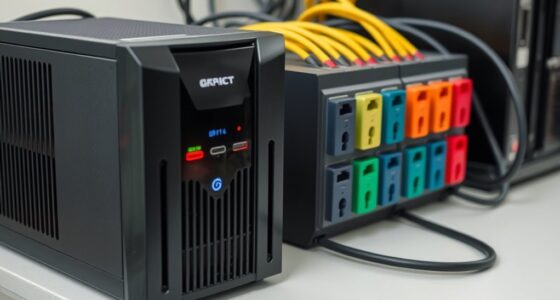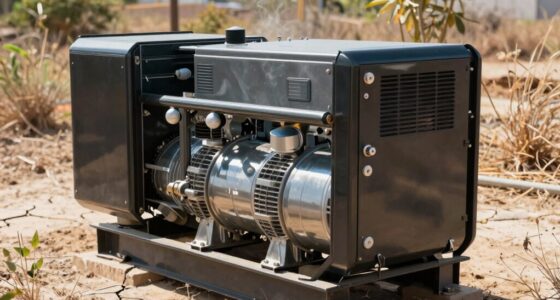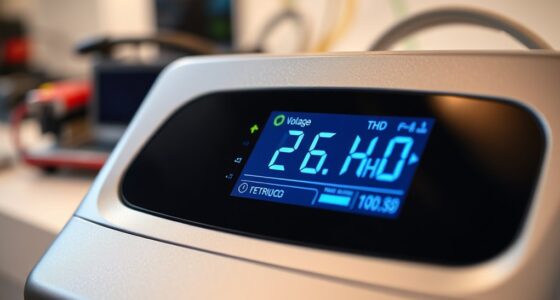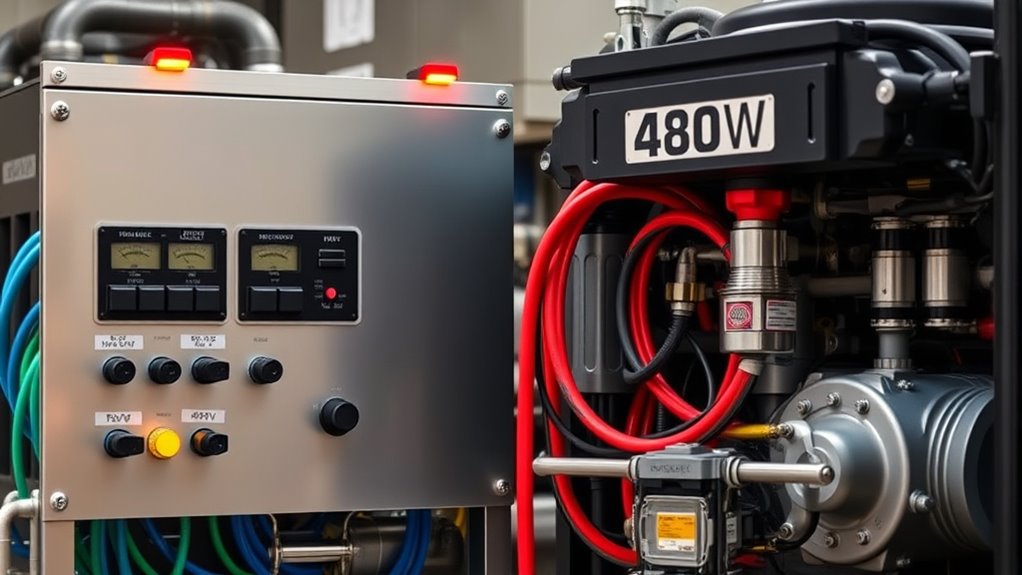

When choosing a three-phase generator, it’s important to understand the difference between 120/208 V and 480 V outputs. The 120/208 V system is ideal for smaller loads like lighting and general use in commercial settings, while 480 V suits heavy machinery in industrial environments. Higher voltage reduces current, minimizing losses and equipment costs. Knowing your load requirements helps you select the right option, and there’s more to learn that can improve your setup’s efficiency.

Get backup power and energy gear delivered free — and shop member deals
- Fast, free delivery on millions of items
- Access to Prime Big Deal Days deals on October 6–7
- Prime Video, Amazon Music and more included
Key Takeaways
- 120/208 V systems are common in commercial spaces, suitable for lighting and general equipment.
- 480 V systems are used in industrial settings for heavy machinery and large-scale loads.
- Higher voltage (480 V) allows for lower current flow, reducing losses and conductor size requirements.
- Voltage choice impacts system efficiency, load capacity, and overall operational costs.
- Proper load balancing and voltage management are crucial for generator performance and system stability.
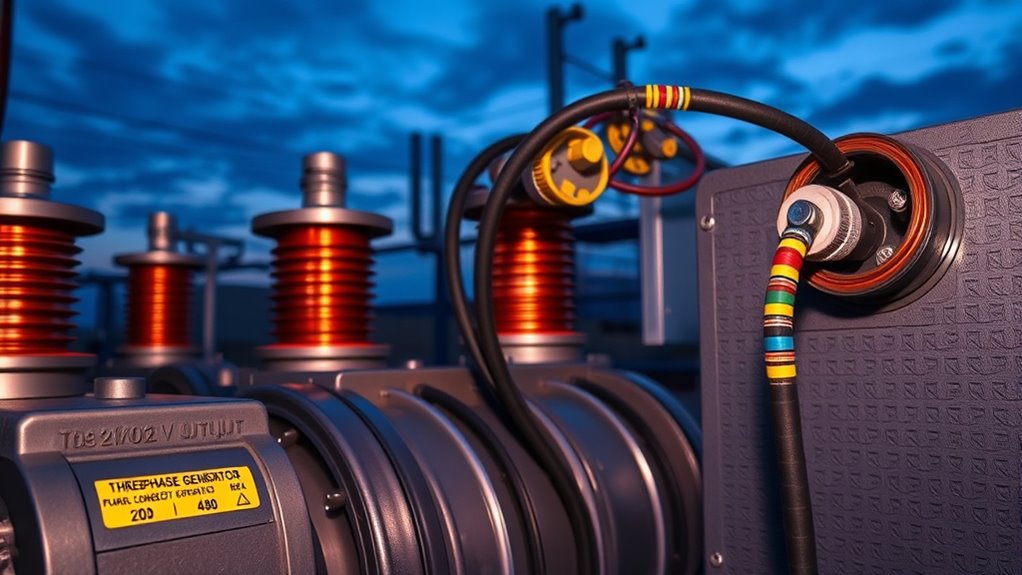
Have you ever wondered how large power plants efficiently generate electricity? It all begins with understanding how three-phase generators work and how their output voltage levels, like 120/208 V versus 480 V, influence their performance. When a generator produces electricity, maintaining an ideal power factor is essential. Power factor measures how effectively the generator’s power is being used; a high power factor means less energy waste. Low power factors can cause unnecessary strain on the system, leading to higher operational costs and potential equipment damage. That’s why load balancing is so important—distributing electrical loads evenly across the three phases ensures that no single phase is overloaded. Proper load balancing helps maintain a stable power factor, reducing the risk of voltage fluctuations and improving overall system efficiency. Effective load management also plays a crucial role in optimizing generator performance and longevity.
Understanding the differences between 120/208 V and 480 V outputs is vital when selecting a generator for specific needs. The 120/208 V output is common in commercial buildings for lighting and general use, providing safe, manageable voltage levels suitable for smaller loads. Conversely, 480 V systems are typically used in industrial settings where heavy machinery requires higher voltage for efficient operation. Higher voltage systems like 480 V allow for lower current flow for the same power level, which reduces losses and minimizes the size of conductors needed. This makes them more suitable for large-scale equipment or manufacturing plants.
In systems where multiple generators operate together, load balancing becomes even more vital. If one generator handles too much load, it may cause voltage drops and reduce the power factor, leading to inefficiencies and increased wear. Properly balancing loads across all generators and phases helps maintain consistent voltage levels and improves overall reliability. It also promotes a better power factor, ensuring the system runs smoothly and efficiently. When generators are correctly matched with the load requirements, you’ll notice fewer maintenance issues and lower energy costs.
Choosing between 120/208 V and 480 V output depends on your specific application and load demands. But no matter which voltage you need, focusing on load balancing and maintaining a high power factor will maximize your generator’s efficiency. It’s all about ensuring your electrical system operates reliably, safely, and cost-effectively. Understanding these fundamental concepts helps you make smarter decisions about generator setup and operation, ensuring your power system remains stable and efficient for years to come.
As an affiliate, we earn on qualifying purchases.
Frequently Asked Questions
How Do I Choose Between 120/208 V and 480 V Generators?
You should choose between 120/208 V and 480 V generators based on your voltage compatibility needs and efficiency considerations. If your equipment runs on standard office or light commercial power, a 120/208 V generator is suitable. For heavy-duty machinery or industrial applications, a 480 V generator offers better efficiency and higher power capacity. Assess your load requirements to make an informed decision.
What Safety Precautions Are Necessary for High-Voltage Generators?
You should always prioritize insulation safety and grounding procedures to protect yourself around high-voltage generators. Imagine handling equipment with insulated gloves and verified grounding, preventing accidental shocks. Always inspect insulation for damage, guarantee proper grounding, and follow safety protocols strictly. Wearing PPE and staying alert reduces risks. Remember, high voltage is dangerous, so taking these precautions keeps you safe while working with or near these powerful generators.
Can a Generator Switch Between 120/208 V and 480 V?
Yes, your generator can switch between 120/208 V and 480 V, but it requires proper voltage conversion and compatibility checks. You need to verify your generator is designed for multi-voltage output or has a transformer system that allows safe voltage switching. Always verify the generator’s specifications and consult a professional to prevent damage or safety hazards during voltage conversion, ensuring compatibility for your specific electrical needs.
What Maintenance Is Required for Different Voltage Outputs?
Think of your generator as a musical instrument needing tuning. For different voltage outputs, you check voltage regulation regularly to guarantee steady performance and avoid surprises. Load balancing becomes your rhythm, preventing uneven wear and tear. Keep connections tight, inspect insulators, and test protective devices. Regular maintenance keeps your generator singing smoothly at both 120/208V and 480V, ensuring reliable power when you need it most.
How Does Power Factor Affect Generator Performance?
Power factor directly impacts your generator’s performance by affecting power quality and efficiency. A low power factor causes your generator to work harder, leading to increased energy loss and potential overheating. By maintaining a high power factor, you guarantee cleaner power delivery, reduce strain on the generator, and improve overall efficiency. Regularly monitoring and correcting power factor helps keep your system running smoothly, saving you energy and preventing costly repairs.
As an affiliate, we earn on qualifying purchases.
Conclusion
Just like the mighty rivers that power cities and dreams, your understanding of 120/208V and 480V three-phase generators helps you harness their strength. Remember, choosing the right voltage is like finding the perfect harmony in a symphony—ensuring smooth, reliable power for your needs. So, as you navigate your options, keep the wisdom of the ancients in mind: with the right knowledge, you can turn even the wildest current into a steady, guiding force.
As an affiliate, we earn on qualifying purchases.
As an affiliate, we earn on qualifying purchases.
Fall Picks
fall essentials
As an affiliate, we earn on qualifying purchases.