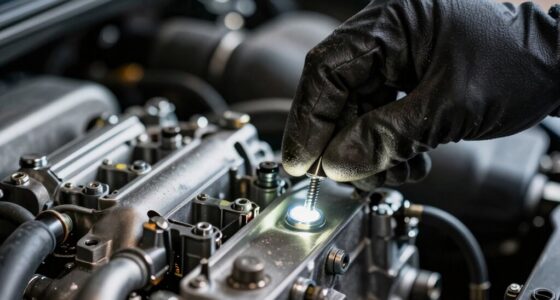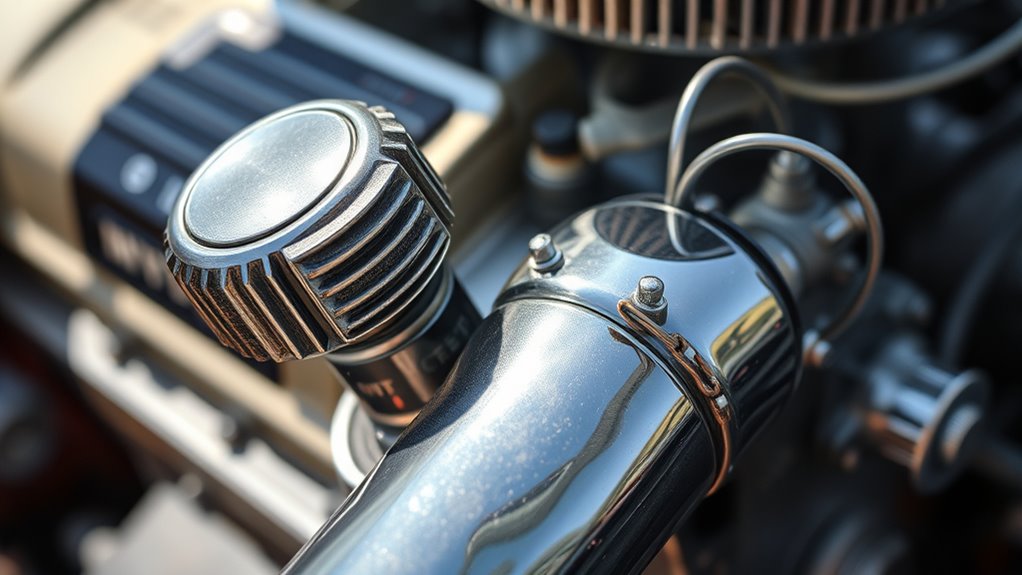

If you’re experiencing choke problems, start by checking if your manual choke is fully closed during a cold start and gradually open it as the engine warms. For automatic chokes, ensure the thermostat and spring mechanisms aren’t sticking or faulty, and lubricate linkage if needed. Adjust the choke cable or linkage for smooth shift from closed to open positions. If you keep working through these steps, you’ll gain a clearer understanding of how to keep your engine running smoothly.

Get backup power and energy gear delivered free — and shop member deals
- Fast, free delivery on millions of items
- Access to Prime Big Deal Days deals on October 6–7
- Prime Video, Amazon Music and more included
Key Takeaways
- Check and adjust the choke linkage or cable to ensure proper opening and closing during engine warm-up.
- For manual chokes, use the control lever or knob to fully close the choke during cold start, then gradually open it.
- For automatic chokes, inspect the thermostat and spring mechanism for proper operation and adjust or replace if faulty.
- Lubricate choke linkage and ensure no obstructions to prevent sticking or sticking during adjustments.
- Regularly clean the carburetor to remove deposits that may hinder choke movement and responsiveness.
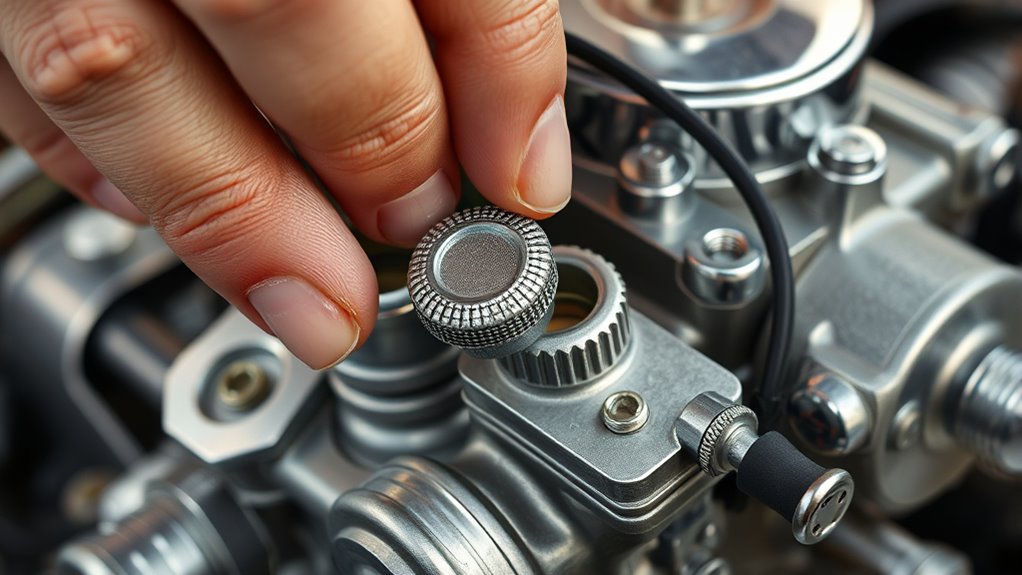
Choke problems can occur suddenly and unexpectedly, often during critical moments when you least need them. Whether you’re starting your lawnmower, chainsaw, or small engine, a malfunctioning choke can leave you stranded or struggling with poor engine performance. The choke’s primary role is to regulate the air-fuel mixture during startup, making cold starts easier. When it malfunctions, your engine may stall, run rough, or refuse to start altogether. Addressing these issues quickly can save you time and frustration, especially when you’re in the middle of a project.
One of the most common choke problems stems from dirt, debris, or varnish buildup inside the carburetor. Carburetor cleaning is essential to guarantee smooth operation, especially if you’ve ignored maintenance for a while. Over time, gunk accumulates, clogging passages that control the choke’s movement or fuel flow. Regular carburetor cleaning can prevent many choke-related issues. When cleaning, pay close attention to the choke plate and linkage, removing any deposits that hinder proper movement. This maintenance step often restores the choke’s responsiveness and overall engine performance.
If you find that your engine struggles to start or stalls shortly after starting, your choke adjustment techniques might need attention. Manual chokes typically have a control lever or knob that you can adjust. If the choke remains closed when it should open, or vice versa, the engine won’t run at its best. To fix this, you need to adjust the choke linkage or cable so it properly transitions from closed during cold starts to open once the engine warms up. For automatic chokes, the problem often lies in the choke’s thermostat or spring mechanism. Adjusting or replacing faulty components can restore proper function.
When performing choke adjustments, always refer to your engine’s manual for specific procedures. Start by ensuring the choke is fully closed when cold and gradually open it as the engine warms. If the choke is sticking or not moving freely, lubricate the linkage and check for any obstructions. Sometimes, adjusting the tension on the choke spring can improve its responsiveness. For automatic chokes, a simple test involves cold-starting the engine and observing whether the choke opens correctly as the engine warms. If it doesn’t, replacing the thermostat or spring might be necessary. Additionally, understanding how relationships can be affected by ongoing mechanical issues highlights the importance of maintenance and proper troubleshooting.
As an affiliate, we earn on qualifying purchases.
Frequently Asked Questions
How Do I Prevent Choke Issues During Cold Weather?
To prevent choke issues during cold weather, you should regularly check your choke adjustment to make sure it’s functioning correctly. Before starting your engine, give the choke a few gentle pulls to ensure it’s not stuck. Keep your engine warm when possible, and avoid sudden throttle changes. Proper choke adjustment helps your engine start smoothly in cold weather, preventing issues like sticking or flooding. Regular maintenance keeps your choke working efficiently.
Can Choke Problems Affect Fuel Efficiency?
Choke problems can definitely impact your fuel efficiency, much like a runner struggling with a tight shoelace affects their stride. When your choke isn’t working properly, your engine struggles to run smoothly, leading to increased fuel consumption and poor engine performance. This inefficiency wastes fuel and can cause your vehicle to work harder. Regularly checking and adjusting your choke helps maintain peak engine performance and keeps fuel usage in check.
Are There Safety Risks With Manual Choke Adjustments?
Yes, manual choke adjustments can pose safety risks if not handled carefully. Manual safety is important because improper adjustments might cause the engine to stall or run poorly, leading to potential hazards. Choke hazards include accidental burns from hot engine parts or fires if fuel leaks occur during adjustment. Always follow safety guidelines, wear protective gear, and ensure the engine is off before making adjustments to minimize risks.
How Often Should I Inspect My Choke Mechanism?
Think of your choke mechanism as the heartbeat of your engine—regular checkups keep it strong. You should inspect your choke every 25 to 50 hours of use or at least once a season, whichever comes first. Proper choke maintenance ensures smooth starts and peak performance. Don’t wait until it’s a problem; routine inspection keeps your engine running like clockwork and prevents costly repairs down the line.
What Are Signs of a Failing Automatic Choke?
If your automatic choke malfunctions, you’ll notice symptoms of choke failure like rough idling, stalling when cold, or difficulty starting the engine. You might also see the engine running too rich or too lean, or the choke sticking open or closed. These signs indicate the automatic choke isn’t operating properly, so you should inspect and adjust or replace it promptly to keep your engine running smoothly.
As an affiliate, we earn on qualifying purchases.
Conclusion
Dealing with choke problems can feel frustrating, like battling against your engine’s needs. Yet, understanding the difference between manual and automatic chokes empowers you to select the right fix. Just as a steady hand can smooth out a rough ride, your quick adjustments can restore smooth starts. Whether you prefer the control of manual chokes or the convenience of automatic ones, mastering these tools guarantees your engine runs reliably—turning potential setbacks into seamless performance.
As an affiliate, we earn on qualifying purchases.
As an affiliate, we earn on qualifying purchases.
Fall Picks
fall essentials
As an affiliate, we earn on qualifying purchases.