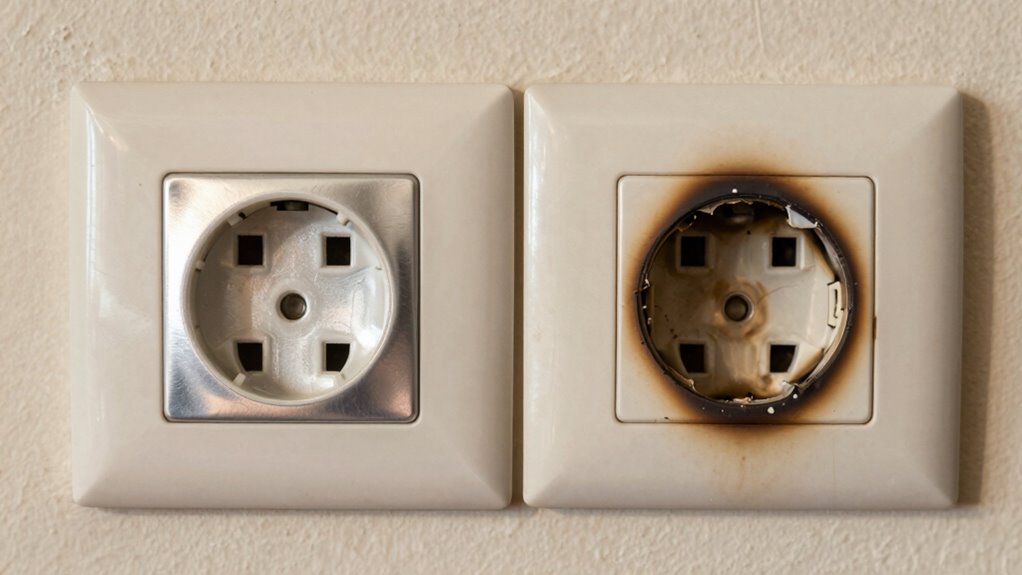
If one outlet works and another doesn’t, it could be due to wiring issues, a tripped circuit breaker, or a faulty outlet. You should check if the circuit breaker has flipped or is in the middle position, and inspect the outlets for loose or damaged wiring. Sometimes, a worn-out outlet needs replacing. If these steps don’t fix the problem, there are more details that can help you troubleshoot effectively.

Get backup power and energy gear delivered free with Prime
- Fast, free delivery on millions of items
- Prime Video, Amazon Music and more included
- Member-only deals all year
Key Takeaways
- The non-working outlet may have loose or disconnected wiring, disrupting electrical flow.
- A tripped GFCI outlet can cut power to other outlets on the same circuit.
- The outlet might be faulty or worn out, requiring replacement or repair.
- A circuit breaker may have tripped or be faulty, cutting power to the outlet.
- There could be wiring issues or shorts causing the outlet to malfunction while others remain functional.
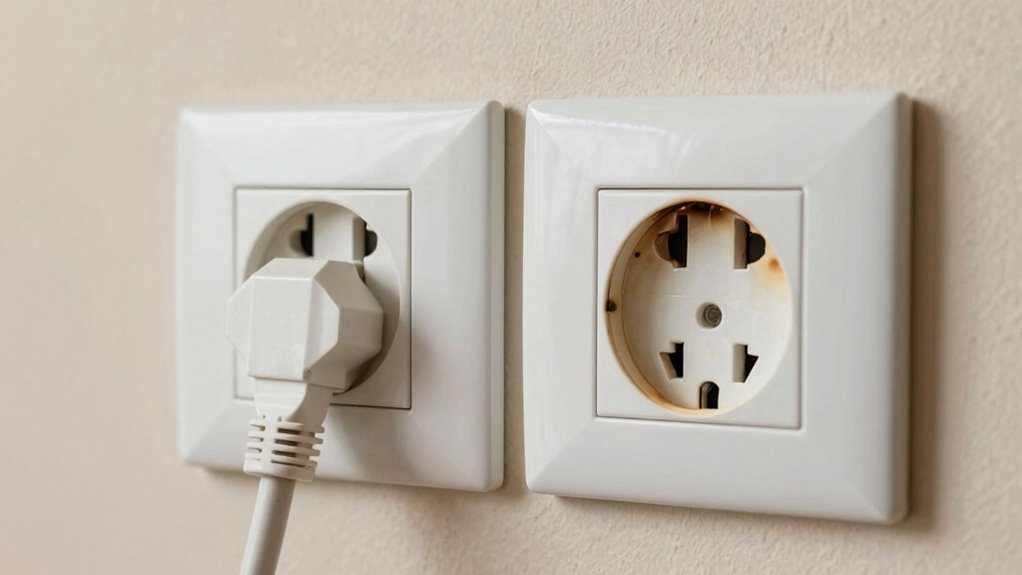
Have you ever plugged in an appliance only to find your outlet isn’t working? It’s frustrating, especially when you need to power something urgently. Before jumping to conclusions, it’s important to consider electrical safety and troubleshoot carefully. Sometimes, outlets stop working because of simple issues that you can resolve without calling an electrician, but always prioritize safety to prevent shocks or fires.
If your outlet isn’t working, troubleshoot safely before calling an electrician.
First, check if the non-working outlet is part of a GFCI circuit. Many modern homes have GFCI outlets in kitchens, bathrooms, or outdoor areas to protect against electrical faults. If a GFCI outlet tripped, it can cause other outlets on the same circuit to stop functioning. Reset the GFCI by pressing the reset button. If it trips again immediately, there might be a wiring problem or an electrical fault that needs professional attention. Remember, handling electrical components without proper knowledge can be dangerous, so always follow electrical safety guidelines.
Next, inspect the outlet visually. Turn off the power at the circuit breaker before doing any work. Remove the outlet cover and look for loose or disconnected wires. Over time, wires can loosen due to vibrations or poor connections, leading to a non-functioning outlet. Tighten any loose screws securely, but avoid over-tightening, which can damage the wiring. If you notice burnt marks, melted components, or a burning smell, stop and call a professional. These are signs of serious electrical issues that require expert troubleshooting tips. Additionally, understanding electrical safety and the importance of proper wiring can help prevent future issues and ensure your home’s electrical system remains reliable. Keeping a good grasp of home wiring standards can also assist in safe repairs and upgrades.
Another common cause for an outlet not working is a tripped circuit breaker. Head to your electrical panel and see if any breaker switch has flipped to the “off” position or is in the middle. Flip it back on to restore power. If the breaker trips again after resetting, it indicates an overload or short circuit somewhere in the system. Avoid using the outlet until a qualified electrician examines the wiring. It’s also helpful to understand how circuit protection devices work to better troubleshoot these issues effectively.
Finally, think about whether the outlet itself is faulty. Over time, outlets wear out or become damaged. Replacing an old or damaged outlet is often straightforward if you have basic electrical knowledge. Make sure the power is off, disconnect the old outlet, and install a new one following manufacturer instructions. Always test the new outlet with a voltage tester to ensure it’s wired correctly and functioning properly. Proper cabling solutions and understanding how to troubleshoot common issues can save you time and money in the long run.
Troubleshooting tips like these help you quickly identify the cause of outlet issues while maintaining electrical safety. If you’re ever unsure or uncomfortable working with electricity, don’t hesitate to call a licensed electrician. Your safety should always come first.
Products Worth Considering
Google Nest Cam Indoor (Wired, 3rd Gen) – Security Camera – Snow

Ring Alarm 14-Piece Wireless Security System Kit

Philips Hue Secure Wired Video Doorbell, 2K, Black
As an affiliate, we earn on qualifying purchases.
Frequently Asked Questions
Can a Tripped Circuit Breaker Cause an Outlet to Stop Working?
Yes, a tripped circuit breaker can cause an outlet to stop working. When it trips, it cuts off power, often due to voltage fluctuation or circuit interference. You might notice no power at that outlet, even though others work fine. Resetting the breaker restores the flow of electricity. To prevent future issues, check for overloads, loose connections, or damaged wiring that could cause the breaker to trip unexpectedly.
Why Does My Outlet Work Sometimes but Not Always?
Think of your outlet like a delicate dance partner, sometimes in sync, sometimes out of step. Your outlet’s design can cause it to work intermittently, especially if there’s a loose connection or damage. Power surges may also trigger safety features, making it temporarily unreliable. Regularly check for loose wires or signs of damage, and consider installing surge protectors to keep your outlet functioning smoothly and consistently.
Could a Loose Wire Be Why My Outlet Isn’t Functioning?
Yes, a loose wire connection could be causing your outlet not to function properly. When wires aren’t securely attached, it affects the outlet’s overall durability and performance. You should turn off the power and carefully check the wiring to verify all connections are tight. A loose wire disrupts the electrical flow, leading to intermittent or no power. If you’re unsure, it’s best to call a professional electrician for safety.
How Do I Test if an Outlet Is Receiving Power?
To test if an outlet is receiving power, use a voltage tester or a multimeter. Insert the tester into the outlet slots to check for proper voltage, usually around 120 volts in most homes. Make sure your device is compatible with the outlet type. If you don’t get a reading, verify your tester’s functionality, check the circuit breaker, or consider whether the outlet might have loose wiring affecting its power supply.
Is It Safe to Fix Outlet Issues Myself or Hire an Electrician?
It’s safest to hire an electrician for outlet issues, especially if you’re unfamiliar with electrical codes or DIY safety. While some small fixes, like replacing a faceplate, are manageable, working on wiring can be risky. Electricians are trained to handle electrical systems properly and guarantee compliance with electrical codes, reducing hazards. If you decide to attempt repairs, turn off power, wear safety gear, and follow all safety guidelines strictly.
Conclusion
Imagine flicking the switch and feeling that tiny jolt of power surging through the outlet, lighting up your space. When one outlet works and another doesn’t, it’s like a silent plea for attention inside your walls. With a quick check, you can restore the flow of electricity, turning a dark, unused corner into a bright, functional space. Don’t let a simple outlet issue cast a shadow—bring back the light and keep your home shining.