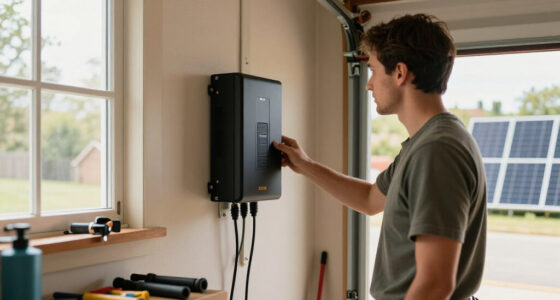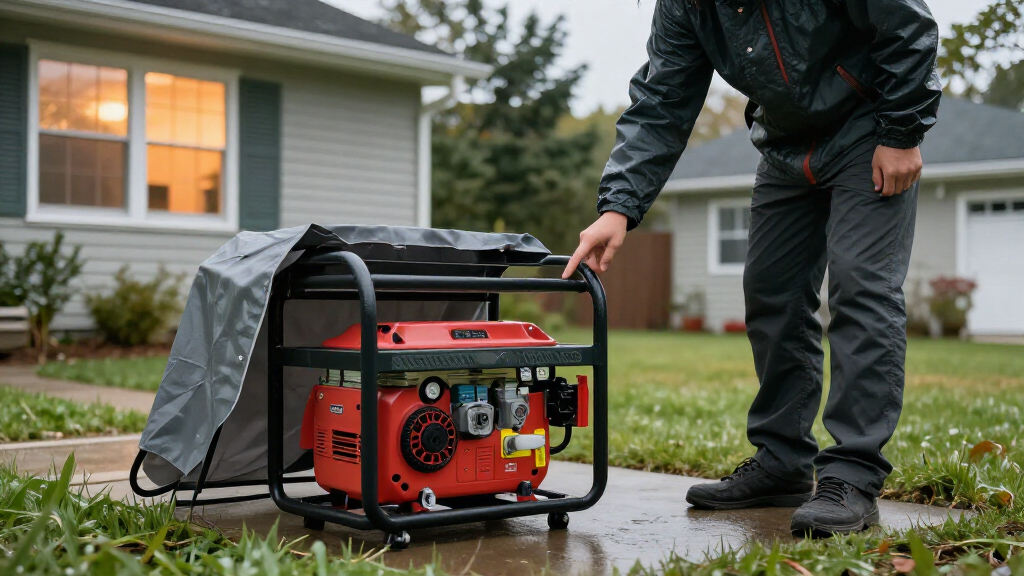

Choosing the right home backup generators with electric start means balancing raw power output against fuel flexibility and ease of deployment. My top recommendation, the Champion Power Equipment 9375-Watt Dual Fuel, stands out for its seamless switch between gasoline and propane, ensuring you are not stranded if one fuel source becomes scarce. For those needing higher amperage for heavy-duty tools, the Westinghouse WGen9500c offers robust performance with a remote start feature that adds convenience during storm conditions. The primary tradeoff in this category is between the clean power of inverter models and the raw wattage of traditional open-frame units. While inverters protect sensitive electronics, they often cap out at lower wattages compared to the heavy hitters on this list. Continue reading to see how these 15 models stack up against each other in real-world scenarios.

Get backup power and energy gear delivered free with Prime
- Fast, free delivery on millions of items
- Prime Video, Amazon Music and more included
- Member-only deals all year
Complete the kit


Key Takeaways
- Dual-fuel capability is now a standard expectation for mid-range generators, with propane offering longer shelf life than gasoline.
- Electric start reliability varies by battery type; models with built-in lithium-ion batteries tend to hold charge better over long periods of storage.
- Carbon Monoxide (CO) shutdown sensors are no longer optional extras but a critical safety feature mandated by newer safety standards.
- Inverter generators provide cleaner power for electronics but sacrifice peak starting wattage compared to traditional AVR models.
- Noise levels drop significantly in the 5,000-watt range, making inverter units more suitable for residential neighborhoods with strict noise ordinances.
| Champion Power Equipment 9375-Watt Electric Start Dual Fuel Home Backup Portable Generator with CO Shield |  | Best Overall for Flexible Home Backup | Fuel type: Gasoline and propane | Engine displacement: 439 cc | Gasoline output: 9,375 starting watts; 7,500 running watts | VIEW LATEST PRICE | See Our Full Breakdown |
| WEN DF680iX 6800-Watt Dual-Fuel Portable Inverter Generator |  | Best Quieter Inverter Pick | Fuel type: Gasoline and propane | Engine displacement: 224 cc | Gasoline output: 6,800 surge watts; 5,100 rated watts | VIEW LATEST PRICE | See Our Full Breakdown |
| WEN DF5600X 5,600-Watt Dual-Fuel Portable Generator with Electric Start and CO Shutdown Sensor |  | Best for 120V-Only Backup | Fuel type: Gasoline and propane | Engine displacement: 224 cc | Gasoline output: 5,600 surge watts; 4,500 rated watts | VIEW LATEST PRICE | See Our Full Breakdown |
| Westinghouse WGen9500c 12,500-Watt Gasoline Portable Generator with Remote Electric Start and CO Sensor |  | Best Gasoline-Only High-Capacity Pick | Fuel type: Gasoline | Engine: 457 cc, 4-stroke OHV | Output: 12,500 peak watts; 9,500 running watts | VIEW LATEST PRICE | See Our Full Breakdown |
| Westinghouse WGen9500DF Dual Fuel Portable Generator, 12,500 Peak Watts, Remote Electric Start |  | Best Premium Dual-Fuel Capacity | Fuel type: Gasoline and propane | Engine: 457 cc, 4-stroke OHV | Gasoline output: 12,500 starting watts; 9,500 running watts | VIEW LATEST PRICE | See Our Full Breakdown |
| WEN DF1100X 11,000-Watt Dual-Fuel Electric-Start Portable Generator |  | Best Mid-Range Dual-Fuel | Fuel Type: Gasoline or LPG (propane) | Surge Wattage: 11,000 watts (gas); 9,500 watts (propane) | Running Wattage: 8,300 watts (gas); 7,500 watts (propane) | VIEW LATEST PRICE | See Our Full Breakdown |
| Westinghouse WGen5300DF Dual-Fuel Portable Generator with Remote Electric Start |  | Best Compact Dual-Fuel | Fuel Types: Gasoline, propane | Peak Watts: 6,600 (gas); 5,900 (propane) | Running Watts: 5,300 (gas); 4,800 (propane) | VIEW LATEST PRICE | See Our Full Breakdown |
| DuroMax XP13000EH 13,000-Watt Dual-Fuel Portable Generator |  | Best High-Capacity Workhorse | Running Wattage: 10,500 watts | Peak Wattage: 13,000 watts | Fuel Type: Gasoline/Propane | VIEW LATEST PRICE | See Our Full Breakdown |
| WEN 14,500-Watt Tri-Fuel Generator with Electric Start and CO Sensor |  | Best Tri-Fuel Flexibility | Fuel Types: Gasoline, propane, natural gas | Surge Wattage: 14,500 watts (gas) | Running Wattage: 11,500 watts (gas) | VIEW LATEST PRICE | See Our Full Breakdown |
| Westinghouse WGen5300c 6,600-Watt Gasoline Portable Generator with Remote Electric Start |  | Best Value Gasoline Only | Peak Wattage: 6,600 watts | Running Wattage: 5,300 watts | Engine: 274 cc, 4-stroke OHV | VIEW LATEST PRICE | See Our Full Breakdown |
| PowerSmart 4800W Gasoline Inverter Generator with Electric Start |  | Best for RV Owners | Starting Wattage: 4800 watts | Running Wattage: 4800 watts | Fuel Type: Gasoline | VIEW LATEST PRICE | See Our Full Breakdown |
| Generac GP8000E Gas-Powered Portable Generator with Electric Start |  | Best High-Capacity Workhorse | Starting Wattage: 10,000 watts | Running Wattage: 8,000 watts | Fuel Type: Gasoline | VIEW LATEST PRICE | See Our Full Breakdown |
| PowerSmart 4800-Watt Electric Start Portable Inverter Generator |  | Best Long Runtime Inverter | Starting Wattage: 4800 watts | Running Wattage: 3800 watts | Fuel Type: Gasoline | VIEW LATEST PRICE | See Our Full Breakdown |
| PowerSmart DB5041 4300-Watt Portable Inverter Generator |  | Best Compact and Lightweight | Starting Wattage: 4300 watts | Running Wattage: 3500 watts | Fuel Type: Gasoline | VIEW LATEST PRICE | See Our Full Breakdown |
| Westinghouse WGen7500c Portable Generator with CO Sensor |  | Best for Transfer Switch Integration | Running Watts: 7,500 watts | Peak Watts: 9,500 watts | Fuel Type: Gasoline | VIEW LATEST PRICE | See Our Full Breakdown |
| home backup generators with electric start | Fuel type | Runtime | Running Wattage |
|---|---|---|---|
| Champion Power Equipment 9375- | Gasoline and propane | — | — |
| WEN DF680iX 6800-Watt Dual-Fue | Gasoline and propane | Up to 6.1 hours at half load on gasoline; up to 9 hours at half load on a 20-pound LPG tank | — |
| WEN DF5600X 5,600-Watt Dual-Fu | Gasoline and propane | Up to 12.5 hours at half load on gasoline | — |
| Westinghouse WGen9500c 12,500- | Gasoline | Up to 12 hours | — |
| Westinghouse WGen9500DF Dual F | Gasoline and propane | Up to 12 hours | — |
| WEN DF1100X 11,000-Watt Dual-F | Gasoline or LPG (propane) | Up to 8.5 hours at half load | 8,300 watts (gas); 7,500 watts (propane) |
| Westinghouse WGen5300DF Dual-F | — | Up to 14.5 hours | — |
| DuroMax XP13000EH 13,000-Watt | Gasoline/Propane | — | 10,500 watts |
| WEN 14,500-Watt Tri-Fuel Gener | — | Up to 12 hours at half load | 11,500 watts (gas) |
| Westinghouse WGen5300c 6,600-W | Gasoline | Up to 14.5 hours | 5,300 watts |
| PowerSmart 4800W Gasoline Inve | Gasoline | Up to 5 hours at full load | 4800 watts |
| Generac GP8000E Gas-Powered Po | Gasoline | Up to 12 hours at 50% load | 8,000 watts |
| PowerSmart 4800-Watt Electric | Gasoline | Up to 18 hours at 25% load | 3800 watts |
| PowerSmart DB5041 4300-Watt Po | Gasoline | Up to 12 hours at 25% load | 3500 watts |
| Westinghouse WGen7500c Portabl | Gasoline | Up to 11 hours | — |
More Details on Our Top Picks
Champion Power Equipment 9375-Watt Electric Start Dual Fuel Home Backup Portable Generator with CO Shield
The Champion makes the strongest all-around case when you want electric start, dual-fuel flexibility, and substantial running output in one portable unit. Its 7,500 gasoline running watts exceed the WEN DF680iX’s 5,100, leaving more room for several household loads at once. Switch to propane when gasoline storage is a concern, though output drops to 6,750 running watts and runtime falls to 5.5 hours at half load. CO Shield shutdown protection and an Intelligauge add useful safety and operating information, while the included battery and Cold Start Technology support easier starts. The tradeoff is a 74 dBA noise rating, louder than the WEN inverter, and its 30A locking outlets do not match the Westinghouse WGen9500DF’s listed 50A connection. I’d choose it for adaptable backup, not quiet operation.
Pros:- Dual-fuel operation gives buyers a choice between gasoline and propane.
- 7,500 running watts on gasoline supports more simultaneous loads than the WEN DF680iX.
- CO Shield shuts the engine down when unsafe carbon monoxide levels are detected.
- Electric start, Cold Start Technology, and an Intelligauge support startup and routine monitoring.
Cons:- Propane runtime is listed at just 5.5 hours at half load, versus 10 hours on gasoline.
- The 74 dBA noise level may be disruptive around homes.
- Listed outlets include 30A locking connections but no 50A outlet.
Best for: Homeowners who want strong household-load capacity and the option to store and use either gasoline or propane.
Not ideal for: People prioritizing quieter operation or a listed 50A outlet for a larger transfer-switch setup.
- Fuel type:Gasoline and propane
- Engine displacement:439 cc
- Gasoline output:9,375 starting watts; 7,500 running watts
- Propane output:8,400 starting watts; 6,750 running watts
- Runtime at 50% load:10 hours on gasoline; 5.5 hours on propane
- Fuel tank capacity:7.7 gallons
- Noise level:74 dBA
- Starting and safety features:Electric start with included battery; Cold Start Technology; CO Shield
Our verdict“Choose the Champion if you want a high-output, dual-fuel home backup generator with electric start and can accept its noise and shorter propane runtime.”
WEN DF680iX 6800-Watt Dual-Fuel Portable Inverter Generator
The WEN DF680iX is the better fit when lower noise and inverter design matter more than maximum output. Its 64 dB rating at quarter load is notably below the Champion 9375’s 74 dBA figure, making it a more appealing option for a residential setting where generator noise is a concern. It still offers electric start, gasoline-or-propane operation, and 120/240V output, plus a bonded-neutral configuration that supports low-power Level 2 EV charging. Rated output is 5,100 watts on gasoline, so it gives up capacity compared with the Champion and the Westinghouse WGen9500DF. Wheels and a telescoping handle help with movement, but this is not a lightweight unit by virtue of those features alone. I’d pick it for quieter, more versatile power, not for running the largest collection of home loads.
Pros:- 64 dB at quarter load is quieter than the Champion 9375’s listed 74 dBA.
- Inverter output combines with gasoline and propane flexibility.
- Electric start has a recoil starter backup.
- Wheels, a telescoping handle, and 120/240V output support varied use and transport.
Cons:- Its 5,100 gasoline rated watts are well below the Champion 9375 and Westinghouse WGen9500DF.
- The parallel connection kit is sold separately.
- The propane regulator hose is six feet long, which can restrict tank placement.
Best for: Homeowners seeking a quieter dual-fuel inverter with electric start, portability aids, and 120/240V capability.
Not ideal for: Buyers who need high running wattage for multiple large household loads or want to expand output without buying a separate parallel kit.
- Fuel type:Gasoline and propane
- Engine displacement:224 cc
- Gasoline output:6,800 surge watts; 5,100 rated watts
- Propane output:6,000 surge watts; 4,500 rated watts
- Noise level:64 dB at quarter load
- Runtime:Up to 6.1 hours at half load on gasoline; up to 9 hours at half load on a 20-pound LPG tank
- Gasoline tank capacity:2.9 gallons
- Starting and safety features:Electric start with recoil backup; CO shutdown, low-oil and low-fuel shutdown, overload protection
Our verdict“Pick the WEN DF680iX if you value quieter inverter power and dual-fuel convenience more than the higher capacity of the larger open-frame generators.”
WEN DF5600X 5,600-Watt Dual-Fuel Portable Generator with Electric Start and CO Shutdown Sensor
The WEN DF5600X suits buyers whose backup plan centers on 120V appliances and circuits, rather than a 120/240V transfer-switch connection. Its 4,500 rated gasoline watts are below the DF680iX’s 5,100, but the simpler 120V-only setup may fit smaller backup needs without paying for capacity the household cannot use. Electric start with recoil backup gives a manual fallback, and the CO shutdown sensor adds a layer of protection. Its stated 12.5-hour runtime at half load on gasoline is longer than the DF680iX’s listed gasoline runtime, though that figure applies only under the specified conditions. Propane provides fuel flexibility, but the product data does not give a propane runtime. I’d skip this model if you need 240V output; the Champion 9375 or DF680iX is a better match for that requirement.
Pros:- Electric start is backed up by a recoil starter.
- Runs on gasoline or propane.
- Gasoline runtime is listed at up to 12.5 hours at half load.
- CO shutdown sensor and wheel-and-handle kit add practical safety and mobility features.
Cons:- 120V-only output rules it out for backup setups that require 240V.
- The 12.5-hour runtime applies to gasoline at half load, not every fuel or load condition.
- Its 4,500 rated gasoline watts are lower than the WEN DF680iX’s 5,100.
Best for: Households backing up 120V appliances and circuits that want electric start, propane capability, and a recoil fallback.
Not ideal for: Buyers whose home backup plan requires 240V output or a 240V transfer-switch connection.
- Fuel type:Gasoline and propane
- Engine displacement:224 cc
- Gasoline output:5,600 surge watts; 4,500 rated watts
- Propane output:5,000 surge watts; 4,050 rated watts
- Starting system:Electric start with recoil backup
- Fuel tank capacity:4.3 gallons
- Runtime:Up to 12.5 hours at half load on gasoline
- Voltage and frequency:120 V; 60 Hz
Our verdict“Choose the DF5600X for 120V-focused backup with dual-fuel flexibility, but move up to the DF680iX or Champion if you need 240V output.”
Westinghouse WGen9500c 12,500-Watt Gasoline Portable Generator with Remote Electric Start and CO Sensor
For buyers who want high running output and remote electric start without needing a second fuel type, the WGen9500c is the strongest gasoline-focused choice here. Its 9,500 running watts exceed the Champion 9375’s 7,500 on gasoline, and the remote key fob lets you start it without standing beside the unit. A 50A outlet is listed alongside a 30A transfer-switch-ready connection, providing more connection options than the Champion’s listed 30A outlets. The tradeoff is gasoline-only operation: unlike the WGen9500DF, it offers no propane fallback. At 212 pounds, it also calls for a planned storage spot and help or equipment for moving. The CO sensor, low-oil shutdown, and overload protection add safeguards, but this remains an outdoor-use generator, not a unit for indoor or enclosed placement.
Pros:- 9,500 running watts provide more listed gasoline capacity than the Champion 9375.
- Remote, electric, and recoil starting give multiple ways to start the generator.
- Listed 30A and 50A outlets support different transfer-switch connections.
- CO sensor, low-oil shutdown, and overload protection add protective features.
Cons:- Gasoline-only operation offers less fuel flexibility than the WGen9500DF or Champion 9375.
- At 212 pounds, it is difficult to reposition without planning or assistance.
- Minimal assembly is required before use.
Best for: Homeowners who need substantial gasoline-powered backup, remote starting, and listed 30A and 50A connections.
Not ideal for: Buyers who want propane as a backup fuel or need a generator they can move frequently without assistance.
- Fuel type:Gasoline
- Engine:457 cc, 4-stroke OHV
- Output:12,500 peak watts; 9,500 running watts
- Fuel tank capacity:6.6 gallons
- Runtime:Up to 12 hours
- Starting methods:Remote, electric, and recoil start
- Outlets:Eight outlets, including 30A and 50A connections
- Weight:212 pounds
Our verdict“Choose the WGen9500c if gasoline capacity, remote start, and 50A connectivity matter more to you than having propane as an alternative fuel.”
Westinghouse WGen9500DF Dual Fuel Portable Generator, 12,500 Peak Watts, Remote Electric Start
The WGen9500DF combines high output, remote electric start, and two fuel choices, making it the most capable flexible-fuel option in this group. On gasoline, its 9,500 running watts match the WGen9500c; propane lowers that figure to 8,500, but still exceeds the Champion 9375’s 6,750 propane running watts. The remote key fob, electric start, and recoil backup give buyers options if one starting method is inconvenient. Its listed 50A outlet and RV connection broaden hookup choices, while the digital VFT display and hour meter support monitoring. The tradeoffs are its 6.6-gallon tank and substantial size, plus minimal assembly before operation. Compared with the gasoline-only WGen9500c, this model gives up no listed gasoline output for propane flexibility, but it still requires careful placement and outdoor operation.
Pros:- Dual-fuel operation offers gasoline and propane backup options.
- Gasoline output matches the WGen9500c at 9,500 running watts.
- Remote, electric, and recoil starting provide multiple startup methods.
- Listed 30A, 50A, and RV connections support varied uses.
Cons:- The large 6.6-gallon tank and generator size can complicate storage and transport.
- Minimal assembly is needed before operation.
- Propane output is lower than gasoline output, at 8,500 versus 9,500 running watts.
Best for: Homeowners who need high-capacity backup, propane as an alternative to gasoline, remote starting, and multiple connection options.
Not ideal for: Buyers with limited storage or who need a compact generator that is easy to move and set up alone.
- Fuel type:Gasoline and propane
- Engine:457 cc, 4-stroke OHV
- Gasoline output:12,500 starting watts; 9,500 running watts
- Propane output:11,200 starting watts; 8,500 running watts
- Fuel tank capacity:6.6 gallons
- Runtime:Up to 12 hours
- Starting methods:Remote, electric, and recoil start
- Outlets:Two 120V 20A GFCI; one 120V 30A L14-30R; one 120/240V 50A 14-50R
Our verdict“Choose the WGen9500DF if you want the WGen9500c’s gasoline capacity with the added option of propane and can accommodate a large, heavy unit.”
WEN DF1100X 11,000-Watt Dual-Fuel Electric-Start Portable Generator
This unit strikes a balance between raw power and fuel flexibility that many competitors miss. 11,000 surge watts on gasoline allows you to start heavy appliances like well pumps or central air conditioners, a capability that smaller models like the Westinghouse WGen5300DF simply cannot match. The inclusion of a CO Watchdog shutdown sensor is a critical safety feature for indoor-adjacent use, offering peace of mind that older, unprotected units lack. However, this power comes with bulk; the 6.6-gallon tank and large engine make it significantly heavier and harder to store than compact alternatives. While the propane mode reduces output to 7,500 running watts, the ability to switch fuels provides redundancy when gasoline supplies are scarce. It is a robust choice for homeowners who need serious capacity without jumping to the industrial tier.
Pros:- High 11,000-watt surge capacity handles heavy motor loads
- Dual-fuel capability provides backup fuel options
- Built-in CO shutdown sensor enhances safety
- Includes wheel and handle kit for easier movement
Cons:- Heavy and bulky due to large fuel tank and engine
- Propane mode reduces available running watts significantly
Best for: Homeowners needing to power central HVAC systems or well pumps who value fuel flexibility over portability.
Not ideal for: Campers or apartment dwellers who prioritize lightweight design and easy storage.
- Fuel Type:Gasoline or LPG (propane)
- Surge Wattage:11,000 watts (gas); 9,500 watts (propane)
- Running Wattage:8,300 watts (gas); 7,500 watts (propane)
- Engine:457cc 4-stroke OHV
- Fuel Tank Capacity:6.6 gallons
- Runtime:Up to 8.5 hours at half load
- Safety Feature:CO Watchdog shutdown sensor
Our verdict“Choose this if you need high wattage and dual-fuel versatility but can accommodate its substantial footprint.”
Westinghouse WGen5300DF Dual-Fuel Portable Generator with Remote Electric Start
For buyers who find the WEN DF1100X too cumbersome, this Westinghouse model offers a more manageable footprint without sacrificing the convenience of dual-fuel operation. The remote key fob start is a standout convenience, allowing you to fire up the generator from the comfort of your home during a storm. With 5,300 running watts on gasoline, it comfortably handles essential circuits, refrigeration, and lighting, though it lacks the headroom to run large central AC units. The 14.5-hour runtime on a full tank is impressive for its size, reducing the frequency of refueling during extended outages. While it requires some assembly, the three-year warranty covers parts and labor, mitigating some initial setup concerns. This is the pragmatic choice for smaller homes or RV users who need reliable backup without the bulk of a 10,000-watt beast.
Pros:- Remote key fob start adds significant convenience
- Dual-fuel support for gasoline and propane
- Transfer switch-ready outlet for whole-home backup
- Long runtime of up to 14.5 hours
Cons:- Lower wattage limits appliance options
- Requires minor assembly before first use
Best for: RV owners and small home occupants who need essential power and remote starting convenience.
Not ideal for: Large families or those needing to power heavy-duty tools and central air conditioning.
- Fuel Types:Gasoline, propane
- Peak Watts:6,600 (gas); 5,900 (propane)
- Running Watts:5,300 (gas); 4,800 (propane)
- Engine:274 cc, 4-stroke OHV
- Starting System:Push-button electric start with remote key fob
- Runtime:Up to 14.5 hours
- Warranty:3-year limited service, labor, and parts
Our verdict“Ideal for those who prioritize ease of use and portability over maximum power output.”
DuroMax XP13000EH 13,000-Watt Dual-Fuel Portable Generator
If you need to keep an entire modern home running, this DuroMax unit is a monster in the best sense. With 10,500 running watts and 13,000 surge watts, it easily powers central air, multiple refrigerators, and heavy-duty power tools simultaneously. This capacity far exceeds the WEN DF1100X, making it suitable for larger residences or construction sites. The all-metal frame and copper windings suggest durability for rough handling, while the 50-amp transfer switch-ready outlet ensures seamless integration with home systems. However, it is exceptionally heavy at 234 pounds, requiring two people for any significant movement. The listed runtime of 3 hours on a small tank suggests it is designed for high-intensity, shorter-duration use rather than all-day standby unless you manage fuel carefully. It is the premium choice for maximum power availability.
Pros:- Extremely high running and surge wattage
- Durable all-metal construction with copper windings
- 50-amp outlet supports heavy transfer switch loads
- Dual-fuel flexibility for fuel redundancy
Cons:- Very heavy at 234 pounds
- Short runtime on single tank fill
Best for: Large homeowners or contractors who need to power entire houses or heavy machinery.
Not ideal for: Users with limited storage space or those who cannot handle heavy equipment.
- Running Wattage:10,500 watts
- Peak Wattage:13,000 watts
- Fuel Type:Gasoline/Propane
- Engine:500cc OHV, 4-stroke
- Weight:234 pounds
- Outlets:Includes 50-amp transfer switch-ready outlet
- Features:CO sensor, hour meter, low-oil shutdown
Our verdict“Buy this for uncompromising power capacity if weight and size are not dealbreakers.”
WEN 14,500-Watt Tri-Fuel Generator with Electric Start and CO Sensor
This generator stands out for its tri-fuel capability, allowing operation on gasoline, propane, or natural gas. This versatility is a massive advantage over dual-fuel units like the Westinghouse WGen5300DF, especially in areas with reliable natural gas lines. The 11,500 running watts on gasoline provide substantial power for whole-home backup, while the 8.2-gallon tank offers up to 12 hours of runtime. The CO Watchdog sensor is included, adding a layer of safety for residential use. However, the natural gas hose is sold separately, which is a minor annoyance for immediate setup. While the power output is impressive, the complexity of three fuel systems may require more maintenance attention than simpler gasoline-only models. It is the ultimate choice for homeowners who want maximum fuel redundancy and high wattage.
Pros:- Operates on gasoline, propane, and natural gas
- High 11,500 running watts for whole-home use
- CO shutdown sensor for safety
- Electric start with recoil backup
Cons:- Natural gas hose not included
- Complexity of tri-fuel system may increase maintenance
Best for: Homeowners with access to natural gas lines who want maximum fuel options and high power.
Not ideal for: Budget-conscious buyers or those who prefer simple, single-fuel maintenance.
- Fuel Types:Gasoline, propane, natural gas
- Surge Wattage:14,500 watts (gas)
- Running Wattage:11,500 watts (gas)
- Engine:500cc, 4-stroke OHV
- Fuel Tank Capacity:8.2 gallons
- Runtime:Up to 12 hours at half load
- Safety Feature:CO Watchdog shutdown sensor
Our verdict“Select this for the ultimate fuel flexibility and high capacity, provided you have access to multiple fuel sources.”
Westinghouse WGen5300c 6,600-Watt Gasoline Portable Generator with Remote Electric Start
If you do not need the complexity of dual-fuel systems, this gasoline-only model offers excellent value. It mirrors the Westinghouse WGen5300DF in size and features but strips away the propane capability to simplify maintenance and reduce potential points of failure. The remote key fob start remains, providing that essential convenience during bad weather. With 5,300 running watts and a 14.5-hour runtime, it is perfectly adequate for essential home circuits and RV use. The CO and low-oil shutdowns protect the engine and occupants, a standard feature that adds significant safety value. While it lacks the fuel flexibility of the dual-fuel version, the simplicity appeals to users who want a straightforward, reliable backup. It is a no-nonsense choice for those who know they will stick to gasoline.
Pros:- Simple gasoline-only operation
- Remote key fob and push-button start
- Long 14.5-hour runtime
- CO and low-oil shutdown protection
Cons:- No alternative fuel options
- Requires minor assembly
Best for: Users who prefer the simplicity of gasoline-only operation and want remote start convenience.
Not ideal for: Those who want fuel redundancy or live in areas where gasoline is hard to obtain.
- Peak Wattage:6,600 watts
- Running Wattage:5,300 watts
- Engine:274 cc, 4-stroke OHV
- Fuel Type:Gasoline
- Runtime:Up to 14.5 hours
- Starting System:Electric push-button and remote key fob
- Safety Features:Automatic low-oil and carbon monoxide shutdown
Our verdict“The smart choice for buyers who want reliable, simple gasoline backup with modern starting conveniences.”
PowerSmart 4800W Gasoline Inverter Generator with Electric Start
This unit stands out for RV connectivity thanks to its integrated 120V 30A outlet. Unlike the PowerSmart DB5041, which requires an adapter for similar connections, this model offers direct plug-in capability for camper setups. The inverter technology ensures clean power for sensitive electronics, a distinct advantage over standard open-frame generators. However, the 5-hour runtime at full load is modest compared to larger tanks. It is a solid choice for travelers who prioritize convenience over extended endurance.
Pros:- Includes a native 120V 30A RV outlet for direct connection
- Inverter engine provides stable power for sensitive electronics
- Parallel-ready design allows doubling capacity with a second unit
Cons:- Limited 5-hour runtime at full load requires frequent refueling
- Parallel operation requires purchasing a second compatible unit
Best for: RV owners who need direct 30A plug-in capability without adapters
Not ideal for: Users needing extended runtime without refueling breaks
- Starting Wattage:4800 watts
- Running Wattage:4800 watts
- Fuel Type:Gasoline
- Runtime:Up to 5 hours at full load
- Tank Capacity:3.4 gallons
- Outlets:120V 30A RV, 2x 120V 20A, USB
- Safety Features:CO sensor, low-oil shutdown
- Parallel Ready:Yes
Our verdict“Choose this if you own an RV and want a plug-and-play backup source with clean power.”
Generac GP8000E Gas-Powered Portable Generator with Electric Start
With 8,000 running watts, this model outpaces the Westinghouse WGen7500c in raw output, making it suitable for larger appliances. The 7.9-gallon tank supports up to 12 hours of runtime at half load, offering endurance that smaller inverters cannot match. Its steel-tube cradle and heavy-duty wheels suggest durability for rough handling. The tradeoff is significant weight and bulk; at 198 pounds, it is far less portable than the compact PowerSmart models. This is a tool for serious power needs, not casual camping.
Pros:- High 10,000 starting watts handle demanding motor loads
- Extended 12-hour runtime at 50% load reduces refueling frequency
- Robust steel frame and heavy-duty wheels aid transport
Cons:- Heavy 198-pound weight makes solo transport difficult
- Open-frame design is noisier than inverter alternatives
Best for: Homeowners needing to power multiple large appliances simultaneously
Not ideal for: Campers or users with limited storage space due to its size and weight
- Starting Wattage:10,000 watts
- Running Wattage:8,000 watts
- Fuel Type:Gasoline
- Runtime:Up to 12 hours at 50% load
- Tank Capacity:7.9 gallons
- Weight:198 pounds
- Safety Features:COsense protection, low-oil shutdown
- Starting System:Electric start with battery
Our verdict“This is the right pick if you need maximum wattage for a whole-home backup scenario.”
PowerSmart 4800-Watt Electric Start Portable Inverter Generator
This model balances 4,800 peak watts with an impressive 18-hour runtime at 25% load, surpassing the PowerSmart 4800W (PS5046CE) in efficiency. The Eco mode automatically throttles the engine to save fuel, a feature critical for overnight use. It includes a 30A RV-ready outlet but requires an adapter for certain connections, unlike the native plug on the other PowerSmart unit. The clean power output protects laptops and phones, making it a versatile choice for both home and travel. It offers more endurance than comparable inverters without sacrificing portability.
Pros:- Up to 18 hours of runtime at 25% load minimizes refueling
- Eco mode optimizes fuel consumption based on load
- Inverter engine delivers clean power for sensitive devices
Cons:- 30A RV outlet requires an included adapter for specific connections
- Electric start setup involves connecting an internal wire connector
Best for: Users who need overnight backup power for essential electronics
Not ideal for: Those requiring native 30A RV plugs without using adapters
- Starting Wattage:4800 watts
- Running Wattage:3800 watts
- Fuel Type:Gasoline
- Runtime:Up to 18 hours at 25% load
- Tank Capacity:3.43 gallons
- Outlets:4x 120V 20A, 1x 30A RV, 1x 12V DC, 2x USB
- Engine Displacement:223cc
- Warranty:2-year limited warranty
Our verdict“Select this for its superior fuel efficiency and long-lasting inverter performance.”
PowerSmart DB5041 4300-Watt Portable Inverter Generator
Weighing just 68 pounds, this unit is significantly easier to move than the Generac GP8000E. Its 1.9-gallon tank yields 12 hours of runtime at 25% load, offering decent endurance for its size. The digital display provides real-time data on voltage and load, aiding in monitoring. However, the 3,500 running watts are lower than the PowerSmart 4800-Watt model, limiting it to fewer simultaneous appliances. It is an ideal companion for light-duty tasks where portability outweighs raw power capacity.
Pros:- Lightweight 68-pound design is easy to transport and store
- Digital display shows real-time voltage, frequency, and runtime
- Clean power under 3% THD protects sensitive electronics
Cons:- Smaller 1.9-gallon tank limits total operational time
- Lower 3,500 running watts restricts appliance combinations
Best for: Campers and RVers who prioritize lightweight portability and clean power
Not ideal for: Households needing to run heavy HVAC or multiple large appliances
- Starting Wattage:4300 watts
- Running Wattage:3500 watts
- Fuel Type:Gasoline
- Runtime:Up to 12 hours at 25% load
- Tank Capacity:1.9 gallons
- Weight:68 pounds
- Outlets:120V 30A, 120V 20A duplex, 12V DC
- THD:Less than 3%
Our verdict“Buy this if you need a manageable, clean-power source for light emergency loads.”
Westinghouse WGen7500c Portable Generator with CO Sensor
This generator features a 120/240V 30A L14-30R outlet, making it directly compatible with home transfer switches, unlike the PowerSmart DB5041 which lacks a 240V output. The remote key-fob start adds convenience, allowing ignition from inside the house. With 7,500 running watts, it handles substantial household loads, though it falls short of the Generac GP8000E‘s peak capacity. The CO sensor provides automatic shutdown for safety. It is a strong middle-ground option for homeowners seeking a semi-permanent backup solution without the bulk of industrial units.
Pros:- L14-30R outlet enables direct connection to a home transfer switch
- Remote key-fob start allows convenient ignition from indoors
- CO sensor automatically shuts down the engine in enclosed spaces
Cons:- Requires minimal assembly before first use
- Gasoline-only operation lacks the flexibility of dual-fuel models
Best for: Homeowners planning to connect to a manual transfer switch for whole-home backup
Not ideal for: Users who only need 120V power for RVs or small tools
- Running Watts:7,500 watts
- Peak Watts:9,500 watts
- Fuel Type:Gasoline
- Runtime:Up to 11 hours
- Tank Capacity:6.6 gallons
- Outlets:2x 120V 20A GFCI, 1x 120/240V 30A L14-30R
- Starting Methods:Remote electric, electric, recoil
- Warranty:3-year limited warranty
Our verdict“This is the best choice if you intend to wire the generator into your home’s electrical panel.”
How We Picked
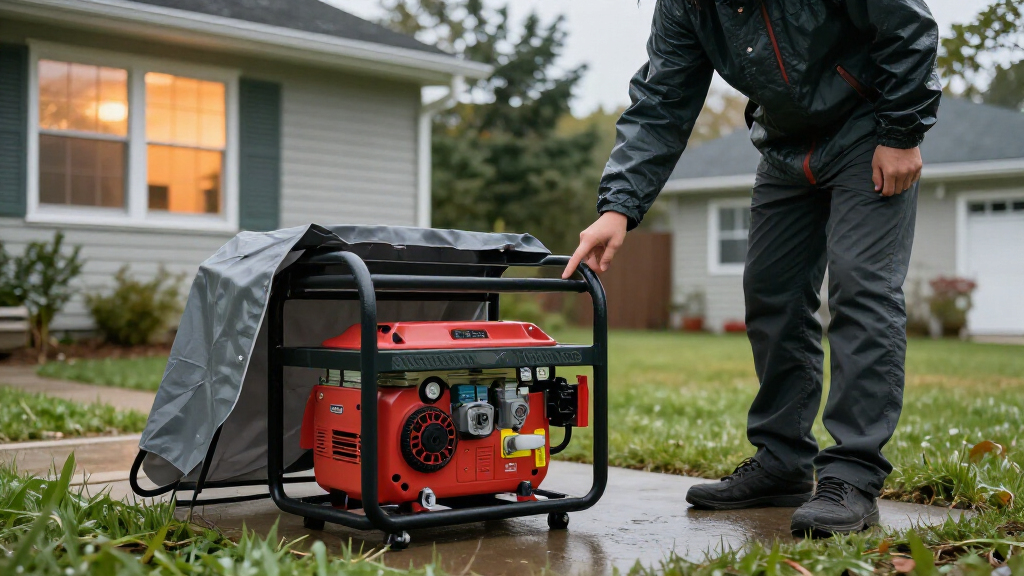
I evaluated these generators based on three core pillars: power consistency, fuel versatility, and user interface. Power consistency wasn’t just about peak watts; I looked at running watts and how well the generator handles sudden loads, such as starting an air conditioner compressor. Fuel versatility was weighted heavily because supply chain disruptions during storms are common; models that accept propane, natural gas, or gasoline offer greater resilience. The electric start mechanism was tested for reliability across temperature ranges, ensuring that the push-button start works consistently without the frustration of a dead battery.
I also prioritized safety features, specifically CO sensor integration and overload protection. Many lower-tier models lack these safeguards, posing risks in enclosed or poorly ventilated areas. Finally, I considered maintenance accessibility. A generator is useless if it breaks down during an emergency, so I favored units with widely available spare parts and straightforward oil change procedures. This ranking reflects a balance between raw capability and the practical realities of owning and operating a backup power system during a crisis.
| home backup generators with electric start | Fuel type |
|---|---|
| Champion Power Equipment 9375- | Gasoline and propane |
| WEN DF680iX 6800-Watt Dual-Fue | Gasoline and propane |
| WEN DF5600X 5,600-Watt Dual-Fu | Gasoline and propane |
| Westinghouse WGen9500c 12,500- | Gasoline |
| Westinghouse WGen9500DF Dual F | Gasoline and propane |
| WEN DF1100X 11,000-Watt Dual-F | Gasoline or LPG (propane) |
| Westinghouse WGen5300DF Dual-F | — |
| DuroMax XP13000EH 13,000-Watt | Gasoline/Propane |
| WEN 14,500-Watt Tri-Fuel Gener | — |
| Westinghouse WGen5300c 6,600-W | Gasoline |
| PowerSmart 4800W Gasoline Inve | Gasoline |
| Generac GP8000E Gas-Powered Po | Gasoline |
| PowerSmart 4800-Watt Electric | Gasoline |
| PowerSmart DB5041 4300-Watt Po | Gasoline |
| Westinghouse WGen7500c Portabl | Gasoline |
Factors to Consider When Choosing Home Backup Generators With Electric Start
Selecting a generator involves more than just matching wattage to your appliance list. You must consider how the unit fits into your home’s infrastructure and your personal ability to maintain it.Calculating True Power Needs
Most buyers underestimate the surge wattage required to start motors. A refrigerator compressor might need three times its running wattage to kick on. If you plan to run central air conditioning or well pumps, you need a generator with a high surge capacity, not just high running watts. I recommend listing every device you intend to power, adding their running watts, and then adding the highest surge wattage among them. This method prevents the generator from tripping its breaker when the first heavy appliance starts. Many people buy a 5,000-watt unit only to find it cannot handle their HVAC system, leading to dangerous manual load-shedding during a storm.The Reality of Fuel Storage
Gasoline degrades in 30 to 60 days without stabilizers, making it a poor choice for long-term emergency storage. Propane and natural gas do not degrade, allowing you to store fuel indefinitely. However, propane tanks require physical space and periodic recertification, while natural gas ties you to utility infrastructure that may fail during earthquakes or severe storms. Dual-fuel generators offer the best compromise, letting you use gasoline for immediate, high-demand tasks and propane for extended runtime. If you live in an area prone to hurricanes where roads may be blocked for weeks, the longevity of propane becomes a decisive factor over the convenience of gasoline.Transfer Switches vs. Extension Cords
Plugging a generator directly into a wall outlet is illegal and dangerous, as it can backfeed power to utility lines, electrocuting linemen. To safely power hardwired appliances like furnaces or well pumps, you must install a manual or automatic transfer switch. This adds to the upfront cost but is non-negotiable for safety. Some generators, like the Westinghouse models, are designed to be compatible with specific transfer switches, simplifying installation. If you are not comfortable with electrical work, budget for a licensed electrician to install the switch. Relying solely on extension cords limits you to plugging in individual devices, which is cumbersome and creates trip hazards during prolonged outages.Noise Regulations and Placement
Traditional open-frame generators often exceed 75 decibels at 23 feet, which violates noise ordinances in many residential areas and causes neighbor disputes. Inverter generators are significantly quieter, often operating between 50 and 60 decibels, comparable to a normal conversation. If you live in a densely populated neighborhood, prioritizing a quiet inverter model is essential for social harmony. Additionally, placement matters; generators must be at least 20 feet from windows and vents to prevent carbon monoxide poisoning. Some compact inverter models are portable enough to move closer to the house if needed, but always verify local codes regarding noise limits and placement distances before purchasing.Maintenance and Long-Term Ownership
A generator requires regular oil changes, spark plug replacements, and fuel system cleaning to remain reliable. Electric start systems rely on batteries that can corrode or lose charge if the unit sits unused for months. I recommend models with automatic choke systems and easy-access oil drains to simplify maintenance. Buying a premium unit with a longer warranty might save money on repairs down the line. Consider the availability of local service centers; a cheap generator from an unknown brand may become orphaned if parts are unavailable. Regular exercise runs, at least once a month under load, keep the internal components lubricated and the battery charged, extending the life of the machine.Frequently Asked Questions
Can I run a generator in my garage if the door is open?
No, you must never run a generator in a garage, even if the door is open. Carbon monoxide is odorless, colorless, and can accumulate rapidly in enclosed spaces, leading to fatal poisoning within minutes. The safe distance from any opening is at least 20 feet outdoors, with the exhaust pointed away from the house. Modern generators with CO sensors will shut down if levels rise, but they are not a substitute for proper outdoor placement. Always operate the unit on a flat, dry surface outside, well away from windows, doors, and vents.Is dual-fuel better than a natural gas generator for whole-home backup?
It depends on your infrastructure and risk profile. Natural gas generators are convenient because they connect directly to your gas line, offering unlimited runtime as long as the utility supply remains intact. However, during earthquakes or major storms, gas lines can rupture or be shut off by the utility, rendering the generator useless. Dual-fuel generators provide redundancy; you can use propane, which is stored on-site, if the natural gas supply fails. For most homeowners, the flexibility of dual-fuel or propane-only systems offers better resilience against a wider variety of disaster scenarios than relying solely on piped natural gas.Do I need an inverter generator if I have a modern home with smart appliances?
Yes, if you plan to power sensitive electronics like computers, smart TVs, or modern HVAC control boards. Traditional generators produce power with higher harmonic distortion, which can damage delicate circuitry over time. Inverter generators produce cleaner sine wave power that is safe for these devices. While traditional units are cheaper and offer higher wattage for the price, the risk of damaging expensive electronics often outweighs the savings. If your primary load is tools or older appliances, a traditional generator is sufficient. For a mixed load including smart home technology, an inverter is the prudent choice.How does the electric start differ from a recoil start in cold weather?
Electric start uses a battery and starter motor to crank the engine, requiring minimal physical effort. Recoil start relies on pulling a cord, which can be difficult in cold weather when the oil is thick and the engine is tight. In freezing temperatures, a weak battery can fail to turn the engine over, leaving you stranded. However, electric start systems add complexity and require battery maintenance. If you live in a very cold climate, ensure the generator is stored in a temperature-controlled environment or use a battery tender to keep the battery charged. Some models also offer a recoil backup, providing a fail-safe if the battery dies.Can I parallel two generators to get more power?
Yes, but only if both generators are identical models and explicitly rated for parallel operation. Not all generators support this feature, and attempting to connect non-compatible units can damage the alternators or cause fires. Parallel kits usually include specific cables that synchronize the frequency and phase of both units. This setup is useful if you need 15,000 watts but don’t want to buy a single massive, expensive unit. However, it doubles your maintenance requirements, as you must service two engines instead of one. Always consult the manufacturer’s manual before attempting to parallel any power equipment.Conclusion
Choosing the right home backup generator with electric start ultimately depends on your specific power demands and local climate conditions. For the majority of homeowners seeking a balance of power and versatility, the Champion Power Equipment 9375-Watt remains the best overall choice due to its dual-fuel capability and robust build. If your priority is protecting sensitive electronics and minimizing noise, the WEN DF680iX inverter model offers cleaner power and a quieter footprint, making it ideal for suburban settings. For those needing maximum raw wattage to run heavy machinery or entire houses, the Westinghouse WGen9500c provides the surge capacity necessary for demanding loads, though it requires more careful placement due to noise. Beginners should look toward the PowerSmart 4800W for its user-friendly interface and lower maintenance complexity, while premium buyers who value brand reputation and service networks will find the Generac GP8000E to be a reliable long-term investment. Match the generator to your actual load profile, not your worst-case fantasy, and prioritize safety features like CO sensors above all else.