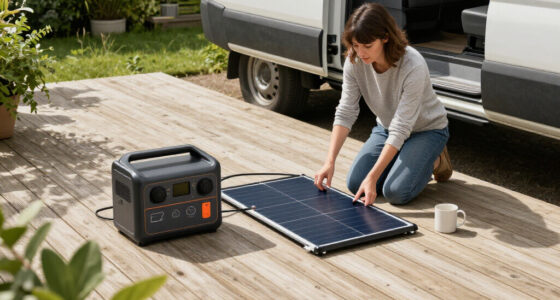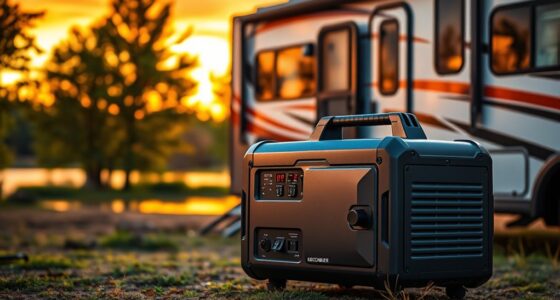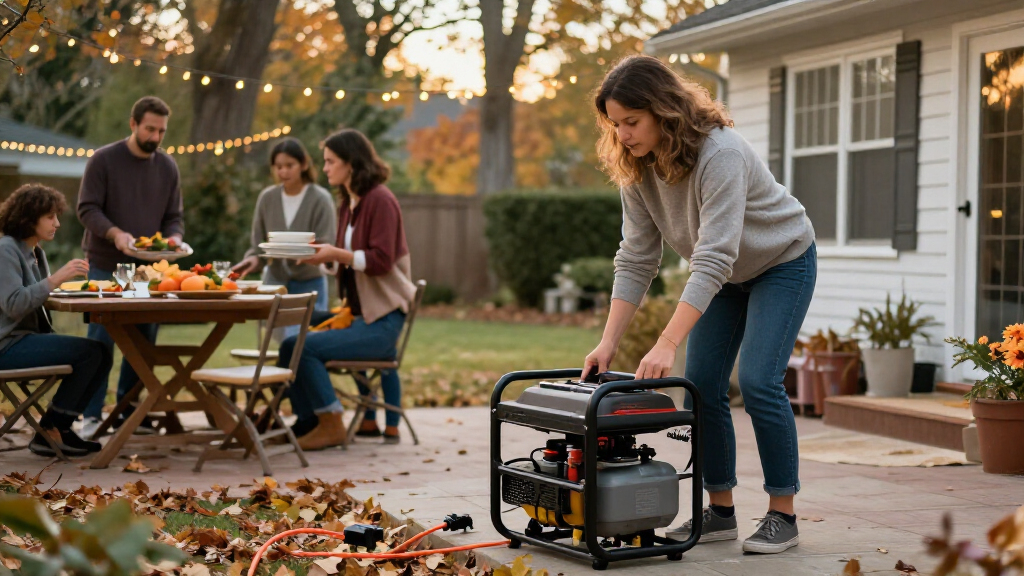
For Thanksgiving hosting, I’d put the Westinghouse WGen9500DF first when the goal is to power several household essentials, while the Honda EU2200i suits hosts who value inverter power in a smaller gas generator. For quiet, exhaust-free backup near guests, the Jackery Explorer 2000 v2 is a strong battery-powered alternative. The central tradeoff is capacity and runtime versus noise, fuel handling, portability, and the limits of battery storage. A small power station can keep phones and lights running, but it won’t cover the same kitchen loads as a larger fuel generator. Read on for the full breakdown and guidance on matching a model to your menu, appliances, and hosting setup.

Get backup power and energy gear delivered free with Prime
- Fast, free delivery on millions of items
- Prime Video, Amazon Music and more included
- Member-only deals all year
Complete the kit


Key Takeaways
- Fuel generators lead for sustained, higher-demand backup: the Westinghouse WGen9500DF and WEN DF472 offer dual-fuel flexibility, while their size, exhaust, and operating noise make placement a serious part of the plan.
- Battery power stations are a different kind of solution: the Jackery Explorer 2000 v2 and EF ECOFLOW DELTA 3 Classic avoid fuel and local exhaust, but their stored energy limits how long they can run substantial appliances.
- Inverter models stand out for smaller, more sensitive loads: the Honda EU2200i and Generac GP2500i are better fits for selective backup than for running an entire kitchen.
- Wattage labels alone don’t settle Thanksgiving needs: startup surges from refrigerators and other motor-driven appliances can rule out a small unit even when its running wattage appears adequate.
- The smallest power stations have narrow hosting roles: the HOWEASY 88Wh and EnginStar 296Wh are better suited to phones, lights, and small electronics than to cooking or extended refrigerator backup.
| Jackery Explorer 2000 v2 Portable Power Station, 2042Wh, 2200W |  | Best for Quiet, Long-Lasting Backup | Battery capacity: 2042Wh | Battery type: LiFePO4 | AC output: 2200W | VIEW LATEST PRICE | See Our Full Breakdown |
| EnginStar Portable Power Station, 300W, 296Wh |  | Best for Small Electronics | Battery capacity: 296Wh | Battery type: Lithium-ion | AC output: 300W | VIEW LATEST PRICE | See Our Full Breakdown |
| Westinghouse WGen9500DF Dual-Fuel Portable Generator with Remote Start |  | Best for Whole-Home-Style Backup | Gasoline running wattage: 9500 watts | Gasoline peak wattage: 12500 watts | Propane running wattage: 8500 watts | VIEW LATEST PRICE | See Our Full Breakdown |
| Honda EU2200i 2200 Watt Inverter Generator (EU2200ITAN) |  | Best for Quiet Fuel-Powered Backup | Starting wattage: 2200 watts | Running wattage: 2200 watts | Fuel type: Gasoline | VIEW LATEST PRICE | See Our Full Breakdown |
| Generac GP2500i 2,500-Watt Gas-Powered Portable Inverter Generator |  | Best for Parallel Expansion | Running power: 2200 watts | Starting power: 2500 watts | Fuel type: Unleaded gasoline | VIEW LATEST PRICE | See Our Full Breakdown |
| AidBuilt 5000W Portable Gas Inverter Generator |  | Best for Higher-Powered Thanksgiving Backup | Fuel and engine: Gasoline; 174cc 4-stroke OHV | Peak / running power: 5,000 / 4,000 watts | Outlets: 2 × 120V AC, 1 × 12V DC, 1 × 120V 30A TT-30R | VIEW LATEST PRICE | See Our Full Breakdown |
| HOWEASY Portable Power Station, 88Wh, 120W Output |  | Best for Small Electronics and Tabletop Lighting | Battery capacity: 88Wh | Running / peak output: 120W / 240W | AC output: 110V | VIEW LATEST PRICE | See Our Full Breakdown |
| PowerSmart 4300-Watt Portable Gas Inverter Generator |  | Best for Longer Rated Runtime Between Refuels | Fuel and engine: Gasoline; 223cc 4-stroke | Starting / running wattage: 4,300 / 3,500 watts | Fuel tank: 1.9 gallons | VIEW LATEST PRICE | See Our Full Breakdown |
| WEN 2800-Watt Inverter Generator with CO Shutdown Sensor |  | Best for Portable, Lower-Load Backup | Engine displacement: 98cc | Fuel and tank: Gasoline; 1.58 gallons | Runtime: Up to 9 hours at half load | VIEW LATEST PRICE | See Our Full Breakdown |
| EF ECOFLOW DELTA 3 Classic Portable Power Station, 1024Wh, 1800W |  | Best Quiet, No-Fuel Option for Indoor-Adjacent Backup | Battery capacity and chemistry: 1,024Wh LiFePO4 | Output / surge power: 1,800W / 3,600W | AC charging: 0–80% in 45 minutes | VIEW LATEST PRICE | See Our Full Breakdown |
| WEN DF472 4,750-Watt Dual-Fuel Portable Generator |  | Best for Flexible Fuel and Home Backup | Engine: 224 cc, 4-stroke | Fuel types: Gasoline and propane | Running watts: 3,800 watts gasoline; 3,500 watts propane | VIEW LATEST PRICE | See Our Full Breakdown |
| SIOKIUU 2500W Portable Inverter Generator with CO Sensor |  | Best Compact Gas Inverter for Essential Loads | Peak output: 2,500 watts | Running output: 1,900 watts | Engine: 80 cc, 4-stroke | VIEW LATEST PRICE | See Our Full Breakdown |
| PowerSmart 4000-Watt Gas-Powered Portable Inverter Generator |  | Best for More Inverter Output | Starting wattage: 3,800 watts | Running wattage: 3,200 watts | Engine: 149 cc, 4-stroke | VIEW LATEST PRICE | See Our Full Breakdown |
| Jackery Explorer 300 Portable Power Station (292Wh) |  | Best Lightweight Backup for Small Electronics | Battery capacity and type: 292Wh LiFePO4 | AC output: 300W, 600W peak | Weight: 7.5 pounds | VIEW LATEST PRICE | See Our Full Breakdown |
| Jackery Explorer 1000 v2 Portable Power Station, 1024Wh LiFePO4 Battery |  | Best Battery Power for Indoor-Friendly Backup | Battery capacity and type: 1,024Wh LiFePO4 | AC output: 1,500W | Surge peak: 3,000W | VIEW LATEST PRICE | See Our Full Breakdown |
| portable generators for Thanksgiving hosting | Weight | Runtime |
|---|---|---|
| Jackery Explorer 2000 v2 Porta | 39.5 lbs | — |
| EnginStar Portable Power Stati | 6.5 lbs | — |
| Westinghouse WGen9500DF Dual-F | — | Up to 12 hours |
| Honda EU2200i 2200 Watt Invert | 47 pounds | 3.2 to 8.1 hours |
| Generac GP2500i 2,500-Watt Gas | 46.6 lbs | Up to 8 hours at 25% load; up to 5.5 hours at 50% load |
| AidBuilt 5000W Portable Gas In | 57.3 lbs | Up to 10 hours at 25% load |
| HOWEASY Portable Power Station | 2.3 lbs | — |
| PowerSmart 4300-Watt Portable | 68 lbs | Up to 12 hours at 25% load |
| WEN 2800-Watt Inverter Generat | 45 lbs | Up to 9 hours at half load |
| EF ECOFLOW DELTA 3 Classic Por | 26.7 lbs | — |
| WEN DF472 4,750-Watt Dual-Fuel | — | Up to 11 hours at half load |
| SIOKIUU 2500W Portable Inverte | 39.46 pounds | Up to 17 hours at 25% load; 8.6 hours at 50% load |
| PowerSmart 4000-Watt Gas-Power | — | — |
| Jackery Explorer 300 Portable | 7.5 pounds | — |
| Jackery Explorer 1000 v2 Porta | — | — |
More Details on Our Top Picks
Jackery Explorer 2000 v2 Portable Power Station, 2042Wh, 2200W
For Thanksgiving hosts who want substantial backup power without running a fuel-powered engine, the Jackery Explorer 2000 v2 is the strongest fit in this group. Its 2042Wh LiFePO4 battery and 2200W AC output can support a mix of essential devices, while three AC ports give you more room to connect than the smaller EnginStar 300W. Silent charging below 30dB can be welcome around guests, and 20ms UPS switching is aimed at keeping connected equipment powered through an interruption. The tradeoff is that this is a 39.5-pound battery unit, not a lightweight grab-and-go charger; its runtime is limited when loads are heavy, and solar panels are optional. Compared with the Westinghouse WGen9500DF, it avoids fuel and engine noise but cannot match that generator’s much higher output for large household loads.
Pros:- 2042Wh LiFePO4 capacity and 2200W AC output suit a broader set of backup needs than the EnginStar 300W.
- Three AC ports allow several devices to connect at once.
- AC, solar, fast, and silent charging options offer flexibility around an event.
- 20ms UPS switching can help maintain power to connected equipment during an interruption.
Cons:- At 39.5 pounds, it is substantial to carry between storage and the hosting area.
- Optional solar panels add a separate purchase for solar recharging.
- Its battery capacity and output cannot replace a high-wattage dual-fuel generator for demanding loads.
Best for: Hosts who want quiet backup for several essential devices and value a rechargeable LiFePO4 power station over a high-output fuel generator.
Not ideal for: Hosts planning to power multiple high-demand appliances for extended periods, or anyone who needs a lightweight unit and does not want to buy solar panels separately.
- Battery capacity:2042Wh
- Battery type:LiFePO4
- AC output:2200W
- AC ports:3
- USB-C PD output:100W
- Weight:39.5 lbs
- AC fast charging:0 to 80% in 66 minutes
- Silent charging:Full charge in 5 hours at less than 30dB
Our verdict“Choose the Jackery Explorer 2000 v2 for quiet, substantial battery backup, but pick the Westinghouse WGen9500DF when higher output and fuel-powered runtime matter more.”
EnginStar Portable Power Station, 300W, 296Wh
The EnginStar is a compact pick for keeping phones, tablets, and other modest loads charged—not for running Thanksgiving kitchen appliances. Its 296Wh capacity and 300W AC limit sit far below the Jackery Explorer 2000 v2, so I would treat it as a personal-device backup rather than a household power source. The upside is portability: at 6.5 pounds, it is much easier to move around a crowded home or take along in a car. Eight output ports, a digital display, and a flashlight make it practical for several small devices, while wall, car, and compatible solar charging give it more replenishment options than a basic power bank. The cost of that compact format is limited appliance support and a maximum charging speed of 65W. Hosts needing meaningful outage coverage should step up to a larger station or generator.
Pros:- At 6.5 pounds, it is far easier to carry than the Jackery Explorer 2000 v2.
- Eight output ports accommodate several small devices.
- Pure sine wave AC output is designed for stable power to compatible electronics.
- Can recharge from a wall outlet, car socket, or compatible solar panel.
Cons:- The 300W AC output rules out most kitchen appliances and other heavy loads.
- A 296Wh battery offers limited backup duration compared with larger stations.
- The compatible solar panel is not included, and maximum charging speed is 65W.
Best for: Hosts seeking a light, portable way to keep phones, tablets, and other low-wattage electronics powered during a gathering or short outage.
Not ideal for: Anyone expecting to run a refrigerator, cooking appliance, or several high-draw devices; its 300W output is not intended for those loads.
- Battery capacity:296Wh
- Battery type:Lithium-ion
- AC output:300W
- AC outlets:2 pure sine wave, 110V
- Output ports:8
- Weight:6.5 lbs
- Dimensions:9 x 5.5 x 7.5 inches
- Recharge time:80% in 2 hours
Our verdict“Choose the EnginStar for portable phone-and-device charging, not as the main backup source for Thanksgiving hosting.”
Westinghouse WGen9500DF Dual-Fuel Portable Generator with Remote Start
When Thanksgiving hosting calls for more than device charging, the Westinghouse WGen9500DF brings the highest stated output in this batch: 9,500 running watts on gasoline and 8,500 on propane. That makes it a better match than either the Honda EU2200i or Generac GP2500i for hosts planning to support multiple household loads, though exact circuits and appliance demands still need checking. Dual-fuel operation gives you a choice of gasoline or propane, and remote, electric, and recoil starting provide more starting options than the pull-start-only Generac. Its 6.6-gallon tank is rated for up to 12 hours of runtime, but the large 457cc engine brings bulk and setup demands that smaller inverter models avoid. I would shortlist it for serious outage coverage, not for quiet operation near guests; safe outdoor placement and proper transfer equipment remain part of the plan.
Pros:- High running output exceeds the Honda EU2200i and Generac GP2500i for larger backup loads.
- Gasoline and propane fuel options add flexibility.
- Remote, electric, and recoil starting offer more starting choices than the Generac GP2500i.
- Transfer-switch-ready and RV-ready outlets support multiple connection needs.
Cons:- The 457cc engine makes it a large, demanding unit to store and move.
- Requires minimal assembly before use.
- Its engine-based operation is a less suitable fit for close-to-the-house, quiet hosting than battery power stations.
Best for: Hosts who need high-output backup for several household circuits and want the flexibility of gasoline or propane with remote starting.
Not ideal for: Hosts with limited outdoor space, a strong need for quiet operation, or only a few small devices to power.
- Gasoline running wattage:9500 watts
- Gasoline peak wattage:12500 watts
- Propane running wattage:8500 watts
- Fuel types:Gasoline and propane
- Engine:457cc 4-stroke OHV
- Fuel tank capacity:6.6 gallons
- Runtime:Up to 12 hours
- Starting methods:Remote, electric, and recoil
Our verdict“Pick the WGen9500DF when high output and dual-fuel flexibility outweigh size and noise, rather than choosing a compact inverter or battery station.”
Honda EU2200i 2200 Watt Inverter Generator (EU2200ITAN)
The Honda EU2200i is the fuel-powered option I would favor when noise and clean power matter more than running many appliances. At a stated 48–57 dB(A), it is quieter than the Westinghouse WGen9500DF, and inverter technology is suited to sensitive electronics. Its 2200-watt output is a major step above the EnginStar’s 300W, but it is still a compact generator rather than a solution for every kitchen load; check the starting and running demands of anything you plan to connect. The 0.95-gallon tank and 3.2-to-8.1-hour runtime range mean refueling needs can interrupt a long gathering, especially under heavier loads. At 47 pounds, it also is not as easy to move as the EnginStar. CO-MINDER adds automatic shutdown protection, but the generator still needs safe outdoor placement.
Pros:- 48–57 dB(A) noise rating is lower than the larger Westinghouse WGen9500DF.
- Inverter technology provides clean power suited to sensitive electronics.
- Eco Throttle System is designed to improve fuel efficiency.
- CO-MINDER automatically shuts down the unit if carbon monoxide levels become dangerous.
Cons:- The 0.95-gallon tank can mean more frequent refueling than the Westinghouse’s 6.6-gallon tank.
- Its 2200-watt output is not suited to powering many high-demand household loads at once.
- At 47 pounds, it is much heavier than the EnginStar portable power station.
Best for: Hosts who need gasoline-powered backup for selected electronics or modest loads and place a high value on quieter operation.
Not ideal for: Hosts who need long runtimes without refueling or enough output to support multiple high-demand appliances; also check availability restrictions before buying.
- Starting wattage:2200 watts
- Running wattage:2200 watts
- Fuel type:Gasoline
- Fuel tank capacity:0.95 gallons
- Runtime:3.2 to 8.1 hours
- Noise level:48 to 57 dB(A)
- Weight:47 pounds
- Outlets:2
Our verdict“Choose the Honda EU2200i for quieter, clean fuel-powered support for selected loads, but choose the Westinghouse for longer runtime and substantially higher output.”
Generac GP2500i 2,500-Watt Gas-Powered Portable Inverter Generator
The Generac GP2500i suits hosts who want a compact gasoline inverter now and the option to add capacity later. It provides 2,200 running watts, matching the Honda EU2200i’s stated running output, and its less-than-3% total harmonic distortion is intended for sensitive electronics. Economy Mode can adjust engine speed to the load, while the stated runtime reaches up to eight hours at 25% load. The differentiator is parallel capability: connect a second GP2500i with a separately sold kit for up to 4,400 running watts. That flexibility costs extra equipment and still does not give this unit the Westinghouse WGen9500DF’s high single-generator output or dual-fuel choice. It also relies on a recoil pull-start, so it offers less convenience than the Honda’s listed starting setup. COsense adds an automatic shutdown response to unsafe carbon monoxide levels.
Pros:- 2200 running watts and less than 3% total harmonic distortion support clean power for compatible electronics.
- Parallel connection can raise combined running output to 4400 watts with a second unit and separate kit.
- Economy Mode adjusts engine speed to the load and can extend runtime.
- COsense monitors carbon monoxide and automatically shuts the unit down if levels become unsafe.
Cons:- Recoil pull-start only, unlike the Honda EU2200i’s broader starting options listed in its product data.
- Gasoline-only operation lacks the Westinghouse WGen9500DF’s propane option.
- The parallel kit is sold separately, and there is no built-in TT-30R RV outlet or wheel kit.
Best for: Hosts who want an inverter generator for selected loads and may later expand output by connecting a second compatible unit.
Not ideal for: Buyers who need remote or electric starting, propane operation, a built-in RV outlet, or high output from one generator.
- Running power:2200 watts
- Starting power:2500 watts
- Fuel type:Unleaded gasoline
- Fuel tank capacity:0.95 gallons
- Runtime:Up to 8 hours at 25% load; up to 5.5 hours at 50% load
- Noise level:53 dB(A) at 25% load
- Weight:46.6 lbs
- Parallel capability:Up to 4400 running watts with a second GP2500i and separately sold kit
Our verdict“Choose the GP2500i if you value clean inverter power and a path to parallel expansion, but choose the Westinghouse for greater single-unit capacity and dual-fuel flexibility.”
AidBuilt 5000W Portable Gas Inverter Generator
For a host who wants to run several household essentials from one portable gas unit, the AidBuilt’s 4,000 running watts give it more headroom than the PowerSmart 4300-Watt, rated for 3,500 running watts. That capacity can help cover a mix of needs, though buyers should check the starting and running demands of each appliance rather than assume every kitchen device can run at once. Its under-3% THD inverter output is designed for sensitive electronics, while the 30A TT-30R outlet also suits RV use. At 57.3 pounds and under 59 dBA, it is easier to move and quieter by its stated rating than many larger gas generators. The tradeoff is the 1.85-gallon tank: its up-to-10-hour figure applies at just 25% load, so heavier hosting use can mean more refueling.
Pros:- 4,000 running watts provide more stated output than the PowerSmart 4300-Watt’s 3,500 running watts.
- Inverter output under 3% THD is designed for sensitive electronics.
- 30A TT-30R outlet, two 120V AC outlets, and 12V DC outlet support varied connections.
- ECO mode, fuel gauge, and up-to-10-hour runtime at 25% load aid basic run planning.
Cons:- The 1.85-gallon tank and runtime rating at 25% load may mean refueling during heavier use.
- At 57.3 pounds, it is not an effortless carry for one person over a long distance.
Best for: Thanksgiving hosts who need portable gas-powered backup for several moderate-load essentials and value an RV-ready 30A outlet.
Not ideal for: Hosts planning long, high-load operation without refueling, or anyone who needs a lightweight unit for carrying over long distances.
- Fuel and engine:Gasoline; 174cc 4-stroke OHV
- Peak / running power:5,000 / 4,000 watts
- Outlets:2 × 120V AC, 1 × 12V DC, 1 × 120V 30A TT-30R
- Total harmonic distortion:Less than 3%
- Fuel tank:1.85 gallons (7 L)
- Runtime:Up to 10 hours at 25% load
- Weight:57.3 lbs
- Warranty:2 years
Our verdict“Choose the AidBuilt if you want more running-watt headroom than the PowerSmart 4300-Watt in a portable inverter generator and can manage its modest fuel tank.”
HOWEASY Portable Power Station, 88Wh, 120W Output
The HOWEASY is a small-device backup option, not a substitute for a generator that can run kitchen appliances. Its 120W running output and 88Wh battery suit phones, small lights, and other modest electronics, but leave it far behind the 1,800W EF ECOFLOW DELTA 3 Classic for hosting-related power needs. That limitation is also its advantage: at 2.3 pounds, it is easy to keep nearby for a phone or a little extra lighting without handling gasoline or exhaust. Eight ports allow several compatible devices to connect, and AC, car, and compatible solar charging offer flexibility between uses. The solar panel is not included, and the battery’s capacity is limited, so I would choose this as a personal charging companion—not as backup for a refrigerator, microwave, or other high-draw equipment.
Pros:- At 2.3 pounds, it is easy to carry and position near guests or a charging area.
- Eight ports include AC, USB, USB-C, and DC connections for compatible small devices.
- Can recharge from an AC outlet, car socket, or compatible solar panel.
- Built-in display and three lighting modes add utility for outages and outdoor use.
Cons:- 120W running output rules out most kitchen appliances and other high-draw hosting equipment.
- The 88Wh battery offers limited energy for extended use or charging many devices.
- A compatible solar panel must be obtained separately.
Best for: Hosts who want a lightweight battery pack for phones, small electronics, or low-power lighting during an outage or outdoor gathering.
Not ideal for: Anyone expecting to power Thanksgiving cooking equipment, a refrigerator, or multiple high-wattage devices; its 120W output and 88Wh capacity are too limited.
- Battery capacity:88Wh
- Running / peak output:120W / 240W
- AC output:110V
- Ports:8 total: 2 AC, 1 USB-C, 3 USB, 2 DC
- USB-C output:18W
- Charging methods:AC outlet, 12V/24V car socket, compatible 15V–24V solar panel
- Weight:2.3 lbs
- Dimensions:6.6 × 4 × 3 inches
- Warranty:24 months
Our verdict“Pick the HOWEASY for lightweight phone and small-device support, but choose the EF ECOFLOW DELTA 3 Classic if you need meaningful backup power for household equipment.”
PowerSmart 4300-Watt Portable Gas Inverter Generator
The PowerSmart’s clearest hosting advantage over the AidBuilt is its up-to-12-hour runtime at 25% load, compared with AidBuilt’s up-to-10-hour rating. That can make low-load backup easier to schedule, but neither figure promises a full day of cooking: actual runtime depends on demand, and the 1.9-gallon tank remains modest. With 3,500 running watts, this model offers less continuous output than the AidBuilt’s 4,000 watts, so I’d favor it when rated runtime matters more than extra power headroom. Its under-3% THD output is designed for sensitive electronics, and the digital display, ECO mode, and low-oil shutdown add useful operating information and protection. At 68 pounds, it is also heavier than the AidBuilt, making frequent repositioning less appealing.
Pros:- Up to 12 hours at 25% load is a longer stated runtime than the AidBuilt’s up-to-10-hour rating.
- 3,500 running watts can support a planned mix of moderate-load essentials.
- Inverter output under 3% THD is designed for sensitive electronics.
- Digital display, ECO mode, and low-oil shutdown add operating feedback and protection.
Cons:- Its 3,500 running watts are below the AidBuilt’s 4,000 running watts.
- The 1.9-gallon tank and light-load runtime rating may require refueling during heavier hosting use.
- At 68 pounds, it is less convenient to lift and reposition than the AidBuilt.
Best for: Hosts who want a gas inverter with a longer stated runtime at light load and can plan around 3,500 running watts.
Not ideal for: Buyers who need the highest running output in this gas-generator pair, or anyone who needs to move the unit often without assistance.
- Fuel and engine:Gasoline; 223cc 4-stroke
- Starting / running wattage:4,300 / 3,500 watts
- Fuel tank:1.9 gallons
- Runtime:Up to 12 hours at 25% load
- Outlets:120V 30A L5-30R twist-lock, 120V 20A 5-20R duplex, 12V 8A DC
- Total harmonic distortion:Less than 3%
- Weight:68 lbs
- Dimensions:18.5 × 15.9 × 19.7 inches
- Warranty:2-year limited manufacturer warranty
Our verdict“Choose the PowerSmart over the AidBuilt if longer stated light-load runtime matters more than the AidBuilt’s extra 500 running watts.”
WEN 2800-Watt Inverter Generator with CO Shutdown Sensor
The WEN is the lineup’s more manageable gas-powered choice for a narrower set of essential loads. At 45 pounds, it is lighter than both the AidBuilt and PowerSmart, but its 2,250 rated watts put it below their 3,500- and 4,000-watt running outputs. I would plan for selected electronics and modest essentials rather than trying to power several demanding kitchen appliances at once. Its CO shutdown sensor and fuel shutoff are useful added safeguards and maintenance features; they do not make indoor operation safe, so it still belongs outdoors and away from occupied spaces. The stated up-to-nine-hour runtime is at half load, a different measurement point from the other gas models’ 25% figures. It also offers USB ports, while the AidBuilt and PowerSmart provide more running-power headroom.
Pros:- At 45 pounds, it is lighter than the AidBuilt and PowerSmart models in this batch.
- CO shutdown sensor and fuel shutoff add useful operating and maintenance features.
- THD under 1.2% at full load is specified for clean power to sensitive electronics.
- AC, 12V DC, and USB outlets accommodate several types of compatible devices.
Cons:- Its 2,250 rated watts provide substantially less running-power capacity than the AidBuilt and PowerSmart.
- Up-to-nine-hour runtime is specified at half load, so it is not directly comparable with 25%-load runtime claims.
- The parallel connection kit is sold separately.
Best for: Hosts who need a relatively light gas inverter for selected lower-load essentials and value a CO shutdown sensor and USB charging.
Not ideal for: Anyone intending to run several high-demand kitchen appliances or seeking the greater running capacity of the AidBuilt or PowerSmart.
- Engine displacement:98cc
- Fuel and tank:Gasoline; 1.58 gallons
- Runtime:Up to 9 hours at half load
- Noise level:60 dB at no load
- Outlets:Two 120V AC, one 12V DC, two 5V USB
- Weight:45 lbs
- Dimensions:19.7 × 11.6 × 18.7 inches
- Warranty:Three-year limited warranty
Our verdict“Choose the WEN if portability and its CO shutdown sensor matter more than the higher running output offered by the AidBuilt and PowerSmart.”
EF ECOFLOW DELTA 3 Classic Portable Power Station, 1024Wh, 1800W
Unlike the AidBuilt and PowerSmart, the DELTA 3 Classic runs on a 1,024Wh LiFePO4 battery rather than gasoline, so it avoids generator exhaust and refueling while supplying power. Its 1,800W output and 3,600W surge capacity suit a more limited, planned set of devices than those gas models’ running-watt ratings; check appliance requirements before relying on it for kitchen equipment. For Thanksgiving hosting, the appeal is convenient backup for compatible electronics or other loads that fit its output, with under-10ms UPS switchover for supported equipment and app-based monitoring. AC charging can reach 80% in 45 minutes, while solar charging requires an optional panel. The battery’s finite capacity is the main tradeoff: unlike a fueled generator, it needs recharging once depleted, and it cannot pair with the specified DELTA extra batteries.
Pros:- Battery operation avoids gasoline refueling and generator exhaust.
- 1,800W output and 3,600W surge capacity support compatible moderate loads.
- Under-10ms UPS switchover can help keep supported sensitive equipment powered during interruptions.
- App controls, 100W USB-C output, and AC charging to 80% in 45 minutes add flexibility.
Cons:- The 1,024Wh battery has finite capacity and must be recharged after use.
- Solar charging requires an optional 500W panel.
- Not compatible with DELTA 2 Smart Extra Battery or DELTA 3 Series Smart Extra Battery.
Best for: Hosts who prefer fuel-free backup for compatible electronics and moderate loads, with app monitoring and fast AC recharging.
Not ideal for: Buyers who need sustained high-output operation without recharge breaks, or who want to expand capacity using the listed DELTA 2 or DELTA 3 Series smart extra batteries.
- Battery capacity and chemistry:1,024Wh LiFePO4
- Output / surge power:1,800W / 3,600W
- AC charging:0–80% in 45 minutes
- Solar charging:2.5 hours with optional 500W solar panel
- UPS switchover:Under 10ms
- USB-C output:100W
- Outlets:6
- Weight:26.7 lbs
- Warranty:5 years
Our verdict“Choose the DELTA 3 Classic over the AidBuilt or PowerSmart if fuel-free, exhaust-free operation matters more than sustained power from a gasoline generator.”
WEN DF472 4,750-Watt Dual-Fuel Portable Generator
The WEN DF472 is the strongest fit here when Thanksgiving hosting means keeping several household essentials running, not just charging phones. Its gasoline output reaches 3,800 running watts, well above the smaller SIOKIUU and PowerSmart inverter generators, while selectable 120V/240V output and a twist-lock connection add transfer-switch flexibility. Propane operation gives hosts another fuel option, though it drops running output to 3,500 watts. The tradeoff is a conventional generator setup: it weighs more to manage than either Jackery power station and requires outdoor operation. Its 4-gallon tank is also modest for this class, despite a listed runtime of up to 11 hours at half load. I’d choose it for backup capacity and fuel choice, not quiet table-side power.
Pros:- Runs on gasoline or propane, giving hosts a choice of available fuel.
- 3,800 running watts on gasoline exceed the output of the SIOKIUU and PowerSmart inverter models here.
- Selectable 120V/240V output and a NEMA L14-30R twist-lock outlet support compatible transfer-switch setups.
- Rated for up to 11 hours at half load on gasoline.
Cons:- The 4-gallon gasoline tank can mean refueling during longer hosting or outage periods.
- Propane operation lowers running output to 3,500 watts.
- Unlike the Jackery power stations, it uses fuel and must run outdoors away from occupied spaces.
Best for: Hosts who want gasoline-or-propane flexibility and enough output for multiple household backup loads through a compatible transfer switch.
Not ideal for: Hosts prioritizing quiet power near guests, easy one-person portability, or a battery-based option with no fuel or exhaust.
- Engine:224 cc, 4-stroke
- Fuel types:Gasoline and propane
- Running watts:3,800 watts gasoline; 3,500 watts propane
- Surge watts:4,750 watts gasoline; 4,350 watts propane
- Voltage:Selectable 120V/240V
- Gasoline tank:4 gallons
- Runtime:Up to 11 hours at half load
- Outlets:Two 120V GFCI 5-20R, one 120V/240V NEMA L14-30R, one 12V DC
- Starting system:Recoil
Our verdict“Choose the DF472 if you need substantial backup output and two fuel choices more than quiet operation or battery-powered convenience.”
SIOKIUU 2500W Portable Inverter Generator with CO Sensor
The SIOKIUU 2500W suits hosts who need portable power for a few essentials rather than a whole kitchen. Its 1,900 running watts can serve modest loads, while inverter output rated below 3% THD is a better match for sensitive electronics than a conventional generator such as the WEN DF472. At 39.46 pounds, it is easier to move than the heavier PowerSmart inverter, and its CO sensor adds an automatic shutdown safeguard; it does not make indoor or enclosed use safe, so keep it outdoors. The small 1.06-gallon tank is the main hosting limitation: the long runtime figure applies at just 25% load, and the listed runtime falls to 8.6 hours at 50%. I’d pick it for compact, lower-load backup, not powering multiple large appliances.
Pros:- 39.46-pound weight and carrying handle make it easier to relocate than the 50.7-pound PowerSmart inverter.
- Less than 3% THD is suited to sensitive electronics.
- CO sensor shuts the generator down when carbon monoxide levels become too high.
- ECO mode, parallel capability, and up to 17 hours of runtime at 25% load offer flexibility for lighter use.
Cons:- 1,900 running watts limit how many substantial appliances it can support at once.
- The 1.06-gallon tank is small, and listed runtime is 8.6 hours at 50% load.
- Gasoline operation requires outdoor placement and refueling, unlike the Jackery battery stations.
Best for: Hosts who need a relatively light gasoline inverter for electronics, lighting, and a few modest loads, and who can refuel as needed.
Not ideal for: Hosts expecting to run high-wattage cooking equipment or several major appliances, or anyone unable to operate a generator outdoors at a safe distance.
- Peak output:2,500 watts
- Running output:1,900 watts
- Engine:80 cc, 4-stroke
- Fuel and tank:Gasoline; 1.06 gallons
- Runtime:Up to 17 hours at 25% load; 8.6 hours at 50% load
- Noise level:Under 59 dBA at 23 feet
- Weight:39.46 pounds
- Power quality:Less than 3% THD
- Features:ECO mode, parallel capability, CO sensor
Our verdict“Choose this SIOKIUU for portable, lower-load inverter power with a CO sensor, but look to the WEN DF472 for heavier household loads.”
PowerSmart 4000-Watt Gas-Powered Portable Inverter Generator
For a host who wants more inverter capacity than the SIOKIUU without stepping up to the WEN DF472, the PowerSmart 4000-Watt offers a useful middle ground. It provides 3,200 running watts and less than 3% THD, so it has more room for household loads while remaining suited to sensitive electronics. Its mix of AC, DC, and USB connections can simplify powering lights and charging devices alongside other equipment. The cost of that extra output is a larger, heavier unit: at 50.7 pounds, it is less convenient to move than the SIOKIUU, and its 1.3-gallon tank may need attention during extended use. Unlike the battery-based Jackery Explorer 1000 v2, it also produces exhaust and must stay outdoors. I’d favor it when output matters more than fuel-free convenience.
Pros:- 3,200 running watts provide more capacity than the SIOKIUU’s 1,900 watts.
- Less than 3% THD is suited to sensitive electronics.
- AC, DC, and USB outlets support a range of household devices and chargers.
- Eco Mode and low-oil shutdown add useful operating controls.
Cons:- At 50.7 pounds, it is heavier to move than the SIOKIUU.
- The 1.3-gallon tank may require frequent refueling during extended use.
- Must be operated outdoors, away from enclosed or partially enclosed spaces.
Best for: Hosts who need more inverter output for several moderate household loads and want AC, DC, and USB connections in one gasoline unit.
Not ideal for: Hosts who need quiet, exhaust-free power near guests, frequent easy carrying, or long operation without refueling.
- Starting wattage:3,800 watts
- Running wattage:3,200 watts
- Engine:149 cc, 4-stroke
- Fuel tank:1.3 gallons
- Voltage and frequency:120V, 60Hz
- Power quality:Under 3% THD
- Noise level:59 dBA at 23 feet
- Weight and dimensions:50.7 pounds; 20.1 × 12.2 × 17.7 inches
- Outlets and ports:120V 20A duplex, 120V 30A L5-30R twist-lock, 12V 8A DC, dual 5V 2.1A USB
Our verdict“Pick the PowerSmart when you need more inverter output than the compact SIOKIUU provides and can accommodate its weight, fuel needs, and outdoor placement.”
Jackery Explorer 300 Portable Power Station (292Wh)
The Jackery Explorer 300 is the easiest option here to bring near a gathering because it weighs just 7.5 pounds and produces no generator exhaust. That makes it useful for keeping phones, a laptop, or small electronics powered without placing a running gasoline unit near guests. Its 292Wh capacity and 300W AC output, however, put it in a very different category from the PowerSmart or WEN: it cannot take over for a kitchen appliance or sustain a broad set of household loads. The 100W USB-C port and multiple connections help with small-device charging, while the Jackery Explorer 1000 v2 is the better choice in this lineup for longer or higher-wattage backup. Solar panels are sold separately, so off-grid recharging requires another purchase.
Pros:- At 7.5 pounds, it is far easier to carry than any gasoline generator in this group.
- Battery operation avoids fuel handling and generator exhaust near the gathering.
- 100W USB-C PD, USB-A, AC, and car-port connections cover common small-device needs.
- LiFePO4 battery is rated for over 4,000 charge cycles to 70% capacity.
Cons:- 292Wh capacity and 300W AC output are not suitable for high-power appliances.
- Solar panels are not included, and solar recharging requires a compatible panel.
- Its limited stored energy makes it less suitable for extended backup than the Explorer 1000 v2.
Best for: Hosts seeking a light, quiet, exhaust-free source for phones, laptops, and small electronics during a gathering.
Not ideal for: Hosts who need to power refrigerators, cooking appliances, or several high-wattage devices, or who need extended backup without recharging.
- Battery capacity and type:292Wh LiFePO4
- AC output:300W, 600W peak
- Weight:7.5 pounds
- Ports:Two AC, one 100W USB-C PD, two USB-A, one car port
- Charge cycles:4,000+ to 70% capacity
- Solar charging:About 2.8 hours to 80% with a 100W panel
- AC adapter charging:About 4 hours
- Voltage:110V
Our verdict“Choose the Explorer 300 for light, portable charging of small devices, not for keeping major Thanksgiving appliances running.”
Jackery Explorer 1000 v2 Portable Power Station, 1024Wh LiFePO4 Battery
The Jackery Explorer 1000 v2 is the battery pick I’d choose when a Thanksgiving host wants meaningful backup without running a fuel-powered generator nearby. Its 1,024Wh capacity and 1,500W AC output give it far more scope than the Explorer 300 for essential devices and moderate loads, though it still cannot match the WEN DF472’s sustained generator output or refuelability. A 10ms UPS switchover can help keep compatible essential equipment running through an interruption, and app-controlled charging modes add flexibility. The unit weighs 23.4 pounds, so it is portable but not as effortless to carry as the Explorer 300. Solar panels are not included and compatibility is limited to Jackery panels. Its 50-minute emergency charge also requires enabling that mode in the app.
Pros:- 1,024Wh capacity and 1,500W AC output offer substantially more scope than the Explorer 300.
- Battery operation avoids fuel handling and exhaust from a running generator.
- 10ms UPS switchover can help maintain power for compatible essential devices during an interruption.
- App offers emergency, quiet overnight, and energy-efficiency charging modes.
Cons:- Its 1,500W AC output and finite battery capacity cannot replace a higher-output generator for sustained heavy loads.
- Solar panels are not included, and solar charging supports Jackery panels only.
- The 50-minute full charge requires enabling emergency charging in the app.
Best for: Hosts who want exhaust-free backup for essential electronics and moderate loads, with enough battery capacity for more than phone charging.
Not ideal for: Hosts who need to run high-wattage kitchen equipment for long periods, want fuel-based extended runtime, or already rely on non-Jackery solar panels.
- Battery capacity and type:1,024Wh LiFePO4
- AC output:1,500W
- Surge peak:3,000W
- UPS switchover:10ms
- Weight and dimensions:23.4 pounds; 12.34 × 7.91 × 9.19 inches
- Ports:Two pure sine wave AC, two USB-C, one USB-A, one DC car port
- USB-C charging:100W PD
- Charging time:50 minutes with emergency charging enabled; 1.25 hours by default
- Solar compatibility:Jackery solar panels only; panel not included
Our verdict“Choose the Explorer 1000 v2 for substantial, exhaust-free backup of essential and moderate loads, but choose the WEN DF472 for longer, higher-output generator power.”
How We Picked
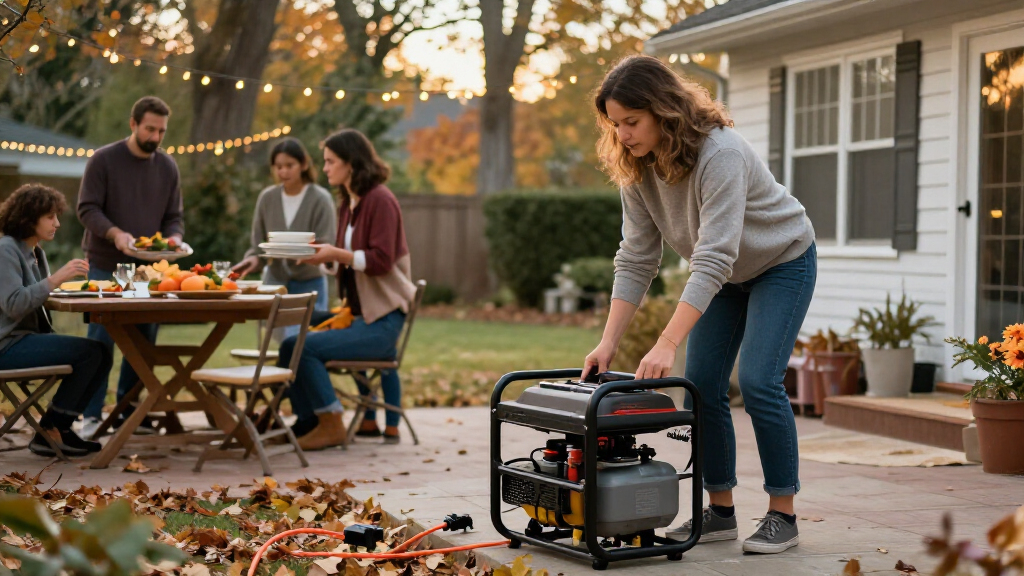
I ranked these 15 options around the loads and constraints that matter during a Thanksgiving gathering: whether a unit can support planned appliances, how much usable energy or runtime it can provide, and whether its power format fits the location. I distinguished fuel generators from battery power stations rather than treating their wattage figures as interchangeable. For fuel models, I weighed output class, dual-fuel flexibility, inverter design where specified, and practical burdens such as exhaust, sound, and fuel storage. For battery models, I focused on capacity, rated output, and the kinds of modest loads they can realistically serve.
The ordering favors versatile choices for common hosting needs, then options with narrower but useful strengths. A large dual-fuel generator ranks ahead for broad backup, while quiet battery units rank well for indoor-adjacent electronics and limited loads. Smaller or less clearly specified models rank lower because their role is more restricted or buyers have less information to match them confidently to appliances. The list is not a substitute for checking each appliance’s running and starting watts, the generator’s manual, and local safety rules.
Factors to Consider When Choosing Portable Generators For Thanksgiving Hosting
Choosing a generator for a holiday meal starts with the jobs you need it to do, not the largest number on a product page. I’d plan for the refrigerator, cooking equipment, lighting, and communications separately, then decide which loads truly need backup at the same time. These broader checks can prevent both overspending on unused capacity and buying a unit that cannot handle the appliance you care about most.
Build a Load Plan Around the Meal
List every appliance you want to run during an outage and check its nameplate or manual for running watts and startup watts. Refrigerators and other motors can briefly demand more power when they start, so adding only their steady-state draw can understate what a generator must handle. Ovens, electric ranges, and many countertop cooking appliances draw substantial power; a modest generator may be suitable for lights and refrigeration but not for cooking the full meal. Decide which loads can take turns, such as reheating food after the refrigerator has settled into operation. This schedule can let a smaller unit serve more useful functions without pretending it can power everything at once. If you cannot verify the draw of a key appliance, treat that uncertainty as a reason to check before buying.
Compare Running Watts, Starting Watts, and Battery Capacity
Generator wattage describes the power available at a moment, while a battery station’s watt-hours describe stored energy; those figures answer different questions. A high-output battery unit may run a demanding device briefly, but it does not necessarily have enough stored energy for hours of use. A fuel generator can keep producing power while it has fuel and is operated within its limits, though refueling adds work and risk. For a battery estimate, divide capacity by the appliance’s draw for a rough best-case duration, then allow for conversion losses and changing loads. For a fuel model, consult its runtime information at a stated load rather than assuming the advertised maximum output reflects continuous operation. This distinction is especially useful when comparing units like the 1024Wh Jackery Explorer 1000 v2 with much higher-wattage fuel generators.
Choose Between Fuel and Battery for the Setting
Battery power stations avoid fuel storage, engine noise, and exhaust at the unit, which can make them more comfortable for limited backup near guests. Their capacity is finite, and recharging may take time or depend on access to another power source. Gas and dual-fuel generators can suit longer or heavier loads, but they must operate outdoors with exhaust directed away from people, doors, and windows. Dual-fuel capability adds another supply option, yet it also means storing and handling whichever fuels the model supports. Don’t choose a fuel generator simply because it has the highest output if your property has no safe operating location. Match the power source to both the outage length you expect and the space available to run it safely.
Plan Safe Placement and Electrical Connection
A portable generator should never run indoors, in a garage, or near openings where exhaust can enter the home; carbon monoxide can be deadly. CO sensors and shutdown features provide an added safeguard, not permission to operate a generator in an unsafe location. Check the manual for clearance, grounding, extension-cord, and connection instructions before the holiday, rather than learning them during an outage. Never connect a portable generator to a home outlet in a way that can send power back through utility lines; use a properly installed transfer setup if you need to power household circuits. Battery stations do not produce engine exhaust, but their placement, charging, and appliance connections still need to follow manufacturer guidance. A safe outdoor location and a tested connection plan can matter more than a small difference in rated output.
Account for Noise, Fuel, and Holiday Logistics
Noise affects more than comfort: a loud engine near a patio can interrupt conversation and make a gathering less pleasant. Inverter generators are often selected for more controlled power and a more restrained operating profile, but actual noise depends on model and load, so check the manufacturer’s specifications. Fuel generators also require fresh, correctly stored fuel and a plan for refueling without spilling or handling hot equipment. Battery units avoid that routine but need to be charged ahead of time, and a partly charged station may fall short during a long outage. Consider where cords will run, whether guests could trip over them, and whether the generator can be secured from weather and interference. A quick rehearsal before the holiday can reveal logistical problems that a spec sheet will not.
Pay for Capacity You Can Use
More capacity is useful only if it supports loads you actually expect to run and can be operated safely where you live. A large dual-fuel unit may make sense for a household that wants broad outage coverage beyond Thanksgiving, but it can be cumbersome for a host who needs only a few hours of lights and device charging. At the other end, very small power stations are easy to place and manage but cannot replace a generator for major appliances. Think about storage space, maintenance, charging habits, and how often you will use the unit after the holiday. If a generator will serve several roles, such as backup for refrigeration and tools, broader capability may justify the added size and operating demands. If its only job is to keep phones and a few lamps on, a compact station may be the more sensible fit.
Frequently Asked Questions
Can a portable generator keep my refrigerator running while I cook Thanksgiving dinner?
It can, but only if its usable output can handle the refrigerator’s startup demand alongside any other loads running at the same time. Check the refrigerator’s starting and running watts, then add the requirements of the lights or appliances you plan to use concurrently. A smaller inverter generator may work if you stagger other loads, while a high-demand cooking appliance could exceed its capacity. A battery station also needs enough stored energy for the intended runtime, not just enough output to start the refrigerator. Test your planned combination before the holiday when possible, and follow the generator’s operating instructions.
Is a battery power station enough for a full Thanksgiving outage?
It may cover selected needs, but a portable station is not automatically a whole-home or full-kitchen solution. Capacity determines how long stored energy lasts, while output determines which appliances it can run at once. A station such as the Jackery Explorer 2000 v2 has far more stored energy than the compact HOWEASY 88Wh, yet runtime still depends on the appliances connected and their draw. Battery power is a strong fit for lights, communication, and limited electronics, but cooking and extended refrigeration can use energy quickly. Decide which loads matter most and estimate their runtime before relying on a station as your only backup.
Should I choose a dual-fuel generator if I already have gasoline?
Dual-fuel capability can give you another operating option if the model supports a fuel you can store and obtain reliably. It does not make the generator quieter or remove the need for safe outdoor operation, and you still need to follow its fuel-specific setup and maintenance instructions. If gasoline is already part of your emergency plan and you expect to use the generator rarely, a single-fuel model may be simpler. If supply flexibility matters during a longer outage, dual-fuel models such as the Westinghouse WGen9500DF or WEN DF472 deserve a closer look. Compare the manual’s fuel requirements and performance information before treating the two fuel types as interchangeable.
Can I run a portable generator on a covered porch or in my garage?
No. A garage or porch can trap or redirect carbon monoxide, even when the door is open, so an engine generator must operate outdoors in the location and clearances specified by its manual. Keep exhaust away from doors, windows, vents, and people, and follow local rules for placement and noise. A CO sensor or automatic shutdown is an extra layer of protection, not a substitute for safe placement. If you cannot identify a compliant outdoor location, a battery power station may better suit smaller loads. For household circuits, use a proper transfer arrangement rather than plugging a generator into a wall outlet.
How can I tell whether an inverter generator is powerful enough for my cooking appliances?
Read the appliance labels or manuals for both running and starting watts, then compare the combined demand with the generator’s rated output. Some electric cooking appliances draw enough power that they leave little capacity for a refrigerator or other equipment, so plan which devices will run at the same time. Do not rely on a peak-watt figure as though it were the continuous rating. If a key appliance’s demand is unclear, contact its manufacturer or use a suitable measuring method before purchase. For hosts who can cook on another source and use the generator for refrigeration, lights, and electronics, a smaller inverter model may still fit well.
Conclusion
For the broadest fuel-powered backup among these picks, I’d choose the Westinghouse WGen9500DF as best overall, provided you have a safe outdoor location and need its higher output. The best value for modest, selective backup is the Generac GP2500i, while the best premium battery option is the Jackery Explorer 2000 v2 for hosts who prioritize quiet operation and freedom from engine exhaust near the gathering. For beginners who mainly need straightforward backup for small electronics and lights, the Jackery Explorer 300 is easier to match to modest loads than a large fuel unit, though its capacity is limited. Choose the Honda EU2200i for a smaller inverter-generator format, or a dual-fuel model such as the WEN DF472 when fuel flexibility matters. Before deciding, check appliance startup demands, expected runtime, safe placement, and the load you truly need to keep running.