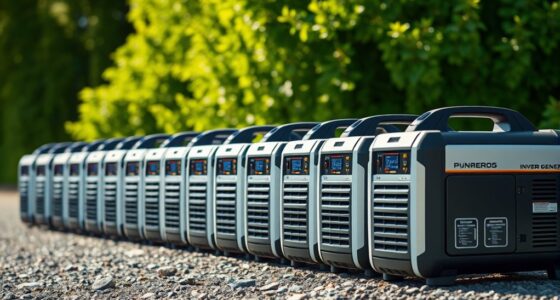
Dual fuel inverter generators let you choose between gasoline and propane while supplying inverter power for sensitive electronics. From this lineup, I’d put the WEN DF480iX forward as the best overall balance of useful output and manageable size; the Champion 4000-Watt stands out for RV use, while the Westinghouse iGen12000DFc suits buyers who need far more capacity. The main tradeoff is straightforward: larger models can power more equipment but are heavier and less convenient to move, while compact models are easier to transport but can limit what runs at once. Propane adds fuel flexibility and storage convenience, though output and runtime can differ by fuel. Read on for the full comparison and guidance on matching generator capacity to your actual loads.

Get backup power and energy gear delivered free with Prime
- Fast, free delivery on millions of items
- Prime Video, Amazon Music and more included
- Member-only deals all year
Complete the kit


Key Takeaways
- The WEN DF480iX is the lineup’s best all-round fit for buyers balancing useful household or recreational output with a more portable format than the largest units.
- Capacity creates the clearest split: compact 2,300- to 2,450-watt options prioritize easier transport, while the Westinghouse iGen12000DFc, WEN DF680iX, and AIVOLT 8000W target heavier backup loads.
- RV buyers should start with outlet compatibility and starting watts, not the headline wattage alone; the Champion 4000-Watt is the clearest RV-ready choice in this group.
- Remote electric start and CO sensing can improve convenience and safety, but they do not replace outdoor-only operation, correct placement, or checking the unit’s outlet setup.
- The two listed POXURIO 2450-Watt entries appear to be the same model, so buyers should verify the exact listing and specifications rather than treating them as separate performance choices.
| WEN DF480iX 4800-Watt Dual-Fuel Portable Inverter Generator |  | Best Overall for RV Power | Engine: 224 cc, 4-stroke | Fuel types: Gasoline and propane (LPG) | Surge output: 4,800 W gasoline; 4,320 W propane | VIEW LATEST PRICE | See Our Full Breakdown |
| A-iPower SUA4300iD Dual-Fuel Inverter Generator, 4,300 Starting Watts |  | Best for Feature-Rich Portability | Engine: 149 cc, 4-stroke OHV | Fuel types: Gasoline and propane | Starting output: 4,300 W gasoline; 3,900 W propane | VIEW LATEST PRICE | See Our Full Breakdown |
| POXURIO 2450-Watt Dual-Fuel Inverter Generator |  | Best for Longer Light-Load Camping | Model: KF100337US-05HSD-001 | Engine: 4-stroke | Fuel types: Gasoline and propane | VIEW LATEST PRICE | See Our Full Breakdown |
| POXURIO 2450-Watt Dual-Fuel Inverter Generator |  | Best Compact Pick for RV and Camping | Model: KF100337-02 | Fuel types: Gasoline and propane | Starting and running output: 2,450 W | VIEW LATEST PRICE | See Our Full Breakdown |
| A-iPower 2300W Dual-Fuel Inverter Generator | 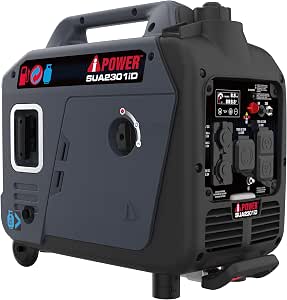 | Best for Easy Handling and Light Loads | Model: SUA2301iD | Engine: 80 cc, 4-stroke OHV | Fuel types: Gasoline and propane | VIEW LATEST PRICE | See Our Full Breakdown |
| Westinghouse iGen12000DFc Dual-Fuel Portable Inverter Generator with Remote Electric Start and CO Sensor |  | Best for Whole-Home Backup | Fuel: Gasoline and propane | Running watts: 9,000 W gasoline; 8,100 W propane | Peak watts: 12,000 W gasoline; 11,000 W propane | VIEW LATEST PRICE | See Our Full Breakdown |
| Champion 4000-Watt Dual-Fuel RV-Ready Portable Inverter Generator |  | Best Lightweight RV Pick | Fuel: Gasoline and propane | Starting watts: 4,000 W | Running watts: 3,000 W gasoline; 2,700 W propane | VIEW LATEST PRICE | See Our Full Breakdown |
| maXpeedingrods MXR5000DF Dual-Fuel Inverter Generator |  | Best Midrange Output for RV and Home Use | Fuel: Gasoline and propane | Output on gasoline: 5,000 surge watts; 4,600 rated watts | Output on propane: 4,000 surge watts; 3,600 rated watts | VIEW LATEST PRICE | See Our Full Breakdown |
| 4300W Dual-Fuel Inverter Generator for RV, Home, and Backup Power |  | Best for Remote Starting in a Compact RV Setup | Fuel: Gasoline and LPG | Output on gasoline: 4,300 peak watts; 3,300 running watts | Output on LPG: 3,900 peak watts; 2,900 running watts | VIEW LATEST PRICE | See Our Full Breakdown |
| Westinghouse iGen5000DFc Dual-Fuel Portable Inverter Generator, 5,000 Peak Watts, Remote Electric Start |  | Best Quiet Dual-Fuel Choice | Fuel: Gasoline and propane | Peak watts: 5,000 W gasoline; 4,500 W propane | Running watts: 3,900 W gasoline; 3,500 W propane | VIEW LATEST PRICE | See Our Full Breakdown |
| Westinghouse iGen4000DFc Dual-Fuel Portable Inverter Generator |  | Best for Remote-Start RV Use | Peak output: 4,000 watts | Fuel: Gasoline or propane | Runtime: Up to 7 hours | VIEW LATEST PRICE | See Our Full Breakdown |
| WEN DF680iX 6800-Watt Dual-Fuel Portable Inverter Generator |  | Best for 240V Backup and Higher Loads | Gasoline output: 6,800 surge watts; 5,100 rated watts | Propane output: 6,000 surge watts; 4,500 rated watts | Engine: 224cc | VIEW LATEST PRICE | See Our Full Breakdown |
| AIVOLT 8000W Dual-Fuel Inverter Generator |  | Best for Maximum Portable Output | Starting output: 8,000 watts | Running output: 6,100 watts | Fuel: Gasoline and propane | VIEW LATEST PRICE | See Our Full Breakdown |
| WEN DF360iX 3600-Watt Dual-Fuel Portable Inverter Generator |  | Best Compact and Lightweight Pick | Gasoline output: 3,600 surge watts; 2,900 rated watts | Propane output: 3,500 surge watts; 2,600 rated watts | Engine: 149cc, 4-stroke | VIEW LATEST PRICE | See Our Full Breakdown |
| dual fuel inverter generator | Runtime | Engine | Outlets | Weight |
|---|---|---|---|---|
| WEN DF480iX 4800-Watt Dual-Fue | Up to 7 hours at half load on gasoline; up to 20 hours at half load on a 20-pound LPG tank | 224 cc, 4-stroke | Four 120V NEMA 5-20R, one 120V TT-30R, one 12V DC, and two 5V USB | — |
| A-iPower SUA4300iD Dual-Fuel I | Up to 7.5 hours at 25% load on gasoline | 149 cc, 4-stroke OHV | 12V DC, L5-30R 30A 120V, and duplex 5-20R 20A 120V | 54.8 pounds |
| POXURIO 2450-Watt Dual-Fuel In | Up to 14 hours at 25% load | 4-stroke | 2 | 43 pounds |
| POXURIO 2450-Watt Dual-Fuel In | Up to 8.3 hours | — | — | 43 pounds |
| A-iPower 2300W Dual-Fuel Inver | Up to 9 hours | 80 cc, 4-stroke OHV | — | 40.3 pounds |
| Westinghouse iGen12000DFc Dual | Up to 19 hours at 25% load on gasoline | 457 cc, 4-stroke OHV | — | — |
| Champion 4000-Watt Dual-Fuel R | — | 149 cc, 4-stroke | 120V 25A TT-30R; 120V 20A 5-20R duplex; 12V automotive-style; parallel outlets | Less than 55 lb |
| maXpeedingrods MXR5000DF Dual- | — | — | — | — |
| 4300W Dual-Fuel Inverter Gener | — | — | — | 64 lb |
| Westinghouse iGen5000DFc Dual- | Up to 18 hours at 25% load | 224 cc, 4-stroke OHV | TT-30R 30A RV outlet; 5-20R 120V 20A duplex; two USB ports | — |
| Westinghouse iGen4000DFc Dual- | Up to 7 hours | — | 5-20R duplex household outlet, TT-30R 30A RV outlet, and two USB outlets | — |
| WEN DF680iX 6800-Watt Dual-Fue | Up to 6.1 hours at half load on gasoline; up to 9 hours at half load on a 20-pound LPG tank | 224cc | L14-30R 120V/240V, two 120V 5-20R, TT-30R RV, 12V DC, and two 5V USB | — |
| AIVOLT 8000W Dual-Fuel Inverte | Up to 10 hours at 25% load | 322cc, 4-stroke OHV | — | 129 pounds |
| WEN DF360iX 3600-Watt Dual-Fue | Up to 5 hours at half load on gasoline; up to 14 hours at half load on a 20-pound propane tank | 149cc, 4-stroke | Two 120V 5-20R, one 120V TT-30R RV, one 12V DC, and two 5V USB | 49 pounds |
More Details on Our Top Picks
WEN DF480iX 4800-Watt Dual-Fuel Portable Inverter Generator
The WEN DF480iX offers the most useful balance in this group for buyers who need more than camping-level output. Its 4,800-watt gasoline surge rating and TT-30R RV outlet suit travel-trailer needs better than the smaller A-iPower SUA2301iD, while propane operation gives owners another fuel option during an outage. Keyless electric starting, with recoil backup, makes startup less of a chore, and the wheels and telescoping handle help with repositioning. At 62 dB at quarter load, it is designed for quieter operation, though its stated noise figure is not directly comparable to products measured under different conditions. The tradeoff is bulk and reduced output on propane: that fuel’s surge rating drops to 4,320 watts. I’d choose it for versatile RV and home backup, not for buyers who prioritize the lightest unit.
Pros:- Gasoline and propane operation provide flexibility across campsite and backup use.
- TT-30R RV outlet serves compatible travel-trailer connections directly.
- Keyless electric start includes recoil backup.
- CO shutdown and low-oil, low-fuel, and overload protections add safeguards.
Cons:- Propane surge output is lower than gasoline output.
- Its higher-capacity format is less suited to frequent hand-carrying than the 43-pound POXURIO models.
- Parallel connection kit is sold separately.
Best for: RV owners who want a dedicated TT-30R outlet, electric starting, and enough gasoline output for more demanding campsite loads.
Not ideal for: Solo campers and buyers who need to carry a generator over long distances; smaller models such as the A-iPower SUA2301iD are better suited to lighter loads and easier handling.
- Engine:224 cc, 4-stroke
- Fuel types:Gasoline and propane (LPG)
- Surge output:4,800 W gasoline; 4,320 W propane
- Noise level:62 dB at quarter load
- Gasoline tank:1.9 gallons
- Runtime:Up to 7 hours at half load on gasoline; up to 20 hours at half load on a 20-pound LPG tank
- Outlets:Four 120V NEMA 5-20R, one 120V TT-30R, one 12V DC, and two 5V USB
- Starting system:Keyless electric start with recoil backup
Our verdict“Choose the WEN DF480iX if you want one adaptable generator for RV use and backup power, and can accept its larger format and reduced propane output.”
A-iPower SUA4300iD Dual-Fuel Inverter Generator, 4,300 Starting Watts
The A-iPower SUA4300iD suits buyers who want midrange dual-fuel output without stepping up to the WEN DF480iX. It supplies 3,450 running watts on gasoline and 3,100 on propane, with a 30A L5-30R outlet for compatible equipment. Its display, LED light, CO sensor, flat-free wheels, and telescoping handle make the controls and transport more practical than the stripped-back POXURIO 2450-watt models. The stated 3% THD is intended for sensitive electronics, while the included parallel cables and LPG hose reduce the number of separately sourced accessories. The compromise is fuel capacity: a 1.6-gallon tank is rated for up to 7.5 hours only at 25% load, so heavier use means more frequent refueling. I’d favor it for portable work and backup loads, not all-night high-demand operation.
Pros:- Separate gasoline and propane running ratings clarify available power on each fuel.
- Includes LPG hose with regulator, parallel cables, and a 30A RV adapter.
- Data display, LED light, and CO sensor add useful control-panel functions.
- Telescoping handle and flat-free wheels support moving it around camp or a work site.
Cons:- The 1.6-gallon gasoline tank limits operation between refills, especially above 25% load.
- Running output is lower than the WEN DF480iX, particularly for larger combined loads.
Best for: Campers, mobile workers, and homeowners who want dual-fuel flexibility, a 30A outlet, and useful control-panel features in a 54.8-pound package.
Not ideal for: Buyers planning long stretches at substantial load; the small tank and lower running output trail the WEN DF480iX for sustained higher-demand use.
- Engine:149 cc, 4-stroke OHV
- Fuel types:Gasoline and propane
- Starting output:4,300 W gasoline; 3,900 W propane
- Running output:3,450 W gasoline; 3,100 W propane
- Total harmonic distortion:3%
- Fuel tank:1.6 gallons
- Runtime:Up to 7.5 hours at 25% load on gasoline
- Weight:54.8 pounds
- Outlets:12V DC, L5-30R 30A 120V, and duplex 5-20R 20A 120V
Our verdict“Pick the SUA4300iD for a portable, accessory-ready generator with helpful onboard features, but choose a larger unit for longer or heavier loads.”
POXURIO 2450-Watt Dual-Fuel Inverter Generator
This POXURIO model is the light-load camping pick for buyers who value a manageable 43-pound weight and a stated runtime of up to 14 hours at 25% load. That runtime claim gives it an advantage on paper over the A-iPower SUA2301iD, whose listed maximum is up to nine hours, though the figures use different load and product conditions and should not be treated as a direct test comparison. Its gasoline-or-propane operation adds fuel flexibility, and the stated 59 dB rating targets quieter outdoor use. Output is the clear limit: 2,450 watts is also the listed running wattage, so this is better for modest camping needs than for powering several demanding appliances. The brief product data lists only two outlets and does not specify their types. I’d choose it for a simple, light-load setup, not as a substitute for the WEN DF480iX’s greater capacity.
Pros:- 43-pound weight is more manageable than the larger WEN DF480iX.
- Runs on gasoline or propane.
- Stated runtime reaches up to 14 hours at 25% load.
- Listed noise level is 59 dB.
Cons:- The 2,450-watt listed running output limits the loads it can support.
- Product data identifies only two outlets without specifying their types.
- The 1.6-gallon tank may require refueling during extended gasoline use.
Best for: Campers who need a lighter generator for modest 120V loads and value the stated extended runtime at 25% load.
Not ideal for: RV owners or households that need several outlet types, greater running capacity, or a clearly specified 30A connection; the WEN DF480iX is better equipped for those demands.
- Model:KF100337US-05HSD-001
- Engine:4-stroke
- Fuel types:Gasoline and propane
- Starting and running output:2,450 W
- Fuel tank:1.6 gallons (6 liters)
- Runtime:Up to 14 hours at 25% load
- Noise level:59 dB
- Weight:43 pounds
- Outlets:2
Our verdict“Choose this POXURIO for lighter camping loads and a stated long low-load runtime, but skip it if you need RV-style connections or higher output.”
POXURIO 2450-Watt Dual-Fuel Inverter Generator
This second POXURIO listing shares the other model’s 43-pound weight, 2,450-watt output, and stated 59 dB noise level, so the buyer-facing difference is mainly in the supplied details: this version lists built-in wheels and a pull handle, pure sine wave output, and EPA compliance. Those points make it a more clearly described fit for moving around a campsite than the first POXURIO listing, which instead states a longer runtime of up to 14 hours at 25% load. Here, gasoline runtime is listed as up to 8.3 hours, without a stated load condition. With only 2,450 watts, it remains a small-load option rather than a replacement for the WEN DF480iX when RV or home backup demands rise. I’d shortlist this version for portability, but compare the exact model details before buying because the two POXURIO listings share many headline figures.
Pros:- Gasoline and propane fuel options offer flexibility at camp or during an outage.
- Pure sine wave output is specified for sensitive electronics.
- Built-in wheels and pull handle support movement.
- 43-pound weight and 59 dB listed noise level suit portable use.
Cons:- Maximum listed output of 2,450 watts limits higher-demand applications.
- Up to 8.3 hours of runtime is listed without a load condition.
- Its headline output and weight match the other POXURIO model, making the distinction between listings less clear.
Best for: Campers and RV users with modest power needs who want a 43-pound dual-fuel unit with listed wheels, a pull handle, and pure sine wave output.
Not ideal for: Buyers needing long, clearly load-qualified runtime or enough capacity for several larger appliances; the first POXURIO listing states up to 14 hours at 25% load, while this one lists up to 8.3 hours without a load condition.
- Model:KF100337-02
- Fuel types:Gasoline and propane
- Starting and running output:2,450 W
- Voltage and frequency:120V, 60Hz
- Noise level:59 dB
- Fuel tank:1.6 gallons
- Runtime:Up to 8.3 hours
- Weight:43 pounds
- Compliance:EPA compliant
Our verdict“Choose this POXURIO when its listed wheels, handle, and pure sine wave output suit your light-load setup, but verify the model details and runtime needs first.”
A-iPower 2300W Dual-Fuel Inverter Generator
The A-iPower SUA2301iD is the easiest fit here for buyers who want a compact dual-fuel unit with practical portability features. At 40.3 pounds, it weighs less than either POXURIO 2450-watt listing, and its wheels and telescoping handle help when rolling matters more than carrying. The tradeoff is a modest 1,800-watt gasoline running rating, falling to 1,600 watts on propane; the larger A-iPower SUA4300iD offers substantially more continuous output for demanding equipment. This model still brings 3% THD, a CO sensor, a data display, and USB and 12V DC connections, but its 0.9-gallon tank makes fuel planning part of the experience. I’d pick it for light camping loads and occasional backup rather than extended operation or appliances with high running demands.
Pros:- 40.3-pound weight, wheels, and telescoping handle support easier transport.
- Runs on gasoline or propane with separate output ratings.
- 3% THD, CO sensor, and data display add useful power and safety information.
- Includes USB, 12V DC, L5-30R, and duplex 5-20R outlet types.
Cons:- Running output is limited to 1,800 watts on gasoline and 1,600 watts on propane.
- The 0.9-gallon tank limits fuel capacity for extended use.
- Listed runtime of up to nine hours does not specify a load condition.
Best for: Campers and homeowners needing a lighter, rollable generator for modest electronics and small 120V loads, with propane as an alternative fuel.
Not ideal for: Buyers running higher-demand appliances or planning prolonged operation; the SUA4300iD provides more running wattage, and this model’s 0.9-gallon tank is small.
- Model:SUA2301iD
- Engine:80 cc, 4-stroke OHV
- Fuel types:Gasoline and propane
- Starting output:2,300 W gasoline; 2,000 W propane
- Running output:1,800 W gasoline; 1,600 W propane
- Total harmonic distortion:3%
- Fuel tank:0.9 gallons
- Runtime:Up to 9 hours
- Weight:40.3 pounds
Our verdict“Choose the SUA2301iD for easy-to-move light-duty power and dual-fuel flexibility, but step up to the SUA4300iD for heavier loads.”
Westinghouse iGen12000DFc Dual-Fuel Portable Inverter Generator with Remote Electric Start and CO Sensor
The iGen12000DFc is the high-output choice here: its 9,000 running watts on gasoline and 8,100 on propane give it more capacity for backup circuits than the Champion 4000-Watt Dual-Fuel RV-Ready Portable Inverter Generator or the smaller Westinghouse iGen5000DFc. Its ≤3% THD output also suits sensitive electronics, while 120/240V outlets, including a 50A connection, broaden its transfer-switch options. Remote and electric start reduce the effort of getting a large unit running, and the CO sensor adds a safety layer. The tradeoff is size and noise: at up to 64 dBA, it is more noticeable than the iGen5000DFc’s stated 52 dBA. Fuel-tank capacity is also inconsistent across the supplied information—7.9 gallons in one place and 9.8 in another—so I would verify that figure before buying.
Pros:- High running output on both gasoline and propane for larger backup loads.
- ≤3% THD inverter output is suitable for sensitive electronics.
- Remote and electric start plus 50A and 30A outlets support convenient backup connections.
- Flat-free wheels and a foldable handle help with moving and storage.
Cons:- Up to 64 dBA may be intrusive near campsites or quiet neighborhoods.
- Listed fuel-tank capacity conflicts between 7.9 and 9.8 gallons.
- Its high-output design is less suited to buyers prioritizing compactness and easy lifting.
Best for: Homeowners who need substantial 120/240V backup capacity, transfer-switch-ready outlets, and inverter power for electronics.
Not ideal for: Campers or buyers who need a compact, quiet generator; its high output comes with a larger, louder unit, and the tank-capacity listing is inconsistent.
- Fuel:Gasoline and propane
- Running watts:9,000 W gasoline; 8,100 W propane
- Peak watts:12,000 W gasoline; 11,000 W propane
- Engine:457 cc, 4-stroke OHV
- Total harmonic distortion:≤3%
- Runtime:Up to 19 hours at 25% load on gasoline
- Voltage and outlets:120/240 V; 50A 14-50R, 30A L14-30R, 20A GFCI 5-20R duplex
- Noise:As low as 64 dBA
- Starting and safety:Remote and electric start; CO sensor; low-oil shutdown
Our verdict“Choose the iGen12000DFc when backup capacity and 120/240V connections matter more than a quieter, smaller generator.”
Champion 4000-Watt Dual-Fuel RV-Ready Portable Inverter Generator
For RV owners who want a relatively light dual-fuel unit, the Champion 4000 is the easiest fit in this group to carry: it weighs less than 55 pounds and has a built-in handle. Its 120V TT-30R outlet is tailored to RV connections, while less than 3% THD supports sensitive electronics. Unlike the Westinghouse iGen5000DFc, it does not offer remote or electric starting, and its gasoline running output is lower at 3,000 watts. Its standout endurance figure is on propane—up to 25 hours at 25% load—though that fuel also lowers running output to 2,700 watts. CO Shield, cold-start technology, and a simple recoil start make it a practical, straightforward option. I would skip it for larger home backup needs or if adding power later without a separately purchased parallel kit is important.
Pros:- Under-55-pound weight and built-in handle make it easier to carry than the larger Westinghouse models.
- Up to 25 hours at 25% load on propane offers extended light-load operation.
- TT-30R RV outlet and less than 3% THD suit common RV and electronics use.
- CO Shield automatic shutoff and cold-start technology add useful operating safeguards.
Cons:- Running output is limited to 3,000 watts on gasoline and 2,700 watts on propane.
- Recoil start lacks the remote and electric-start convenience of the Westinghouse iGen5000DFc.
- Parallel kit is sold separately.
Best for: RV travelers who need a carryable generator with a TT-30R outlet, clean inverter power, and long light-load runtime on propane.
Not ideal for: Homeowners with larger simultaneous loads or buyers who want push-button starting; it has modest running output and recoil start only.
- Fuel:Gasoline and propane
- Starting watts:4,000 W
- Running watts:3,000 W gasoline; 2,700 W propane
- Engine:149 cc, 4-stroke
- Runtime at 25% load:Up to 10 hours gasoline; up to 25 hours propane
- Noise:64 dBA at 23 feet
- Outlets:120V 25A TT-30R; 120V 20A 5-20R duplex; 12V automotive-style; parallel outlets
- Weight:Less than 55 lb
- Starting and safety:Recoil start; CO Shield automatic shutoff; low-oil shutoff
Our verdict“Pick the Champion 4000 for a lighter RV-ready setup and propane runtime, not for high-demand home backup or push-button starting.”
maXpeedingrods MXR5000DF Dual-Fuel Inverter Generator
The MXR5000DF lands between compact RV generators and large backup units: 4,600 rated watts on gasoline give it more sustained capacity than the Champion 4000, while its 5,000-watt peak still falls well below the Westinghouse iGen12000DFc. That middle ground suits buyers who want room for several everyday loads without stepping up to a high-output generator. It includes RV-ready outlets, USB connectivity, and parallel capability, plus CO auto-shutdown and overload protection. Wheels and a handle help with positioning, though the product data gives no weight to judge how easy it is to lift. Fuel choice has a clear cost in usable output: propane running capacity drops to 3,600 watts. The supplied details also do not specify runtime or noise, making it harder to compare for overnight use or noise-sensitive settings.
Pros:- 4,600 rated watts on gasoline provide more running capacity than the Champion 4000.
- Gasoline and propane operation offers fuel flexibility.
- RV-ready outlets, USB connectivity, and parallel capability cover varied use cases.
- CO auto-shutdown and overload protection add safety and circuit protection.
Cons:- Rated output falls to 3,600 watts on propane.
- Supplied product data does not state runtime, noise level, or weight.
- At 160 cc, its engine is smaller than the 224 cc engine listed for the Westinghouse iGen5000DFc.
Best for: RV users and households seeking a mid-output dual-fuel inverter with USB ports, safety shutoff, and the option to connect a parallel unit.
Not ideal for: Buyers who need strong propane output, published runtime and noise figures, or clearly documented weight before choosing a portable generator.
- Fuel:Gasoline and propane
- Output on gasoline:5,000 surge watts; 4,600 rated watts
- Output on propane:4,000 surge watts; 3,600 rated watts
- Engine displacement:160 cc
- Features:RV-ready outlets, USB port, overload protection, parallel capability
- Safety:CO auto-shutdown
- Certifications:EPA; UL 2201
- Warranty:2 years
Our verdict“Choose the MXR5000DF for a feature-rich middle-output option, provided its lower propane output and missing runtime and noise data fit your needs.”
4300W Dual-Fuel Inverter Generator for RV, Home, and Backup Power
This 4300W generator pairs a key-fob remote start with wheels and a telescoping handle, a useful combination for RV owners who want to start the unit without reaching its controls. Its 30A outlet supports an RV connection, and the listed 53 dBA noise level is lower than the 64 dBA figures supplied for the Champion 4000 and Westinghouse iGen12000DFc. Output is more modest than the MXR5000DF: 3,300 running watts on gasoline and 2,900 on LPG leave less headroom for simultaneous loads. At 64 pounds, it is movable on its wheels but still a substantial lift. CO auto-shutoff and low-oil shutdown are included, though the data does not specify THD or runtime, two details I would want before relying on it for sensitive electronics or extended outages.
Pros:- Key-fob remote start adds convenience compared with the Champion 4000’s recoil start.
- Listed 53 dBA noise level is lower than the supplied figures for the Champion 4000 and iGen12000DFc.
- 30A outlet, wheels, and telescoping handle suit RV use and repositioning.
- CO auto-shutoff and low-oil shutdown provide safety protections.
Cons:- Running output is 3,300 watts on gasoline and 2,900 watts on LPG.
- At 64 pounds, it may be cumbersome to lift despite its wheels and handle.
- Supplied data does not provide runtime or THD figures.
Best for: RV users who value remote starting, a 30A connection, and wheeled mobility more than high running output.
Not ideal for: Buyers who need confirmed low-THD output, long-runtime figures, or a generator light enough to lift frequently.
- Fuel:Gasoline and LPG
- Output on gasoline:4,300 peak watts; 3,300 running watts
- Output on LPG:3,900 peak watts; 2,900 running watts
- Weight:64 lb
- Noise:53 dBA
- Outlet:30A
- Starting method:Remote start with key fob
- Safety:Carbon monoxide auto-shutoff; low-oil shutdown
- Certifications:UL 2201; EPA
Our verdict“Choose this model for remote-start convenience and RV mobility, but look elsewhere if you need published THD and runtime figures or greater load capacity.”
Westinghouse iGen5000DFc Dual-Fuel Portable Inverter Generator, 5,000 Peak Watts, Remote Electric Start
The iGen5000DFc is a strong fit for RV users and nearby camping setups where noise matters: its stated minimum of 52 dBA is quieter than the Champion 4000 and the much larger iGen12000DFc. It also offers remote and electric start, an RV-ready TT-30R outlet, USB ports, and less than 3% THD, bringing convenience and electronics-friendly power together. At 3,900 running watts on gasoline, it has more rated capacity than the Champion 4000, but the MXR5000DF lists a higher 4,600 watts on gasoline. Propane output drops to 3,500 running watts, and the parallel kit is sold separately. The 18-hour maximum runtime applies at only 25% load, so it should not be read as an expectation under heavier use.
Pros:- 52 dBA minimum noise rating is quieter than the supplied figures for the Champion 4000 and iGen12000DFc.
- Remote and electric start simplify operation compared with recoil-start-only options.
- Less than 3% THD, RV-ready outlet, and USB ports support electronics and RV use.
- Up to 18 hours at 25% load on a 3.4-gallon gasoline tank.
Cons:- Running output falls from 3,900 watts on gasoline to 3,500 watts on propane.
- Parallel kit is sold separately.
- The maximum runtime is specified at 25% load and will be shorter under heavier demand.
Best for: RV owners and campers who want quiet inverter power, remote starting, and enough output for moderate loads.
Not ideal for: Buyers needing larger backup capacity or a bundled path to parallel expansion; propane output is lower and the parallel kit costs extra.
- Fuel:Gasoline and propane
- Peak watts:5,000 W gasoline; 4,500 W propane
- Running watts:3,900 W gasoline; 3,500 W propane
- Engine:224 cc, 4-stroke OHV
- Runtime:Up to 18 hours at 25% load
- Fuel tank:3.4 gallons
- Noise and THD:As low as 52 dBA; less than 3% THD
- Outlets:TT-30R 30A RV outlet; 5-20R 120V 20A duplex; two USB ports
- Starting and safety:Electric and wireless remote start; CO sensor with automatic shutdown; low-oil shutdown
Our verdict“Pick the iGen5000DFc for quiet, convenient RV and light backup use, but choose a higher-output model for larger simultaneous loads.”
Westinghouse iGen4000DFc Dual-Fuel Portable Inverter Generator
The iGen4000DFc is a good fit for RV owners who want dual-fuel flexibility without stepping up to a larger, heavier-output generator. Its 3,300 rated watts and TT-30R outlet can handle a range of RV needs, while remote and electric starting save effort when the unit is parked outside. Compared with the WEN DF360iX, it offers more rated gasoline output and remote start, but the WEN is much lighter and lists longer propane runtime. The Westinghouse’s 52 dBA low-noise rating suits quieter campsites, though its 1.69-gallon tank limits gasoline runtime to up to seven hours. I’d choose it for convenient RV operation, not for extended high-load home backup.
Pros:- Gasoline or propane operation gives fuel-choice flexibility.
- Remote, electric, and recoil starting provide convenient backup options.
- TT-30R RV outlet and USB ports support camping and device charging.
- Low-noise rating and less than 3% THD suit quieter use and many electronics.
Cons:- The 1.69-gallon gas tank supports up to seven hours of runtime, so longer use means refueling.
- Rated output of 3,300 watts is well below the 4,000-watt peak figure.
Best for: RV owners who want remote starting, a TT-30R connection, and enough rated output for moderate onboard loads.
Not ideal for: Buyers planning long stretches of gasoline-powered use or running several high-demand household appliances at once.
- Peak output:4,000 watts
- Fuel:Gasoline or propane
- Runtime:Up to 7 hours
- Gas tank:1.69 gallons
- Noise:As low as 52 dBA
- Outlets:5-20R duplex household outlet, TT-30R 30A RV outlet, and two USB outlets
- Starting system:Remote, electric, and recoil
Our verdict“Choose the iGen4000DFc for a quieter, remote-start-capable RV generator, but pick a higher-output model for heavier home backup loads.”
WEN DF680iX 6800-Watt Dual-Fuel Portable Inverter Generator
For buyers who need more than basic RV or camping power, the WEN DF680iX brings a useful combination of higher output and 120V/240V capability. Its 5,100 rated gasoline watts and bonded-neutral L14-30R outlet suit backup setups that need a 240V connection, while the listed low harmonic distortion helps support sensitive electronics. Compared with the Westinghouse iGen4000DFc, it offers substantially more rated output and a 120V/240V outlet, but it is louder at 64 dB at quarter load and heavier to move. Wheels and a telescoping handle help with rolling, not lifting. Runtime reaches up to 6.1 hours at half load on gasoline or nine hours on a 20-pound propane tank, so buyers should match their expected load to its fuel supply.
Pros:- 5,100 rated gasoline watts provide more capacity than the smaller Westinghouse iGen4000DFc.
- Bonded-neutral 120V/240V outlet expands backup and equipment connection options.
- Low listed THD is suited to sensitive electronics.
- Wheels and telescoping handle ease movement across level ground.
Cons:- At 64 dB at quarter load, it is louder than the Westinghouse iGen4000DFc’s listed low-noise figure.
- Parallel connection kit is sold separately.
- EV charging is described as low-power Level 2 charging, not a high-speed solution.
Best for: Homeowners or RV users who need higher output, a 120V/240V connection, and cleaner power for electronics.
Not ideal for: Campers prioritizing a quiet, lightweight unit, or EV owners expecting fast charging from its low-power Level 2 connection.
- Gasoline output:6,800 surge watts; 5,100 rated watts
- Propane output:6,000 surge watts; 4,500 rated watts
- Engine:224cc
- Runtime:Up to 6.1 hours at half load on gasoline; up to 9 hours at half load on a 20-pound LPG tank
- Noise:64 dB at quarter load
- THD:Under 0.3% at no load; under 1.2% at full load
- Outlets:L14-30R 120V/240V, two 120V 5-20R, TT-30R RV, 12V DC, and two 5V USB
- Starting system:Electric start with recoil backup
Our verdict“Pick the DF680iX when 240V access and higher output matter more than low noise or easy lifting.”
AIVOLT 8000W Dual-Fuel Inverter Generator
The AIVOLT 8000W is the output-first choice in this group, with 6,100 running watts and an 8,000-watt starting rating for buyers juggling larger loads. Its 3.6-gallon tank supports up to ten hours at 25% load, and the wheeled frame and telescoping handle make repositioning more manageable than its 129-pound weight suggests. Against the WEN DF680iX, AIVOLT lists more running power and a longer light-load runtime, while the WEN provides a clearly specified L14-30R 120V/240V outlet and detailed THD figures. AIVOLT’s title specifies 120V/240V, but the outlet details are less explicit in the supplied specifications. Remote start and engine oil are not included, so this is best for buyers focused on capacity who are comfortable checking setup details.
Pros:- 6,100 running watts provide the highest stated continuous output among these four products.
- Gasoline and propane operation offers fuel flexibility.
- Up to 10 hours at 25% load supports extended light-load use.
- CO shutdown, low-oil shutdown, wheels, and telescoping handle add practical safety and mobility features.
Cons:- At 129 pounds, it is difficult to lift or carry.
- Remote start and engine oil are not included.
- Outlet details are less specific than the WEN DF680iX’s listed 120V/240V outlet configuration.
Best for: Households needing substantial portable backup capacity and willing to roll, rather than lift, a heavy generator.
Not ideal for: Campers who need a light, easily carried unit or buyers who require clearly documented outlet configuration and remote starting.
- Starting output:8,000 watts
- Running output:6,100 watts
- Fuel:Gasoline and propane
- Engine:322cc, 4-stroke OHV
- Runtime:Up to 10 hours at 25% load
- Fuel tank:3.6 gallons
- Noise:62 dBA at 23 feet
- Weight:129 pounds
Our verdict“Choose the AIVOLT when running capacity is the priority and its weight and less-detailed outlet information fit your setup.”
WEN DF360iX 3600-Watt Dual-Fuel Portable Inverter Generator
At 49 pounds, the WEN DF360iX is the clear portability pick here: it is easier to lift into a vehicle or store than the 129-pound AIVOLT, though it gives up substantial running capacity. The WEN provides 2,900 rated watts on gasoline and 2,600 on propane, enough for modest RV or camping loads rather than whole-home backup. Its low-distortion output, USB ports, and TT-30R outlet make it versatile for smaller electronics and RV connections. Propane runtime reaches up to 14 hours at half load on a 20-pound tank, compared with up to five hours at half load on gasoline; that gap makes fuel choice especially important for longer outings. I’d favor it over the Westinghouse iGen4000DFc when carrying weight matters most, but the Westinghouse supplies more rated gasoline output and remote starting.
Pros:- 49-pound weight makes it far easier to lift and transport than the AIVOLT 8000W.
- Propane runtime is listed at up to 14 hours at half load on a 20-pound tank.
- Low THD is suited to sensitive electronics.
- TT-30R RV, AC, DC, and USB outlets cover several common small-power needs.
Cons:- Rated output falls to 2,600 watts on propane, limiting heavier loads.
- Gasoline runtime is up to five hours at half load, and the tank holds only 1.5 gallons.
- Parallel connection kit is sold separately.
Best for: Solo campers, small-RV owners, and anyone who needs a dual-fuel generator that one person can lift and store.
Not ideal for: Households needing high-output emergency backup or buyers who expect long gasoline runtime without refueling.
- Gasoline output:3,600 surge watts; 2,900 rated watts
- Propane output:3,500 surge watts; 2,600 rated watts
- Engine:149cc, 4-stroke
- Runtime:Up to 5 hours at half load on gasoline; up to 14 hours at half load on a 20-pound propane tank
- Weight:49 pounds
- Noise:65 dB at quarter load
- THD:Under 0.3% at no load; under 1.2% at full load
- Outlets:Two 120V 5-20R, one 120V TT-30R RV, one 12V DC, and two 5V USB
Our verdict“Choose the DF360iX for easy carrying and long propane operation on modest loads, not for high-capacity home backup.”
How We Picked
I ranked these generators around the choices buyers actually face: how much power they can supply, how practical they are to move, how clearly their dual-fuel setup serves different situations, and whether their features match common RV or home-backup needs. I gave weight to usable output and starting capacity rather than treating peak wattage as the whole story. I also considered controls and conveniences such as electric or remote start, CO sensing, and RV-ready connections where named in the product information.
The order favors versatility for the widest range of buyers, then gives more specialized models room for particular needs. Compact units rank well for transport and modest loads but cannot substitute for a larger generator when several appliances need power. High-output models can cover more demanding setups, yet their size and handling demands make them a poor default for every buyer. Where the supplied product names do not provide enough detail to distinguish two listings, I avoid inventing a difference and advise checking the exact specifications before purchase.
| dual fuel inverter generator | Fuel |
|---|---|
| WEN DF480iX 4800-Watt Dual-Fue | — |
| A-iPower SUA4300iD Dual-Fuel I | — |
| POXURIO 2450-Watt Dual-Fuel In | — |
| POXURIO 2450-Watt Dual-Fuel In | — |
| A-iPower 2300W Dual-Fuel Inver | — |
| Westinghouse iGen12000DFc Dual | Gasoline and propane |
| Champion 4000-Watt Dual-Fuel R | Gasoline and propane |
| maXpeedingrods MXR5000DF Dual- | Gasoline and propane |
| 4300W Dual-Fuel Inverter Gener | Gasoline and LPG |
| Westinghouse iGen5000DFc Dual- | Gasoline and propane |
| Westinghouse iGen4000DFc Dual- | Gasoline or propane |
| WEN DF680iX 6800-Watt Dual-Fue | — |
| AIVOLT 8000W Dual-Fuel Inverte | Gasoline and propane |
| WEN DF360iX 3600-Watt Dual-Fue | — |
Factors to Consider When Choosing Dual Fuel Inverter Generators
Choosing a dual fuel inverter generator is less about finding the biggest wattage number and more about matching fuel, load, and location. I’d work through these factors before comparing model names, since a mismatch can leave you with a generator that is either hard to move or unable to start the equipment you need.
Size the generator around starting loads
List the appliances or tools you expect to run at the same time, then separate their running watts from their startup surge. Refrigerators, pumps, and air conditioners can briefly draw much more when their motors start, so adding only their steady-state wattage can lead to an undersized choice. Avoid assuming that a generator’s peak figure is available continuously; compare both starting and running output in the manufacturer’s specifications. If your needs vary, prioritize a model with enough headroom for the largest likely combination rather than planning to run every appliance at once. A smaller unit may handle lights, chargers, and a few essentials well, but it may not start a major motor load. For home backup, decide which circuits or appliances matter most before selecting a capacity class.
Compare gasoline and propane by the way you will use them
Gasoline is widely available and may deliver higher output on some generators, while propane can be convenient for longer storage and use with an existing tank supply. Neither fuel is automatically the better choice: the generator’s output, runtime, and approved tank setup can vary by fuel. Check the manual for fuel-specific wattage and runtime figures instead of assuming the advertised headline applies equally to both. Propane tanks also take space, and cold conditions or high demand can affect practical performance. For occasional emergency use, fuel storage and rotation may matter more than a small difference in rated output. Choose a generator whose fuel connections and operating instructions fit the supply you can reliably access.
Treat portability as a workload, not a label
A generator described as portable can still be awkward to lift, load, or move across uneven ground. Compare the listed weight, handle design, and wheel arrangement with the path between storage and use, especially if one person will move it. Compact models such as the 2,300- and 2,450-watt class are easier to accommodate, but that convenience comes with a lower ceiling on simultaneous loads. Larger units can better serve demanding backup needs but may require two people or a planned location. Think about transport frequency as well as distance: an RV trip calls for different compromises than a generator stored beside a transfer-switch connection. Do not choose a large unit just for capacity you are unlikely to use.
Check outlets and connection plans before buying
Generator wattage alone does not tell you whether the unit can connect to your RV, selected home circuits, or the equipment you own. Compare outlet types and ratings with your intended use, and confirm whether an adapter or transfer switch is needed. An RV-ready label can be useful, but it does not replace checking the connector and the electrical requirements of your particular rig. For home backup, never plan to feed household wiring through a standard wall outlet; use a properly installed transfer setup and follow local electrical rules. Also check whether the listed output is split across outlets in a way that affects your load plan. Resolving connection details before purchase can prevent a powerful generator from being inconvenient in practice.
Decide which conveniences earn their place
Electric start can make routine operation easier, while remote start may help when the generator is positioned at a distance; both still depend on a charged starting battery and proper setup. A CO sensor is an added protective feature, not permission to operate a generator indoors, in a garage, or near open windows. Review the controls, fuel shutoff, low-oil protection, and maintenance instructions before choosing between similarly sized models. More features can add convenience, but they also create more components to understand and maintain. Beginners may prefer clear controls and accessible service guidance over a longer feature list. Whatever the equipment offers, follow the manual’s placement and maintenance requirements.
Plan for noise, runtime, and maintenance at the site
Inverter design is commonly chosen for quieter operation than many conventional open-frame generators, but sound levels still vary by model, load, and distance. Check the manufacturer’s noise measurement conditions and local rules rather than relying on a general claim that a unit is quiet. Runtime figures also depend on fuel type and load, so a long advertised runtime at light demand may not reflect an overnight backup scenario. Consider how often you can refuel and whether the generator’s placement allows safe exhaust clearance. Read the maintenance schedule for oil changes, air-filter care, and fuel-system storage steps before committing to a model. A generator that fits the site and upkeep routine is more useful than one selected by output alone.
Frequently Asked Questions
Can a dual fuel inverter generator run my RV air conditioner?
It depends on the air conditioner’s starting surge, the generator’s running and starting output, and what else is operating in the RV. Check the appliance label or manual for its electrical draw, then compare that with the generator’s fuel-specific ratings. A soft-start device may reduce startup demand for some air conditioners, but you should confirm compatibility rather than count on it to solve every capacity gap. The Champion 4000-Watt is the lineup’s clearly named RV-ready option, but buyers still need to verify outlet type and load limits. Avoid sizing from peak watts alone.
Is propane or gasoline better for emergency home backup?
Gasoline can be easier to obtain in some areas and may provide greater output on a given generator, while propane is often easier to store for longer periods when handled correctly. The better fit depends on local availability, fuel-specific output, and how long you expect to run the generator. Check the manual for runtime and wattage on each fuel, since they may differ. For outages, plan how fuel will be stored and replenished safely rather than relying on a single full tank. Never refuel a hot or running generator.
Can I connect one of these generators directly to my home electrical panel?
Do not connect a portable generator to household wiring through a wall outlet or other improvised connection. Home circuits require a suitable transfer switch or other approved interconnection installed according to local electrical requirements. The generator also needs enough capacity for the circuits you plan to support, including motor startup loads. Ask a qualified electrician to confirm the connection method and whether the selected unit’s output suits your backup plan. Operate the generator outside and follow its required distance from doors, windows, and vents.
Does an inverter generator make power safe for every sensitive electronic device?
Inverter generators are designed to provide stable electrical output, which is why buyers often consider them for electronics, but no generator should be assumed compatible with every device. Check the generator’s specifications for its electrical output and consult the equipment maker’s guidance, especially for medical or specialized electronics. Use correctly rated cords and avoid overloading an outlet or circuit. Keep in mind that clean output does not remove risks from poor grounding, damaged wiring, or unsafe operation. For equipment where interruption could affect health or safety, seek guidance from the device supplier.
Should I choose a compact 2,300-watt-class model or a larger generator?
Choose the compact class when your priority is easier transport and your planned loads are modest, such as charging devices and running a limited set of essentials. Move to a larger unit when your list includes high-startup appliances, several simultaneous loads, or a more demanding RV setup. The tradeoff is more than extra capacity: larger generators are usually harder to move and store. Make a written load list and account for the largest startup surge before deciding. If you are uncertain, compare the exact running output on your preferred fuel rather than relying on the model’s peak number.
Conclusion
For the broadest mix of portability and useful capacity, I’d start with the WEN DF480iX as the best overall. The best value fit is the A-iPower 2300W for buyers whose loads are modest and who would rather carry a smaller unit than pay the weight penalty of a larger class; verify its exact output and outlets for your setup. For a best premium, high-capacity choice, compare the Westinghouse iGen12000DFc, WEN DF680iX, and AIVOLT 8000W against your load plan and available storage space. The best option for beginners is the Champion 4000-Watt if RV-ready positioning matches the intended use and its controls and connection details suit the buyer. For compact, occasional power, consider the A-iPower 2300W or POXURIO 2450-Watt, while RV shoppers should give the Champion and the named Westinghouse RV-relevant models a closer outlet-and-capacity check. Before ordering, confirm the exact product listing, fuel-specific output, connections, and safe installation plan; the two POXURIO entries are listed under the same name and should not be treated as distinct choices without confirming their specifications.