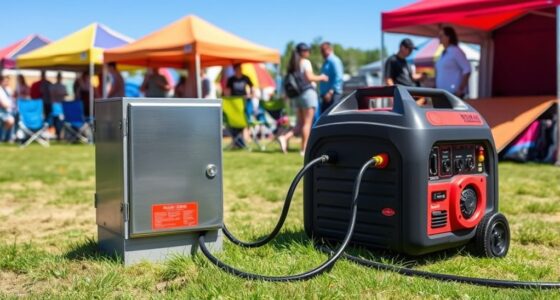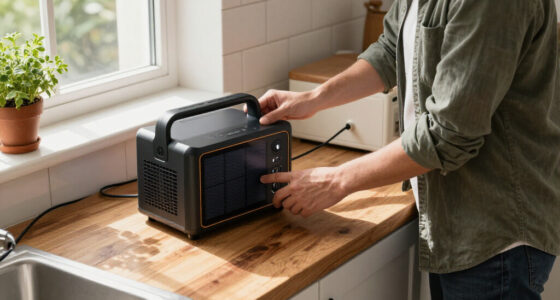
The best portable power stations balance capacity, output, and portability for the devices you need to run. My best overall pick is the Anker SOLIX C1000 Gen 2 for buyers seeking a capable middle ground between compact units and heavy backup systems. The EcoFlow DELTA 3 stands out as another versatile option, while the Jackery Explorer 300 suits lighter trips where easy carrying matters more than long runtimes. The main tradeoff is straightforward: more capacity and power usually mean more weight and space, while smaller models can run out sooner or limit which appliances they support. Read on for the full breakdown and guidance on matching a station to your needs.

Get backup power and energy gear delivered free — and shop member deals
- Fast, free delivery on millions of items
- Access to Prime Big Deal Days deals on October 6–7
- Prime Video, Amazon Music and more included
Complete the kit


Key Takeaways
The Anker SOLIX C1000 Gen 2 is the roundup’s middle-ground pick: it sits between compact travel units and multi-kilowatt-hour stations intended for longer backup needs.
Capacity changes the job a station can do: the 256–300Wh models suit small electronics and short outings, while the 2,000Wh-plus options better fit extended backup or higher-energy loads.
Rated output matters alongside battery size: the Anker SOLIX C2000 Gen 2 lists 2,400W, while the Anker SOLIX S2000 lists 1,500W; the higher-capacity label alone does not tell you what equipment either can run.
Portable has different meanings across this lineup: a 256Wh power bank is easier to take on the move, while 3,000Wh-class stations prioritize stored energy over easy carrying.
Solar bundles and battery chemistry affect the ownership choice: the Jackery Explorer 300 bundle includes a 40W panel, and several compact picks specify LiFePO4 cells; check included equipment and product specifications before comparing them.


| portable power station | Capacity | Weight |
|---|---|---|
| Jackery Explorer 300 Portable | 292Wh | 7.1 lbs |
| Anker SOLIX S2000 Portable Pow | 2,010Wh | 35.7 lbs |
| Jackery HomePower 3600 Plus Po | 3,584Wh | — |
| BLUETTI Elite 30 V2 Portable P | 288Wh | 9.4 lbs |
| Anker SOLIX C2000 Gen 2 Portab | 2,048Wh; expandable to 4kWh | 41.7 lbs |
| Jackery Explorer 240D Portable | 256Wh | 4.85 lbs |
| Anker SOLIX C1000 Gen 2 Portab | 1,024Wh | 11.3 kg |
| BLUETTI AC180 Portable Power S | 1,152Wh | — |
| EcoFlow DELTA 3 Portable Power | 1,024Wh | — |
| Jackery Explorer 300 Portable | 292Wh | 7.5 lbs |
| Jackery Explorer 1000 v2 Porta | — | 23.8 lb |
| BLUETTI Elite 300 Portable Pow | 3,014.4Wh | 58 lb |
| ALLWEI Portable Power Station | 256Wh | 6.4 lb |
| EnginStar Portable Power Stati | 296Wh | 6.5 lb |
| Anker SOLIX C300 Portable Powe | 288Wh | — |
More Details on Our Top Picks
Jackery Explorer 300 Portable Power Station, 292Wh
The Jackery Explorer 300 is the lightest option in this group at about 7.1 pounds, making it easier to pack for short camping trips or carry between a car and campsite. Its 292Wh capacity and mix of AC, USB-C, USB-A, and car outputs suit phones, cameras, and other modest loads. Compared with the BLUETTI Elite 30 V2, it has less rated output, but its lower weight and stated long cycle life make it a straightforward choice for light use. The limit is its 300W rated output: it is not suited to demanding appliances, and the solar panel is sold separately. I’d choose it for portability over the BLUETTI’s higher output and faster stated AC recharge.
Pros:- About 7.1 pounds for easier transport
- AC, USB-C, USB-A, and car outputs support several device types
- LiFePO4 cells are rated for over 4,000 cycles to 70% capacity
- Supports solar charging with compatible panels
Cons:- 300W rated output limits the appliances it can power
- Solar panel is not included
Best for: Campers and day-trip travelers who want a light station for charging phones, cameras, and small electronics.
Not ideal for: Buyers who need to run appliances above 300W or want substantial backup runtime.
- Capacity:292Wh
- Peak output:600W
- Weight:7.1 lbs
- AC outlets:2
- USB-C:1 port, 100W PD
- Charge cycles:Over 4,000 cycles to 70% capacity
Our verdict“Choose the Explorer 300 for light loads and easy carrying; pick a higher-output station for appliances.”
Anker SOLIX S2000 Portable Power Station, 2,010Wh, 1,500W
The Anker SOLIX S2000 balances substantial capacity with several ways to recharge: it accepts AC, solar, generator, alternator charger, and car outlet charging among its six listed methods. That flexibility can matter on trips where wall power is unavailable, while its 400W maximum solar input gives it a defined solar ceiling. Compared with the Anker SOLIX C2000 Gen 2, it offers lower continuous output and less peak power, but weighs less and includes a stated UPS switch under 10 milliseconds. Eight outlets also make it useful when several devices need power at once. The tradeoff is a missing 12V DC port, which narrows direct connection options, and its 1,500W continuous output rules out some heavier loads.
Pros:- Six listed charging methods suit changing access to power
- 400W maximum solar input
- Eight outlets and UPS switching under 10ms
- LFP battery is rated for up to 10,000 charge cycles
Cons:- No 12V DC port
- 1,500W continuous output is lower than the C2000 Gen 2’s 2,400W rating
- Claimed refrigerator runtime varies with the appliance and conditions
Best for: Road-trippers and backup-power buyers who need multiple recharge options, several outlets, and UPS switching.
Not ideal for: RV owners or campers who need a dedicated 12V DC port or higher continuous output for demanding appliances.
- Capacity:2,010Wh
- Continuous output:1,500W
- Peak output:3,000W
- Maximum solar input:400W
- Outlets:8
- Weight:35.7 lbs
- UPS switchover:Under 10ms
- 12V DC port:None
Our verdict“Pick the S2000 if flexible recharging and UPS switching matter more than a 12V port or higher output.”
Jackery HomePower 3600 Plus Portable Power Station, 3584Wh, 3600W
With 3,584Wh of capacity and 3,600W of AC output, the Jackery HomePower 3600 Plus is built for larger backup needs than the smaller Anker stations in this lineup. Its capacity can expand to 21kWh per unit, or 43kWh with multiple units, which gives buyers room to scale a backup setup. Wheels and a telescopic handle help move its substantial capacity around, while AC, solar, gas generator, and hybrid charging provide several ways to replenish it. Compared with the Anker SOLIX C2000 Gen 2, it starts with more capacity and rated output, but 240V output requires parallel operation. Home backup also requires an MTS, so buyers need to account for that setup rather than treating this as a plug-in replacement for a home electrical system.
Pros:- 3,584Wh capacity and 3,600W AC output
- Expandable to 21kWh per unit or 43kWh with multiple units
- AC, solar, gas generator, and hybrid charging support
- Wheels and telescopic handle aid movement
Cons:- 240V output requires parallel operation
- Home backup setup requires an MTS
- Large capacity makes it less suited to frequent long-distance carrying
Best for: Homeowners planning expandable backup for multiple appliances who can accommodate an MTS setup.
Not ideal for: Travelers seeking a compact station or buyers who need 240V output from a single unit.
- Capacity:3,584Wh
- AC output:3,600W
- Parallel output:7,200W
- Expandable capacity:Up to 21kWh per unit or 43kWh with multiple units
- Charging options:Hybrid AC+DC, AC, solar, and gas generator
- Hybrid AC+DC recharge time:2 hours
- Battery cycle life:Up to 6,000 cycles
- Design:Wheels and telescopic handle
Our verdict“Choose the HomePower 3600 Plus for scalable home backup if you can plan for its MTS and parallel requirements.”
BLUETTI Elite 30 V2 Portable Power Station, 288Wh, 600W
The BLUETTI Elite 30 V2 packs 600W of continuous output into a 9.4-pound unit with just 288Wh of capacity. That higher output gives it more headroom for compatible devices than the Jackery Explorer 300, though neither small station is intended for long appliance runtime. Its stated AC recharge reaches 80% in 45 minutes, making it a practical option when there is a short window to recharge before heading out again. A 10ms UPS switch adds a backup role for small electronics. Power Lifting Mode can support loads above 600W, but that mode is a specific operating feature, not a reason to treat the station as a larger-capacity model. For longer outages or heavier use, its battery size is the clear constraint.
Pros:- 600W continuous output in a 9.4-pound unit
- AC, solar, and car charging support
- Stated AC recharge to 80% in 45 minutes
- 10ms UPS switching for backup use
Cons:- 288Wh capacity limits runtime for higher-power devices
- Power Lifting Mode is needed for loads above 600W
Best for: Campers or home-office users who need a compact unit with more output headroom and quick AC recharge.
Not ideal for: Buyers who need long runtimes for appliances or expect over-600W loads to run as ordinary continuous output.
- Capacity:288Wh
- Continuous output:600W
- Power Lifting Mode:Up to 1,500W
- Weight:9.4 lbs
- AC recharge:0–80% in 45 minutes; 0–100% in 70 minutes
- UPS switch time:10ms
- Charging input:380W/200W adjustable AC
Our verdict“Choose the Elite 30 V2 for compact portability with more output than the Explorer 300, while keeping expectations modest on runtime.”
Anker SOLIX C2000 Gen 2 Portable Power Station, 2,048Wh, 2,400W
The Anker SOLIX C2000 Gen 2 pairs 2,048Wh with 2,400W rated output, so it can handle heavier appliance loads than the S2000’s 1,500W continuous rating. Its standout is the stated 58-minute full recharge via AC or solar, which suits buyers who may need to replenish quickly between uses. The 800W alternator charging option also offers a practical route to recharge from a vehicle on a road trip. Compared with the Jackery HomePower 3600 Plus, it has less starting capacity and output, but is more focused on portability at 41.7 pounds and can expand to 4kWh with an additional battery. That weight still calls for planning, and the expansion battery is separate.
Pros:- 2,400W rated output with 4,000W peak
- Stated full recharge in 58 minutes via AC or solar
- 800W alternator charging can recharge from a vehicle
- Expandable to 4kWh with an additional battery
Cons:- At 41.7 pounds, it is heavy for carrying long distances
- Expansion battery is sold separately
- 9W standby draw uses stored energy while idle
Best for: Road-trip and home-backup buyers who need strong appliance output and quick recharging between uses.
Not ideal for: People who need a lightweight carry-on station or want 4kWh capacity without buying an expansion battery.
- Capacity:2,048Wh; expandable to 4kWh
- Peak output:4,000W
- Battery type:LiFePO4
- Full recharge time:58 minutes via AC or solar
- Alternator charging:800W; stated 100% in 3 hours
- Weight:41.7 lbs
- Dimensions:18.1 × 9.8 × 10.1 inches
Our verdict“Pick the C2000 Gen 2 for high output and rapid recharge in a more portable package than the HomePower 3600 Plus.”
Jackery Explorer 240D Portable Power Bank, 256Wh, 200W DC
The Jackery Explorer 240D is the easiest pick here to carry when your gear charges over USB: at 4.85 pounds, it weighs less than the Explorer 300, while its three USB-C ports can deliver up to 140W per port. Its 256Wh battery and 200W total DC output suit phones, laptops, and compatible devices such as Starlink Mini, but this is not a small substitute for a household backup station. Unlike the Explorer 300, it has no AC outlets, so standard plugs are out. USB-C, car, and solar charging add flexibility away from a wall, and the long cycle-life rating favors frequent use. Choose it for a compact DC kit; skip it if you need to run appliances.
Pros:- Light 4.85-pound design is easy to carry
- Three USB-C ports support high-power device charging
- LiFePO4 battery is rated for 6,000 cycles to at least 70% capacity
- Can recharge by USB-C, car, or solar
Cons:- DC-only output cannot power standard AC appliances
- 200W total output limits the devices it can run at once
Best for: Backpackers, mobile workers, and Starlink Mini users whose gear charges by USB-C or other DC connections
Not ideal for: Campers who need AC outlets or buyers who want to power household appliances
- Capacity:256Wh
- Total output:200W DC
- Ports:3 USB-C, 1 USB-A
- Battery:LiFePO4
- Weight:4.85 lbs
- Solar input:Up to 100W
- Cycle life:6,000 cycles to at least 70% capacity
Our verdict“Choose the Explorer 240D for a light, USB-C-focused power kit; choose the Explorer 300 if AC outlets matter.”
Anker SOLIX C1000 Gen 2 Portable Power Station
The Anker SOLIX C1000 Gen 2 balances a useful 1,024Wh capacity with 2,000W output, giving it more appliance headroom than the EcoFlow DELTA 3’s 1,800W rating. Its stated 49-minute AC recharge is the standout for people who may have only a short window to refill between outages or trips. It also offers solar charging and UPS backup under 10 ms, a faster stated switchover than the BLUETTI AC180’s 20 ms. Those advantages come with some setup friction: HyperFlash charging and TOU mode require the Anker app, and the stated 1.8-hour solar time depends on a compatible 600W input. At 11.3 kg, it is portable for car camping, but less suited to carrying far on foot.
Pros:- 1,024Wh capacity and 2,000W output suit a range of appliances
- Stated AC recharge time is 49 minutes
- UPS switchover is under 10 ms
- Battery is rated to retain at least 80% capacity after 4,000 cycles
Cons:- HyperFlash charging and TOU mode require the Anker app
- Fast solar recharge requires a compatible 600W solar input
- 11.3 kg weight makes it cumbersome for extended carrying
Best for: Car campers and households that want appliance-capable power with a short AC recharge window and UPS backup
Not ideal for: Hikers seeking a carryable trail power source or buyers who want to manage all charging without an app
- Capacity:1,024Wh
- Output:2,000W, 3,000W peak
- AC recharge:49 minutes
- Solar recharge:1.8 hours via 600W solar
- UPS switchover:Under 10 ms
- Weight:11.3 kg
Our verdict“Pick the C1000 Gen 2 if fast AC recharging and quick UPS switchover matter more than low weight or app-free controls.”
BLUETTI AC180 Portable Power Station, 1152Wh LiFePO4 Battery
With 1,152Wh, the BLUETTI AC180 holds more energy than the Anker SOLIX C1000 Gen 2 and EcoFlow DELTA 3, both listed at 1,024Wh. That extra capacity can stretch a session powering essential devices, while its 1,800W AC output handles many common appliances. Eight outlets give a group several connection points, and the stated one-hour AC recharge helps reduce downtime. Compared with the Anker, the AC180’s stated UPS response is slower at 20 ms, though it still offers backup for essential devices. Solar charging is supported up to 500W, but the stated solar recharge takes 2.8 to 3.3 hours. Its 2,700W peak boost also requires app activation, so check that feature’s setup before relying on it.
Pros:- 1,152Wh capacity exceeds the 1,024Wh Anker SOLIX C1000 Gen 2 and EcoFlow DELTA 3
- 1,800W AC output supports many common appliances
- Eight outlets provide connection options for multiple devices
- Supports AC and solar charging
Cons:- UPS response time is 20 ms, slower than the Anker SOLIX C1000 Gen 2’s stated under-10-ms response
- Solar recharge takes a stated 2.8 to 3.3 hours
- Activating 2,700W peak boost requires the app
Best for: Campers and households who want more stored energy than a 1,024Wh station and need several outlets for shared devices
Not ideal for: Buyers prioritizing the fastest stated UPS switchover or those who want peak boost without app setup
- Capacity:1,152Wh
- Battery type:LiFePO4
- AC output:1,800W
- Peak output:2,700W
- Outlets:8
- Solar input:500W
- UPS response:20 ms
- AC recharge time:About 1 hour
Our verdict“Choose the AC180 when extra capacity and eight outlets matter more than the quickest UPS response or app-free peak boost.”
EcoFlow DELTA 3 Portable Power Station, 1024Wh, 1800W
The EcoFlow DELTA 3 is a practical starting point for buyers who may need more than a single 1,024Wh station later: compatible EcoFlow batteries can expand capacity to up to 5kWh. That path to longer backup distinguishes it from the Anker SOLIX C1000 Gen 2, whose listed data does not specify expandable capacity. The DELTA 3 delivers 1,800W, matching the BLUETTI AC180’s AC output, and its stated 56-minute full charge helps limit time at the wall. Solar input is capped at 500W. Expansion requires compatible battery packs, so it adds cost and equipment complexity over time; the IP65 rating applies to the battery pack, not necessarily the station itself. This is the better fit for a modular home backup plan than a fixed, grab-and-go setup.
Pros:- Expandable to up to 5kWh with compatible EcoFlow batteries
- 1,800W output supports a range of appliances
- Stated full recharge time is 56 minutes
- LiFePO4 battery is rated for 4,000 cycles to 80% capacity
Cons:- Expansion requires compatible battery packs
- Solar input is limited to 500W
- IP65 rating applies to the battery pack
Best for: Households that want a 1,024Wh station now with the option to add compatible batteries for longer outages
Not ideal for: Buyers who need the highest capacity out of the box or prefer a simple system with no separate expansion packs
- Capacity:1,024Wh
- Output:1,800W
- Maximum AC input:1,500W
- Solar input:500W
- Full charge time:56 minutes
- Battery chemistry:LiFePO4
- Expandable capacity:Up to 5kWh with compatible batteries
Our verdict“Choose the DELTA 3 if you want a fast-charging station that can grow into a larger backup system with compatible packs.”
Jackery Explorer 300 Portable Power Station with 40W Solar Panel
The Jackery Explorer 300 with 40W solar panel gives casual campers a ready-to-use kit, pairing a 292Wh station with a panel instead of asking buyers to source one separately. At 7.5 pounds, it remains manageable to carry, while two AC outlets and a 100W USB-C port make it more versatile for mixed devices than the DC-only Explorer 240D. Its tradeoff is recharge speed: the included panel takes about 7.5 hours to bring the station to 80%, so it suits slow daytime top-ups more than rapid recovery. The 300W rated output and 600W surge also leave it well below larger choices such as the BLUETTI AC180. Pick this bundle for phones, lights, and modest gear on short trips, not appliance-heavy backup.
Pros:- Includes a 40W solar panel
- Two AC outlets add versatility over the DC-only Explorer 240D
- 100W USB-C port supports higher-power USB-C devices
- LiFePO4 battery is rated for over 4,000 charge cycles
Cons:- Included 40W panel takes about 7.5 hours to charge the station to 80%
- 292Wh capacity and 300W rated output limit runtime and appliance choices
- Station and panel may ship separately
Best for: Car campers and weekend travelers who want a compact station with a panel included for topping up small electronics
Not ideal for: Buyers who need fast solar recharging, extended outage capacity, or power for higher-draw appliances
- Capacity:292Wh
- Peak surge:600W
- Battery chemistry:LiFePO4
- Weight:7.5 lbs
- AC outlets:2
- Included solar panel:40W
- Solar charge time:About 7.5 hours to 80% with included panel
Our verdict“Choose this Explorer 300 bundle for a light, modest-capacity camping kit with solar included, and look to the AC180 for longer appliance use.”
Jackery Explorer 1000 v2 Portable Power Station
1,070Wh capacity and 1,500W AC output put the Explorer 1000 v2 between small trip-ready units and heavier home-backup models. It can handle several everyday devices at once, while its 23.8-pound weight and foldable handle make it easier to move than the 58-pound BLUETTI Elite 300. The LFP battery’s stated 4,000-cycle life also suits regular use over time. App controls add quiet overnight and energy-efficiency modes, and emergency mode can enable a one-hour charge. That speed depends on changing the app setting; the default charge time is 1.7 hours. Compared with the higher-capacity Elite 300, this Jackery is easier to carry but stores much less energy. Solar panels are sold separately, and charging is limited to compatible Jackery panels.
Pros:- 1,500W AC output supports a wider range of appliances than 300W compact stations.
- LFP battery is rated to retain over 70% capacity after 4,000 charge cycles.
- Three AC outlets plus USB and DC ports allow several device types to connect.
- App offers quiet overnight and energy-efficiency modes.
Cons:- One-hour charging requires enabling emergency mode in the app; default charging takes 1.7 hours.
- Solar panel is not included, and solar charging is limited to compatible Jackery panels.
- Its capacity is modest for extended home backup or larger RV loads.
Best for: Campers and households who want a carryable station for several devices and moderate appliance loads.
Not ideal for: RV owners or households seeking multi-day backup capacity, since its 1,070Wh battery is far smaller than the BLUETTI Elite 300’s 3,014.4Wh.
- Battery capacity:1,070Wh
- AC output:1,500W
- Surge peak:3,000W
- Battery type:LFP
- Weight:23.8 lb
- AC outlets:3 pure sine wave
- USB-C:2 ports, up to 100W charging
- Charging time:1 hour with emergency mode enabled; 1.7 hours by default
Our verdict“Choose the Explorer 1000 v2 for a useful balance of carryability, appliance output, and battery life when 1,070Wh is enough.”
BLUETTI Elite 300 Portable Power Station for RV & Home Backup, 3014.4Wh
3,014.4Wh of LiFePO4 capacity makes the Elite 300 the high-capacity pick in this batch, suited to longer outages and RV trips where smaller stations need frequent recharging. Its 2,400W output, TT-30 outlet, and 12V/30A DC output support RV equipment, while a 10ms UPS switchover can keep connected critical devices running through a brief power interruption. It also reaches 80% charge in as little as 78 minutes. Compared with the Jackery Explorer 1000 v2, it holds almost three times the energy and offers more output, but it weighs 58 pounds, so moving it is a two-handed job for many people. The compact-for-its-capacity design helps with storage, yet only two power outlets limit how many AC devices can connect directly.
Pros:- 3,014.4Wh capacity supports longer use between charges than the smaller stations in this batch.
- TT-30 outlet and 12V/30A DC output are suited to RV equipment.
- 10ms UPS switchover helps protect connected computers and critical devices.
- LiFePO4 battery is rated for 6,000+ cycles.
Cons:- 58-pound weight makes it cumbersome to move despite its compact size for a 3kWh station.
- Two power outlets restrict direct AC connections.
- Its capacity and RV-focused connections are more than many short-trip or device-charging buyers need.
Best for: RV owners and households who need substantial outage capacity, a TT-30 connection, and UPS support for critical electronics.
Not ideal for: Solo campers or frequent travelers who need a station they can carry easily; at 58 pounds, it is much heavier than compact options such as the ALLWEI 300W.
- Capacity:3,014.4Wh
- Output:2,400W, 4,800W surge
- Battery:LiFePO4, 6,000+ cycles
- Weight:58 lb
- Outlets:2 power outlets
- RV connections:TT-30 outlet and 12V/30A DC output
- UPS switchover:10ms
- Recharge time:0–80% in as little as 78 minutes
Our verdict“Pick the Elite 300 when RV-ready output and extended backup matter more than easy lifting or numerous AC outlets.”
ALLWEI Portable Power Station 300W, 256Wh LiFePO4 Solar Generator
The ALLWEI pairs a 256Wh LiFePO4 battery with a 6.4-pound body, making it a practical choice for keeping a laptop, phone, camera, or CPAP running when portability matters more than appliance power. Its 300W pure sine wave AC output is modest, but the USB-C PD 60W port and several other connections let it serve multiple small devices. The built-in LED with SOS mode adds a useful camp or outage light. Compared with the lithium-ion EnginStar 300W, the ALLWEI has less capacity but a stated 3,000-cycle battery life and faster dual AC-plus-solar charging. Its 300W ceiling rules out many larger appliances, and the solar panel is not included. For higher-wattage needs, the Jackery Explorer 1000 v2 is a more capable, though heavier, step up.
Pros:- 6.4-pound weight and compact dimensions suit travel and camping.
- LiFePO4 battery is rated for 3,000 cycles.
- Pure sine wave AC output and USB-C PD 60W support sensitive electronics and laptops.
- AC, car, solar, and dual AC-plus-solar charging provide flexible recharge options.
Cons:- 300W continuous output cannot run many household appliances.
- 256Wh capacity is limited for extended outages.
- Solar panel is sold separately.
Best for: Light-packing campers and CPAP users who want a small LFP station for sensitive electronics and low-wattage devices.
Not ideal for: Buyers who need to run kettles, cooking appliances, or other loads above 300W, or who expect substantial backup duration.
- Capacity:256Wh
- Continuous output:300W
- Peak surge:600W
- Battery:LiFePO4, 3,000 cycles
- Weight:6.4 lb
- Ports:1 AC, 2 DC5521, 1 car port, 1 USB-A, 1 USB-C
- USB-C output:Up to 60W
- Dual charging time:2–2.5 hours with AC and solar
Our verdict“Choose the ALLWEI for lightweight trips and small electronics if its 300W output and 256Wh capacity fit your needs.”
EnginStar Portable Power Station, 300W, 296Wh
296Wh capacity in a 6.5-pound package gives the EnginStar a little more stored energy than the ALLWEI 300W, making it a straightforward option for phones, laptops, cameras, and small electronics on short trips. Two pure sine wave AC outlets offer more plug-in flexibility than the ALLWEI’s single AC outlet, though both are capped at 300W continuous output. It can recharge from a wall outlet, car socket, or compatible solar panel, and its digital display makes remaining power easy to check. The tradeoff is its lithium-ion battery, rated for more than 1,000 cycles, compared with the ALLWEI’s LiFePO4 battery rated for 3,000. USB-C output is limited to 18W, so laptop users may prefer the ALLWEI’s 60W USB-C port. Solar charging also requires a separate compatible panel.
Pros:- 296Wh capacity is slightly higher than the ALLWEI 300W’s 256Wh.
- Two pure sine wave AC outlets allow two AC devices to connect.
- 6.5-pound weight and compact dimensions suit car camping and travel.
- Supports wall, car, and compatible solar charging.
Cons:- 300W output limits it to small appliances and electronics.
- Lithium-ion battery is rated for more than 1,000 cycles, fewer than the ALLWEI’s 3,000-cycle LFP rating.
- USB-C output is 18W, and solar panel is sold separately.
Best for: Travelers who want a light station with two AC outlets for phones, cameras, and small electronics on short trips.
Not ideal for: Frequent users seeking long battery cycle life or fast USB-C laptop charging; the ALLWEI 300W is a stronger fit for those needs.
- Capacity:296Wh
- AC output:300W
- AC outlets:2 pure sine wave, 110V
- Battery type:Lithium-ion
- Battery cycle life:More than 1,000 cycles
- Weight:6.5 lb
- USB-C output:18W
- Recharge time:Up to 80% in 2 hours
Our verdict“Pick the EnginStar for a lightweight, simple charging station with two AC outlets, provided its cycle life and USB-C speed meet your needs.”
Anker SOLIX C300 Portable Power Station, 288Wh
The C300 is aimed at buyers who want a compact station with a broad mix of ports and fast wall recharging: it reaches 80% in 50 minutes, and it can recharge through wall, solar, car, or USB-C input. Its 288Wh capacity and 300W total AC output place it alongside the ALLWEI and EnginStar for small devices and modest loads, rather than household appliances. The LiFePO4 battery is rated for 3,000 cycles, and operation is listed at 25dB from 3.3 feet, useful around a campsite or quiet room. Compared with the ALLWEI, the Anker offers three AC outlets and faster wall charging, but gives up the ALLWEI’s built-in SOS light. Its solar compatibility has limits, and the shoulder strap and panel are sold separately.
Pros:- Reaches 80% wall charge in 50 minutes.
- Three AC outlets plus USB and car ports support several connected devices.
- LiFePO4 battery is rated for 3,000 cycles.
- 25dB listed noise level suits quieter settings.
Cons:- 300W total AC output limits the size of appliances it can run.
- Solar panel and shoulder strap are sold separately.
- Not compatible with several Anker solar panels, including PS30, PS200, and PS400.
Best for: Campers and remote workers who want quick recharging, multiple device connections, and a compact LFP station for electronics.
Not ideal for: Buyers who need to run high-wattage appliances or want a complete solar-ready kit; output is 300W and the panel is separate.
- Capacity:288Wh
- AC output:300W total
- Surge output:600W
- Battery:LiFePO4, 3,000 cycles
- AC outlets:3
- USB-C ports:2 at 140W each; 1 at 15W
- Wall recharge time:80% in 50 minutes
- Noise level:25dB at 3.3 ft
Our verdict“Choose the C300 for a compact electronics station when fast wall charging and multiple ports matter more than appliance power or included solar gear.”
How We Picked
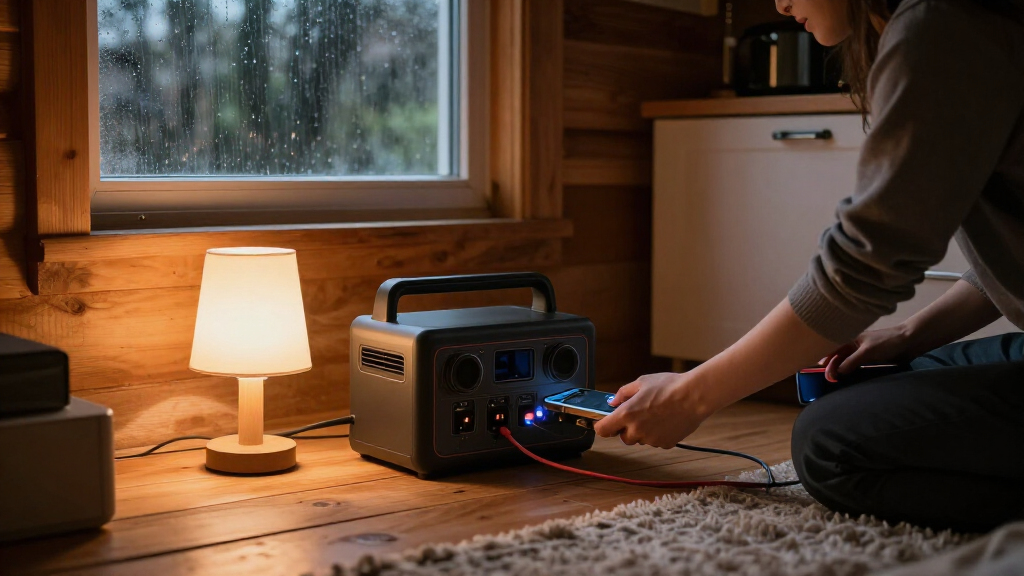
I compared these 15 stations by the details that shape a real buying decision: stated capacity, AC or DC output, portability, battery chemistry where listed, and whether solar equipment is included. I gave weight to the match between a product’s stated capabilities and its likely role, from charging phones and small electronics to powering larger loads or supporting home backup. Capacity and wattage are not interchangeable: wattage helps determine which devices can run, while capacity affects how long they can run.
The order favors versatile options that occupy useful positions across the lineup, followed by larger backup-focused models, compact travel picks, and more specialized or less fully specified alternatives. I also considered whether a bundle or named feature meaningfully changes the purchase. Some product names do not provide enough detail to compare charging speed, port selection, or weight, so buyers should check the current manufacturer specifications for those points before choosing.
Factors to Consider When Choosing Best Portable Power Stations
Start with the devices you need to power and the length of time you need them running. From there, check output, usable capacity, recharge options, and the practical burden of moving or storing the unit. These steps can prevent a common mismatch: buying a large station that is awkward for short trips or a compact one that cannot handle the equipment you care about.
Match Output to Your Devices
Make a list of the devices you may run at the same time and check their running wattage on the label or manufacturer page. For equipment with a motor or heating element, startup demand can exceed its normal draw, so compare both figures with the station’s output limits. A large battery does not compensate for an inverter that cannot support the device. Also check which ports you need; a station with the right total output may still lack a useful connection for your gear. If the load is close to the stated limit, leave headroom rather than planning around a best-case number. For sensitive electronics, confirm the output type and any relevant manufacturer guidance.
Estimate Runtime With a Buffer
Battery capacity in watt-hours gives a useful starting point, but it is not a promise of runtime. Divide capacity by the device’s watt draw for a rough estimate, then allow for conversion losses and changes in power use. For example, a device drawing 100W will not necessarily run for exactly ten hours from a 1,000Wh station. Refrigerators cycle on and off, and laptops draw different amounts as they charge or work. Add a margin for cold conditions, battery aging, and devices you may have forgotten to include. If the station is for an outage, plan around essential loads first rather than trying to recreate normal household use.
Decide How Much Portability You Need
Think about the entire route from storage to use: lifting into a vehicle, carrying across a campsite, or rolling the unit through a home. A compact 256–300Wh station is easier to move, but the tradeoff is less stored energy and fewer hours for many devices. Large backup stations can cover more demanding needs while becoming difficult to handle without help or a vehicle. Check weight, dimensions, handles, and any wheels in the manufacturer’s specifications before buying. A station that stays beside a fridge during an outage has different portability needs from one that moves between a car and a tent. Choose for the heaviest move you expect to make, not only its footprint on a shelf.
Plan Your Recharge Routine
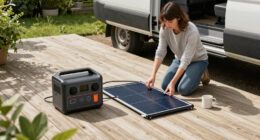
Look beyond whether a model supports solar and check the actual input limits and compatible charging methods. A small included solar panel, such as the 40W panel in the Explorer 300 bundle, can help on a sunny outing but may recharge a depleted battery slowly. Grid charging can be more practical when you have access to an outlet, while vehicle charging may suit road trips. Solar performance depends on sunlight, panel placement, season, and shading, so avoid building an emergency plan around ideal conditions. Check whether panels are included or sold separately, and confirm connector compatibility. If you need repeated daily use, compare recharge time as closely as battery capacity.
Compare Battery Chemistry and Care
Some products in this roundup specify LiFePO4 batteries, while the product names for others do not state chemistry. Chemistry can affect cycle life, weight, and how a manufacturer recommends storing or maintaining a unit, but it does not replace checking the warranty and operating limits. Read the manual for storage charge guidance, temperature limits, and how often the unit should be checked while stored. For emergency backup, a station left untouched for months should be easy to inspect and keep ready. Avoid assuming two batteries with similar capacity will have the same lifespan or maintenance needs. Use the maker’s published specifications to compare those details.
Pay for Capacity You Can Use
It can be tempting to choose the largest capacity available, but extra stored energy adds weight and may go unused if your loads are modest. Pay more for a larger station when longer runtime, higher-output appliances, or several days away from an outlet are real requirements. For phone charging, lights, and a laptop on short trips, a compact model may be easier to pack and manage. Bundles can make sense when included solar equipment matches your recharge plan, but compare panel output and compatibility before treating it as a complete setup. Consider how often you will use the station and where it will live between trips. The right size is the smallest one that covers your expected loads with a reasonable reserve.
Frequently Asked Questions
How do I know whether a power station can run my refrigerator?
Check the refrigerator’s running wattage and, if listed, its startup surge, then compare both with the station’s output specifications. Refrigerators cycle, so their average use over time differs from the wattage shown while the compressor runs. Capacity helps estimate how long the station can support those cycles, but leave room for conversion losses and other devices. For outage planning, try to find the refrigerator’s daily energy use from its label or manual and compare that with the station’s usable energy guidance. A larger capacity alone does not guarantee compatibility if output is too low.
Is a 1,000Wh station enough for an overnight camping trip?
It can be enough if your needs are mostly phones, lights, and modest electronics, but runtime depends on total energy use rather than the trip length alone. Add the watt-hours for each device you expect to charge or run, including repeated charging during the night. Heating appliances and cooking gear can consume a large share of the battery quickly. Keep a reserve for cold weather or an unexpectedly low starting charge. If you need only phones and a light, a smaller station may be easier to carry; frequent high-draw use points toward more capacity.
Should I choose a solar bundle or buy panels separately?
A bundle is convenient when the included panel is compatible and its output fits your expected recharge time. Check the panel’s wattage, the station’s solar input limit, and connector requirements before relying on it. Small panels can extend use for low-energy devices but may take a long time to refill a depleted station. Buying panels separately gives you more choice in size and placement, though it can add compatibility work. Compare the full charging setup, including how you will position and transport panels, rather than deciding from the bundle label alone.
When is a large home backup station worth the extra size?
A large station makes more sense when you need longer runtimes, higher-output appliances, or backup for several essential devices at once. First list the loads you intend to cover and estimate their daily energy use; this can reveal whether a smaller unit would meet the same need. Account for where the station will sit and how it can be moved, since multi-kilowatt-hour units are less convenient to carry. Also check how quickly it can recharge between outages and whether its input options suit your home. If your main use is occasional phone and laptop charging, the added capacity may be more burden than benefit.
What should I check before storing a power station for emergencies?
Follow the manufacturer’s instructions for storage charge, temperature, and periodic recharging, because these can differ by model and battery chemistry. Keep the unit somewhere dry and within its stated temperature range, then check its charge at the interval the manual recommends. Confirm that you have the cables and adapters needed for your essential devices, and store them where you can find them during an outage. If solar is part of your plan, check panel compatibility and whether you have a place to use it safely. A station is only useful in an emergency if it is charged, accessible, and suited to the loads you plan to run.
Conclusion
For most buyers who want a balance of capacity and flexibility, I recommend the Anker SOLIX C1000 Gen 2 as the best overall starting point; the EcoFlow DELTA 3 is another versatile choice. For value, compare the ALLWEI 300W and EnginStar 300W with the compact options, paying close attention to their output, ports, and battery details before choosing. For a premium, longer-backup setup, look at the Jackery HomePower 3600 Plus or BLUETTI Elite 300, with portability as the tradeoff. Beginners with lighter needs may find the Jackery Explorer 300 with 40W Solar Panel an approachable bundle, while frequent travelers who prioritize minimal size can compare the Jackery Explorer 240D and Anker SOLIX C300. Match the station to your actual devices, runtime, and moving needs before settling on a capacity.
Fall Picks
fall essentials
As an affiliate, we earn on qualifying purchases.