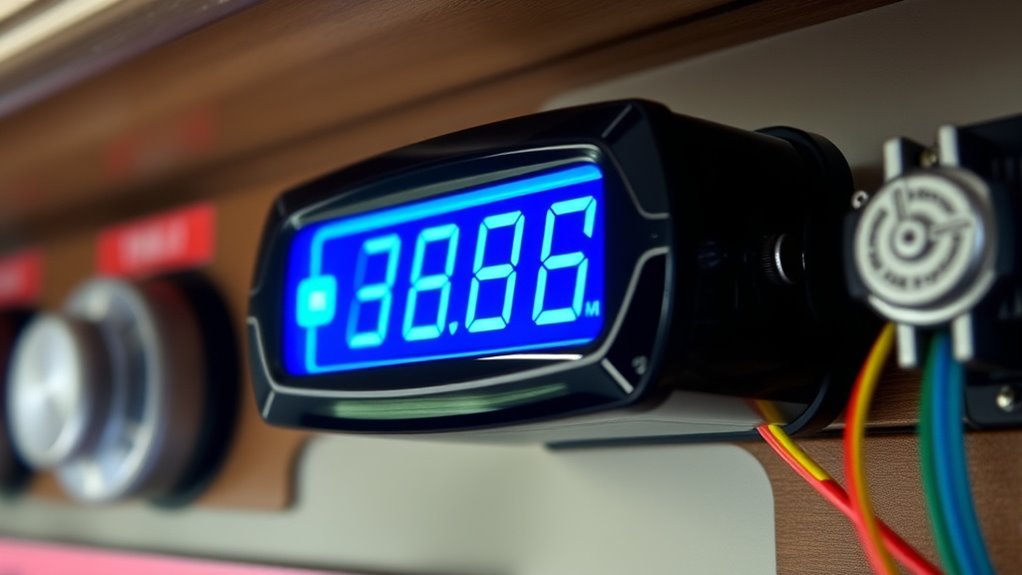

A generator voltage meter for an RV helps you check whether generator power is within a usable range before relying on sensitive appliances. My best overall pick is the 30-Amp RV Surge Protector with Power Meter because it pairs voltage monitoring with surge protection at the RV connection. For a simpler, lower-complexity check, the KETOTEK voltage and frequency meter adds frequency readings, while the DROK two-pack is useful if you want a display at more than one outlet. The main tradeoff is between connection-level protection and a basic plug-in reading; voltage range, frequency display, and installation needs also matter. Read on for how these six options differ and which type of RV setup each suits best.

Get backup power and energy gear delivered free with Prime
- Fast, free delivery on millions of items
- Prime Video, Amazon Music and more included
- Member-only deals all year
Complete the kit


Key Takeaways
- The 30-amp surge protector is the only listed pick that combines voltage monitoring with stated surge protection, making it the strongest choice for buyers who want protection at the RV hookup rather than a reading alone.
- KETOTEK and the 80–500 V meter report both voltage and frequency; frequency can add useful generator context, while the wider voltage range is more relevant when readings may exceed the 300 V range of other plug-in options.
- The DROK two-pack offers placement flexibility, not a broader measurement range: both plug-in testers are specified for 80–300 V, so the set suits monitoring separate points rather than measuring two electrical legs at once.
- The 240 V CL200 kWh meter serves a different job from the voltage testers: it tracks energy use, which can help with consumption records, but its listing does not specify a frequency reading.
- These product listings do not establish every RV-specific fit detail, such as connector configuration, display behavior under generator conditions, or installation requirements; check those against your rig and power source before buying.
| 30-Amp RV Surge Protector with Power Meter, 12,000-Joule Protection |  | Best Overall for RV Shore-Power Monitoring | Maximum current: 30 A | Voltage: 125 V | Surge protection: 12,000 joules | VIEW ON AMAZON | See Our Full Breakdown |
| KETOTEK Digital AC Voltmeter and Frequency Meter, 80–300 V, 45–65 Hz |  | Best Compact Panel Meter for Pure-Sine Generators | Voltage range: AC 80–300 V | Frequency range: 45–65 Hz | Accuracy: 1% ± 2 digits | VIEW ON AMAZON | See Our Full Breakdown |
| DROK AC Voltage Testers, 2-Pack, 80–300V LCD Plug-In Voltmeter |  | Best Value for Simple Outlet Voltage Checks | Quantity: 2 | Measurement range: AC 80–300 V | Measurement accuracy: ±1.5%, ±2 counts | VIEW ON AMAZON | See Our Full Breakdown |
| Digital AC Voltage and Frequency Meter, 80–500 V, 45–65 Hz |  | Best Wide-Range Dual-Reading Panel Meter | Voltage range: AC 80–500 V | Frequency range: 45–65 Hz | Measurement speed: 2 readings per second | VIEW ON AMAZON | See Our Full Breakdown |
| Digital Electric Meter for RV and Home, 240V, CL200 kWh |  | Best for Meter-Socket Energy Monitoring | Voltage: 240 V | Current measurement: TA30 (30 test amps) | Accuracy: 0.5-level | VIEW ON AMAZON | See Our Full Breakdown |
| DROK AC Voltage Tester with LCD Display, 80–300V |  | Best for Simple, Low-Draw Monitoring | Measurement type: AC voltage | Measuring range: 80–300V | Measuring accuracy: ±1.5%, ±2 counts | VIEW ON AMAZON | See Our Full Breakdown |
| generator voltage meter for rv | Display | Power source | Dimensions |
|---|---|---|---|
| 30-Amp RV Surge Protector with | LCD | — | — |
| KETOTEK Digital AC Voltmeter a | LED; red for voltage and green for frequency | Powered by measured voltage; no separate supply required | 2.68 × 1.65 × 1.5 in |
| DROK AC Voltage Testers | 3-digit LCD with blue backlight | Corded electric | — |
| Digital AC Voltage and Frequen | Red and green LED | Two-wire connection; no separate power supply required | 2.75 × 1.18 × 1.57 in |
| Digital Electric Meter for RV | LCD | — | 7.09 × 5.51 × 7.09 in |
| DROK AC Voltage Tester with LC | LCD with blue backlight | — | — |
More Details on Our Top Picks
30-Amp RV Surge Protector with Power Meter, 12,000-Joule Protection
The 30-Amp RV Surge Protector is the most complete choice here for RV owners who want to monitor more than voltage at the hookup. Its display reports voltage, current, power, power factor, temperature, and energy use, while 12,000 joules of surge protection adds a layer of protection against electrical spikes. That breadth makes it more useful for tracking campsite power and managing loads than the DROK AC Voltage Testers, which only show voltage. The tradeoff is its 30 A connection: it is not a fit for RVs using a different service rating, and it is a hookup-side monitor rather than a dedicated generator panel meter. Choose it when you want one device to combine electrical readings with surge protection; skip it if voltage and frequency readings at the generator are your main need.
Pros:- Displays voltage, current, power, and power factor for practical load checks
- Tracks energy usage in kWh
- Adds 12,000 joules of surge protection
- Reports internal temperature and protection-circuit status
Cons:- Designed for 30 A RV power connections only
- Does not provide a frequency reading
- Its hookup-side format may not suit buyers seeking a built-in generator panel meter
Best for: RV owners with 30 A service who want voltage and load information plus surge protection at the power connection.
Not ideal for: Owners of RVs using a different amperage connection, or buyers who need a permanently installed meter that reports generator frequency.
- Maximum current:30 A
- Voltage:125 V
- Surge protection:12,000 joules
- Measurements:Voltage, current, power, power factor, internal temperature, and energy usage
- Display:LCD
- Outlets:1
- Energy tracking:kWh
- Color:Black
Our verdict“Choose this if you have a 30 A RV connection and want surge protection alongside broad electrical monitoring.”
KETOTEK Digital AC Voltmeter and Frequency Meter, 80–300 V, 45–65 Hz
The KETOTEK Digital AC Meter earns its place for buyers who want voltage and frequency together in a small panel-mount format. Those two readings help check whether a generator is delivering voltage and operating frequency within the meter’s measurement range, unlike the DROK plug-in voltmeters, which report voltage alone. Its red voltage and green frequency displays are easy to distinguish, and it draws power from the measured circuit rather than requiring a separate supply. The key limitation is waveform compatibility: KETOTEK is intended for pure AC power and is not suitable for square-wave or modified-sine outputs. It also measures only 80–300 V, while the other dual-reading panel option in this group reaches 500 V. I’d pick KETOTEK for a compact installation on a compatible generator, not for uncertain inverter output.
Pros:- Shows AC voltage and frequency simultaneously
- Color-coded readings make the two measurements easy to tell apart
- Powered by the measured voltage, with no separate supply required
- Compact panel-mount dimensions and low weight
Cons:- Not suitable for square-wave or modified-sine-wave outputs
- Its 80–300 V range is narrower than the 80–500 V range of the other dual-reading panel meter
- Panel installation is less convenient than using a plug-in tester
Best for: RV owners installing a compact panel meter on a generator with pure AC output who want both voltage and frequency readings.
Not ideal for: Owners of generators with square-wave or modified-sine output, or anyone who needs readings above 300 V.
- Voltage range:AC 80–300 V
- Frequency range:45–65 Hz
- Accuracy:1% ± 2 digits
- Measurement speed:2 readings per second
- Display:LED; red for voltage and green for frequency
- Power source:Powered by measured voltage; no separate supply required
- Dimensions:2.68 × 1.65 × 1.5 in
- Operating temperature:-10°C to 50°C
Our verdict“Pick KETOTEK for a compact, dual-reading panel meter when your generator supplies compatible pure AC power.”
DROK AC Voltage Testers, 2-Pack, 80–300V LCD Plug-In Voltmeter
For a straightforward check at a compatible outlet, the DROK two-pack offers a simple alternative to installing a panel meter. Each plug-in unit displays AC voltage from 80–300 V on a blue-backlit screen, and having two makes it practical to keep one near the RV and another in a storage or service area. Compared with the KETOTEK meter, DROK is easier to use without panel wiring, but it does not show frequency—a meaningful gap when checking generator output. These testers are specified for indoor, dry use, so they are not a replacement for an outdoor-rated RV surge protector. The adjustable calibration potentiometer is useful for fine-tuning, though adjustment requires opening the casing with a screwdriver. I’d choose this pair for occasional voltage checks, not continuous generator monitoring.
Pros:- Includes two plug-in voltage meters
- Measures AC voltage across an 80–300 V range
- Blue-backlit LCD is easier to read in dim areas
- Uses less than 1 W and includes an adjustable calibration potentiometer
Cons:- Does not measure frequency
- Specified for indoor use in dry environments, not damp RV hookup locations
- Calibration requires opening the casing with a screwdriver
Best for: RV owners who want two plug-in meters for checking voltage at indoor, dry, compatible outlets without panel installation.
Not ideal for: Buyers who need frequency readings, outdoor hookup monitoring, or a meter designed for damp conditions.
- Quantity:2
- Measurement range:AC 80–300 V
- Measurement accuracy:±1.5%, ±2 counts
- Power consumption:Less than 1 W
- Plug style:US plug
- Display:3-digit LCD with blue backlight
- Power source:Corded electric
- Model:200376BFA
Our verdict“Choose this pair for convenient indoor voltage checks, but use a dual-reading panel meter if generator frequency matters.”
Digital AC Voltage and Frequency Meter, 80–500 V, 45–65 Hz
This 80–500 V voltage-and-frequency meter is the more flexible panel choice for buyers whose generator setup may exceed the range of the KETOTEK. Both display voltage and frequency, but this unit reaches 500 V and is listed for gasoline and diesel generators, motors, and RVs. Its two-wire connection and bright red-and-green LED display keep installation and readouts simple, while the 45–65 Hz range covers common AC frequency checks. That wider voltage range is useful only when the application calls for it; it does not make this meter compatible with every waveform. Like KETOTEK, it is not suitable for inverter output or square-wave power. It also requires panel installation, unlike the plug-in DROK pair. I’d select it for a compatible generator installation where broader voltage coverage matters, rather than for quick outlet checks.
Pros:- Displays voltage and frequency at the same time
- Measures voltage across a broad 80–500 V range
- Two-wire connection needs no separate power supply
- Compact, lightweight design with a bright red-and-green LED display
Cons:- Cannot measure inverter output or square-wave power
- Panel installation is less convenient than the plug-in DROK meters
- The 45–65 Hz range does not cover frequencies outside that band
Best for: RV owners or technicians installing a panel meter on a compatible gasoline or diesel generator and needing voltage coverage up to 500 V.
Not ideal for: Owners of inverter or square-wave generators, or buyers who want a plug-in meter for occasional outlet checks.
- Voltage range:AC 80–500 V
- Frequency range:45–65 Hz
- Measurement speed:2 readings per second
- Measurement accuracy:1% ± 2 digits
- Display:Red and green LED
- Power source:Two-wire connection; no separate power supply required
- Operating temperature:-10°C to +50°C
- Dimensions:2.75 × 1.18 × 1.57 in
- Weight:36 g
Our verdict“Choose this panel meter over KETOTEK when you need its wider voltage range and your generator supplies compatible pure AC.”
Digital Electric Meter for RV and Home, 240V, CL200 kWh
The XaHo digital electric meter is a specialized pick for buyers monitoring consumption through a compatible four-jaw meter socket, rather than checking generator output at a standard outlet. Its LCD reports real-time usage, and the listed 240 V operation and up-to-200 A measurement point to a different installation and monitoring task from the 125 V hookup-focused surge protector. Compared with the DROK plug-in meters, it is aimed at tracking electricity use in an installed meter setup, not giving a quick voltage reading. The tradeoff is fit: this unit requires a C1S, four-jaw socket, and the supplied details do not specify frequency measurement or remote connectivity. I’d consider it only when the RV or home already has the matching socket and energy monitoring is the goal.
Pros:- LCD displays real-time electricity usage
- Designed for residential and RV monitoring
- Lists 0.5-level measurement accuracy
- Specified to resist dust, water, and pressure
Cons:- Requires a compatible C1S, four-jaw meter socket
- Does not provide a generator frequency reading in the supplied specifications
- No connectivity or remote monitoring features are specified
Best for: RV or home owners with a compatible C1S four-jaw meter socket who want an LCD readout of electricity use.
Not ideal for: Buyers seeking a plug-in generator voltage meter, frequency readings, remote monitoring, or an installation without a compatible four-jaw socket.
- Voltage:240 V
- Current measurement:TA30 (30 test amps)
- Accuracy:0.5-level
- Socket configuration:C1S, 4-jaw
- Display:LCD
- Weight:1.54 lb
- Dimensions:7.09 × 5.51 × 7.09 in
- Included components:Box
Our verdict“Choose this only if you have the matching four-jaw socket and want energy monitoring rather than a basic generator voltage check.”
DROK AC Voltage Tester with LCD Display, 80–300V
I’d choose this plug-in voltmeter for an RV owner who wants a clear voltage reading without adding a more feature-heavy meter to the setup. Its 80–300V AC range covers the typical 120V RV supply and leaves room to observe readings outside that level, while the blue-backlit LCD is easier to read in a dim interior than an unlit display. Drawing less than 1W also makes it a modest addition when left plugged in.
Compared with the KETOTEK Digital AC Voltmeter and Frequency Meter, this DROK focuses on voltage rather than adding frequency readings. That simpler scope may suit buyers who only need a voltage check, but it won’t show frequency. The adjustable potentiometer can help calibrate the reading, though reaching it requires opening the casing with a screwdriver. I’d skip it for damp locations, since the product is not suited to moisture.
Pros:- 80–300V measuring range covers common RV AC supply checks
- Blue-backlit LCD is easier to read in low light
- Consumes less than 1W
- Internal potentiometer allows calibration of the reading
Cons:- Calibrating the reading requires opening the casing with a screwdriver
- Not suitable for damp environments
- Shows voltage only, unlike meters that also report frequency
Best for: RV owners who want a basic, backlit AC voltage reading at an indoor outlet and do not need frequency measurement.
Not ideal for: Campers who need monitoring in damp areas, or buyers who want frequency data or calibration without opening the meter casing.
- Measurement type:AC voltage
- Measuring range:80–300V
- Measuring accuracy:±1.5%, ±2 counts
- Power consumption:Less than 1W
- Display:LCD with blue backlight
- Adjustment:Internal potentiometer
- Plug type:Flat plug
Our verdict“Choose this DROK for straightforward, low-power voltage monitoring at a dry RV outlet; pick a voltage-and-frequency meter if you need more diagnostic information.”

How We Picked
I ranked these products by how directly they answer an RV generator owner’s main question: can I monitor the power feeding my rig, and what extra information or protection comes with that reading? The strongest fit is the unit that monitors at the RV connection and adds a stated protective function. After that, I favored meters that show both voltage and frequency, then simple plug-in displays for buyers who value a quick reading or multiple monitoring points. I treated the CL200 kWh meter separately because energy tracking is useful for a different task than checking live generator voltage.
I also weighed the listed measurement ranges, number of units, and likely setup burden. A wider stated range can suit a different measurement scenario, but it does not by itself prove better accuracy or RV compatibility. The plug-in meters rank below the surge protector for buyers seeking protection, since a display alone does not protect equipment. Where a listing leaves details unclear—such as connection style, installation, or RV-specific use—I avoid assuming compatibility and treat that uncertainty as a buying drawback.
| generator voltage meter for rv | Power source |
|---|---|
| 30-Amp RV Surge Protector with | — |
| KETOTEK Digital AC Voltmeter a | Powered by measured voltage; no separate supply required |
| DROK AC Voltage Testers | Corded electric |
| Digital AC Voltage and Frequen | Two-wire connection; no separate power supply required |
| Digital Electric Meter for RV | — |
| DROK AC Voltage Tester with LC | — |
Factors to Consider When Choosing Generator Voltage Meter For Rv
Before choosing a generator voltage meter for an RV, decide what you need to learn and where you need to see it. A voltage display, a frequency reading, surge protection, and energy tracking solve different problems. The right pick depends as much on your RV’s electrical connection and how you use the generator as on the numbers printed in a product name.
Match the meter to the point you need to monitor
A plug-in meter reads power at the receptacle where it is connected, while a device placed at the RV connection can show conditions closer to the incoming supply. Those readings may not describe every outlet or load in the rig, especially when wiring, adapters, or operating loads affect conditions downstream. Decide whether you want a quick spot check, a display you can leave plugged in, or monitoring at the hookup. Avoid assuming that a household-style plug-in meter will connect directly to an RV’s shore-power inlet. Confirm the connector and adapter arrangement before purchase, and keep the meter within its stated electrical rating.
Know what voltage range does—and does not—tell you
The listed 80–300 V range on several options and the 80–500 V range on one model describe their stated measurement windows, not a guarantee of accuracy throughout those ranges. A wider range can matter for a particular electrical system or measurement point, but it does not automatically make a meter better for a typical RV circuit. Check the generator output and the voltage your RV system is designed to receive, then compare those figures with the meter’s specifications. Also look for accuracy and resolution details if you need to make close comparisons; those are not provided in the product names here. Never treat a reading outside the meter’s specified range as dependable.
Decide whether frequency readings matter for your use
Voltage tells you one part of the power picture; frequency gives another reading that can help you evaluate generator output. A combined voltage-and-frequency meter may be a better fit if you want both values visible without using separate instruments. A voltage-only display can still answer a narrower question, such as whether the measured voltage appears within an expected range. Do not assume that seeing a frequency number diagnoses a generator fault or confirms that every appliance is safe to run. Compare the displayed values with the specifications for your generator and RV equipment, and consult the relevant manuals when readings seem abnormal.
Separate monitoring from protection
A meter reports electrical information; it does not necessarily stop a damaging condition. Surge protection is a separate feature, and only select a product for that job when its listing clearly states protective capability and explains the ratings and connection fit. A voltage reading can alert you to an issue, but it may not react quickly enough or disconnect power. Buyers who want protection at the RV hookup should prioritize a properly rated RV device over a basic display, while buyers who already own suitable protection may prefer a simpler meter. Check the surge protector’s specifications and RV compatibility rather than relying on the word “meter” or a screen alone.
Choose between a single display and multiple monitoring points
A single plug-in tester is straightforward when you only need to check one receptacle at a time. A two-pack can let you keep one meter in a second location or compare readings from separate outlets, but it does not mean the pair measures both legs of an RV service simultaneously. Outlet location, adapter use, and electrical configuration affect whether a comparison is meaningful. Before buying a multi-pack, decide where each unit will go and whether both locations are rated for the meter. If you need continuous or system-wide monitoring, confirm that a portable plug-in format actually meets that need.
Do not confuse energy tracking with live voltage monitoring
A kWh meter measures accumulated energy use, which can help you understand consumption over time or keep records. That is different from watching live voltage to check generator output. If your main concern is whether power is within a suitable range at startup or while appliances run, choose a meter that explicitly displays voltage. If you want to track usage, check whether the energy meter’s electrical rating, wiring, and installation method suit your RV setup. Listings with limited installation details deserve extra verification before purchase, particularly for equipment intended to connect to a fixed electrical circuit.
Frequently Asked Questions
Can I use a plug-in voltage meter to check my RV generator before connecting the RV?
Yes, if the meter’s plug and electrical rating match a generator receptacle you can safely access. It will report conditions at that receptacle, not necessarily every point in the RV after an adapter, cord, or onboard wiring. Check the generator manual for the expected output and compare the reading with the meter’s stated range. A plug-in meter does not provide surge protection or disconnect power on its own. If you need a reading at the RV connection, choose equipment designed to fit that connection instead.
Is a voltage-only meter enough, or should I choose one that also reads frequency?
A voltage-only meter is suited to a basic voltage check, while a combined meter gives you an additional generator output value to compare with equipment specifications. Frequency can be useful when checking generator operation, but a reading alone does not certify that power is safe or diagnose a mechanical problem. The KETOTEK and 80–500 V options in this roundup list both voltage and frequency; several other meters list voltage only. If you expect to use frequency information, confirm that the display is clear and that the product’s measurement range fits your setup. Otherwise, a simpler voltage display may be easier to use.
Does a voltage meter protect my RV appliances from surges?
No. A voltage meter displays a measurement, but that does not mean it blocks surges, disconnects power, or protects connected equipment. In this lineup, the 30-amp RV surge protector is the option that states both power monitoring and surge protection. Check its listed electrical and surge ratings and confirm that its connector configuration suits your RV. If you already use a separate, properly rated surge protector, a standalone meter may be enough for monitoring, but it should not replace protective equipment.
Will the 80–300 V plug-in meters work with every RV generator outlet?
No. A stated voltage range does not confirm that a meter’s plug fits a generator receptacle or an RV connection. You also need to check the outlet’s electrical configuration, the meter’s rating, and whether any adapter is suitable for the intended use. The listed range says what the meter is designed to measure, but the provided product details do not establish universal RV compatibility. Compare the meter specifications with your generator manual and RV electrical system before ordering. When the connection or wiring is unclear, ask a qualified RV electrician rather than improvising an adapter.
Should I buy a two-pack of meters or one meter with a wider range?
Choose based on the task, not the quantity or largest number in the range. The DROK two-pack gives you two 80–300 V displays for separate monitoring locations, while the 80–500 V meter offers a wider stated measurement window and also lists frequency measurement. Two units do not automatically provide simultaneous measurement of both legs or a system-wide view. A wider range does not prove greater accuracy at the voltages typical of an RV. Decide where you will take readings, then check the product’s accuracy, connection, and display details before choosing.
Conclusion
For most RV owners seeking monitoring plus stated protection at the hookup, I would choose the 30-Amp RV Surge Protector with Power Meter as the best overall fit. The best value for flexible spot checks is the DROK two-pack if you have a use for two separate displays; for a single plug-in unit with frequency readings, the KETOTEK is a more focused choice. Beginners who want a simple voltage check can start with the single DROK tester, while buyers who need a wider stated range and frequency monitoring should compare the 80–500 V meter’s full specifications. The best premium-style choice for protection is the surge protector, since it adds a function the standalone meters do not list. Pick the CL200 kWh meter only when tracking energy consumption is your main task, not when you need a direct generator voltage check.