TL;DR
Portable inverter generators turn engine power into regulated electricity, often with lower noise and fuel use at light loads than comparable conventional generators. Their output and runtime vary by model and load, so compare starting watts, running watts, and runtime at a stated load. Operate fuel-burning models outdoors, far from openings, and never connect one to a home outlet.
A refrigerator can go quiet during an outage just as the freezer starts to warm, while a campsite can feel wonderfully remote until your phone battery hits 3 percent. Portable inverter generators can help with both problems, but their compact shells hide real tradeoffs in output, runtime, noise, weight, and safe placement.

Get backup power and energy gear delivered free with Prime
- Fast, free delivery on millions of items
- Prime Video, Amazon Music and more included
- Member-only deals all year
This guide explains how these powered generators that produce electricity for appliances, tools, and electronics differ from conventional models. You’ll learn how to match watts to your actual gear, compare fuel and noise claims, and spot the safety rules that matter most. For instance, the generator that makes sense for charging phones and running a small cooler may fall short when you add a sump pump or air conditioner.
Think of choosing a generator like packing a car: you need to know what has to fit, what can wait, and whether you can lift the load. The right choice depends on your plans, not a headline number on the box.
Compare starting watts as well as running watts, especially for refrigerators, pumps, and other motor-driven appliances.
Read runtime figures with their stated load; hours per tank at light demand may not reflect your planned setup.
Check the distance and load behind noise ratings before choosing a generator for a campsite or neighborhood.
Run fuel-burning generators outdoors and away from doors, windows, and vents; carbon-monoxide alarms do not replace safe placement.
Use a qualified electrician and an approved transfer arrangement for home connections, never a household outlet.
How an inverter generator delivers steadier power
A portable inverter generator uses electronic circuitry to convert engine-produced electricity into a regulated AC output. It typically makes high-frequency AC power, converts that power to DC, then converts it back to AC with controlled voltage and frequency. This extra conversion stage helps the output stay consistent as demand changes.
That can make an inverter model suitable for many common electronics when you follow the manufacturer’s instructions. If you’re charging a laptop at a campsite, stable output may be a welcome feature beside the convenience of USB ports. Still, check both the generator manual and your device’s power requirements; a product label alone does not guarantee compatibility with every appliance.
Many models also let the engine slow down when you draw less power. That is a bit like a car easing off the accelerator on a flat road: it can reduce fuel use and noise at light loads. If you plug in a power tool or a refrigerator with a motor, demand can rise sharply, so the engine may speed up again. The benefit depends on the particular model and load, not simply on the word “inverter.”
Unlike many conventional generators that produce AC directly from an engine-driven alternator, inverter models often cost more for comparable output. In return, you may get a smaller unit, regulated power, and lower noise at light loads. Compare independent tests and exact specifications before treating those tendencies as guarantees.
Products Worth Considering

Roborock Qrevo S Pro Robot Vacuum and Mop with 18,500 Pa Suction

Levoit Vital 100S-P Air Purifier with Washable Pre-Filter

Dyson V11 Torque Drive Cordless Vacuum Cleaner
As an affiliate, we earn on qualifying purchases.
Match generator watts to the gear you actually use
Starting watts cover the brief surge some motors need when they switch on, while running watts cover the power equipment draws during normal operation. A refrigerator, pump, or air conditioner may need more power to start than to keep running. That difference can determine whether your setup works or trips an overload warning.
Start with the appliances you expect to run at the same time. Write down their running and starting requirements from labels or manuals, then compare the combined demand with the generator’s ratings. For instance, a small camping setup might need power for phone chargers and lights, while a home outage plan could add a refrigerator and a sump pump. You can’t assume both setups need the same generator just because each includes a few devices.
Some portable inverter generators support parallel operation, which connects two compatible units with the specified equipment to increase available output. It can be handy if you prefer carrying one smaller generator for a quiet weekend and bringing a second for higher demand. Compatibility isn’t universal: check the model manuals and connection requirements before buying a pair.
Give yourself a practical margin instead of sizing to the last watt. A generator operating near its limit leaves little room for a startup surge or an added charger. If your plan includes essential home circuits, have a qualified electrician determine the load and install an approved connection arrangement.
- List the devices you expect to use together.
- Record each device’s running watts and starting demand.
- Compare the combined need with the generator’s running and starting ratings.
- Check outlet types and approved parallel options against your equipment.
Compare noise, fuel, runtime, and portability on equal terms
Portable inverter generators vary widely in weight, fuel capacity, noise, and runtime, so compare test conditions as carefully as the headline figures. A decibel rating without its distance and load tells only part of the story. Published runtime also needs a load percentage or stated test condition; a long run time at a light load may shrink when you power several appliances.
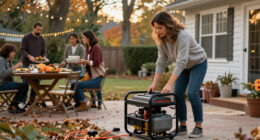
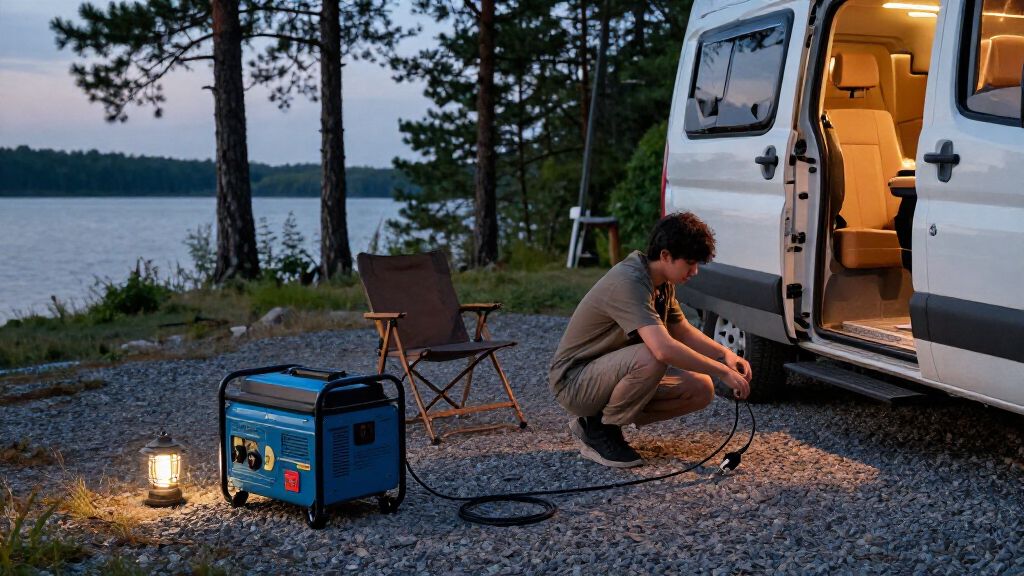
For a campsite, noise can shape the whole evening. A generator that sounds modest beside a busy road may feel intrusive when the woods go quiet and your tent sits nearby. Check campground rules, the rating’s measurement distance, and the load used in the test. They are often chosen for camping, but a low-noise claim doesn’t override site rules or the need to place the unit safely outdoors.
| What to compare | Why it matters |
|---|---|
| Noise rating and test distance | Ratings measured under different conditions are hard to compare directly. |
| Runtime at a stated load | Shows how a tank may perform closer to your expected use. |
| Fuel type and capacity | Affects refueling, storage, availability, and expected operating time. |
| Weight and handles or wheels | Determines whether you can move it from a vehicle to your work area. |
| Warranty and parts access | Can matter after years of seasonal use or a repair need. |
Gasoline is widely available and may suit a buyer who values convenient refueling, while propane can fit different storage and fuel preferences on compatible models. Dual-fuel options add flexibility, but the output and runtime can differ by fuel. Compare the exact model’s figures and storage instructions rather than assuming each fuel performs identically.
Use your generator outdoors and connect it safely
Never run a fuel-burning generator indoors, in a garage, or in a partly enclosed space. These machines produce carbon monoxide, an odorless gas that can be fatal. Keep the generator outdoors and far from doors, windows, and vents, following the manual and local safety guidance; use working carbon-monoxide alarms inside occupied spaces.
A garage door left open does not turn the garage into a safe operating spot. Exhaust can still enter the home or collect where people sleep. For example, if an outage forces you to run a generator overnight, place it outside according to the manufacturer’s clearance directions and keep it away from bedroom windows. A carbon-monoxide shutoff feature, where available, adds a safety layer; it does not replace safe placement.
Never plug a generator into a household wall outlet to power the home. That can send electricity back through wiring and create a dangerous backfeed. A qualified electrician can install a transfer switch or another approved connection method. Electrical work should follow local code and permit requirements, and you should not improvise a connection with a homemade cable.
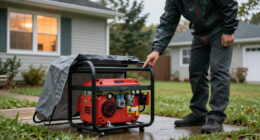
Keep the unit protected from rain and standing water while preserving safe outdoor ventilation. Use only a cover or enclosure approved for that model. Follow the manual for fuel handling, refueling, and maintenance, and keep appropriate protective equipment on hand for the tasks you perform. If the job involves wiring or a home connection, leave it to a licensed professional.
Safety rule: Keep a fuel-burning generator outdoors, away from openings, and never connect it to a home outlet.
Check features and upkeep before you buy
Safety features, service access, and local rules are part of the buying decision, not fine print to skim after checkout. Some models include low-oil shutdown, overload protection, or carbon-monoxide detection and shutoff. These features can help, but they do not make indoor use safe or remove the need to follow the instructions.
For instance, a buyer planning to store a generator in a shed may want to check fuel storage guidance and local rules before choosing gasoline or propane. Noise, emissions, and generator use can also face local restrictions. Product availability changes, so check current specifications, emissions certifications, and any recalls for the model you’re considering.
Routine care matters because a generator may sit unused between storms or camping trips. Follow the manual’s schedule for oil, filters, spark plugs, fuel handling, and storage. Fresh gasoline and the right storage procedure can matter more than a glossy control panel when you pull the machine out months later and need it to start.
Recent designs may include app-connected monitoring, compact frames, dual-fuel systems, and additional safety functions. Those features can make a particular job easier, but they don’t guarantee quieter operation, longer runtime, or better build quality across every model. Check warranty terms and the local availability of service and parts; when a unit fails during an outage, a reachable repair shop can be worth more than an extra screen.
- Confirm outlet types and voltage match your equipment.
- Check safety features and read their limits in the manual.
- Compare warranty coverage, parts, and service access.
- Check local noise, emissions, fuel storage, and operating rules.
Choose a setup that fits your real weekend or outage
The best generator size depends on what you need to run together, how long you need power, and how you’ll move and place the unit. A solo camper who wants to charge a phone and run a small cooler has a different job from a household trying to support a refrigerator and pump during an outage. Start from that real scene rather than buying the largest machine you can afford.
Imagine you’re driving to a campsite with a compact car and a short walk from the parking area. A heavy model may be awkward even if its output looks appealing. Now imagine a home backup setup where the generator can stay on a firm outdoor surface near approved connection equipment. Portability matters less, while starting watts, runtime, and safe electrical connection matter more.
Before you buy, picture where the generator will sit, how you’ll refuel it, and who will carry it. Check its weight, handles or wheels, outlet layout, fuel availability, and the load used for runtime claims. Then read the manual for ventilation clearances and operating conditions. This small bit of planning can prevent the classic mismatch: a generator that runs the lights but not the appliance you bought it for.
You may also decide that a portable inverter generator isn’t the right fit. If your essential loads are large or need long unattended backup, compare other backup options with a qualified electrician. If your needs are modest and occasional, an inverter model may offer a practical balance of transport, regulated output, and fuel use at lighter demand.
Frequently Asked Questions
What can a portable inverter generator run?
It depends on the generator’s running and starting wattage and the demands of the devices you plan to use together. Add their running loads and account for startup surges from items such as refrigerators and pumps. Check the generator’s outlet types and ratings too.
Can I use an inverter generator to charge a laptop or phone?
Many inverter generators provide regulated power that can suit common electronics when used according to the manufacturer’s guidance. Check the generator manual and your device’s power requirements, and use a compatible outlet or charger. Don’t treat the inverter label as a guarantee for every device.
How long will a portable inverter generator run on one tank?
Runtime depends on fuel capacity, load, fuel type, and operating conditions. Compare figures reported at the same stated load; a light-load result may not predict a setup running a refrigerator and other appliances. Review the manual for the model’s operating guidance.
Can I run a portable generator in my garage or RV?
No. Never operate a fuel-burning generator indoors or in an enclosed or partly enclosed space, including a garage. Carbon monoxide can build up quickly; run it outdoors, far from openings, and follow the manual’s clearance directions.
Can I connect a generator directly to my home?
Never connect one through a household outlet; that can cause dangerous backfeed. Ask a qualified electrician to install a transfer switch or another approved connection arrangement that meets local requirements.
Can two inverter generators work together?
Some models support parallel operation with a compatible second unit and the specified connection equipment. Compatibility is not universal, so check the manuals for both generators and follow their instructions. A supported pair can increase available output, but you still need to respect the combined ratings.
Conclusion
Choose a generator around the appliances you’ll actually run together, then check its starting watts, runtime at a stated load, fuel, noise, and transport demands. Read the manual before you operate it, keep it outdoors away from openings, and use a qualified electrician for a home connection.
A generator is only useful when it fits your real life: the right one should start when the lights go out and sit safely outside while your home stays quiet and clear of exhaust.