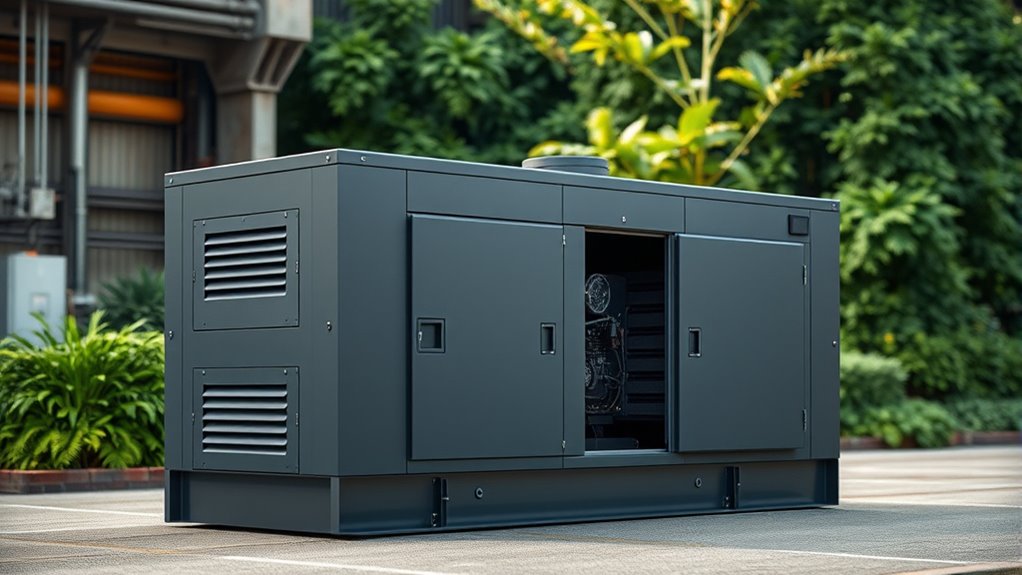

To reduce noise from diesel generators, you can use soundproof materials like acoustic foam, mass-loaded vinyl, and specialized enclosures designed to absorb and block sound. Incorporating vibration dampers such as rubber mounts and pads helps prevent noise from transferring to nearby structures. Proper enclosure design, including ventilation with noise-reducing vents, balances airflow and noise control. Regular maintenance guarantees these measures stay effective. Explore further to discover how combining these options creates quieter, compliant generator setups.
Key Takeaways
- Use soundproof materials like acoustic foam, mass-loaded vinyl, and specialized panels to absorb and block noise effectively.
- Implement vibration dampening solutions such as rubber mounts and isolators to reduce noise caused by engine vibrations.
- Design enclosures that integrate soundproofing and vibration damping for optimal noise reduction and airflow balance.
- Incorporate noise-reducing ventilation systems, like duct silencers, to prevent sound escape while maintaining proper airflow.
- Regularly inspect and maintain soundproof and dampening components to sustain maximum noise mitigation and compliance.
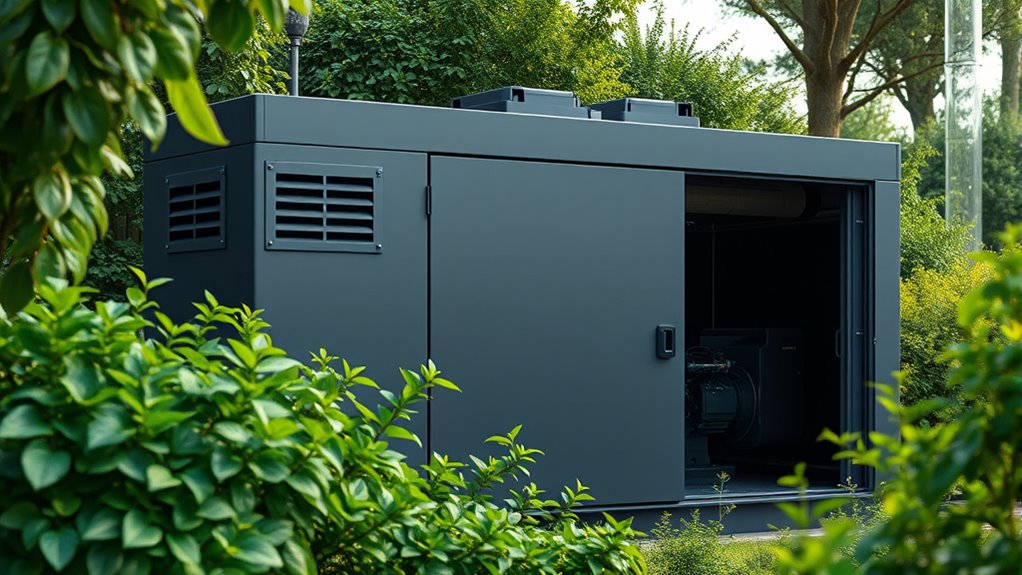
Diesel generators are indispensable power sources for many industries, but their noise can be disruptive and harmful to the environment. To address this, implementing effective noise reduction strategies is vital. One of the most effective approaches involves using soundproof materials, which absorb and block noise, preventing it from spreading beyond the generator enclosure. These materials include acoustic foam, mass-loaded vinyl, and specialized soundproof panels designed to minimize sound transmission. When properly installed, they create a barrier that markedly reduces the noise emitted by the generator, making operations safer and more compliant with regulations.
Using soundproof materials like acoustic foam and vinyl significantly reduces diesel generator noise.
In addition to soundproof materials, vibration dampening plays an essential role in noise reduction. Diesel engines generate vibrations that travel through the generator’s frame and surrounding structures, amplifying noise levels. By incorporating vibration dampening components such as rubber mounts, pads, or isolators, you can effectively minimize these vibrations. This not only reduces the noise but also prolongs the lifespan of the equipment by decreasing mechanical stress. Installing vibration dampening elements absorbs the energy from vibrations, preventing them from transferring to walls, floors, or adjacent structures, which can otherwise amplify noise and cause disturbances.
When designing or selecting a noise reduction enclosure for your diesel generator, combining soundproof materials with vibration dampening solutions produces the best results. For instance, enclosing the generator within a soundproof enclosure lined with acoustic foam and fitted with rubber mounts can drastically cut down on noise levels. Such setups are especially valuable in urban or sensitive environments where noise restrictions are strict. The enclosure acts as a physical barrier, while soundproof materials inside absorb sound waves, and vibration dampeners prevent structural vibrations from propagating outward.
You should also consider airflow and ventilation when constructing these enclosures. Proper ventilation ensures your generator operates efficiently without overheating, but it can also be a source of noise escape if not designed correctly. Using noise-reducing vents or duct silencers can help control this aspect. Regular maintenance of soundproof materials and vibration dampening components is vital, too, to ensure ongoing effectiveness. Over time, materials may degrade or become less effective, so periodic inspection and replacement help maintain ideal noise reduction performance.
Ultimately, combining soundproof materials with vibration dampening techniques allows you to markedly reduce diesel generator noise. This approach creates a safer, quieter environment while ensuring your generator operates efficiently and complies with noise regulations. It’s a practical, effective way to manage the disruptive sound levels typically associated with diesel power sources.

TroyStudio Portable Sound Proof Box, 16" x 12" x 16.2" Noise Reduction Enclosure, Light Blocking Quiet Cover, Soundproof Barrier for Ultrasonic Cleaner, Air Pump, Rock Tumbler & Generator
- Dimensions and Components: 16x12x16.2-inch foldable design
- Noise Reduction Capability: Reduces noise up to 21.5dB
- Light Blocking Feature: Seals out light for peaceful sleep
As an affiliate, we earn on qualifying purchases.
As an affiliate, we earn on qualifying purchases.
Frequently Asked Questions
How Do Different Enclosure Materials Affect Noise Reduction?
Different enclosure materials substantially impact noise reduction by offering varying levels of material effectiveness and enclosure durability. For example, dense materials like steel or concrete block absorb sound waves better, reducing noise more effectively. Meanwhile, durable materials ensure the enclosure withstands environmental factors and wear over time. You’ll find that choosing the right combination of these materials optimizes noise control while maintaining structural integrity for long-term use.
Can Noise Reduction Techniques Impact Generator Cooling Efficiency?
Imagine a quiet, humming generator blending seamlessly into its environment. Noise reduction techniques like acoustic barriers and vibration isolation can sometimes slightly hinder cooling efficiency if not carefully designed. These barriers may trap heat, but with proper airflow management, you can maintain ideal cooling. Vibration isolation minimizes noise without blocking airflow, ensuring your generator runs smoothly and quietly, giving you peace of mind without sacrificing performance.
What Maintenance Is Required for Noise-Reducing Enclosures?
You should regularly inspect your noise-reducing enclosures for damage or wear. Clean acoustic insulation materials to maintain their effectiveness, and check for loose fittings or seals. Vibration damping components need periodic adjustment or replacement to prevent noise leakage. Make certain vents and filters are unobstructed, and promptly address any corrosion or rust. Consistent maintenance keeps the enclosure effective, reducing noise while protecting your generator’s performance.
Are There Environmental Regulations Influencing Noise Reduction Standards?
Think of environmental regulations as the guiding stars that keep your noise levels in check. You must follow regulatory compliance to make certain your diesel generator’s noise emissions don’t disturb the night’s peace. These standards are driven by concerns over environmental impact, aiming to protect wildlife and communities. By adhering to these rules, you not only stay lawful but also contribute to a cleaner, quieter world, making your operations harmonious with nature’s rhythm.
How Do Noise Reduction Costs Compare to Generator Performance Benefits?
You’ll find that noise reduction costs are generally outweighed by performance benefits, making it a smart investment. While some noise mitigation solutions may involve initial expenses, they enhance operational efficiency, comply with regulations, and improve safety. The key is balancing cost effectiveness with performance trade offs; investing in effective noise control can lead to long-term savings and better overall generator performance, ensuring your system runs smoothly and quietly.
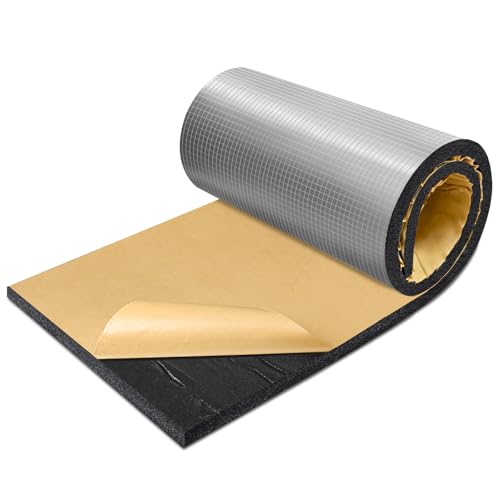
TroyStudio Sound Proof Closed Cell Foam, Self-Adhesive 13" x 39" Heat Shield Acoustic Rubber Foam Sheet – Waterproof Noise Vibration Thermal Insulation Roll for Home, Car, HVAC, Pipe, Machine
- Material Composition: Neoprene foam with aluminum foil surface
- Dimensions: 13 x 39 inches, 0.6 inches thick
- Coverage Area: 3.52 square feet
As an affiliate, we earn on qualifying purchases.
As an affiliate, we earn on qualifying purchases.
Conclusion
You might think enclosing a diesel generator simply dampens noise, but it’s more than that. Proper enclosures and technologies don’t just hide sound—they transform how you perceive it, proving that thoughtful design can turn noise into a manageable, even negligible, part of your environment. When you invest in advanced noise reduction, you’re not just quieting the generator; you’re creating a space where efficiency meets comfort, showing that innovation truly can silence the noise of progress.

EASYEAH M10 Rubber Studs Shock Absorber Anti-Vibration Isolator Mounts
- Package Includes: 4 mounts with 8 lock-nuts
- Thread Size: M10x28 mm (1.1 inch)
- Isolator Dimensions: 40mm x 30mm (1.57 x 1.18 inches)
As an affiliate, we earn on qualifying purchases.
As an affiliate, we earn on qualifying purchases.

TroyStudio Air Vent Noise Reducer Foam Insert, Extended 4 Inch Exhaust Duct Silencer-Inline Return Airflow Ventilation Sound Damper Plug for HVAC Tube,Pipe,Air Conditioner,Bathroom Fan,and Grow Tent
- Dimensions: 4.05" outer diameter, 4" length
- Material: High-density polyurethane foam
- Sound Absorption: Efficient noise reduction with foam
As an affiliate, we earn on qualifying purchases.
As an affiliate, we earn on qualifying purchases.






![Bukit Bintang Hicks Flat: DBKL Orders Cleanup After Viral Video Exposes Dirty Conditions [WATCH] - NST Online](https://invertergeneratorhq.com/wp-content/uploads/2026/08/bukit-bintang-hicks-flat-dbkl-orders-cleanup-after-viral-video-exposes-dirty-con-featured-260x140.jpg)