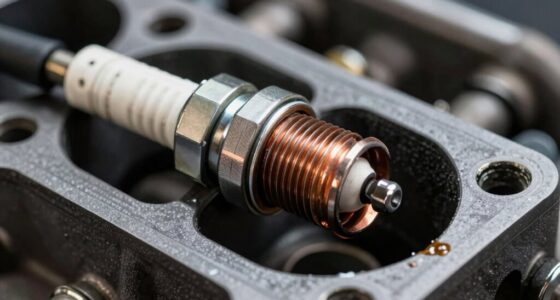
A spark plug is a key part of your engine that ignites the air-fuel mixture in your cylinders, helping your car run smoothly. It consists of a ceramic insulator, metal shell, and electrodes that create a high-voltage spark. Proper gap setting and regular maintenance are essential for peak performance. Understanding these basics can help you keep your engine in top shape, and if you keep exploring, you’ll uncover even more about how spark plugs work.

Get backup power and energy gear delivered free — and shop member deals
- Fast, free delivery on millions of items
- Access to Prime Big Deal Days deals on October 6–7
- Prime Video, Amazon Music and more included
Key Takeaways
- Spark plugs ignite the air-fuel mixture in engine cylinders, crucial for starting and running the engine smoothly.
- They consist of components like the ceramic insulator, metal shell, and electrodes, which influence performance.
- The spark gap between electrodes affects ignition efficiency and must be set correctly for optimal operation.
- Types include copper, iridium, and platinum, each offering different durability and conductivity benefits.
- Proper installation, maintenance, and gap adjustment are essential for preventing misfires and ensuring engine reliability.
As an affiliate, we earn on qualifying purchases.
Spark Plug Fundamentals and Importance
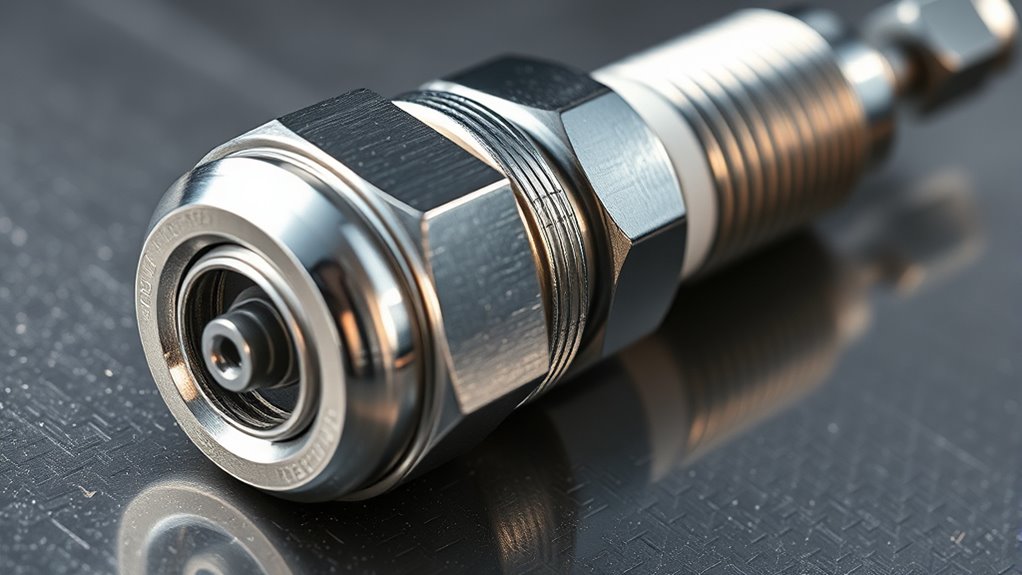
Understanding the basics of spark plugs is essential for maintaining your vehicle’s engine performance. These small components play a crucial role in the ignition system, which is responsible for igniting the air-fuel mixture inside your engine’s cylinders. Without properly functioning spark plugs, your vehicle can experience misfires, reduced power, poor fuel economy, and increased emissions. Knowing how spark plugs work and their key features helps you troubleshoot issues and choose the right replacements to keep your engine running smoothly.
Spark plugs are vital for engine performance, igniting the air-fuel mixture to keep your vehicle running smoothly.
Spark plugs are designed to generate a spark that ignites the air-fuel mixture at just the right moment. This process occurs within your vehicle’s ignition system, which includes the spark plug itself, ignition coil, distributor, and related components. When you turn on your ignition, the ignition coil creates a high-voltage electrical charge that travels to the spark plug. The spark plug then discharges this energy across a small gap between its center and ground electrodes, creating a spark. This tiny but mighty spark ignites the mixture, leading to combustion that powers your engine.
The core parts of a spark plug include the ceramic insulator, the metal shell, and the electrodes. The ceramic insulator surrounds the center electrode, preventing electrical leakage and withstanding high temperatures. The metal shell screws into the cylinder head, securing the spark plug in place and helping transfer heat away from the firing tip. The electrodes—center and ground—are crucial because they define the spark gap, which is critical for proper ignition. The gap size influences ignition efficiency and fuel combustion quality. If the gap is too narrow, the spark may be weak; if too wide, it might not jump reliably, causing misfires.
Understanding the different types of spark plugs can also improve your engine’s performance. For example, copper spark plugs offer excellent conductivity and are usually the most affordable, but they wear out faster. Iridium and platinum spark plugs last longer and provide more stable sparks, especially in high-performance engines. The choice depends on your vehicle’s specifications and your driving habits. Regularly inspecting and replacing spark plugs based on manufacturer recommendations helps maintain optimal engine performance and fuel economy.
Finally, keep in mind that the correct spark plug installation and gap setting are essential. An improperly gapped or loose spark plug can cause misfires, rough idling, and poor acceleration. Using the right tools, such as a feeler gauge, makes it easier to set the correct gap. When in doubt, consult your vehicle’s manual or a professional mechanic to ensure you’re selecting and installing the perfect spark plug for your engine. Proper maintenance of your spark plugs directly benefits your ignition system’s efficiency and your vehicle’s overall engine performance. Additionally, staying informed about advances in quality assurance can help you choose reliable parts and maintain your vehicle more effectively.
As an affiliate, we earn on qualifying purchases.
Frequently Asked Questions
How Often Should Spark Plugs Be Replaced?
You should replace your spark plugs every 30,000 to 50,000 miles, though it depends on your vehicle and ignition system. Modern spark plugs made of durable materials like platinum or iridium last longer, so check your owner’s manual for specific recommendations. Regular inspections can help you catch wear early. Replacing them at the right interval guarantees smooth engine performance and fuel efficiency, preventing misfires and costly repairs down the line.
Can I Upgrade to High-Performance Spark Plugs?
Yes, you can upgrade to high-performance spark plugs, but you should select ones with better spark plug materials like platinum or iridium for longer life and improved performance. Keep in mind, these plugs can affect ignition timing, so you might need to adjust it to optimize engine performance. Upgrading can boost power and efficiency, but always guarantee compatibility with your vehicle’s specifications.
What Signs Indicate Spark Plug Failure?
Think of your engine as a dance, and spark plugs as the partners. When they falter, you’ll notice misfires, rough idling, or difficulty starting — like a dance partner missing a step. You might also see decreased fuel efficiency or increased emissions. Check if ignition timing is off or the spark plug gap has widened, as these signs signal spark plug failure. Regular inspection keeps your engine performing in perfect harmony.
Are Spark Plugs Universal or Vehicle-Specific?
Spark plugs are generally vehicle-specific because they depend on factors like spark plug materials and firing order. You can’t just use any spark plug; you need one compatible with your engine’s design. Check your owner’s manual to match the correct spark plug type, material, and firing order. Using the right spark plug guarantees peak performance and prevents engine issues, so always verify these details before replacing or upgrading.
What Impact Do Spark Plugs Have on Fuel Efficiency?
Spark plugs considerably impact your fuel efficiency by ensuring proper ignition timing. When they fire correctly, your engine runs smoothly, reducing fuel consumption. Poorly functioning plugs can cause misfires, increasing emissions and wasting fuel. Upgrading to high-quality spark plugs may improve combustion, lowering emissions impact and boosting mileage. Maintaining your spark plugs helps your vehicle run efficiently, saving you money on fuel while keeping emissions in check.
As an affiliate, we earn on qualifying purchases.
Conclusion
Understanding spark plugs might seem small, but their role is huge—igniting your engine’s power. Just like a tiny spark starts a blazing fire, a simple component can make or break your vehicle’s performance. It’s easy to overlook these basics, yet their importance runs deep. Remember, in the world of engines, small details often have the biggest impact—so take care of your spark plugs, and they’ll keep your journey smooth and powerful.
As an affiliate, we earn on qualifying purchases.
Fall Picks
fall essentials
As an affiliate, we earn on qualifying purchases.